
Samsung Galaxy Watch CGM Apps: A Guide to Monitoring Glucose on Wear OS
Understanding the Reality of Non-Invasive Glucose Monitoring The pursuit of a needle-free, non-invasive glucose monitoring solution on a…
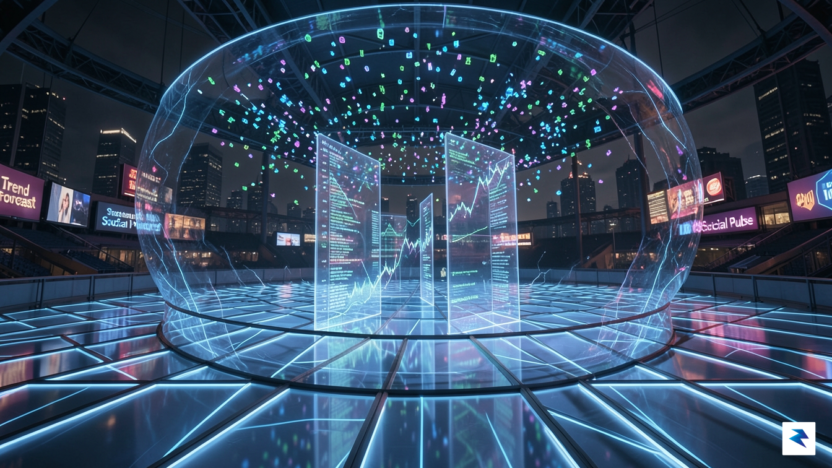

For decades, prediction markets were confined to the fringes of academic research and specialized economic forums, often viewed as curious experiments in behavioral finance rather than viable societal tools. These platforms were built on the premise of the “wisdom of crowds,” suggesting that when a diverse group of individuals puts their own capital at stake, the resulting market price reflects a more accurate probability of future events than the opinion of any single expert. While traditional polling methods have increasingly struggled to capture the nuance of a polarized and rapidly changing public sentiment, incentive-based forecasting has emerged as a robust alternative. By aligning personal risk with the accuracy of one’s foresight, these markets effectively filter out noise, bias, and wishful thinking, providing a real-time pulse on everything from geopolitical shifts to technological breakthroughs.

The sudden surge in interest surrounding these platforms is not merely a trend, but a response to an era defined by profound global uncertainty. As the speed of information dissemination continues to accelerate, the lines between verified news, speculation, and misinformation have become increasingly blurred. In this environment, the public is searching for more objective mechanisms to parse the truth. Prediction markets offer a decentralized form of accountability; because participants must back their claims with financial or social capital, the system inherently penalizes those who propagate falsehoods while rewarding those who correctly identify trends. This shift represents a fundamental change in how we value probability, moving away from passive consumption of commentary toward a more active, calculated engagement with the potential trajectories of our world.
Prediction markets transform the abstract concept of “collective intelligence” into a quantifiable asset, turning individual intuition into a public utility for navigating complex futures.
The entry of major technology firms like Meta into this space suggests that the industry has reached a critical tipping point, transitioning from an academic curiosity to a core component of the digital ecosystem. Companies are recognizing that their massive user bases possess an untapped reservoir of predictive power that, if harnessed correctly, could provide unprecedented insights into consumer behavior, societal trends, and global stability. By integrating these markets into mainstream social platforms, tech giants are attempting to formalize the way we forecast outcomes, effectively creating a “truth engine” that operates at internet scale. This evolution marks a significant departure from the siloed, data-heavy models of the past, signaling a future where the most valuable intelligence is not held by the few, but synthesized from the aggregated insights of the many.
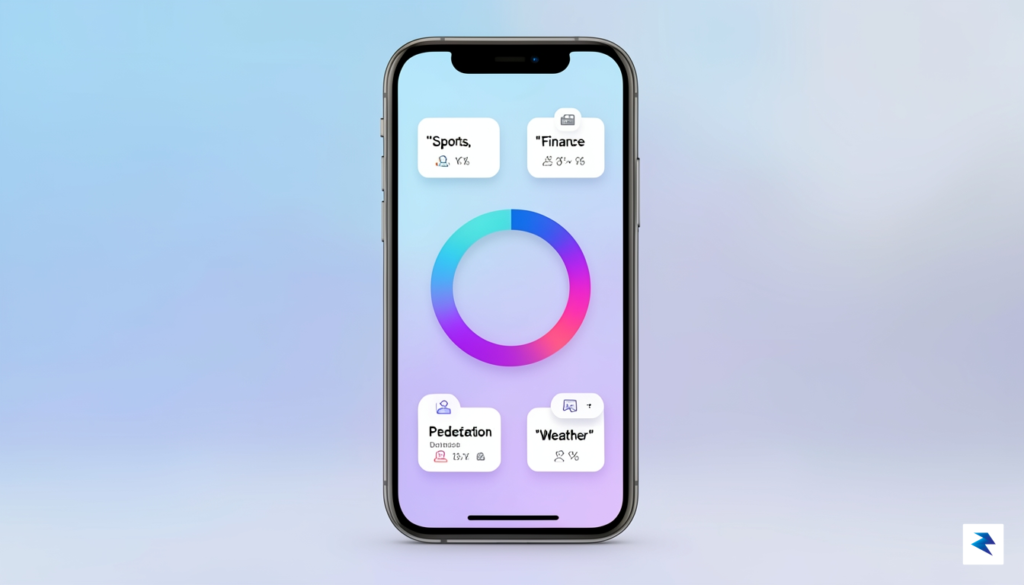
At the core of Meta’s “Arena” project is a fundamental reimagining of the prediction market experience, shifting the focus from high-stakes financial gambling to a highly engaging, gamified social activity. Instead of requiring users to stake real money on the outcomes of global events—ranging from geopolitical shifts to entertainment industry milestones—the platform utilizes a points-based system. By removing the financial risk, Meta effectively lowers the barrier to entry, inviting a broader demographic to participate in forecasting without the legal and ethical complexities associated with traditional betting platforms. This approach transforms prediction into a form of social currency, where the ultimate reward is not monetary gain, but rather the reputation and status earned by consistently accurate prognostications.
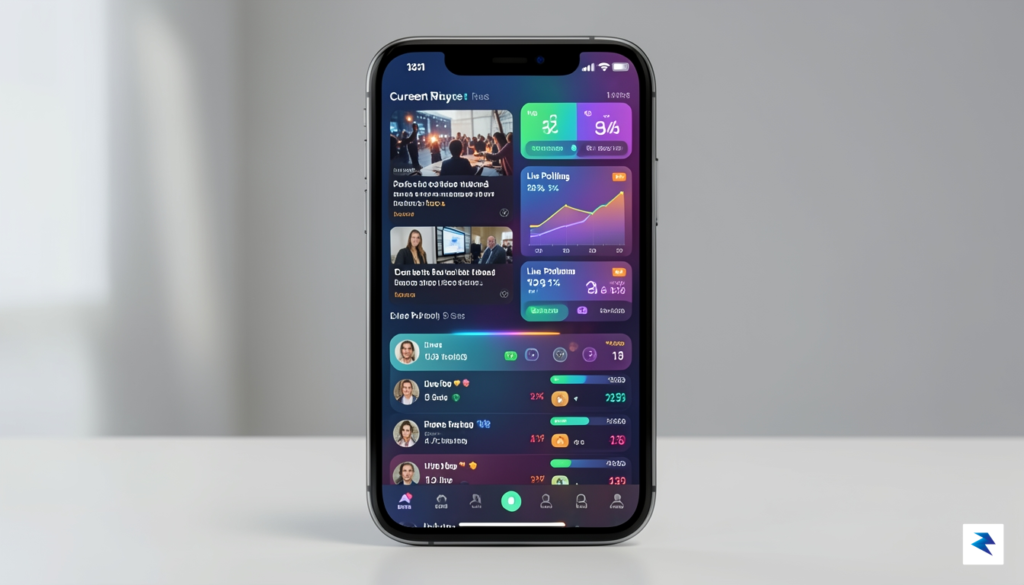
The mechanics of this system rely on the massive, diverse scale of Meta’s existing user base to generate robust and reliable datasets. By tapping into millions of daily active users, the platform can aggregate a vast array of perspectives, potentially creating a “wisdom of the crowd” effect that is far more representative than the niche audiences found on existing professional prediction sites. As participants make their forecasts, the app continuously recalibrates the likelihood of various outcomes based on real-time input. This creates a feedback loop where the collective intelligence of the community is refined, theoretically producing highly accurate predictive data that could be invaluable for understanding public sentiment or forecasting the trajectory of major world events.
By eschewing real-money wagers, Meta effectively pivots from a transactional gambling model to a collaborative intelligence model, turning forecasting into a competitive social game rather than a financial liability.
There are distinct strategic advantages to this non-cash model when compared to traditional betting platforms. Because the app does not involve actual financial wagers, it sidesteps the intense regulatory scrutiny and strict legal frameworks that govern sportsbooks and financial derivatives exchanges. Furthermore, the points-based structure fosters a more inclusive environment where users are encouraged to explore a wider variety of topics without the fear of financial loss. This allows the platform to experiment with more abstract or long-term questions that might not typically attract capital, yet are essential for capturing a nuanced view of future trends. By prioritizing social gamification, Meta is positioning Arena as a unique hybrid: a powerful data collection tool disguised as a casual, addictive pastime.

The core appeal of prediction markets lies in the profound efficacy of the “wisdom of the crowds” theory, which posits that the collective aggregate of independent opinions often produces a more accurate forecast than even the most highly trained individual expert. Unlike traditional media polls, which rely on self-reported intentions that are frequently susceptible to social desirability bias or sudden changes in sentiment, prediction markets require participants to put something of value at stake—whether it be capital or hard-earned reputation. This financial or social skin-in-the-game serves as a powerful filter, effectively weeding out noise and irrationality. When participants are forced to back their predictions with their own resources, they are incentivized to conduct rigorous research, analyze objective data, and suppress their personal biases in favor of identifying the most probable outcome.

As platforms like Polymarket have surged in popularity, they have demonstrated that these markets can act as real-time, high-frequency barometers for global events, ranging from electoral outcomes to geopolitical shifts. This shift in the landscape is not merely a trend but a fundamental pivot in how information is synthesized. Traditional media often operates on a retrospective basis, delivering analysis after an event has unfolded, whereas prediction markets provide a forward-looking, evolving probability map. For a tech giant like Meta, entering this space with an application like Arena is a strategic realization that users are increasingly looking for ways to quantify the future rather than simply consume filtered commentary. By capturing this predictive sentiment, Meta is positioning itself to become a central hub for the synthesis of collective intelligence.
The true power of a prediction market is not found in the opinion of any single user, but in the relentless, corrective pressure applied by the aggregate of thousands of participants acting in their own self-interest.
Furthermore, the current macroeconomic environment has accelerated the mainstreaming of these platforms. In an era defined by rapid technological disruption and a persistent sense of uncertainty, individuals are seeking more empirical tools to navigate complex realities. When standard institutions and traditional polling methods seem to falter, the decentralized nature of prediction markets offers a sense of transparency and accountability that modern audiences find increasingly credible. By leveraging the social graph of its existing user base, Meta intends to transform how we perceive truth and probability, effectively turning social media from a megaphone for static opinions into a dynamic engine for identifying what is actually likely to happen next. As these markets become more liquid and accessible, the gap between expert conjecture and collective reality will likely continue to narrow, further cementing the role of crowd-sourced forecasting in the digital age.

Innovation in the digital age rarely unfolds without significant friction, and the prospect of Meta integrating a prediction market into its sprawling ecosystem is no exception. By allowing users to place wagers—whether social or financial—on the outcomes of geopolitical shifts, natural disasters, or corporate maneuvers, the company enters a minefield of ethical and regulatory complexities. The central tension lies in the democratization of forecasting; while these platforms can theoretically surface “wisdom of the crowd” insights, they also risk turning volatile real-world events into high-stakes gamified content. This shift raises profound concerns about whether Meta, an organization already under intense scrutiny for its role in the spread of misinformation, is adequately equipped to police a marketplace where the truth is not just debated, but actively traded.

One of the most immediate risks facing a platform like Arena is the potential for market manipulation by bad actors. If a prediction market becomes large enough to influence public perception or market sentiment, there is a powerful incentive for coordinated groups to artificially inflate or deflate the odds of a specific event. This “prediction manipulation” could be weaponized to sway elections, damage corporate reputations, or create panic, effectively turning the app into a tool for psychological warfare. Furthermore, the platform’s reliance on user-generated data creates a circular feedback loop: if users are incentivized to bet on the most sensational or inflammatory outcomes, the platform may inadvertently prioritize polarizing content over objective reality.
“When real-world tragedies are reduced to betting lines, the ethical line between civic engagement and exploitation becomes dangerously blurred.”
Beyond the behavioral risks, Meta faces a daunting regulatory landscape. Prediction markets often skirt the edge of gambling laws, and depending on how Arena is structured, it could face stringent oversight from financial regulators like the Commodity Futures Trading Commission (CFTC) in the United States. If the app facilitates monetary transactions based on political outcomes, it could be classified as an illegal event contract, inviting immediate legal challenges. Meta will need to develop sophisticated, perhaps even AI-driven, content moderation systems to ensure that users are not placing bets on prohibited subjects or engaging in insider trading—a feat that has proven notoriously difficult for far smaller, more specialized platforms.
Ultimately, the success or failure of Arena will likely depend on Meta’s ability to balance the thrill of predictive accuracy with the sobering reality of civic responsibility. If the company fails to implement robust safeguards against the gamification of human suffering or the corruption of political discourse, the app may quickly become a liability rather than an asset. The challenge is not merely technical; it is a fundamental test of whether a social media giant can maintain the integrity of a marketplace where the currency is information, and the consequences of being wrong are felt far beyond the screen.

The emergence of platforms like Arena signals a profound transition from passive news consumption toward an era defined by probabilistic forecasting. For decades, the public has relied on journalists and centralized outlets to curate the “truth” after events have already unfolded. By incentivizing users to stake their reputations—and potentially their capital—on the outcomes of geopolitical, economic, and cultural developments, Meta is attempting to pivot the social media experience from reactive commentary to predictive intelligence. This shift suggests that the future of information gathering may no longer be about what happened yesterday, but rather a collective, data-driven bet on what is likely to occur tomorrow.
As this model gains traction, the very nature of “truth” in the digital age faces a complex evolution. In a decentralized prediction market, consensus is not determined by an editorial board, but by the aggregate wisdom—or, conversely, the collective bias—of the participants. While this could democratize insight and surface niche expertise that traditional media often overlooks, it also risks turning public discourse into a game of incentives where narratives are pushed specifically to sway market odds. We may soon find ourselves in a landscape where the veracity of an event is secondary to the “market price” of its probability, raising uncomfortable questions about how misinformation could be weaponized when there is a financial or social stake in a specific outcome.

The success of a prediction market relies not just on the accuracy of the data, but on the diversity of the participants. If the platform becomes an echo chamber, it will fail to provide the objective signal it promises.
Whether Meta can actually succeed in this high-stakes arena remains an open question, particularly given the company’s tumultuous history with content moderation and platform governance. Integrating a betting-style architecture into the fabric of social media requires a delicate balance between maintaining a competitive environment and preventing the spread of harmful manipulation. If Meta can cultivate a robust, transparent, and intellectually honest community, they may well redefine how society processes uncertainty. However, if the platform succumbs to the same polarization that plagues its current social networks, it could inadvertently accelerate the fragmentation of our shared reality, turning the pursuit of truth into a high-stakes competition of conflicting interests.
You must be logged in to post a comment.