
500 Startups Later: Charles Hudson on the Fundraising Mistakes Founders Must Avoid
The Current Reality of Early-Stage Fundraising The venture capital landscape has undergone a seismic shift in the last two years, moving away…

The journey of artificial intelligence in software engineering has traveled at breakneck speed, transforming from a novel curiosity into a structural pillar of modern development. Not long ago, the industry was captivated by the arrival of early autocomplete tools—systems like the original GitHub Copilot—which acted as sophisticated prediction engines. These early iterations functioned primarily as glorified text suggestions, offering developers a modest boost in typing speed by predicting the next few lines of code. While helpful, these tools were fundamentally passive, requiring constant human oversight and failing to grasp the broader architecture of complex, multi-layered applications.
Today, we have definitively entered the agentic era, where the paradigm has shifted from simply “helping” to actively “doing.” Modern AI is no longer confined to suggesting snippets; it is now capable of navigating massive, monolithic codebases, refactoring legacy systems, and autonomously debugging intricate logic chains. This transition represents a fundamental change in the developer’s role: the engineer is evolving from a manual laborer writing every character to a high-level architect guiding an intelligent, automated workforce. The AI now holds the context of the entire project, allowing it to predict the downstream impacts of a single code change across hundreds of files simultaneously.

This evolution reached a critical tipping point in 2026, driven by an insatiable enterprise demand for efficiency and scalability. As technical debt accumulates and talent scarcity persists, organizations are no longer satisfied with marginal gains; they require systems that can handle end-to-end feature implementation without constant hand-holding. Businesses are now prioritizing AI that can bridge the gap between abstract product requirements and functional, production-ready code. Consequently, the market has become a high-stakes arena where the ability to integrate deep institutional knowledge with autonomous reasoning is the primary differentiator for success.
The true value of AI in 2026 isn’t just generating lines of code faster; it is the ability to maintain architectural integrity while scaling development velocity in an increasingly complex digital landscape.
Meta’s entry into this crowded battlefield with Muse Spark 1.1 is not merely another product launch; it is a clear signal that the giants of the tech world are pivoting toward specialized, enterprise-grade reasoning engines. By entering a space dominated by early movers, Meta is effectively challenging the existing status quo, forcing a market consolidation that favors robustness and deep context awareness over simple generative speed. For the modern enterprise, this shift signals that the “AI coding puzzle” is finally moving toward a solution where automation is reliable enough to be trusted with the keys to the kingdom.
While the market is currently saturated with lightweight coding assistants designed for snippet generation or simple function completion, Muse Spark 1.1 distinguishes itself by shifting the focus toward the complex, often chaotic environment of large-scale enterprise software architectures. Unlike “vanilla” AI coding tools that frequently struggle to maintain coherence beyond a single file, Muse Spark 1.1 utilizes an advanced agentic framework capable of managing massive, multi-file workloads simultaneously. By treating the entire codebase as a singular, interconnected ecosystem rather than a collection of disparate documents, the platform ensures that modifications made in one module are automatically propagated and validated across dependent services, effectively eliminating the “fragmentation trap” that plagues most automated coding suites.
One of the most significant technical leaps in this iteration is its deep-context bug remediation engine. Standard coding assistants often suggest patches based on localized syntax patterns, which can inadvertently introduce regression errors in remote parts of an application. In contrast, Muse Spark 1.1 performs a holistic cross-referencing of architectural dependencies, allowing it to trace the root cause of a bug through multiple layers of abstraction. This capability transforms the debugging process from a guessing game into a precise surgical operation, as the system provides developers with a clear roadmap of how a suggested fix will ripple through the integrated systems, thereby drastically reducing the risk of downtime or broken production builds.
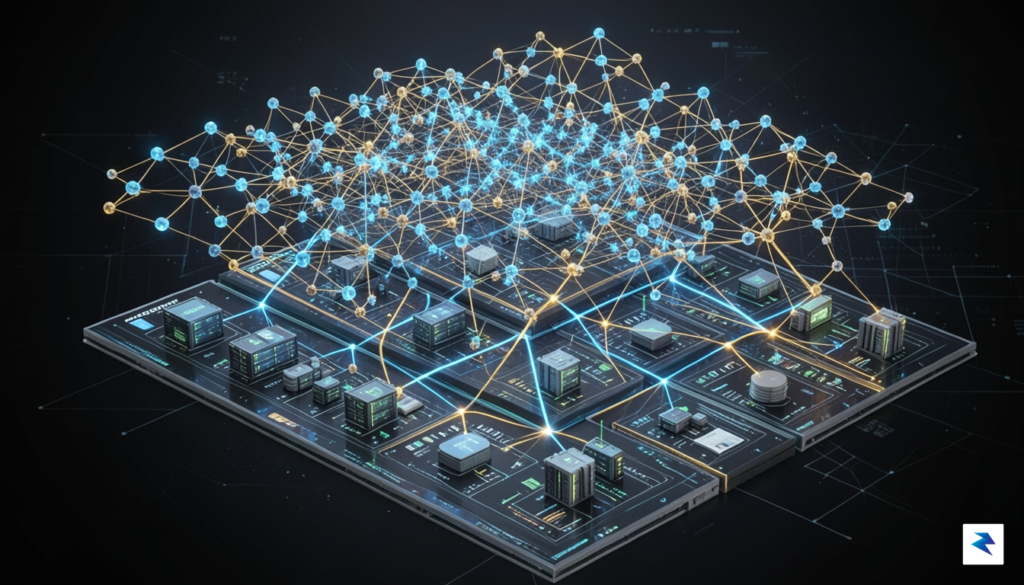
Furthermore, the platform introduces sophisticated automated migration capabilities that address the logistical nightmares typical of legacy system upgrades. Manually refactoring monolithic applications to modern frameworks is traditionally a costly, time-consuming endeavor fraught with human error. Muse Spark 1.1 automates this transition by analyzing existing business logic and mapping it to contemporary syntax and structural requirements without losing critical project history or architectural integrity. By bridging the gap between legacy stability and modern scalability, the tool serves as a force multiplier for engineering teams that are otherwise bogged down by technical debt.
Muse Spark 1.1 represents a fundamental shift from simple code completion to architectural orchestration, prioritizing the stability and integrity of large-scale systems over mere speed of input.
Ultimately, the value proposition of Muse Spark 1.1 lies in its ability to act as a force-multiplier for senior developers who spend more time on system maintenance than on creative problem-solving. By offloading the heavy lifting of dependency management and migration logic to an agentic system that truly understands the “why” behind the “how,” organizations can reclaim thousands of engineering hours. This creates a development environment where the AI is not just writing code, but actively maintaining the health and longevity of the entire digital infrastructure.
For large enterprises, the path to fully leveraging AI has long been fraught with formidable obstacles, primarily stemming from the sheer scale and intricate fragility of their legacy codebases. These vast digital landscapes often comprise millions of lines of code, accumulated over decades, creating a complex web of interdependencies commonly referred to as “dependency hell.” Migrating even a small component, let alone an entire system, can trigger unforeseen cascading failures across the entire architecture, making any significant modernization effort an incredibly risky and resource-intensive undertaking. This inherent complexity has historically acted as a significant barrier, stalling innovation and preventing businesses from adopting cutting-edge AI tools that could otherwise revolutionize their operations.
This is precisely where Meta’s Muse Spark 1.1 aims to make a transformative impact. Unlike traditional code assistants or earlier AI models that often focus on local syntax or generating isolated snippets, Muse Spark 1.1 is engineered with an architectural understanding of complex systems. Its sophisticated approach allows it to parse and comprehend not just individual files or functions, but the intricate relationships and dependencies spanning an entire enterprise codebase. This system-wide awareness means that when a change or migration task is initiated, Muse Spark 1.1 can predict potential impacts across disparate modules, flag hidden conflicts, and even suggest refactorings that account for the holistic integrity of the system, moving far beyond mere surface-level code analysis.
The return on investment (ROI) for automating these monumental migration and modernization tasks is substantial and immediate. Manual efforts to untangle dependency hell, identify necessary code changes, and meticulously rewrite legacy components consume countless engineering hours, often stretching over months or even years, with a high propensity for human error. By leveraging Muse Spark 1.1 to automate significant portions of this work, enterprises can drastically reduce time-to-market for new features, lower development costs, and reallocate their highly skilled engineering talent from tedious maintenance to innovative, value-generating projects. This not only accelerates the adoption of AI within the enterprise but also transforms previously insurmountable tech debt into manageable, automated refactoring initiatives, paving a clearer path for future digital transformation.
The traditional paradigm of software development has long been defined by the tactile relationship between a programmer and their keyboard, where every line of logic must be manually articulated and verified. With the arrival of Meta’s Muse Spark 1.1, we are witnessing a profound transition toward agentic workflows, a shift that redefines the developer as an architectural conductor rather than a line-by-line executor. In this new model, the AI does not merely function as an autocomplete engine; instead, it acts as an autonomous agent capable of decomposing complex feature requests into actionable sub-tasks, executing them, and navigating the inherent constraints of a sprawling enterprise codebase.
Muse Spark 1.1 facilitates this shift through a sophisticated multi-step reasoning framework that mimics the cognitive process of a senior engineer. When a developer provides a high-level objective, the system initiates an iterative loop of planning, drafting, and rigorous self-correction. Unlike static assistants that provide snippets in isolation, this platform maintains global context across the entire repository. If an initial attempt to refactor a legacy module fails to pass the integrated test suite, the agent automatically pivots, analyzes the error logs, and attempts a secondary solution without requiring manual intervention from the human developer. This self-healing capability is the hallmark of true agentic behavior, effectively moving the burden of trial-and-error from the person to the machine.
This evolution necessitates a fundamental change in how we measure developer productivity. We are moving away from a human-in-the-loop model—where the developer must approve every micro-decision—toward a human-on-the-loop paradigm. In this context, the developer’s primary responsibility shifts toward defining constraints, setting quality thresholds, and validating the architectural integrity of the agent’s output. By abstracting away the tedious aspects of boilerplate generation and syntax debugging, Muse Spark 1.1 allows engineers to spend their intellectual energy on system design and business logic, which are the domains where human intuition remains irreplaceable.
The true power of an agentic workflow lies not in replacing the engineer, but in elevating their scope of influence from individual files to entire software ecosystems.
Ultimately, the successful adoption of these agentic tools depends on the reliability of the underlying feedback loops. Muse Spark 1.1 integrates persistent testing environments that validate code changes in real-time, ensuring that autonomy does not come at the cost of stability. As these agents become more adept at navigating enterprise-grade complexity, the role of the developer will continue to evolve into that of a high-level strategic architect. By handing off the tactical execution to autonomous agents, teams can achieve a velocity previously thought impossible, turning weeks of manual coding cycles into hours of orchestrated development.
The arena of AI-assisted software development has rapidly evolved from a niche novelty into a high-stakes battlefield dominated by tech titans. For years, Microsoft’s GitHub Copilot has maintained a near-hegemonic grip on the market, leveraging its seamless integration with VS Code to become the default companion for millions of developers. Simultaneously, Google’s Gemini-powered offerings have sought to capture the enterprise market by emphasizing deep cloud ecosystem connectivity and massive multimodal context windows. Meta’s entry with Muse Spark 1.1 represents a significant pivot in this dynamic, shifting the focus from proprietary, closed-box solutions to a more transparent, open-weights philosophy that challenges the status quo.
Unlike its competitors, which often operate as “black boxes” that prioritize vendor lock-in, Meta is leaning into its open-source heritage. By positioning Muse Spark 1.1 as a flexible, model-agnostic tool, the company is betting that developers are increasingly wary of being tethered to a single cloud provider’s ecosystem. This strategy targets the “freedom-first” segment of the development community—engineers who value the ability to self-host, audit code generation processes, and fine-tune models on proprietary datasets without fearing that their intellectual property will be used to train a rival’s public-facing model.
Success in the AI coding space is no longer just about the quality of the autocomplete; it is about how frictionlessly a tool weaves into the existing CI/CD fabric of a modern engineering organization.
However, technical superiority is only half the battle; the true test for Muse Spark 1.1 lies in enterprise-grade integration. While GitHub Copilot and Google’s suite have spent years perfecting their presence within CI/CD pipelines, security compliance frameworks, and IDE plugins, Muse Spark must prove that it is more than just a powerful engine. It must demonstrate reliability in high-stakes production environments where even a minor hallucination in a code suggestion could lead to catastrophic security vulnerabilities. Meta will need to provide robust guardrails and enterprise-level support that can match the trust developers currently place in established incumbents.
Ultimately, the market is currently experiencing a transition from “AI-enabled experimentation” to “AI-integrated production.” As Meta enters this crowded space, it faces the daunting task of convincing CTOs and lead architects that switching costs are worth the potential productivity gains. If Muse Spark 1.1 can solve the “last mile” problem of coding—namely, the ability to understand sprawling, legacy codebases and suggest context-aware architectural changes rather than just simple boilerplate—it may well disrupt the current duopoly. For now, the industry is watching closely to see if Meta’s open-weights approach can overcome the sheer inertia of existing developer habits.

Adopting sophisticated AI tools like Muse Spark 1.1 into an enterprise environment transcends mere technical integration; it necessitates a comprehensive strategy encompassing rigorous security protocols, robust governance frameworks, and dedicated team training. While the promise of accelerated development cycles and enhanced productivity is compelling, engineering managers must approach deployment with a clear understanding of the unique challenges and responsibilities that come with large-scale code analysis and AI-generated content. Overlooking these critical considerations can lead to significant risks, from data breaches to the subtle erosion of code quality and maintainability, underscoring the need for a meticulously planned rollout.
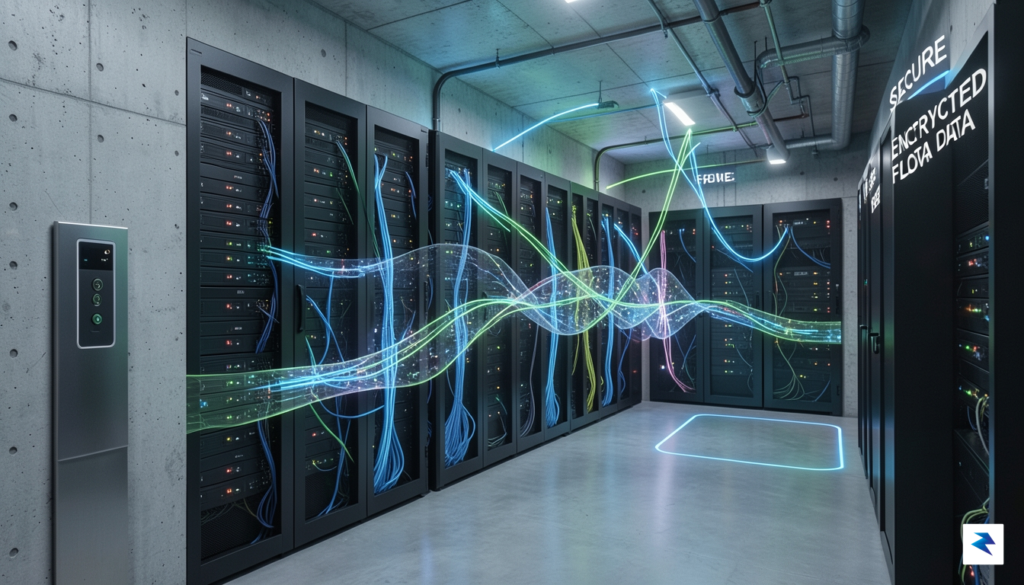
One of the foremost concerns for any enterprise considering an AI coding assistant is data privacy, particularly when dealing with proprietary source code. Muse Spark 1.1 analyzes vast amounts of code to provide its suggestions, and the mechanisms by which this analysis occurs, where the data resides, and how it is utilized for model improvement are paramount questions. Companies must scrutinize Meta’s data handling policies, ensuring that sensitive intellectual property remains isolated and protected. This includes verifying data residency requirements, understanding encryption protocols both in transit and at rest, and confirming stringent access controls. The potential for “model contamination,” where proprietary code inadvertently influences the public-facing model or other enterprise models, must be thoroughly addressed to safeguard trade secrets and maintain competitive advantage.
Even with the most advanced AI, the ‘human-in-the-loop’ remains an indispensable component of the software development lifecycle. While Muse Spark 1.1 can generate code snippets, refactor functions, or even complete entire methods, it is not infallible. AI-generated code, while syntactically correct, might introduce subtle logical flaws, security vulnerabilities, or fail to adhere to specific architectural patterns and coding standards unique to an organization. Therefore, human code review becomes even more critical, shifting its focus from mere syntax checks to deeper scrutiny of architectural fit, business logic correctness, and potential edge cases that the AI might have overlooked. Developers will evolve into expert auditors and refiners, leveraging the AI’s speed while applying their nuanced understanding of the project’s domain and organizational requirements.
To mitigate risks and maximize the benefits, a structured pilot program is essential before any full-scale implementation. Engineering managers should begin by identifying specific, non-critical projects or internal tooling initiatives that can serve as a proving ground for Muse Spark 1.1. These initial projects should be carefully selected to minimize potential disruption to core business operations, allowing teams to experiment with the AI in a controlled environment. Clearly defined success metrics are vital, such as tracking improvements in development velocity for specific tasks, measuring the reduction in boilerplate code, or evaluating developer satisfaction and feedback regarding the AI’s suggestions.
Furthermore, establishing robust feedback mechanisms during the pilot phase is crucial. Developers need clear channels to report inaccuracies, provide suggestions for improvement, and share insights into how Muse Spark 1.1 integrates with their existing workflows. This iterative feedback loop not only helps fine-tune the AI’s application within the enterprise context but also informs necessary adjustments to internal coding standards and review processes. Comprehensive training programs must also accompany the rollout, educating engineers on the AI’s capabilities, its limitations, and best practices for leveraging it effectively, ensuring that teams can harness its power while maintaining the highest standards of code quality and security.
You must be logged in to post a comment.