
Apple vs. OpenAI: Could This Lawsuit Derail the AI Giant’s IPO?
The Genesis of the Conflict: Apple vs. OpenAI For years, the relationship between Apple and OpenAI was characterized by a delicate dance of…


For years, the narrative surrounding the artificial intelligence revolution has been dominated by a Silicon Valley arms race, with tech giants in the United States setting the pace for innovation. However, the emergence of Moonshot AI, a Beijing-based startup, has fundamentally recalibrated this global power dynamic. By launching its flagship Kimi model, Moonshot AI has transitioned from a promising local venture to a formidable international competitor, signaling that the technological chasm between Western and Chinese AI capabilities is narrowing at a rate that has caught many industry analysts off guard.
At the heart of this shift is the Kimi model, a large language model designed to handle long-context inputs with remarkable efficiency. Unlike many early iterations of generative AI that struggled with maintaining coherence over extensive documents, Kimi was engineered to process vast amounts of data—such as legal contracts, lengthy research papers, or entire books—with precision. This technical achievement is not merely a feat of engineering; it is a strategic maneuver designed to capture market share by addressing the immediate, practical needs of users who require deep analytical capabilities rather than just creative flair. By prioritizing accessibility and utility, Moonshot AI has successfully lowered the barrier to entry for users in China, fostering a robust environment for rapid adoption.

The company’s decision to make Kimi widely accessible is a masterclass in data-driven growth. By putting a high-performance tool into the hands of millions, Moonshot AI is creating a powerful feedback loop; every query, correction, and use case provides the company with invaluable real-world data to refine its algorithms further. This cycle of rapid iteration is essential for staying competitive in the fast-moving AI landscape. Furthermore, as the company scales, it is effectively challenging the premise that Western firms possess an insurmountable advantage in model training and deployment. This is not just a localized success story; it is a clear indication that the epicenter of AI development is becoming increasingly multipolar.
The rise of Kimi demonstrates that China’s AI sector has moved beyond mere imitation, entering a phase of aggressive, specialized innovation that directly targets the functional weaknesses of incumbent global models.
Ultimately, the rapid ascent of Moonshot AI underscores a broader geopolitical shift in the tech industry. As developers in Beijing continue to optimize for efficiency, scale, and language-specific nuances, the global AI landscape is evolving into a more fragmented, yet highly competitive, arena. For international observers, Kimi serves as a reminder that the window of unchallenged dominance is closing, and the next frontier of artificial intelligence will likely be defined by a fierce battle for supremacy between diverse, globally distributed development hubs.

The core innovation propelling Kimi to the forefront of the global artificial intelligence race is its groundbreaking capacity to handle a massive “context window.” In the world of Large Language Models (LLMs), the context window acts as the model’s short-term memory, dictating how much information it can retain and reference during a single interaction. While many standard industry models struggle when presented with lengthy documents or complex datasets, Kimi has been engineered to ingest and synthesize an extraordinary volume of data—often reaching hundreds of thousands of tokens—without losing coherence or accuracy. This technical leap effectively bridges the gap between simple chatbot interactions and complex, document-heavy workflows that were previously impossible for a single LLM to manage effectively.

Engineering a system capable of sustaining such a long context presents significant computational challenges, primarily because the complexity of attention mechanisms typically scales quadratically with the length of the input. To overcome this, Moonshot AI has implemented sophisticated architectural optimizations that allow the model to maintain “global attention” over vast amounts of information. Instead of forcing the model to condense or summarize data prematurely, Kimi maintains a high-fidelity representation of the entire input. This means a user can upload a multi-volume research project, an entire legal case file, or a sprawling codebase, and the model will treat the entire collection as a single, unified workspace rather than fragmented pieces of information.
For researchers and enterprise users, the practical implications of this capability are profound. Rather than spending hours manually parsing through thousands of pages of text or relying on unreliable summary tools, professionals can now task Kimi with performing cross-document analysis, identifying subtle contradictions between multiple reports, or extracting specific data points from entire libraries of technical manuals. By maintaining a deep, granular understanding of the provided context, the model significantly reduces the risk of “hallucinations” that often occur when an AI is forced to rely on its training data alone. This precision transforms Kimi from a simple generative assistant into a high-utility research engine that can reliably navigate the complexities of real-world enterprise operations.
The true power of Kimi lies not just in its generation speed, but in its ability to act as a comprehensive knowledge processor, turning vast archives of information into actionable, accurate insights in seconds.
Ultimately, this technological edge positions Moonshot AI as a formidable competitor on the international stage. By solving the memory bottleneck that has historically plagued generative AI, the developers have unlocked new use cases in fields like biotechnology, financial analysis, and software engineering. As the competition for AI dominance intensifies, the ability to process and recall vast datasets will likely become the primary benchmark for measuring the efficacy of frontier models, and in this specific arena, Kimi is currently setting a high bar for its peers globally.
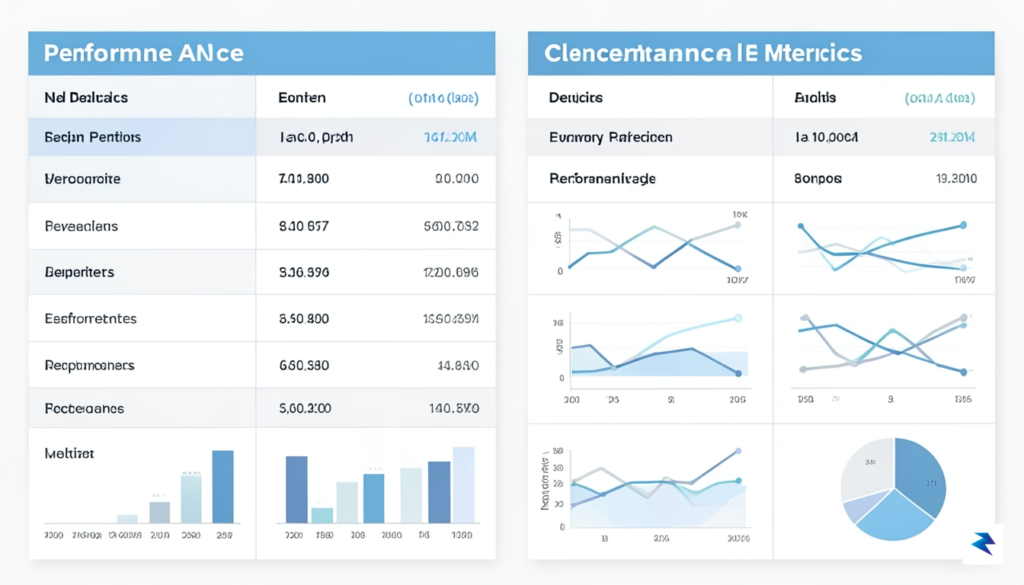
The landscape of large language models has long been dominated by the technological prowess of OpenAI’s GPT-4o and Anthropic’s Claude 3.5. These models have set the global benchmark for complex reasoning, nuanced creative writing, and sophisticated code generation. However, Moonshot AI’s Kimi has emerged as a disruptive force that challenges this hegemony, particularly through its specialized architectural focus on long-context processing. While GPT-4o remains the versatile “Swiss Army knife” of the AI world, excelling in multi-modal interactions and rapid logical deduction, Kimi has carved out a unique niche by prioritizing the ingestion and synthesis of massive document sets with remarkable precision.

When evaluating performance, the distinction between these models becomes clear through their intended applications. Claude 3.5 is widely lauded for its human-like tone and superior ability to handle ethical nuance and sophisticated stylistic instructions, making it the preferred tool for professional creative tasks. Conversely, Kimi has demonstrated an exceptional aptitude for information retrieval, often outperforming its Western counterparts when tasked with distilling insights from hundreds of thousands of words of technical manuals, legal filings, or research papers. Kimi’s ability to “remember” and cross-reference information across expansive document windows allows users to engage in a level of data-heavy analysis that often exhausts the context buffers of smaller or less optimized models.
“While American models define the current ceiling for reasoning and creative output, Kimi is successfully redefining the floor for how efficiently AI can navigate and synthesize dense, real-world data repositories.”
The user experience design also highlights the divergent strategies of these companies. OpenAI and Anthropic have focused on building cohesive ecosystems—integrating their models into robust developer platforms, enterprise API suites, and creative workstations. Kimi, meanwhile, offers a streamlined interface that feels more like a precision-engineered research assistant. For a general user, the choice often boils down to the specific objective: if the goal is to write a polished marketing campaign or debug a complex software architecture, GPT-4o or Claude 3.5 remains the gold standard. However, for users who need to conduct deep-dive research into massive datasets or quickly parse through regulatory changes in the Chinese market, Kimi provides a level of speed and contextual accuracy that is currently difficult to replicate elsewhere.
Ultimately, the rise of Kimi suggests that the future of AI will not be defined by a single winner-take-all model, but by a landscape of specialized intelligence. While US-based models continue to lead in general-purpose intelligence and reasoning capabilities, Kimi’s success signals that there is massive demand for models optimized for long-form synthesis. As these technologies evolve, the competitive friction between these entities will likely accelerate innovation, pushing all platforms toward better efficiency, lower latency, and more reliable factual grounding.

The arrival of Moonshot AI’s Kimi represents far more than a mere milestone in natural language processing; it serves as a potent geopolitical signal that the technological decoupling between the United States and China is fostering unexpected resilience rather than stagnation. For years, Washington has utilized stringent export controls to restrict Chinese access to high-end graphics processing units, such as Nvidia’s H100s, aiming to stifle the development of advanced foundation models. However, the emergence of Kimi demonstrates that China’s AI ecosystem is rapidly pivoting toward a strategy of “resourceful innovation.” By optimizing training methodologies to extract maximum performance from constrained hardware, Chinese startups are proving that architectural ingenuity can, at least partially, compensate for the lack of cutting-edge silicon.

This shift toward extreme efficiency is becoming a cornerstone of China’s domestic self-reliance strategy. As access to the global supply chain for advanced semiconductors becomes increasingly politicized, Chinese firms are forced to prioritize algorithmic elegance over the “brute force” scaling laws that have dominated Silicon Valley’s approach. By mastering techniques like model pruning, quantization, and more efficient transformer architectures, companies like Moonshot AI are successfully narrowing the performance gap with Western competitors. This is not merely a technical adjustment; it is a fundamental reconfiguration of the global AI hierarchy. It suggests that the “moat” created by American hardware dominance may be shallower than policymakers originally anticipated.
The true measure of progress in the global AI race is no longer just about who possesses the most chips, but who can achieve the most intelligence with the resources they have on hand.
Furthermore, the deployment of Kimi forces a re-evaluation of the long-term effectiveness of sanctions. If Chinese startups can maintain parity—or even challenge American models—while operating under restricted hardware access, the geopolitical leverage of export controls may diminish over time. This creates a challenging paradox for Washington: as China doubles down on indigenous innovation to overcome these obstacles, it accelerates its transition toward a fully autonomous technology stack. Ultimately, the success of platforms like Kimi underscores that the competition for AI supremacy is evolving into a contest of systemic adaptation, where domestic policy, engineering adaptability, and strategic focus are just as critical as the speed of a processor.

While Moonshot AI’s Kimi has captured headlines for its impressive performance, the company faces a complex, uphill battle regarding the long-term sustainability of its infrastructure. The most immediate obstacle is the widening “compute gap” caused by international export restrictions on high-end semiconductors. Access to the advanced GPUs necessary to train and run massive large language models remains a precarious bottleneck for Chinese firms. Without a steady supply of cutting-edge silicon, developers are forced to rely on older, less efficient hardware, which significantly slows the pace of innovation and increases the cost per training cycle compared to their American counterparts who enjoy unfettered access to the latest chips from companies like NVIDIA.

Beyond the hardware constraints, the path to maturity for Kimi is complicated by the unique regulatory environment in China. Compliance in this jurisdiction is not merely a legal checkbox; it requires constant, rigorous alignment with strictly enforced guidelines regarding AI-generated content. These regulatory frameworks necessitate that developers build sophisticated, localized filtering mechanisms that can interpret and adhere to shifting government standards in real-time. Maintaining this level of oversight without compromising the model’s creative utility or conversational fluency is a delicate balancing act that requires heavy investment in human and algorithmic supervision, adding a layer of operational friction that Western competitors do not typically encounter at this scale.
Furthermore, the financial model of offering advanced AI services for “free-to-use” creates a significant sustainability challenge. While this strategy is essential for rapidly accumulating the diverse, localized data pools required to refine the model, it is inherently expensive to maintain. The massive energy consumption associated with hosting and serving millions of daily queries—coupled with the cost of maintaining high-quality, localized training data—creates a persistent drain on capital. For a startup like Moonshot AI to survive, it must eventually navigate the difficult transition from a user-growth-focused entity to a profitable commercial platform. This will likely require them to find a sustainable balance between high-end enterprise monetization and the operational costs of supporting a massive, free-tier consumer base.
Success in the global AI race will not be defined solely by the intelligence of the model, but by the resilience of the ecosystem supporting it.
Finally, the challenge of localized data availability cannot be understated. While Kimi excels at processing Chinese-language nuances, the global AI landscape is increasingly moving toward multilingual, multimodal integration. Moonshot AI must continue to curate vast, high-quality datasets that remain relevant in a rapidly changing digital landscape, all while operating within a firewall that limits their ability to scrape the broader, interconnected global web. Bridging this data divide while scaling infrastructure under strict regulatory and hardware limitations represents the true test of Moonshot AI’s longevity in an industry dominated by massive, well-resourced incumbents.

The emergence of Kimi serves as a definitive signal that the era of American AI hegemony is transitioning into a more complex, multipolar landscape. For years, the narrative surrounding generative artificial intelligence was centered almost exclusively on Silicon Valley giants, creating an impression that the frontier of machine intelligence was a private race between a handful of US-based corporations. By successfully scaling long-context window capabilities and demonstrating high-level reasoning, Moonshot AI has effectively shattered this monopoly on innovation, proving that world-class breakthroughs can—and will—originate from every corner of the globe. This shift is not merely a regional success story; it is a fundamental transformation of the competitive dynamics that drive technological progress.
As we look toward the next five years, the global AI ecosystem is poised to undergo a rapid diversification. We can anticipate a wave of specialized competition where models are no longer judged solely on their general knowledge, but on their ability to integrate into unique cultural, linguistic, and regulatory frameworks. The success of Kimi suggests that China’s domestic focus on dense, high-utility applications will force American developers to rethink their own product roadmaps, likely leading to more efficient, cost-effective, and deeply specialized tools. This rivalry will inevitably accelerate the pace of research, as the pressure to maintain technical parity pushes both sides to solve persistent challenges in model reliability, energy efficiency, and data sovereignty.
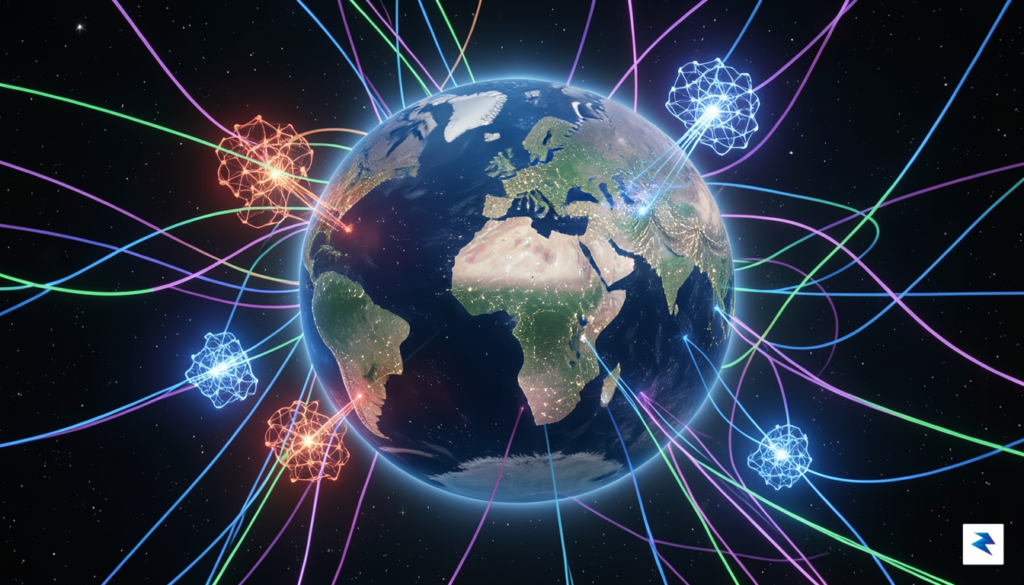
The competition between East and West will likely shift from a race for sheer scale to a battle for integration, where the most successful models are those that can solve the most intricate problems for local industries and individual users alike.
Ultimately, this intensifying rivalry acts as a catalyst for the entire human race, as the competition for supremacy incentivizes a faster cadence of release cycles and greater investment in fundamental research. While geopolitical tensions may complicate the free exchange of hardware and talent, the intellectual momentum behind AI is now too distributed to be contained by borders. We are entering a future where the diversity of AI tools will reflect the diversity of the world itself, providing users with a wider array of options to tackle complex challenges. As these systems continue to mature, the focus will move away from which nation holds the lead and toward which models can most ethically and effectively augment human creativity and productivity on a global scale.
You must be logged in to post a comment.