Xbox Price Hike Incoming: How to Lock in Current Savings Now
Understanding the Xbox Price Hike: What You Need to Know Microsoft has officially confirmed a significant adjustment to the retail pricing of…

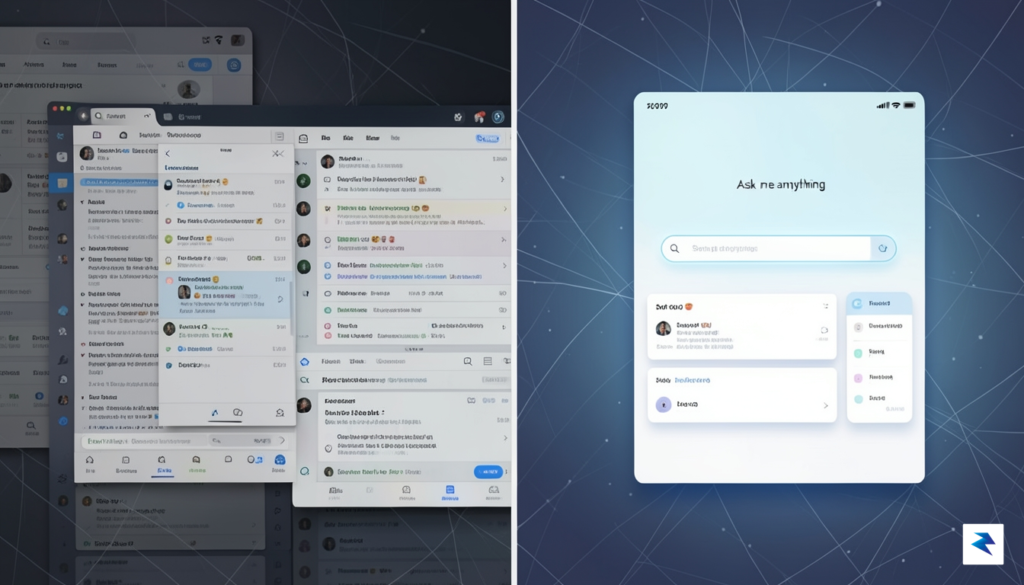
The modern digital workspace is currently undergoing a profound transformation, subtly yet fundamentally reshaping how we interact with information and manage our daily tasks. For years, our productivity has been tethered to traditional tools, chief among them the email client, which served as the central hub for communication, scheduling, and task delegation. While foundational, these tools increasingly demand constant human intervention, forcing us to act as the primary processors of every incoming message, meeting request, and notification. This reliance on manual oversight has inadvertently created a bottleneck, hindering true efficiency and diverting valuable cognitive resources towards routine administrative chores.
Indeed, the phenomenon of “inbox fatigue” has become an all too common complaint across professional landscapes. We’ve all experienced the relentless deluge of emails that demand immediate attention, the mental gymnastics required to triage messages, respond appropriately, file away relevant information, and meticulously follow up on pending items. This constant vigilance, coupled with the sheer volume of digital communication, doesn’t just consume time; it drains mental energy, diminishes focus, and often leaves professionals feeling overwhelmed rather than productive. The traditional model, where every piece of digital communication requires a human touch for processing, is simply not sustainable in an era defined by rapid information flow and complex, interconnected workflows.
This growing inefficiency is precisely what’s driving an industry-wide pivot towards autonomous, AI-driven agents. We are rapidly moving into an era where artificial intelligence acts as the primary interface for our communication, stepping in to alleviate the burden of constant manual email management. These intelligent agents are designed not merely to assist, but to proactively handle a vast array of tasks that traditionally fall on human shoulders. From intelligently filtering out low-priority messages and summarizing lengthy threads to drafting initial responses and autonomously scheduling meetings, AI agents are revolutionizing how we interact with our digital environment by taking on the heavy lifting of information processing and communication orchestration.
The true power of these emerging agents lies in their ability to operate with a degree of foresight and integration previously unimaginable. They are evolving beyond simple automation, demonstrating capabilities such as identifying actionable items within conversations, proactively delegating tasks to relevant teams or individuals, and even integrating seamlessly across disparate platforms to create a unified workflow. This means less time spent sifting through emails for critical details and more time dedicated to strategic thinking, creative problem-solving, and meaningful human collaboration. The shift empowers individuals to delegate cognitive load to an intelligent system, allowing them to focus on the higher-order tasks that truly require human ingenuity.
Ultimately, this evolution signifies a fundamental redefinition of productivity tools: from passive receptacles of information to active, intelligent collaborators. Instead of users being the central processing unit for every byte of data that enters their digital sphere, AI agents are becoming the proactive orchestrators, anticipating needs and streamlining processes without constant user input. This transition is not merely about adopting new software; it’s about embracing a new philosophy of work where technology assumes more responsibility for administrative overhead, thereby reclaiming precious time and cognitive energy for more impactful endeavors. It represents a necessary and welcome step forward in our quest for a more efficient, less fatiguing, and ultimately more human-centric digital existence.
Notion’s decision to discontinue its standalone Notion Mail product is far more than a simple product retirement; it represents a significant and calculated strategic pivot. Rather than signaling a retreat, this move underscores the company’s aggressive refocusing on its core competency: evolving the Notion workspace into a powerful, AI-driven ecosystem. The shift marks an intentional evolution from a versatile document-centric platform to an integrated environment where intelligent agents facilitate and automate workflows, making a separate, traditional email client increasingly redundant within their grander vision.
Maintaining a separate, full-fledged email service demands substantial resources across engineering, design, and customer support. For a company like Notion, with ambitious plans in the rapidly evolving artificial intelligence landscape, every resource allocation decision is critical. By sunsetting Notion Mail, the company is strategically re-channeling these vital resources directly into the development and enhancement of its foundational AI infrastructure and agent architecture. This consolidation allows Notion to accelerate the integration of advanced AI capabilities throughout its primary workspace, ensuring that their competitive edge lies in the intelligence and automation embedded within the platform itself, rather than in a disparate email solution.
The strategic rationale is clear: instead of building a better email app, Notion aims to make email management and communication an intrinsic, intelligent function of its workspace. This means that future interactions currently handled by a standalone email client will be seamlessly integrated into the Notion environment, powered by AI agents designed to understand context, summarize information, draft responses, and even proactively manage tasks derived from communications. This deeper integration promises a more cohesive and less fragmented user experience, where communication isn’t a separate silo but a natural extension of project management, knowledge base, and task execution.
For current users of Notion Mail, the impending closure naturally raises questions about their workflow and data. Notion has committed to providing a clear and supportive transition path. Users are advised to migrate their existing emails and contacts to alternative services well in advance of the final shutdown date. Detailed instructions and recommendations for exporting data will be made available directly within the Notion Mail application and through official support channels. This proactive approach ensures that while the product is being retired, the impact on individual users is minimized, allowing them to smoothly transition their communication workflows to other preferred platforms or prepare for Notion’s integrated AI communication features.
Key Takeaway: Notion’s decision is a strategic leap towards a fully integrated, AI-powered workspace, where traditional email functions will be reimagined and handled by intelligent agents directly within the platform, rather than by a separate application.
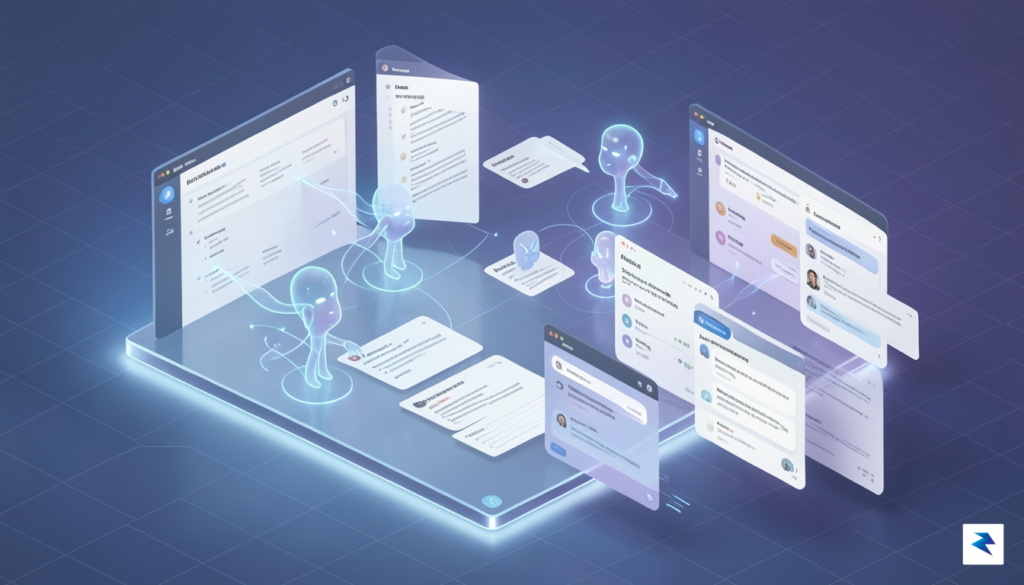
The evolution of our digital workflows is experiencing a profound shift, moving beyond mere information display towards proactive assistance. While traditional inbox software and productivity applications have long served as static interfaces for managing data, AI agents represent a fundamentally different paradigm. These aren’t just smarter apps with improved filtering or notification systems; they are autonomous entities designed to interpret user intent, execute complex actions across various platforms, and synthesize information into actionable insights, effectively transforming how we interact with our digital environment.
In contrast to a standard mail client, which primarily acts as a repository and viewer for your communications, an AI agent takes on the role of a personal delegate. For instance, instead of merely showing you an email about an upcoming meeting, an AI agent can interpret the email’s content, cross-reference it with your calendar, identify a conflict, and proactively suggest alternative times to all parties, or even draft a polite decline. This goes far beyond basic automation; it involves understanding context, making decisions based on predefined parameters and learned preferences, and performing multi-step tasks that would typically require significant manual effort. Consequently, users are freed from the granular, time-consuming aspects of task management, allowing them to redirect their focus to more strategic and creative endeavors.
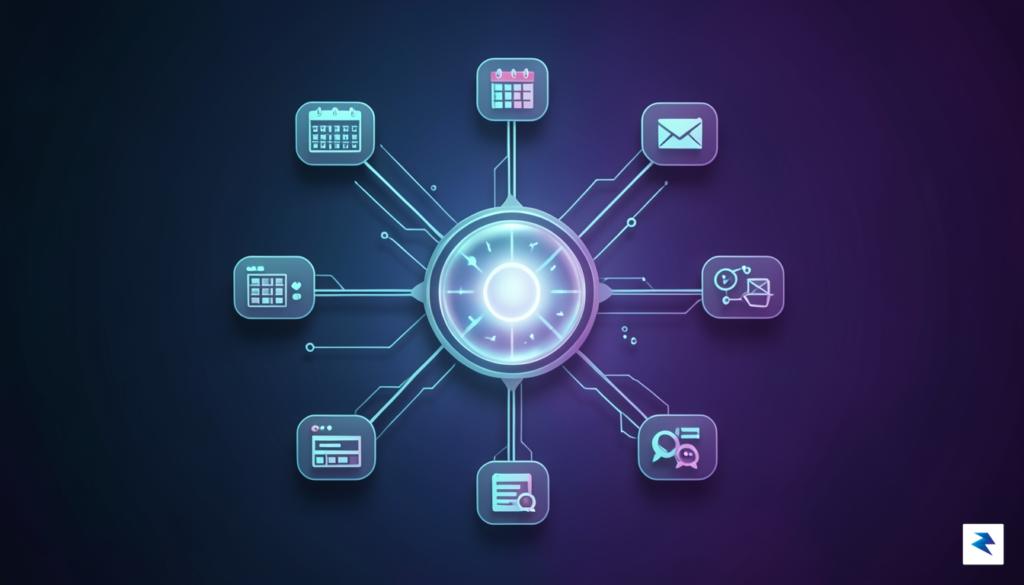
The mechanics behind this delegation are sophisticated, relying on advanced natural language processing (NLP) to understand human commands and machine learning to adapt to individual user patterns over time. These agents don’t just process isolated pieces of information; they connect disparate data points from various applications – your email, calendar, project management tools, and even external web sources – to build a holistic understanding of your workflow. The result is a synthesized output that isn’t just a collection of data, but a curated, actionable summary or a completed task, empowering users to make high-level decisions without getting bogged down in the operational minutiae. This shift profoundly changes the user’s role from an active executor to a high-level decision-maker and overseer.
Naturally, the idea of delegating significant access to an AI raises critical questions about security and privacy. Developers of these advanced agents are acutely aware of these concerns, implementing robust encryption protocols, strict access controls, and transparent user permission frameworks. Many solutions now prioritize on-device processing where possible, or employ anonymization techniques for cloud-based operations, ensuring sensitive data remains protected. Moreover, users typically maintain granular control over what information an AI agent can access and which actions it can take, building a necessary layer of trust and accountability into the system. It’s a balance between unparalleled convenience and ironclad data protection, with user consent always at the forefront.
The tangible productivity gains observed in professional environments are substantial and transformative. Professionals are finding themselves saving hours daily by offloading routine yet essential tasks: triaging overflowing inboxes, drafting initial responses, scheduling complex meetings across multiple time zones, compiling concise daily briefings, or even conducting preliminary research for reports. This liberation from administrative burden allows individuals to allocate more time to deep work, strategic planning, client engagement, and innovative problem-solving, areas where human creativity and critical thinking are indispensable. Ultimately, by automating the mundane and synthesizing the complex, AI agents are not just optimizing workflows; they are fundamentally enhancing human potential within the modern workplace.

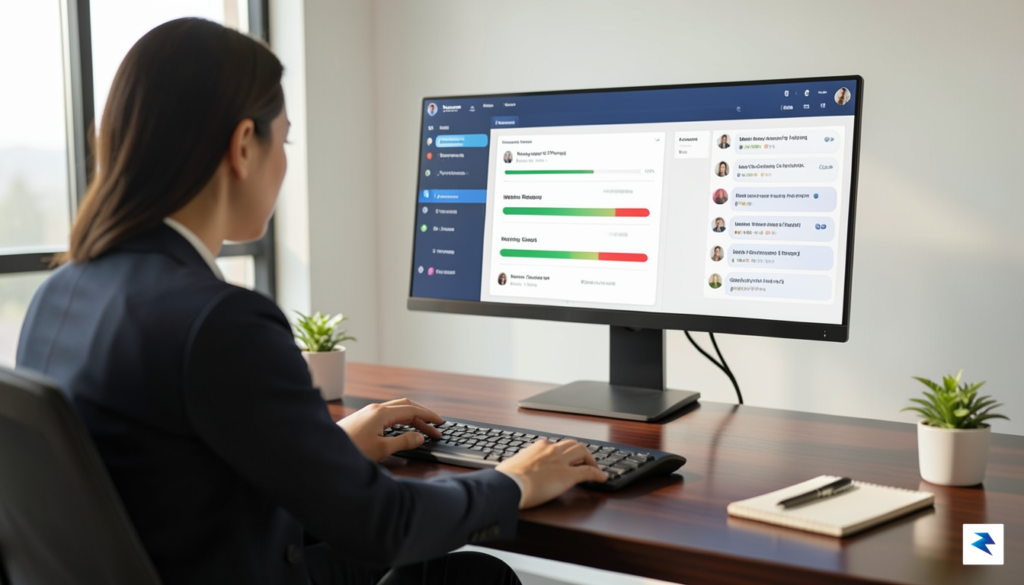
The sunsetting of Notion Mail might initially feel like a disruption for those who integrated their email workflow directly into Notion, but for the dedicated power user, this pivot represents a significant strategic evolution, not a retraction. This move signals a deeper, more cohesive integration of email data directly within the Notion ecosystem, driven by intelligent agents rather than a standalone mail client. The underlying goal is to transform email from a passive inbox into an active data source that fuels your projects and knowledge base, allowing your communications to become actionable insights within your workspace.
For current Notion Mail users, the immediate concern is transitioning existing email data. Notion is providing clear guidelines and tools to ensure a smooth migration, allowing users to export their mailboxes to other platforms or download their data for archival purposes. It is crucial to prioritize identifying critical emails and workflows that previously relied on Notion Mail, then systematically move them to a new dedicated email client like Gmail, Outlook, or Superhuman, ensuring no vital information is lost in the process. The company typically offers a grace period for data export, so checking official announcements for deadlines is essential for safeguarding your historical communications and ensuring a seamless transition.
Looking forward, the disappearance of the dedicated inbox interface is not about abandoning email; rather, it’s about revolutionizing how email interacts with your workspace. Notion’s future vision centers on AI agents that can intelligently parse, summarize, and extract actionable insights from your emails, directly integrating them into your Notion pages and databases. Imagine an intelligent agent that automatically flags project updates, creates tasks from client requests, or adds meeting notes to relevant database entries, all without you ever needing to open a separate email application. This transformative approach ensures that your email data becomes a dynamic, contributing component of your knowledge management, rather than remaining as siloed information.
Instead of a traditional inbox, the new integration will focus on sophisticated data ingestion and automated action triggering. Users will likely set up forwarding rules or connect their primary email accounts to Notion through secure APIs, allowing these AI agents to monitor incoming messages for predefined keywords, sender patterns, or specific content types. Once identified, relevant email content—or concise summaries of it—can be seamlessly pulled into Notion pages, populate database entries, or even create new items, offering a powerful way to keep project documentation, client communications, and personal tasks synchronized. This fundamentally alters the traditional workflow from passive consumption to active data utilization, making your Notion workspace the central hub where email *actions* are managed, even if the email *reading* still occurs elsewhere.
This agent-centric approach promises significant gains in productivity and fosters a more cohesive workflow. By automating the extraction of key information and the creation of tasks or database entries, users can drastically reduce the time spent sifting through emails and manually transferring data between applications. The ultimate goal is to elevate email from merely a communication channel to a potent data stream, making every relevant piece of information immediately actionable and integrated within your Notion environment. Ultimately, this strategic pivot aims to deepen Notion’s role as the ultimate connected workspace, where even external communications seamlessly contribute to your organized knowledge and operational efficiency, empowering you to achieve more.
As we increasingly hand over the reins of our correspondence to sophisticated AI, a fundamental question emerges: how do we effectively balance the undeniable efficiency gains with the irreplaceable essence of human connection? Communication is, at its heart, a deeply human endeavor, infused with nuance, empathy, and context that machines are only just beginning to grasp. The challenge isn’t merely about drafting emails faster or scheduling meetings more smoothly; it’s about preserving authenticity and ensuring that our interactions remain genuinely impactful, rather than becoming a series of sterile, automated exchanges.
This paradigm shift necessitates a robust embrace of “human-in-the-loop” workflows, where AI acts as a powerful co-pilot rather than a solitary pilot. In such systems, AI can efficiently handle the initial heavy lifting—drafting responses, summarizing information, or identifying key action items—but the final review and strategic refinement remain firmly in human hands. This collaborative approach allows us to leverage AI for speed and consistency, while still ensuring that critical messages are imbued with the appropriate tone, cultural sensitivity, and personal touch that only a human can truly provide. It’s about creating a synergistic relationship where technology augments our capabilities without diminishing our intrinsic value in the communication process.
Maintaining a distinct personal voice amidst increasing automation requires deliberate strategies and conscious effort. One effective method involves training AI models with your specific writing style, preferred phrases, and even your unique brand of humor, creating a more personalized output that feels genuinely “you.” Furthermore, establishing clear guidelines for when AI should suggest a response versus when it should flag a message for direct human attention is crucial; complex or emotionally charged communications almost always benefit from direct human engagement. Ultimately, fostering trust in these AI-managed communication systems will depend heavily on transparency—both with the AI itself, understanding its capabilities and limitations, and with our recipients, who may subtly or overtly sense when they are interacting with an automated agent.
Looking ahead, the future of communication will likely see AI becoming even more adept at understanding context and sentiment, moving beyond simple keyword recognition to more sophisticated emotional intelligence. However, even as AI capabilities grow, the human role will evolve, shifting from manual execution to strategic oversight, ethical stewardship, and the cultivation of truly meaningful relationships. Our focus will increasingly be on ensuring that these powerful tools serve to deepen our connections and enhance our ability to communicate effectively, rather than inadvertently creating barriers or diluting the very essence of human interaction. The goal is not just faster communication, but *better* communication, enriched by technology yet grounded in our shared humanity.
You must be logged in to post a comment.