
Japan’s Crypto Pivot: What the New Financial Asset Classification Means for Investors
The Shift: Redefining Crypto in the Japanese Financial Landscape For years, Japan has occupied a unique position as a pioneer in the global…


The intersection of private enterprise and public service has long served as a focal point for debate within the American political landscape, raising fundamental questions about the integrity of democratic institutions. Historically, the expectation for those ascending to the highest office in the land has been a clean break from personal business ventures, typically achieved through divestment or the establishment of rigorous blind trusts. This tradition was not merely a matter of convenience; it was a deliberate structural safeguard designed to ensure that a leader’s decision-making process remains unclouded by the potential for personal financial gain, thereby prioritizing the national interest above all else.
In an era defined by hyper-globalization, the complexity of these financial entanglements has reached an unprecedented scale. When a sitting official maintains significant, ongoing economic links to foreign entities, the challenge shifts from a simple matter of personal wealth to a complex issue of national security and diplomatic transparency. Because modern global companies often operate at the behest of, or in close coordination with, their home governments, any financial transaction—regardless of its stated purpose—can inadvertently blur the lines between private profit and statecraft. This ambiguity creates a persistent perception of vulnerability, where domestic policy decisions or international trade stances might be scrutinized for hidden, self-serving motives.

The fundamental challenge in modern governance is not just avoiding actual corruption, but maintaining the public trust by eliminating the very appearance of a conflict of interest in an increasingly interconnected global economy.
Furthermore, the sensitivity of these arrangements is magnified when the foreign entity involved is simultaneously navigating active trade investigations or regulatory hurdles within the United States. Such scenarios force the public to grapple with the uncomfortable possibility that foreign companies might use financial channels to curry favor with those in power. While defenders often argue that such payments are standard business practice, the reality is that the office of the presidency carries a unique weight that transcends standard commercial transactions. When the boundaries between private financial interests and public governance become porous, it necessitates a higher level of scrutiny, as the potential for foreign influence—or the appearance thereof—threatens to undermine the foundational principles of accountability that sustain the American democratic experiment.

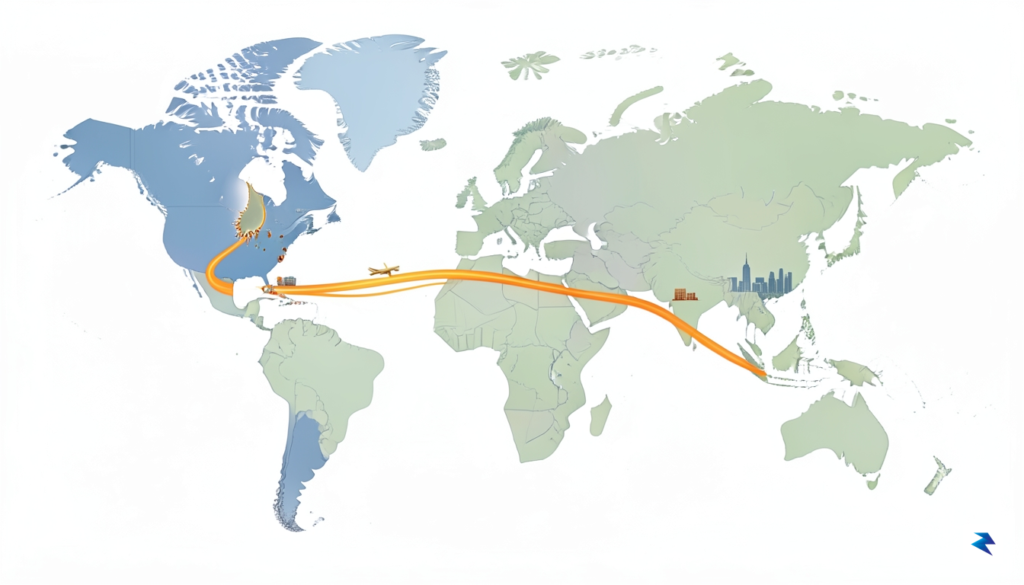
Recent investigative findings have brought to light a significant financial transaction involving a South Korean manufacturing firm and former President Donald Trump, totaling approximately $2 million. The payment, which occurred during a period when the company was navigating intense scrutiny from United States trade regulators, has reignited long-standing debates regarding the intersection of private business interests and high-level political influence. By examining the chronology of these events, observers can better understand the complexities inherent in managing international commercial relationships while an individual occupies or seeks to influence the highest levels of government office.
The company in question, a major player in the aluminum sector, was grappling with active trade investigations initiated by federal agencies at the time the funds were transferred. These investigations generally involve allegations of unfair pricing or the circumvention of trade duties, matters that carry immense financial implications for foreign entities seeking access to the American market. When a foreign corporation with significant regulatory exposure engages in a large-scale financial transaction with a domestic political figure, it naturally invites scrutiny from ethics watchdogs and policy analysts who monitor the potential for conflicts of interest. The timing of this payment, while ostensibly tied to commercial agreements, creates a factual backdrop that requires careful analysis of how global business dealings interact with domestic trade policy.
From a legal perspective, the framework governing such payments is rooted in a blend of disclosure requirements and international trade laws. While private citizens are generally free to conduct business as they see fit, the unique position of a former president—and the ongoing nature of international trade disputes—adds a layer of complexity to the concept of transparency. Critics argue that without rigorous disclosure, it remains difficult to ascertain whether such payments represent standard business transactions or if they carry an implicit expectation of political advocacy or regulatory leniency. Proponents of clearer oversight mechanisms suggest that these instances highlight the necessity for comprehensive reporting standards that apply to former officials, ensuring that their private financial activities do not inadvertently undermine the integrity of national trade policy.
The core challenge in contemporary governance lies in distinguishing between legitimate international commerce and the influence of private financial interests on public regulatory outcomes.
Ultimately, this case serves as a poignant reminder of the evolving standards for accountability in an interconnected global economy. As businesses continue to operate across borders, the need for clear, objective reporting on financial ties becomes paramount for maintaining public trust. By breaking down the components of this $2 million transaction, stakeholders can identify the broader patterns of risk that arise when private profit and public policy mandates overlap, reinforcing the importance of transparency as a safeguard against potential conflicts of interest in the international arena.

The core of ethical governance in a democratic society rests upon a foundational principle: the public must have absolute confidence that its leaders are acting in the interest of the citizenry rather than for personal or private gain. When a high-ranking official receives substantial payments from a foreign entity, particularly one simultaneously navigating the complexities of a trade investigation, it creates a precarious intersection between individual financial interests and national policy. This creates a perception of impropriety that can linger long after the initial transaction, regardless of whether a specific policy change was ever requested or enacted. The very appearance of such a conflict forces the public to question whether diplomatic leverage is being compromised by the weight of personal balance sheets.

This scrutiny is deeply rooted in the Emoluments Clause of the U.S. Constitution, which was designed by the Framers specifically to prevent foreign influence from infiltrating the highest levels of government. While historical interpretations of this clause have often been debated in legal circles, its modern political evolution centers on the necessity of transparency and the prevention of corruption. By prohibiting the acceptance of gifts or payments from foreign states, the framers aimed to ensure that the executive branch remained insulated from the enticements of foreign wealth. In an era of globalized business, the application of this clause becomes increasingly complex, as private entities often act as conduits for national interests, effectively blurring the lines between corporate commerce and geopolitical strategy.
The true cost of foreign financial ties is often measured not in direct policy shifts, but in the erosion of public trust, which serves as the bedrock of any stable democratic institution.
Furthermore, the impact of these financial ties on public perception cannot be overstated. Even if a leader maintains that their private business dealings are completely divorced from their public duties, the mere existence of these payments provides a powerful narrative for critics and international observers alike. This dynamic creates a “perception gap,” where the intent of the official is overshadowed by the suggestive nature of the transaction. When a company facing regulatory or trade scrutiny engages in significant financial exchanges with a leader, it inherently invites suspicion that the payment serves as a mechanism for influence. Consequently, the burden of proof shifts to the official to demonstrate that their decisions remain entirely independent, a position that is inherently difficult to defend in a polarized political climate.
Ultimately, the ethical implications of such ties suggest that true leadership requires not only the avoidance of wrongdoing but also the proactive avoidance of situations that invite doubt. By maintaining clear boundaries between personal financial gain and the functions of the state, public officials protect the integrity of the institutions they serve. When these boundaries become porous, the resulting uncertainty can complicate domestic economic policy and strain international diplomatic relationships, leaving the public to wonder whose interests are truly being prioritized at the negotiation table.

The challenge of monitoring the financial portfolios of high-level political figures has evolved into a monumental task, increasingly complicated by the intricate web of global commerce. Current oversight mechanisms, such as financial disclosure reports and ethics agreements, were largely designed for a domestic era where business interests were easier to compartmentalize. However, in our modern, hyper-globalized economy, executive wealth is often tied to multinational corporations, foreign investments, and opaque holding companies that transcend simple regulatory scrutiny. This makes it exceptionally difficult to establish clear, enforceable boundaries between personal enrichment and the impartial execution of executive responsibility.

When a substantial payment from a foreign entity—such as the recent case involving a South Korean company currently under trade investigation—is directed toward an official’s business interests, it highlights a profound systemic vulnerability. Existing rules often rely on the honor system or voluntary divestment, which frequently prove insufficient when the lines between a private citizen’s business holdings and their public duty become blurred. Without a more rigorous, centralized framework for auditing these connections in real-time, the public is often left to guess whether policy decisions are being influenced by national interest or the private financial trajectory of those in power.
“The integrity of democratic institutions depends not just on the absence of corruption, but on the visible, verifiable independence of its leaders from private financial pressure.”
To address these shortcomings, policy experts and transparency advocates are increasingly calling for fundamental reforms. Potential solutions include:
Ultimately, moving beyond the current landscape of conflict of interest requires a shift toward proactive, rather than reactive, governance. As the global financial system grows more interconnected, our ethical and legal frameworks must keep pace. By implementing more robust disclosure and enforcement mechanisms, we can better ensure that the machinery of government remains focused on the public good rather than private gain. Ensuring this transparency is not merely a bureaucratic preference; it is a vital prerequisite for maintaining public trust in the institutions that define our society.
The core of this controversy extends far beyond a singular transaction; it strikes at the fundamental contract between the American public and the highest office in the land. When financial boundaries become porous, allowing personal enrichment to coincide with pending trade investigations, the integrity of the presidency is placed under an intense and unforgiving microscope. This erosion of clear separation between private enterprise and national policy creates a persistent shadow of doubt, leading citizens to question whether policy decisions are being crafted for the benefit of the American populace or for the enrichment of those in power. Over time, such skepticism does not merely affect the reputation of an individual leader, but slowly degrades the perceived legitimacy of the democratic institutions themselves.
Investigative journalism serves as the essential guardrail in this ecosystem, acting as a diagnostic tool that exposes the hidden threads connecting international corporate interests to domestic political maneuvering. Without the rigorous inquiry of reporters and researchers, these financial intersections might remain obscured, shielded by layers of complex corporate filings and opaque personal accounts. The necessity of this transparency cannot be overstated, as it provides the electorate with the raw data required to hold officials accountable for potential conflicts of interest. By illuminating these paths, the press reinforces the democratic expectation that the presidency must remain an office defined by duty to the public rather than the pursuit of commercial gain.
The health of a democracy is measured not by the rhetoric of its leaders, but by the transparency of their actions and the robustness of the mechanisms designed to keep them accountable to the people they serve.
Looking toward the long-term, the implications for the presidency are profound, suggesting a need for more rigorous financial disclosure standards that evolve alongside the modern complexities of global business. If the public perceives that the mechanisms for oversight are insufficient, the result is a cynical detachment that threatens civic engagement and political stability. Maintaining a healthy democracy requires more than just the rule of law; it requires the active, transparent, and ethical conduct of its stewards to ensure that foreign interests never supersede the needs of the nation. As these matters continue to unfold, the ongoing dialogue regarding financial ethics will likely become a benchmark for future debates on how to protect the sanctity of governance in an increasingly interconnected and commercialized global environment.
You must be logged in to post a comment.