
Why the Strait of Hormuz Attack Is Sending Shockwaves Through Global Markets
The Strategic Gravity of the Strait of Hormuz The Strait of Hormuz is far more than a mere geographical feature; it functions as the…
For years, the landscape of generative artificial intelligence has been dominated by the brute-force efficiency of transformers and the iterative refinement of diffusion models. While these architectures have produced breathtaking visual outputs, they are tethered to significant structural drawbacks. They rely on massive datasets and immense computational power, functioning essentially as “black boxes” that predict pixels based on statistical probability rather than understanding the underlying structure of the visual world. This reliance on high-dimensional statistical inference not only demands astronomical energy costs but also obscures the internal logic of how an image is actually composed, leading to models that are notoriously difficult to interpret or constrain.
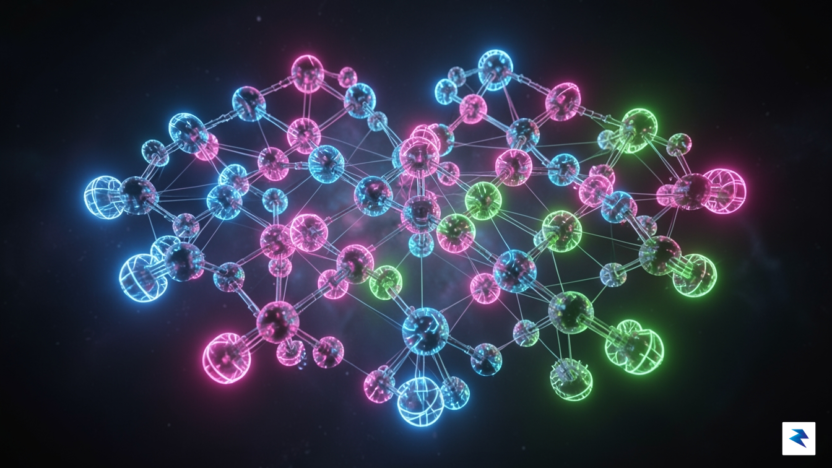
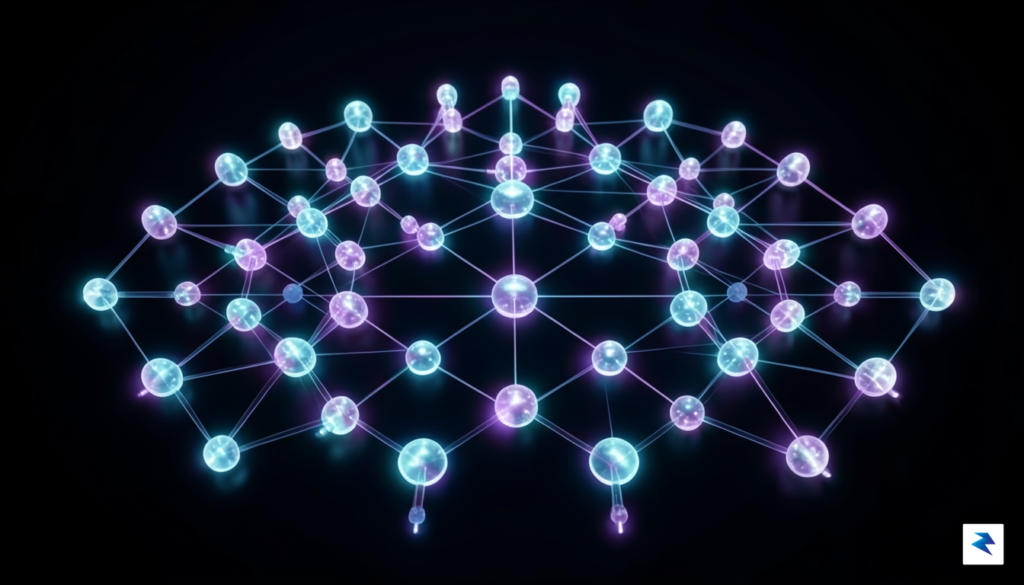
Un-0 emerges as a radical departure from this statistical status quo, pivoting toward the elegant, predictable laws of classical physics. Instead of treating image generation as a game of high-stakes pattern matching, Un-0 views the creation of visual content as a dynamic physical process driven by coupled oscillators. In this framework, the components of an image are modeled as individual oscillating systems—much like pendulums or vibrating strings—that interact with one another to reach a state of equilibrium. By shifting the focus from static probability distributions to the rhythmic synchronization of physical elements, Un-0 introduces a paradigm where images “settle” into existence rather than being forced into shape by sheer raw compute.
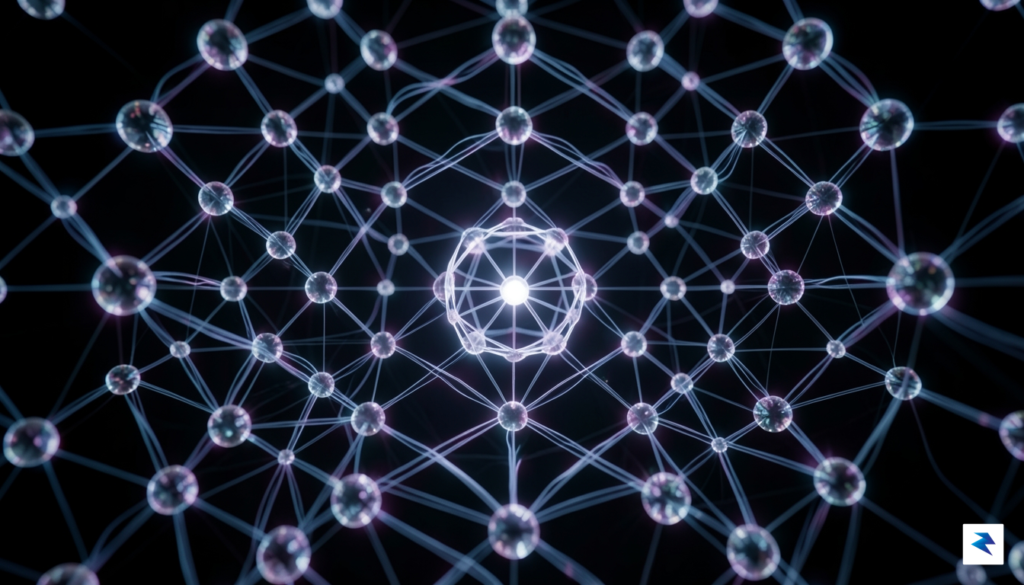
The core philosophy behind this approach is that visual coherence is less about memorizing millions of images and more about understanding the harmonic relationships between parts. When oscillators are coupled, they naturally move toward synchronization, a phenomenon observable in everything from fireflies blinking in unison to the mechanical regularity of clockwork. By harnessing these natural tendencies, Un-0 can synthesize complex visual structures with a level of organic fluidity that traditional neural networks often struggle to replicate without extensive training.
Unlike standard AI models that rely on probabilistic guesswork, Un-0 treats image synthesis as a self-organizing physical system, fundamentally changing how we approach the relationship between digital art and natural dynamics.
This transition represents more than just a technical tweak; it is a fundamental reimagining of what generative AI can be. By moving away from the “black box” nature of current models, Un-0 offers a more transparent and computationally sustainable path forward. As we move toward systems that mimic the laws of physics, we may find that the most complex visual tasks can be solved not by building larger and more expensive neural networks, but by better understanding the rhythmic, mechanical simplicity of the world around us.
To understand the paradigm shift presented by Un-0, one must first look at the traditional diffusion process. Standard generative models operate by introducing Gaussian noise to an image and then painstakingly reversing that process through thousands of iterative steps. In this framework, the model acts as a sculptor, gradually chipping away at the static to reveal the underlying form. However, this is computationally intensive and mathematically rigid, requiring the system to “predict” the noise at every single stage of the refinement process. Un-0 moves away from this subtractive philosophy, opting instead for a generative approach rooted in the principles of collective dynamics and physical equilibrium.
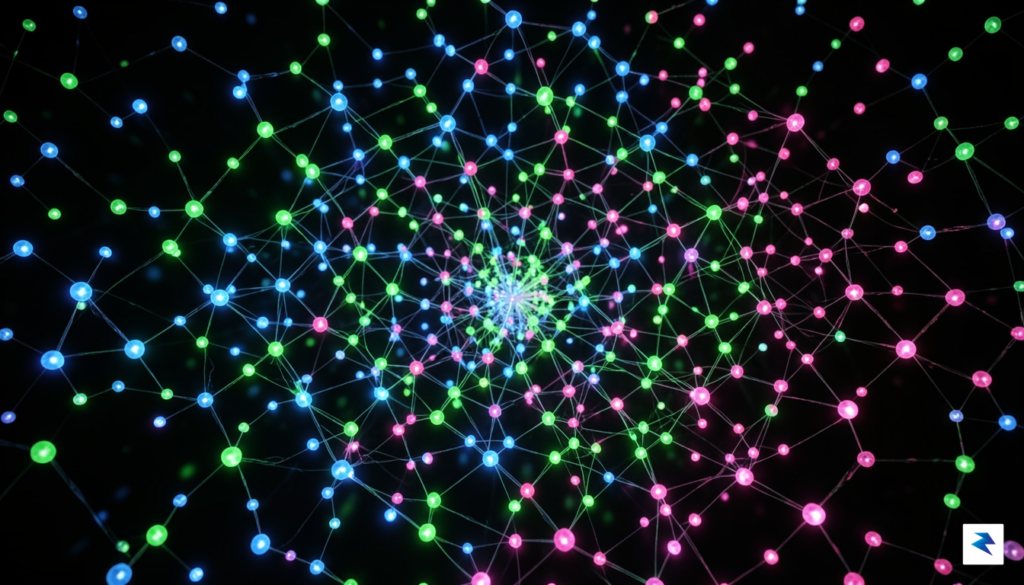
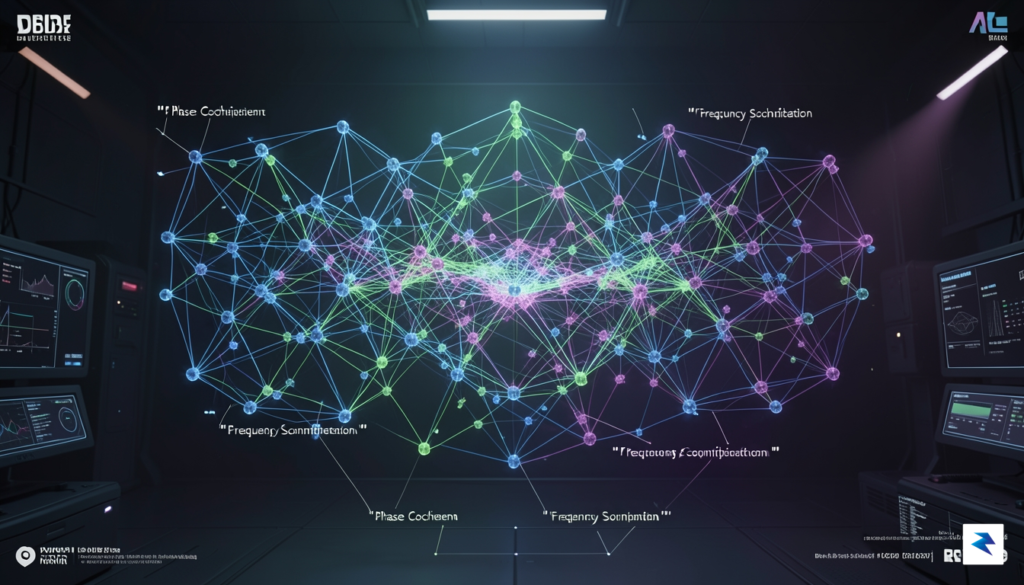
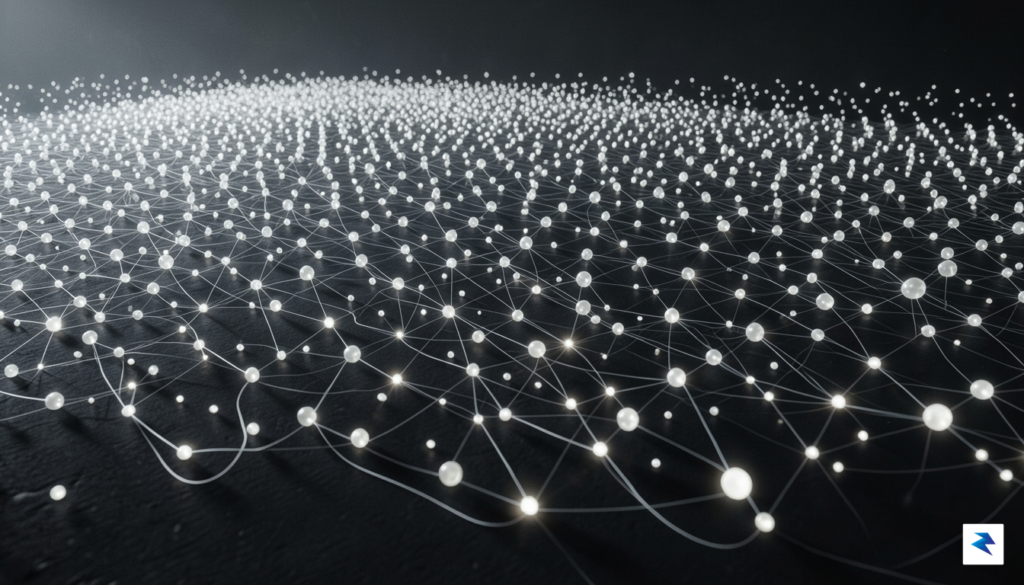
Instead of denoising, the Un-0 architecture utilizes a network of coupled oscillators to simulate the emergence of structure. In physics, synchronization occurs when independent components—like fireflies flashing in unison or pendulums swinging together—align their internal rhythms because of subtle mutual influences. In the context of image generation, each pixel is treated as an individual oscillator with its own phase and frequency. Rather than following a pre-defined path of noise reduction, these pixels interact with their neighbors, constantly adjusting their states based on the collective behavior of the system. This creates a feedback loop where the image “settles” into a stable, synchronized configuration that represents the final output.
The power of Un-0 lies in the transition from a forced, iterative process to an organic, self-organizing system that treats image generation as a move toward natural equilibrium.
The contrast between these two methods is profound. Traditional diffusion is a top-down mandate: the model dictates what the image should look like at each timestep, forcing the data toward a target. In contrast, the synchronization process in Un-0 is bottom-up and emergent. As the oscillators influence one another, they pass information across the image plane, creating local clusters of coherence that eventually expand to cover the entire canvas. This dynamic synchronization allows the system to reach a state of equilibrium—a point where the “energy” of the pixel arrangement is minimized—without the need for the repetitive, error-prone steps required by legacy diffusion pipelines. By mimicking the way complex patterns arise in nature, Un-0 potentially offers a faster, more efficient way to synthesize high-fidelity visual data.
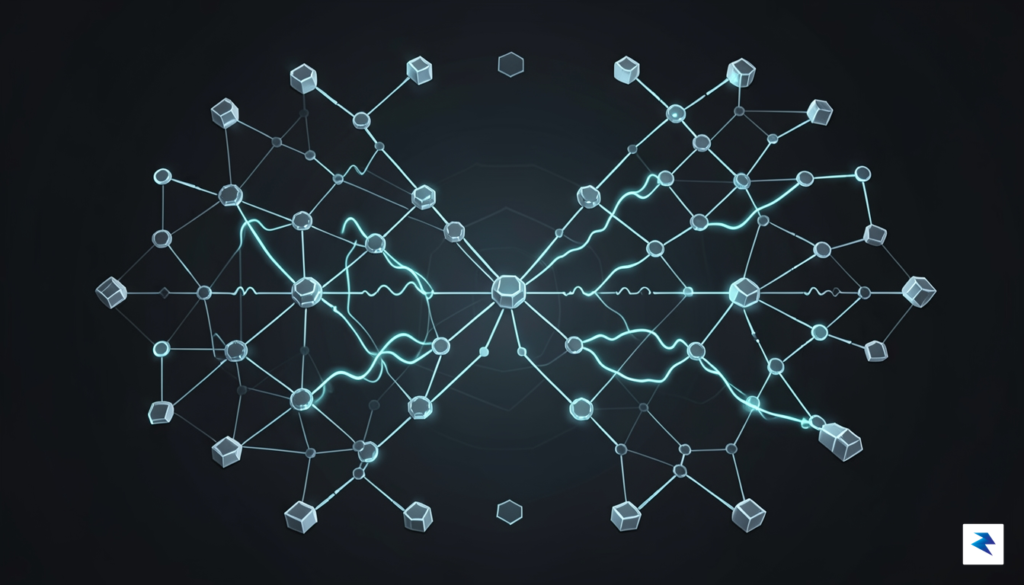
At the heart of Un-0 lies a departure from the static, high-dimensional matrix multiplications that define contemporary transformers. Instead, the model views the generation process as a dynamic system of coupled oscillators, drawing inspiration from the Kuramoto model—a mathematical framework describing how individual rhythmic units synchronize over time. In this architecture, each pixel or latent feature acts as a local oscillator with its own phase and frequency. As these oscillators interact through a learned coupling function, they shift toward a state of collective coherence, effectively “vibrating” into the precise configuration required to form a coherent image. This transition from noise to structure is not a series of discrete, heavy-handed computational steps, but rather a fluid convergence toward a resonant equilibrium.
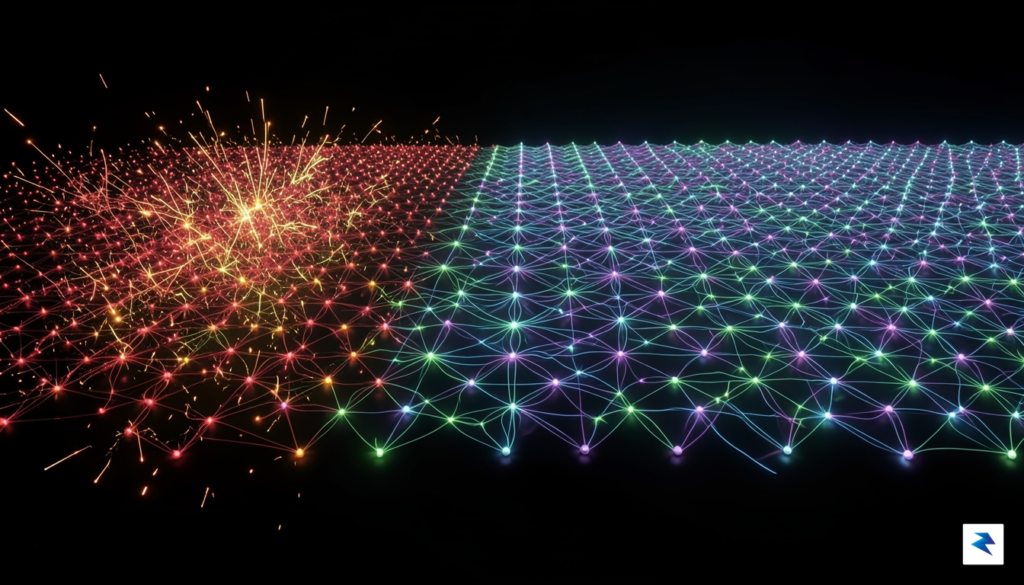
The model’s efficiency is rooted in how it manages these interactions. Traditional generative models rely heavily on self-attention mechanisms, which force every element of an image to “look at” every other element simultaneously, leading to quadratic computational complexity. Un-0 replaces this global dependency with localized oscillatory updates. By constraining the coupling weights to prioritize regional interactions, the model drastically reduces the number of operations required per iteration. Because the system is designed to reach synchronization naturally, it achieves high-fidelity results with significantly less memory overhead. This shift effectively trades the massive, brute-force global attention of standard AI for a refined, physics-informed choreography of localized data points.
By treating generation as a synchronization problem rather than a regression task, Un-0 captures the underlying manifold of visual data through the natural tendency of systems to seek harmony.
Learning these coupling weights is perhaps the most critical stage of the model’s development. During training, the system iterates through vast datasets to optimize the “coupling strength” between neighbors, essentially teaching the oscillators how to influence one another to achieve global coherence. If two adjacent oscillators represent parts of a sharp edge, their coupling strength is reinforced to pull their phases into alignment. Conversely, where visual boundaries exist, the coupling parameters allow for phase differentiation. Through this mathematical tuning, Un-0 develops an innate understanding of texture, shape, and lighting, allowing it to generate complex imagery by simply letting the oscillators find their natural, learned rhythm. This approach suggests a future where generative AI is not just faster, but fundamentally more efficient by mimicking the self-organizing principles found throughout the natural world.
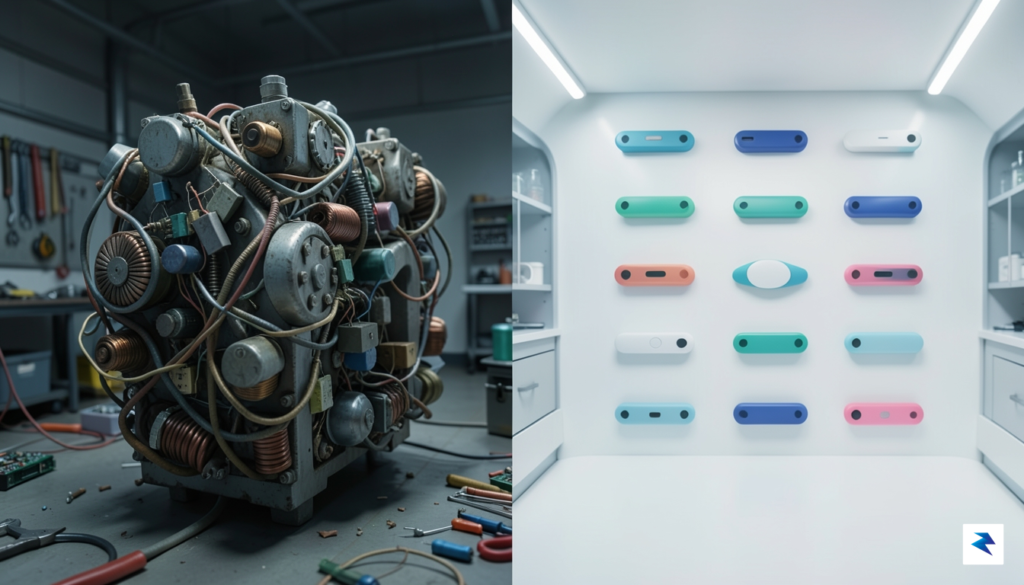
While current state-of-the-art architectures like Stable Diffusion and Flux have revolutionized generative art, they rely heavily on massive transformer backbones that function largely as black boxes. These models demand immense computational resources, often requiring high-end GPUs to process billions of parameters just to generate a single image. In contrast, the Un-0 framework shifts the paradigm by utilizing coupled oscillators—a system rooted in physical principles rather than purely statistical weight associations. By modeling visual generation as a dynamic physical process, Un-0 achieves a level of efficiency that significantly lowers the barrier to entry, potentially allowing for high-fidelity image synthesis on consumer-grade hardware with a fraction of the energy consumption typically required by traditional diffusion models.
The most compelling advantage of this physics-inspired approach is the inherent interpretability it offers. Conventional transformers are notorious for their opacity; when an AI produces an unintended visual artifact or a strange bias, engineers often struggle to trace the specific mathematical “why” behind the error within a sea of latent space vectors. Because Un-0 operates on the mechanics of synchronization and oscillation, researchers can observe how the model reaches a steady state. If an image fails to render correctly, the issue can often be mapped back to the physical properties of the oscillators, such as frequency misalignments or coupling strengths. This transparency transforms debugging from a guessing game into a precise engineering task, providing a clear window into the model’s internal decision-making process.
By rooting generation in physical dynamics rather than brute-force statistical prediction, Un-0 moves us away from the “black box” era of AI and toward a future of transparent, explainable machine intelligence.
Furthermore, the energy efficiency gains afforded by coupled oscillators are not merely marginal; they represent a fundamental change in how we scale generative technology. Traditional transformers must compute complex attention maps across every token in an image, a process that becomes exponentially more expensive as resolution increases. Un-0, however, treats image generation as a system reaching equilibrium, which can be far more computationally nimble. This reduction in the “compute tax” means that we can potentially see real-time, interactive image generation on mobile devices or edge hardware, democratizing access to high-quality creative tools that were previously locked behind massive data centers. By prioritizing physical constraints, we are not just building faster models; we are building more sustainable and predictable ones.
The emergence of Un-0 marks a significant pivot in how we conceive of generative artificial intelligence, signaling a departure from the brute-force, energy-intensive methodologies that have defined the last few years of research. By anchoring image generation in the dynamics of coupled oscillators—a concept borrowed directly from foundational physics—this approach bypasses the massive memory overhead required by traditional transformer-based architectures. As we look toward the future, this suggests that the next generation of AI synthesis may not rely on stacking more layers or expanding parameter counts, but rather on refining the elegant, self-organizing systems that mimic the natural world. This transition toward physics-inspired computation could prove to be the key to overcoming the computational bottlenecks that currently limit high-resolution image and video synthesis to massive server farms.
The long-term implications for generative art and video synthesis are profound, particularly concerning the feasibility of real-time rendering. Currently, generating high-fidelity video requires significant latency, often making real-time interactive experiences impossible without massive hardware acceleration. However, if generative models can function as synchronized dynamical systems, we might soon see “living” digital environments that evolve in real-time with minimal power draw. This shift challenges the long-standing assumption that transformers will remain the permanent standard for generative tasks. If non-transformer architectures can achieve comparable or superior visual quality while operating on significantly less hardware, we may witness an industry-wide migration toward more sustainable, efficient, and responsive generative frameworks.
The true power of Un-0 lies in its ability to democratize high-performance synthesis, shifting the burden of creativity from massive compute clusters back to efficient, algorithmic elegance.
Ultimately, this research serves as a vital step toward the democratization of high-performance AI. By reducing the hardware requirements necessary to generate complex visual data, researchers are effectively lowering the barrier to entry for developers and artists working outside of well-funded corporate silos. When we strip away the need for specialized, proprietary hardware, we open the door for powerful generative tools to run on consumer-grade devices, potentially fueling a new wave of localized, private, and highly accessible creative software. The move toward physics-inspired modeling is not merely a technical optimization; it is a fundamental rethinking of how we integrate artificial intelligence into the fabric of daily life, ensuring that the future of synthetic media is as efficient as it is imaginative.
You must be logged in to post a comment.