
Why Warren Buffett Is Ending His Donations to the Gates Foundation
The Strategic Shift: Why Warren Buffett Stepped Back For nearly two decades, the philanthropic alliance between Warren Buffett and the Bill…

For the better part of the last decade, web development has been dominated by a “complexity tax.” We have grown accustomed to shipping massive JavaScript bundles to the browser, orchestrating complex state management libraries, and maintaining rigid API contracts just to render simple dynamic interfaces. This modern Single Page Application (SPA) architecture often feels like over-engineering, where the primary focus shifts from delivering content to managing the intricate lifecycle of front-end components. By relying on heavy client-side frameworks, we introduce unnecessary latency and fragility into our applications, forcing the browser to do the heavy lifting of rendering and logic that the server is already perfectly equipped to handle.
The Hypermedia-Driven Application (HDA) model offers a refreshing departure from this status quo by returning to the core strengths of the web: HTML. Instead of treating the browser as a blank canvas for a JavaScript runtime, the HDA approach leverages the server to send hypermedia—HTML fragments—directly to the client. This paradigm shift simplifies the entire stack by eliminating the need for complex JSON serialization and client-side routing. When we use HTMX, we are essentially extending the capabilities of standard HTML attributes to trigger partial page updates. This allows us to maintain a clean, server-side source of truth while still providing the fluid, interactive experience that users have come to expect from modern interfaces.
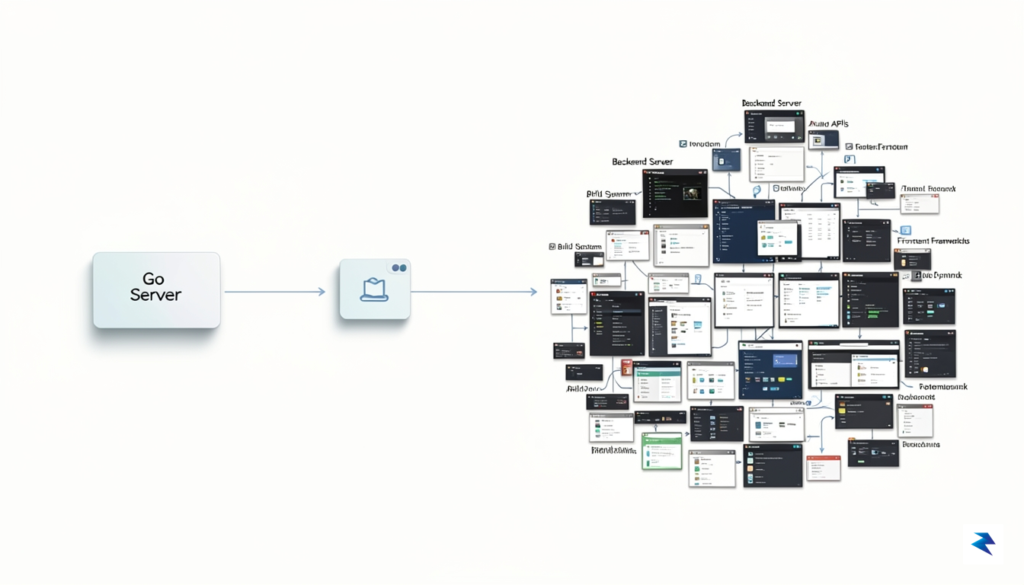
Go stands out as an exceptionally natural fit for this philosophy. Its standard library is robust, performant, and designed with the primitives necessary to serve web content efficiently without the overhead of heavy frameworks. By utilizing Go’s native html/template package, developers can maintain type-safe, modular UI components that are rendered on the server before ever reaching the client. This combination brings a level of predictability and performance that is difficult to achieve in environments where UI state is scattered across disparate JavaScript files. Furthermore, because Go compiles to a single binary, the deployment and maintenance of these hypermedia-driven backends are significantly streamlined, allowing for faster iteration cycles.
The most powerful features of the web were built into the browser from the beginning; hypermedia simply asks us to stop building abstractions over them and start utilizing them as they were intended.
Ultimately, shifting toward an HDA approach with Go and HTMX is about re-establishing control over our infrastructure. It encourages us to write code that is easier to debug, faster to load, and more resilient to the constant churn of the JavaScript ecosystem. By reducing the reliance on client-side complexity, we do not sacrifice functionality; rather, we reclaim the simplicity and speed that made the web a revolutionary platform in the first place. When the server acts as the primary orchestrator of the user experience, the entire application becomes more cohesive, easier to test, and remarkably performant even on low-end devices.
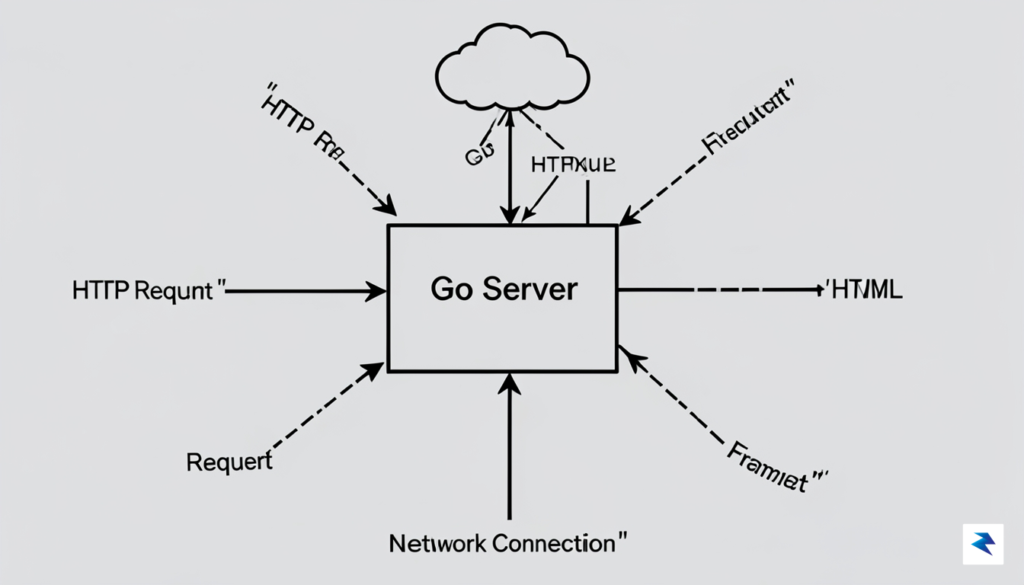
Transitioning from a traditional JSON-based API architecture to an HTMX-driven workflow requires a fundamental shift in how you conceptualize your Go handlers. In a typical RESTful environment, your backend acts as a data provider, often ignoring the structure of the user interface. However, with HTMX, your Go server takes on the responsibility of a partial-content generator, returning ready-to-render HTML snippets instead of serialized data objects. This means your handlers must be capable of distinguishing between a full-page request, which requires a complete layout including headers and footers, and an HTMX-triggered request, which should only return the specific fragment required to update the DOM.
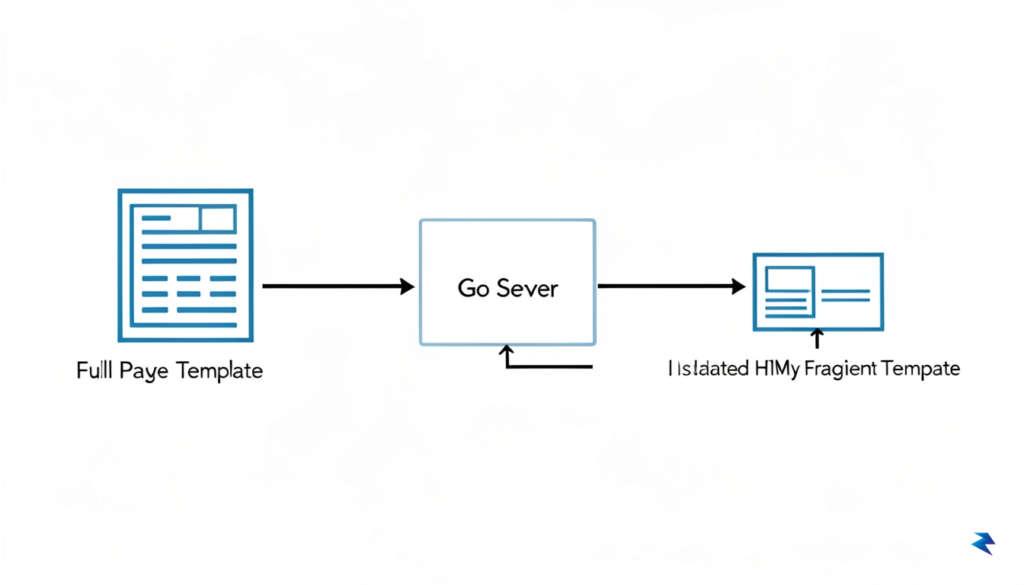
To implement this logic effectively, you should leverage the built-in http.ServeMux to route your requests, while using the HX-Request header to guide your response strategy. Every request initiated by HTMX includes this header, providing a reliable way to differentiate between standard browser navigation and dynamic partial updates. By checking for the presence of this header inside your handler, you can conditionally execute code that renders either a base template or an isolated component. For example, if the header is present, your handler can call a specific template block that excludes the surrounding boilerplate, ensuring the payload remains lightweight and focused.
The key to a maintainable HTMX backend is keeping your logic focused on individual components. By modularizing your HTML templates to match your Go handler structure, you ensure that each endpoint is responsible for exactly one piece of the user experience.
Organizing your code in this manner allows you to maintain a clean separation of concerns. Instead of forcing your Go code to manage complex state transitions or client-side routing, you allow the server to do what it does best: rendering data within the context of a template. When a user clicks a button, the request hits your Go backend, the handler processes the business logic, and the server returns the specific HTML fragment that HTMX swaps into the page. This eliminates the need for a bloated JavaScript framework on the client side, as the orchestration remains entirely within your Go application’s flow control.
Furthermore, ensure that your handlers remain lean by delegating template rendering to helper functions. You might create a custom response wrapper that automatically inspects the HX-Request header and selects the appropriate template variant. This approach prevents code duplication and makes it significantly easier to manage the evolution of your UI as your application grows in complexity. By treating HTML fragments as first-class citizens in your Go backend, you create a robust, high-performance architecture that is both easier to debug and faster to deploy.
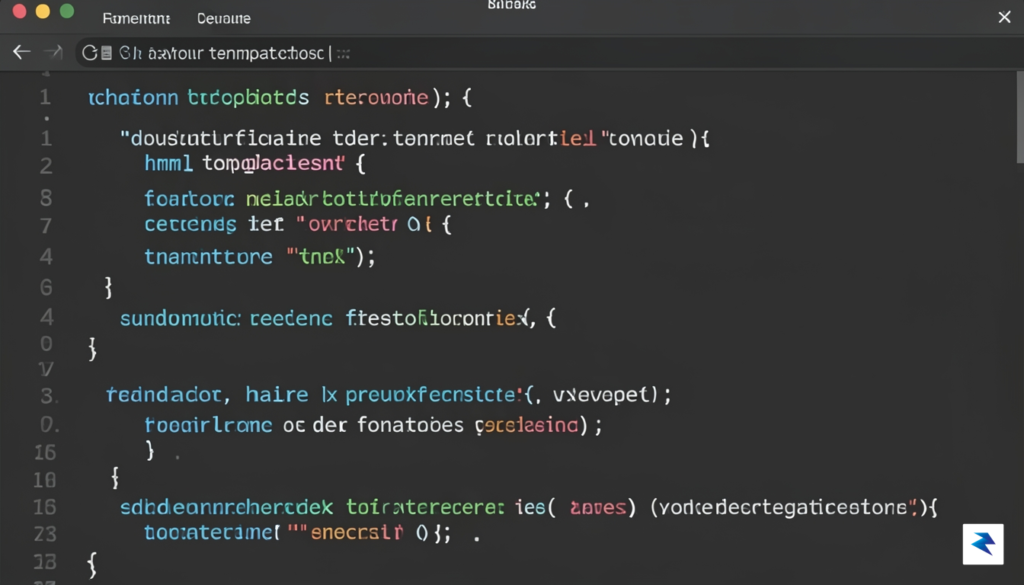
At the heart of a productive HTMX and Go workflow lies the strategic use of html/template. Rather than treating templates as monolithic files that always render an entire HTML document, I prefer to structure my project around reusable components. By utilizing the {{ define "name" }} directive, I can break a complex page into granular, self-contained fragments. This modular approach allows me to treat the server not just as a page generator, but as a component factory that can selectively serve just the HTML snippet required by an HTMX request.
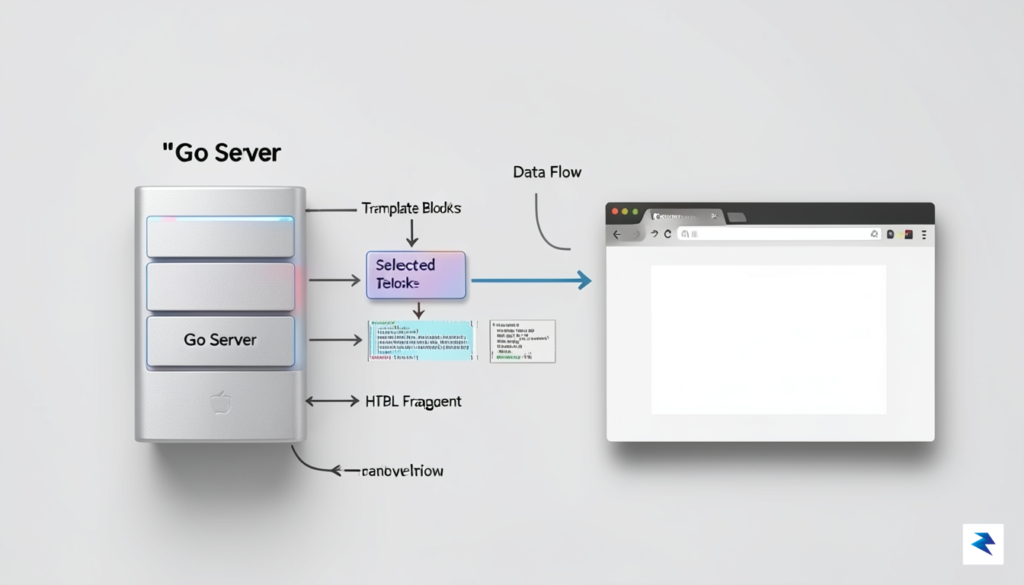
When a user interacts with the interface—perhaps by clicking a button to load more items or submitting a search query—the Go handler logic decides whether to render the full page wrapper or merely the specific component. I typically achieve this by checking for the HX-Request header in my middleware or handler functions. If the request originates from HTMX, I execute only the specific template block, such as {{ template "user-list" .Data }}, instead of the primary layout. This significantly reduces the payload size, as the browser doesn’t need to re-download the navigation, scripts, or stylesheets that remain static across the application.
By decoupling the component’s HTML from the global page layout, you transform your Go backend into a dynamic API that returns rendered components rather than raw JSON.
To make this architecture truly effective, I pass specific data structures into these fragments. Instead of forcing a global “View Model” that contains every piece of data for every element on the screen, I define precise structs for each component. For instance, a ProductCard component only receives the Product struct it needs to render its price and title. This practice enforces a clean separation of concerns and simplifies testing, as you can verify the output of a single component without worrying about side effects from the rest of the page.
Furthermore, leveraging Go’s nesting capabilities allows for sophisticated UI patterns. You can define a base layout that accepts a template name as a variable, enabling you to swap the inner content dynamically while maintaining a consistent wrapper for full-page loads. When combined with HTMX’s hx-target and hx-swap attributes, this pattern creates a seamless, “single-page application” feel that is remarkably easy to debug. Because you are working with standard Go templates, you retain the ability to use type-safe data injection and standard logic blocks (like if and range), ensuring that your frontend remains as robust and maintainable as the rest of your backend code.
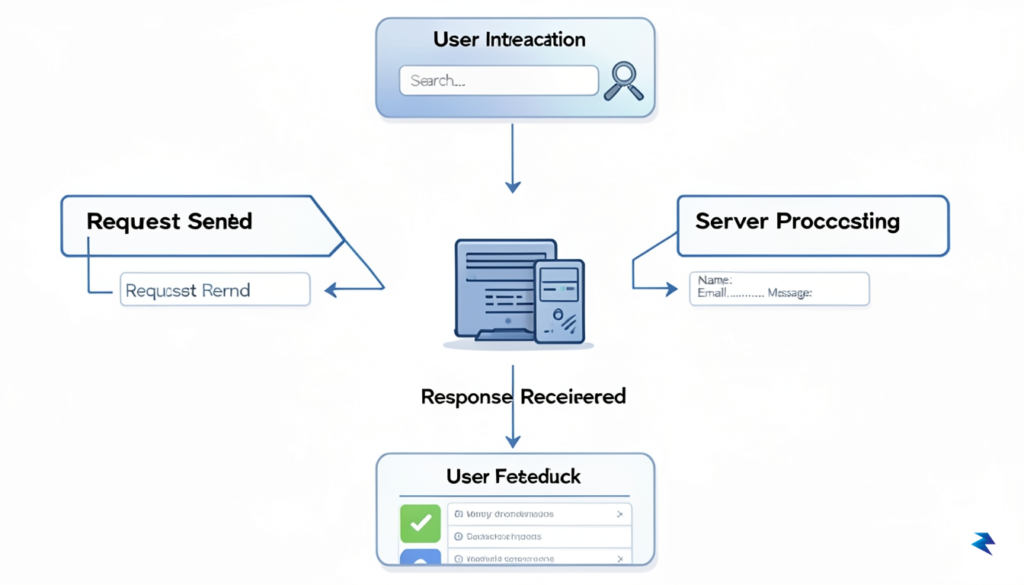
The traditional approach to building interactive web applications often forces developers into a complex, client-heavy architecture involving massive JavaScript bundles and state synchronization challenges. By pairing Go with HTMX, we shift the responsibility of state management back to the server, where your business logic already resides. Instead of shipping JSON to a client-side framework to re-render a component, we simply send back the specific slice of HTML that needs to change. This architectural shift eliminates the need for a build pipeline, allowing you to focus on writing clean, type-safe Go code while achieving the same responsiveness found in contemporary SPA frameworks.
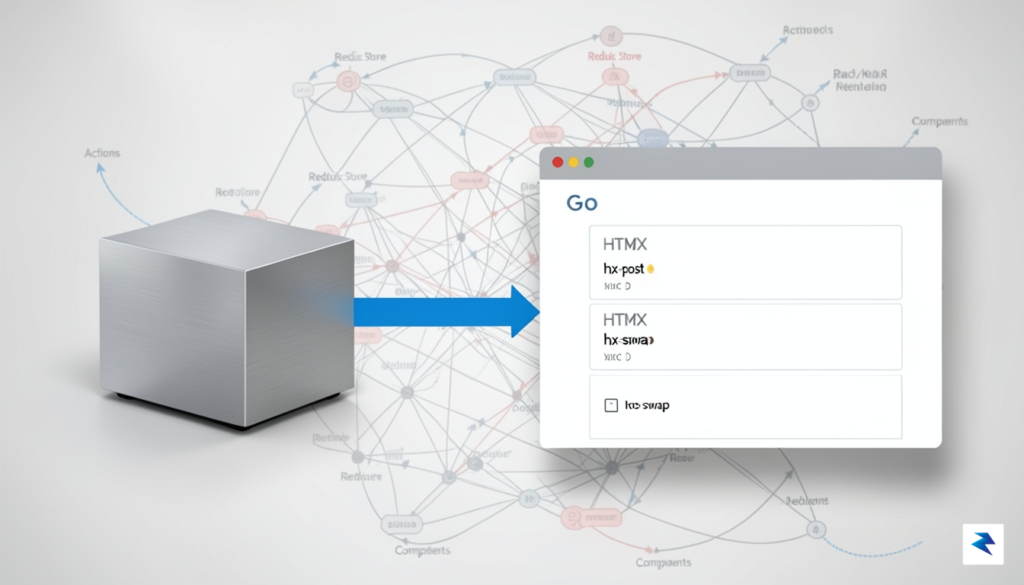
At the heart of this approach is the concept of targeted swapping. HTMX allows you to define exactly where a response should be injected using attributes like hx-target and hx-swap. When a user submits a form or triggers a search, the Go backend processes the request and returns the resulting HTML fragment. By default, innerHTML replaces the contents of the target element, but using outerHTML allows you to replace the entire DOM node, which is essential for dynamic UI patterns like infinite scrolling or inline editing. This granularity ensures that only the necessary parts of the page re-render, providing a seamless experience that feels just as fast as a client-side framework.
By leveraging the server as the single source of truth, you eliminate “state drift” where the client’s view of data falls out of sync with the database.
Managing state in a Go-HTMX stack is remarkably straightforward because your error handling stays within your request handlers. When a form validation fails, for instance, your Go controller can return the same form component populated with error messages and a 422 Unprocessable Entity status code. HTMX handles these status codes gracefully, allowing you to trigger specific behaviors based on the server’s response. For real-time search filtering, you can use the hx-trigger="keyup changed delay:300ms" attribute to debounce user input, ensuring the server isn’t overwhelmed while providing instant, relevant results as the user types.
* Form Validation: Return partial HTML snippets with embedded CSS classes for errors, keeping the user in the current context.
* Infinite Scrolling: Use hx-trigger="revealed" on an element at the bottom of your list to fetch the next page of records from the server.
* State Synchronization: Update specific UI elements—like a shopping cart counter or a user profile status—by targeting their IDs directly from any server response.
Ultimately, this workflow reduces the cognitive load of application development. You no longer have to manage API contracts between a frontend and backend; your Go templates act as the bridge. By embracing the native capabilities of the browser and enhancing them with HTMX, you maintain a simpler codebase that is easier to debug, test, and deploy, all without sacrificing the interactive quality your users expect.
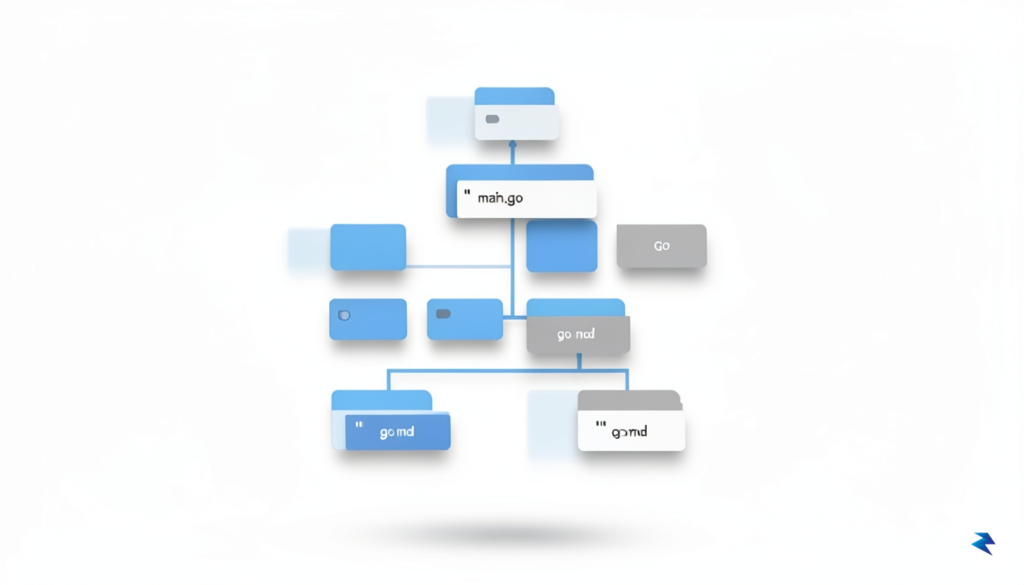
As your project scales, the marriage between Go and HTMX can quickly become cluttered if you don’t enforce a strict architectural boundary. A primary strategy for maintaining sanity is to treat your HTML fragments as first-class components within your file system. I recommend adopting a naming convention that clearly separates full-page templates from partials; for example, using a _partial.html suffix or placing fragments in a dedicated /views/partials/ directory ensures that developers can immediately distinguish between a top-level route handler and a localized UI update. This systematic organization prevents the “spaghetti template” problem where shared components are hidden in deep, impossible-to-find directories.
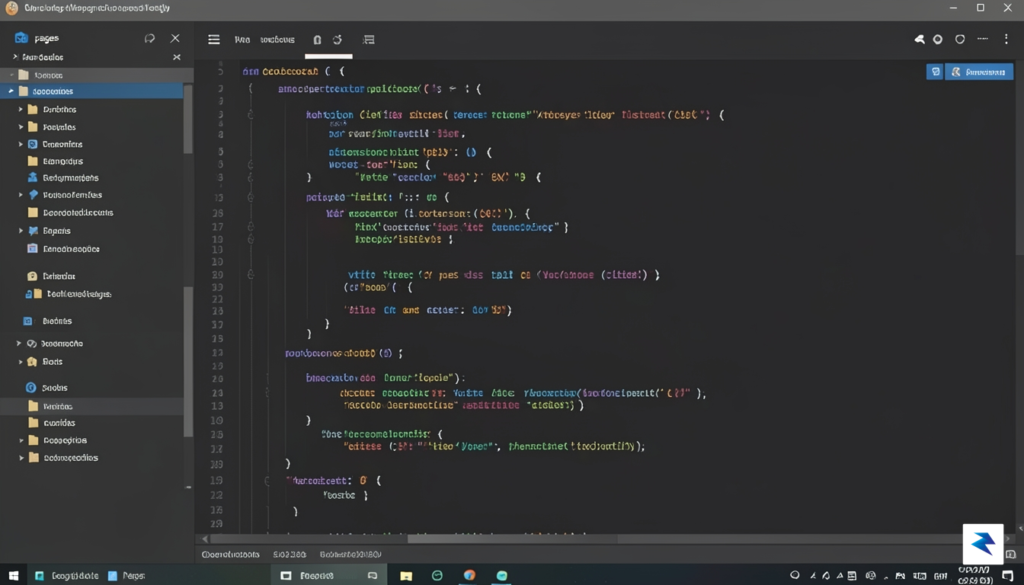
To streamline your server-side operations, encapsulation is your best friend. Instead of sprinkling HTMX-specific headers like HX-Trigger or HX-Retarget throughout every single route handler, wrap these concerns in custom Go middleware. By creating a reusable decorator or a “renderer” helper that handles common HTMX response patterns, you keep your business logic pure and focused on data rather than UI orchestration. This approach not only makes your codebase cleaner but also allows you to enforce consistent behavior—such as error handling for failed partial requests—across the entire application stack.
Testing these fragments is often the most overlooked aspect of long-term maintenance. Because your UI logic is server-side, you can leverage Go’s standard net/http/httptest package to verify that your routes are returning the expected HTML fragments rather than full pages. By writing table-driven tests that assert against the presence of specific IDs or classes in the rendered output, you gain the confidence to refactor your Go logic without breaking the frontend experience.
When in doubt, prioritize simplicity over complexity: if a piece of UI functionality requires more than a few lines of JavaScript to coordinate state, don’t force it into an HTMX extension.
There will inevitably come a point where HTMX reaches its architectural limit, particularly when managing complex client-side state like drag-and-drop interfaces or sophisticated real-time data visualizations. When you reach this threshold, do not be afraid to sprinkle in vanilla JavaScript. The key is to keep your JavaScript focused on self-contained modules that communicate with your Go backend via JSON APIs or simple event listeners. By reserving vanilla JavaScript for high-interactivity components and HTMX for the bulk of your CRUD operations, you maintain a codebase that is both performant and easy for new team members to navigate.
You must be logged in to post a comment.