
Why Netflix is Betting Big on the ‘Hot Ones’ Formula
The Evolution of the Interview Format: From Late Night to Digital Bites For decades, the celebrity interview was locked in a rigid, highly…
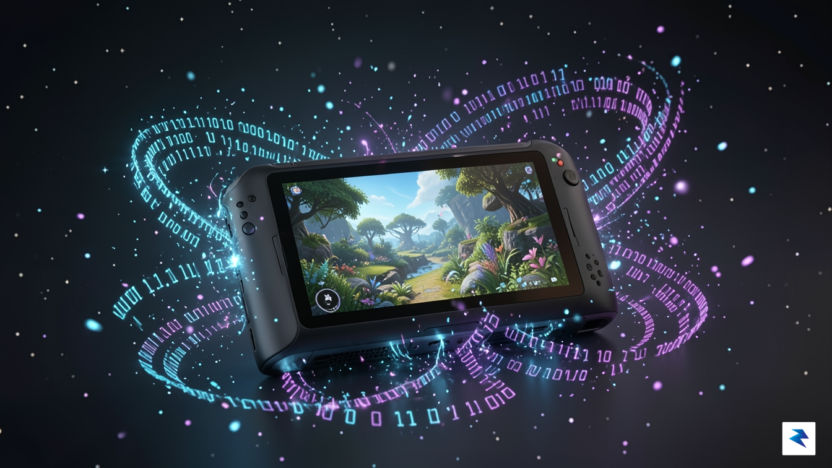

The Steam Machine has undeniably redefined the landscape of portable PC gaming, successfully bridging the gap between desktop-grade performance and handheld convenience. By achieving hardware parity that rivals the processing power of consoles like the PlayStation 5, Valve’s hardware has transformed expectations for what a mobile device can handle. Yet, despite this robust internal architecture, the user experience is frequently hampered by the limitations of legacy upscaling software. As modern titles demand increasingly sophisticated lighting models and intricate geometry, the burden of rendering these scenes at native resolutions becomes unsustainable for mobile silicon, necessitating a reliance on software-based reconstruction that has simply begun to show its age.
For several years, AMD’s FidelityFX Super Resolution (FSR) has served as the backbone for maintaining playable frame rates on the platform. While this technology was revolutionary at its inception, earlier iterations—specifically FSR 2 and its immediate successors—are increasingly struggling to keep pace with the demands of high-fidelity gaming. The primary technical bottleneck lies in the temporal stability of these older algorithms. Players often encounter persistent visual artifacts, such as noticeable ghosting behind moving objects, shimmering textures in dense environments, and a general lack of sharpness that undermines the crispness of the device’s display. When held side-by-side with a PS5 output on a television, these subtle degradations in image quality become glaringly apparent, highlighting a widening disparity in visual fidelity.
The leap from spatial upscaling to AI-driven temporal reconstruction represents the single most important milestone for the next generation of handheld PC gaming.
Visual fidelity is not merely an aesthetic concern; it is a critical component of the handheld market’s long-term viability. Because players view these screens at a closer proximity than they would a living room television, the flaws in older upscaling techniques are magnified, leading to a loss of immersion that can detract from the overall gaming experience. As developers continue to push the boundaries of what is possible in real-time rendering, the reliance on outdated temporal reconstruction methods results in a “softer” image that fails to showcase the true capabilities of the Steam Machine’s custom APU. This architectural plateau serves as a primary motivator for the ongoing collaboration between Valve and AMD.
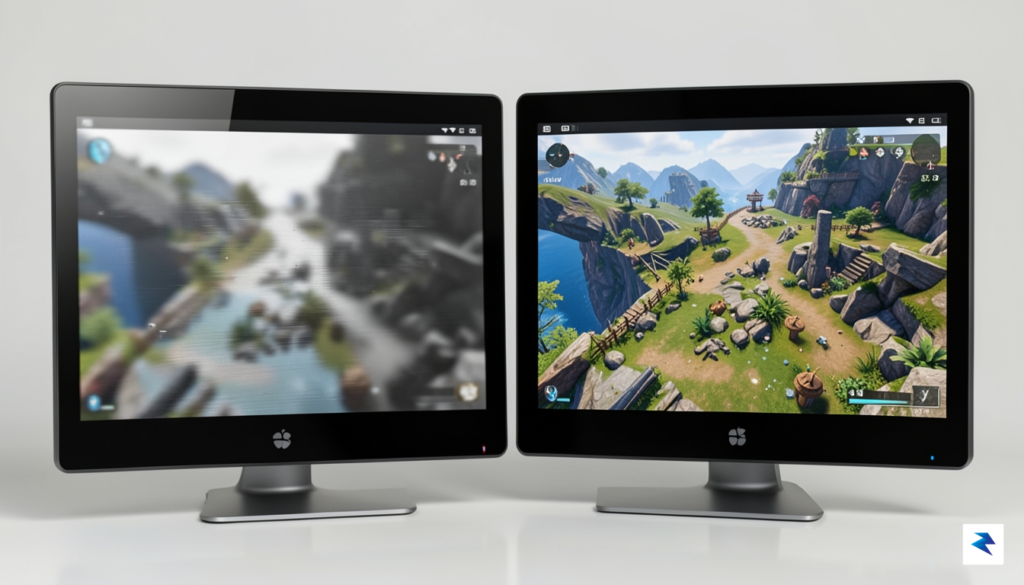
To overcome these hurdles, the industry is shifting away from traditional algorithmic scaling toward more intelligent, frame-aware processing. The limitations inherent in current FSR implementations are no longer just software quirks; they are active barriers to achieving the level of visual parity that the Steam Machine’s hardware is otherwise capable of delivering. By moving toward a more advanced, AI-integrated approach, Valve and AMD aim to rectify these temporal stability issues at the source. This evolution is essential for ensuring that the platform remains a premium competitor in a market where players are increasingly discerning about both performance and picture quality.

The leap to FSR 4 represents a profound architectural pivot in how portable hardware manages graphical fidelity. Unlike its predecessors, which relied heavily on spatial sharpening—effectively stretching existing pixels and applying filters to hide the resulting jagged edges—FSR 4 utilizes advanced temporal AI models to reconstruct images from the ground up. By analyzing multiple frames of motion data, the algorithm can intelligently “fill in the blanks” between low-resolution inputs, resulting in an output that is not merely a sharper version of the original, but a more accurate reconstruction of the scene itself.
This transition is particularly vital for the constraints of a Steam Machine or handheld environment, where raw GPU power is physically limited by thermal and battery thresholds. Traditional upscaling often struggled with “shimmering” or ghosting artifacts, especially during fast-paced movement, as spatial filters failed to account for the temporal consistency of moving objects. FSR 4 tackles these artifacts by leveraging machine learning to predict pixel behavior across successive frames, ensuring that fine details like foliage, hair, and distant textures remain stable rather than flickering as the camera pans.
By shifting the workload from brute-force rendering to intelligent temporal reconstruction, FSR 4 allows developers to maintain high performance without sacrificing the visual clarity that modern gamers demand.
The impact on frame rate stability cannot be overstated. By rendering at a lower native resolution and allowing the AI model to handle the heavy lifting of image reconstruction, the GPU is granted significant overhead. This reduction in load translates directly into higher frame rates and, perhaps more importantly, better frame pacing. For the user, this means that demanding titles will feel inherently smoother, with fewer dips in performance during chaotic combat sequences or complex environmental transitions. The stability provided by this temporal approach creates a more immersive experience, effectively closing the gap between portable hardware and high-end desktop gaming.
Ultimately, users should expect a massive improvement in “perceptual quality.” Because the AI is trained to recognize specific visual patterns, it can reconstruct edges and gradients in a way that mimics native 4K or high-resolution rendering, even when the underlying pixel count is significantly lower. This perceptual leap makes the final output appear much more natural to the human eye, eliminating the artificial “over-sharpened” look that plagued earlier iterations. As Valve and AMD continue to refine these temporal models, the Steam Machine platform is positioned to offer a level of visual fidelity that was previously thought impossible for its form factor.
The collaboration between Valve and AMD represents a fundamental shift in how upscaling technology is deployed on gaming hardware. Rather than treating FidelityFX Super Resolution (FSR) 4 as a simple drop-in software library, the two companies are engaging in a deep-level integration that treats SteamOS and the custom silicon inside Steam devices as a singular, cohesive ecosystem. This strategy moves far beyond the traditional “one size fits all” methodology that often plagues PC gaming, where upscalers are forced to balance compatibility against raw performance. By aligning Valve’s Linux-based kernel expertise with AMD’s intimate knowledge of their APU architecture, the engineers are effectively stripping away the overhead layers that typically separate a game engine from the hardware’s internal frame buffers.
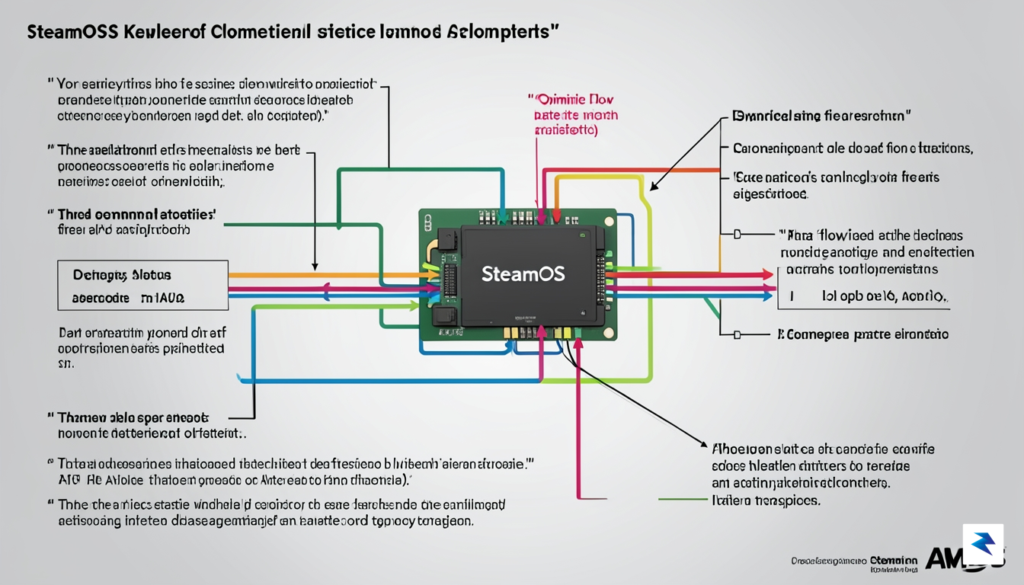
This partnership thrives on kernel-level optimizations that were previously inaccessible to mainstream PC upscaling implementations. When FSR 4 is integrated at the system level within SteamOS, it gains the ability to interface directly with the hardware’s power management and scheduling controllers. This means that instead of the GPU guessing how to best handle a frame in a generalized environment, the upscaling process is calibrated precisely to the thermal envelope and memory bandwidth of the Steam Machine’s specific APU. Consequently, this proprietary optimization ensures that the system can maintain higher frame rates while consuming significantly less power, a critical advantage for handheld devices where efficiency is just as vital as visual fidelity.
By tailoring FSR 4 to the unique characteristics of the Steam Machine’s custom silicon, Valve and AMD are creating a high-performance experience that generic Windows-based drivers simply cannot replicate.
Furthermore, this unique synergy allows for a more deterministic approach to image reconstruction. Because Valve controls both the SteamOS compositor and the underlying driver stack, they can implement FSR 4 in a way that minimizes input latency—a historic pain point for earlier upscaling solutions. Whereas generic implementations must rely on broader, less efficient API hooks, this specialized integration allows for a cleaner pipeline where the upscaling process is treated as a priority task within the Linux kernel’s scheduler. As a result, users are likely to see not just sharper visuals, but a more responsive gaming experience that feels native to the hardware rather than an added layer of post-processing. This level of vertical integration serves as a blueprint for the future of portable gaming, proving that hardware-software harmony is the key to unlocking the full potential of mobile architectures.
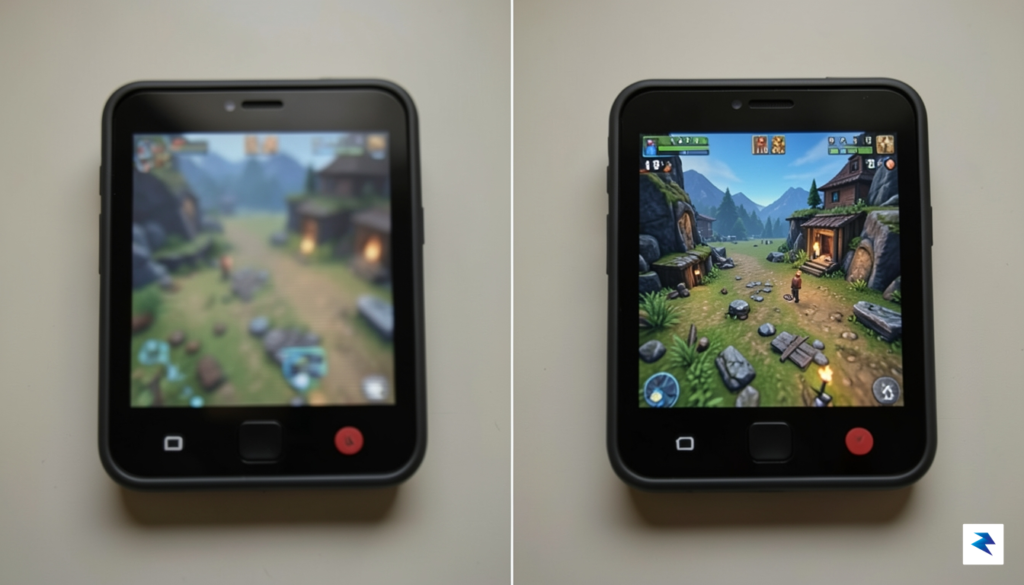
The integration of FSR 4 into the Steam ecosystem represents a paradigm shift for handheld gaming, where the historical struggle has always been the brutal trade-off between visual fidelity and battery longevity. By leveraging advanced temporal upscaling and frame generation techniques, FSR 4 acts as a strategic efficiency layer that offloads the heavy lifting from the device’s APU. Instead of forcing the hardware to render a native 800p or 1080p image—which consumes significant wattage and generates intense heat—the system can render at a fraction of the internal resolution and intelligently reconstruct the final frame. This allows the GPU to operate at lower clock speeds, which directly translates to reduced power draw and a notable extension of total gaming time per charge.
When the internal rendering load is reduced, the most immediate benefit is a mitigation of thermal throttling. In current handheld hardware, when a device gets too hot, it aggressively downclocks its components, leading to unpredictable frame-time stutters and a degraded experience. By maintaining a lower thermal floor through FSR 4, players can expect a much more consistent frame rate in demanding AAA titles. This stability is just as important as the raw frame count; a consistent 40 FPS provides a much smoother visual experience than a fluctuating 60-to-30 FPS range caused by heat-induced throttling. Consequently, users can push graphical presets higher—enabling features like ambient occlusion or higher texture filtering—without pushing the hardware into the danger zone of thermal collapse.
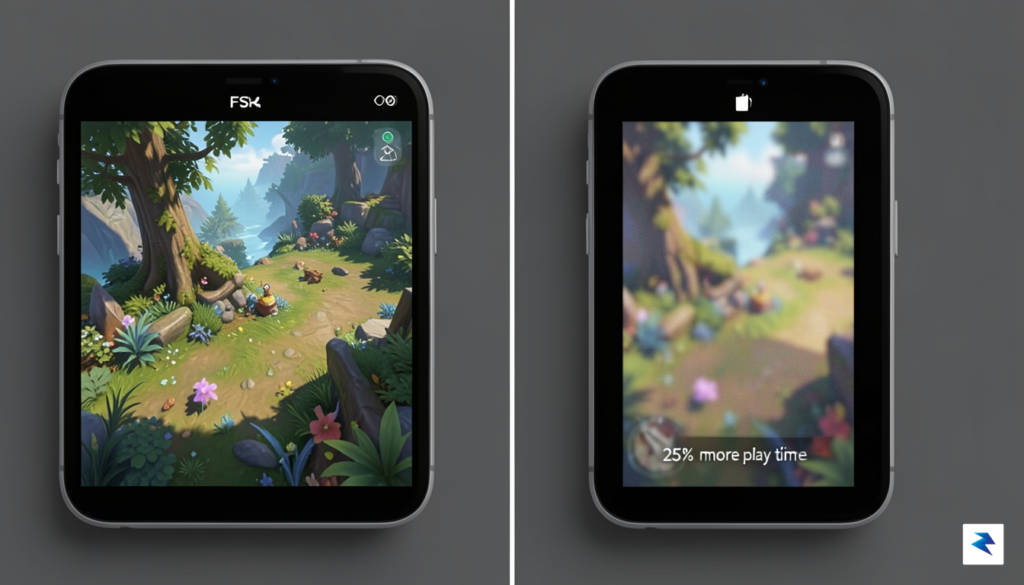
FSR 4 isn’t just about chasing higher frame rates; it is about reclaiming the efficiency lost to brute-force rendering, allowing mobile hardware to punch well above its weight class.
Looking toward the future of AAA gaming on the go, this technology sets a new roadmap for what is possible on portable hardware. Titles that were previously considered “unplayable” or restricted to the lowest graphical settings can now be enjoyed with high-quality visual fidelity and fluid motion. For the end user, this means that the Steam experience becomes more sustainable, as the hardware is no longer running at its absolute limit just to maintain a baseline of playability. By optimizing the power-to-performance ratio, Valve and AMD are effectively ensuring that the next generation of handheld gaming remains accessible, visually stunning, and, most importantly, capable of lasting through a long commute or travel session without tethering the player to a wall outlet.
The integration of FSR 4 into the Steam ecosystem represents far more than a simple driver update or a minor graphical tweak; it signals a fundamental shift in how Valve approaches the lifecycle of portable gaming hardware. By leaning heavily into software-led upscaling and frame generation, Valve is effectively decoupling the visual fidelity of modern titles from the strict physical limitations of mobile silicon. This strategy ensures that as game developers push for higher graphical targets, existing Steam-based hardware can adapt through intelligent algorithmic processing rather than necessitating an immediate, expensive hardware refresh for the user. It is a commitment to longevity that transforms the Steam platform from a collection of devices into a cohesive, evolving service that keeps pace with the bleeding edge of PC gaming.
This development places significant competitive pressure on the broader handheld industry, which has historically relied on raw power increases to maintain relevance. As other manufacturers scramble to optimize their own proprietary stacks, Valve’s partnership with AMD sets a standard for what users should expect from a portable PC experience: visual parity with desktop environments. When software-driven solutions can intelligently fill the gaps left by thermal and power constraints, the barrier to entry for high-end gaming drops significantly. Consequently, we can expect a ripple effect across the industry, forcing competitors to pivot away from a “more cores, more watts” mentality and toward the more sustainable path of intelligent, efficient software optimization.
The true potential of handheld gaming lies not in raw compute performance, but in the efficiency of the translation between complex digital assets and the mobile form factor.
Looking toward future iterations of Steam hardware, this shift suggests that Valve is building a foundation where the user’s software library remains relevant for years, regardless of which generation of device they carry. By prioritizing upscaling technologies like FSR 4, the platform ensures that visual quality—the primary metric of “next-gen” gaming—remains consistent across the entire hardware family. This approach not only protects the consumer’s investment but also provides developers with a reliable target for performance optimization, knowing that the underlying technology will bridge the gap between their vision and the end-user’s screen. Ultimately, software-driven visual parity is the cornerstone of a sustainable, portable gaming future, proving that how you process a frame is just as important as how fast your hardware can render it.
You must be logged in to post a comment.