Building Reliable Agentic AI: A Practical Guide for Engineers
The Challenge of Agentic AI Reliability The transition from traditional chatbot interactions to autonomous agentic workflows represents a…
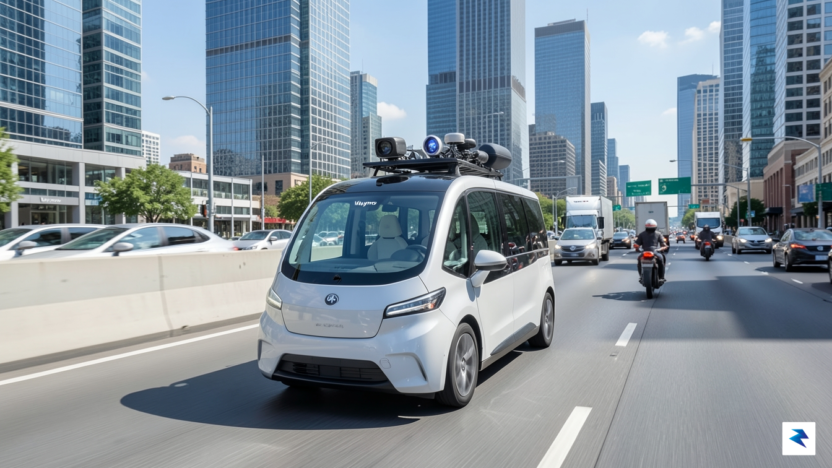
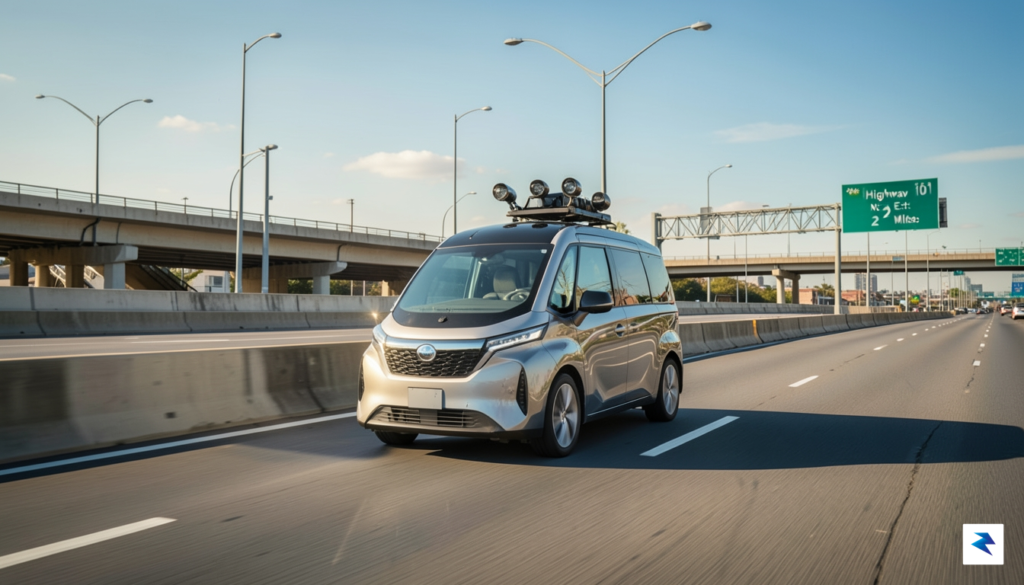
The recent announcement regarding Waymo’s fleet involves a voluntary recall of approximately 3,800 vehicles, a decision prompted by identified challenges in how the autonomous driving software interprets complex road environments. Specifically, the National Highway Traffic Safety Administration (NHTSA) filings highlight a pattern where the vehicles struggled to accurately categorize and navigate around construction zones on high-speed freeways. In these instances, the software’s perception layer occasionally failed to predict the behavior of traffic cones, barrels, and temporary signage, leading to instances where the vehicles may have maintained higher speeds than desired while approaching these unpredictable work zones. By proactively identifying these edge cases, Waymo has opted to refine its software logic to ensure that its autonomous system treats these temporary infrastructure changes with the appropriate level of caution.
It is important for the public to understand that in the modern era of automotive technology, the term “recall” carries a vastly different meaning than it did in the mechanical age. Unlike traditional recalls that require a vehicle to be physically brought into a dealership for hardware repairs or parts replacement, this action is being handled entirely through an over-the-air (OTA) software update. Because Waymo’s platform is designed with connectivity at its core, the company can push corrected algorithms directly to the onboard computers of the affected robotaxis without any user intervention or downtime for the fleet. This remote deployment process demonstrates the agility of software-defined vehicles, allowing for rapid safety improvements that are virtually seamless for both the operator and the broader public.
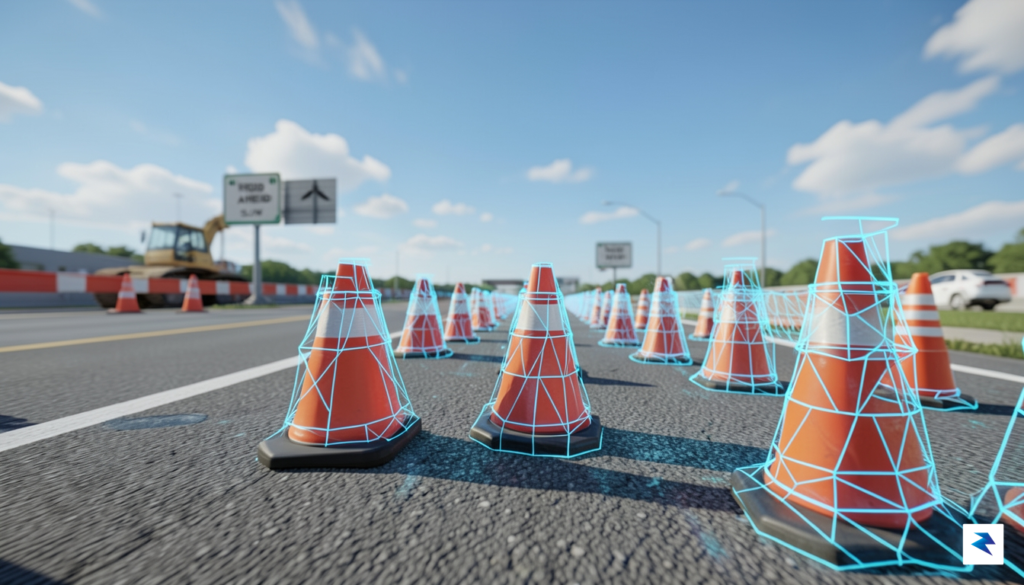
The specific scenarios that triggered this update involved instances where the software encountered non-standard or unexpected placement of construction equipment, which caused the vehicle’s “perception and prediction” module to misinterpret the surrounding environment. While Waymo maintains that its vehicles are designed with multiple layers of redundancy, these specific incidents revealed a narrow gap in the system’s ability to categorize high-speed work zones correctly. By addressing these software bugs, Waymo aims to improve the car’s ability to adjust its speed and trajectory well in advance of entering a construction lane closure. This proactive communication with regulators is a hallmark of the company’s safety-first approach, as it prioritizes transparency and rapid iteration over the desire to avoid public scrutiny.
The core of this update is a recalibration of how the AI interprets spatial data, ensuring that temporary obstacles are treated with the same priority as permanent road infrastructure, regardless of how they are arranged or illuminated.
Ultimately, this recall serves as a practical example of how the autonomous vehicle industry learns through real-world deployment. Every hour that a robotaxi spends navigating city streets and freeways generates vast amounts of data, which engineers then use to refine the system’s decision-making capabilities. While the prospect of a vehicle recall might sound alarming to the average consumer, this specific event represents the standard maturation process of advanced driver-assistance technology. By identifying these nuanced behavioral risks and deploying a remote fix, Waymo continues to demonstrate that it is committed to identifying potential failures before they result in significant safety incidents, ultimately helping to build a more robust and reliable autonomous ecosystem for everyone.
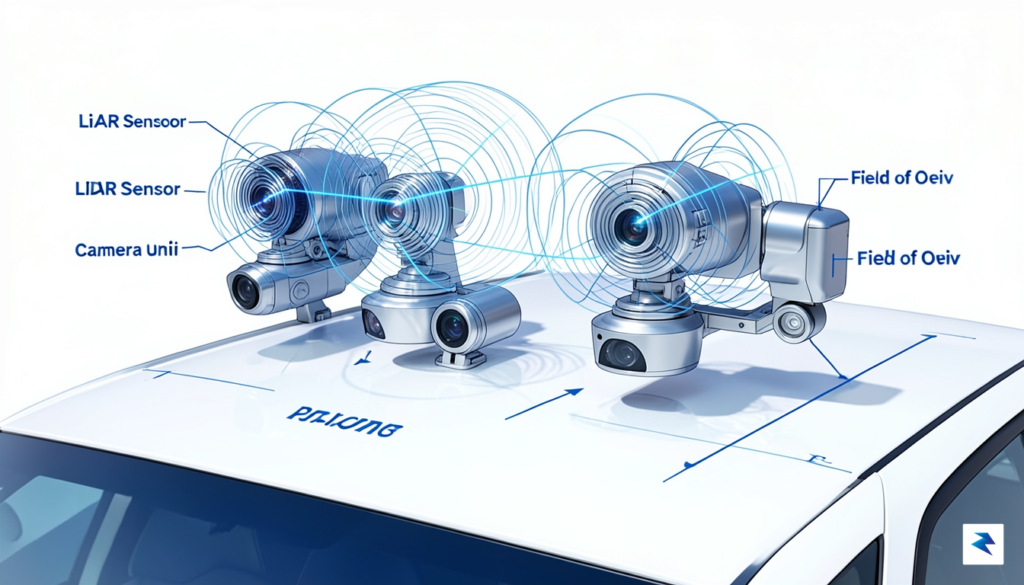
Navigating a modern roadway requires more than just following the static lines painted on the asphalt; it demands a sophisticated dance of perception and interpretation that autonomous systems are still struggling to master. At the heart of this challenge is sensor fusion, a complex process where data from LiDAR, radar, and high-resolution cameras are stitched together to create a cohesive 360-degree model of the world. While this system works exceptionally well under predictable conditions, construction zones introduce a chaotic, fluid environment that defies the rigid logic of traditional machine learning. Unlike a standard highway, where lane markings are consistent and traffic flow is linear, construction sites are defined by temporary signage, shifting barriers, and the unpredictable movements of human workers, all of which create a “data noise” that can confuse even the most advanced onboard computers.
The difficulty lies in the fact that construction zones are classic “edge cases”—scenarios that occur infrequently enough in training data that the AI may not have developed a robust strategy for handling them. Standard autonomous models are trained to prioritize fixed infrastructure, such as solid yellow lines or permanent traffic signals. However, in a construction zone, these rules are often superseded by temporary orange cones, erratic detours, or hand signals from human flaggers. When the software perceives a conflict between its high-definition maps and the real-time physical evidence provided by its sensors, the system must perform a rapid, high-stakes calculation. If the sensor fusion layer cannot reconcile these discrepancies—or worse, if it interprets a temporary barrier as an obstacle to be avoided in a way that forces the car into a dangerous trajectory—the vehicle’s performance degrades significantly.
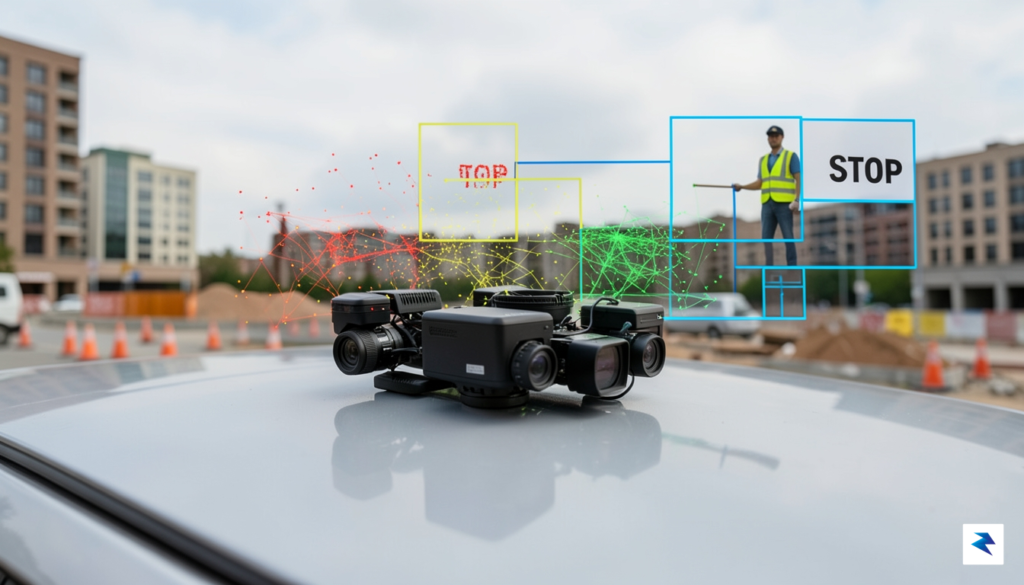
Furthermore, human traffic controllers present a unique hurdle that highlights the limitation of current AI logic. A human driver understands the nuance of a worker waving a hand or holding a “Slow” sign, interpreting these gestures as social cues that override standard traffic laws. An autonomous vehicle, by contrast, is governed by probabilistic models that look for patterns. When a human controller deviates from standard traffic light signals, the AI may experience a “perception loop,” where it becomes trapped trying to classify an unusual human gesture into a known category. This leads to the jerky, indecisive behavior that prompted recent safety concerns, as the vehicle struggles to decide whether to treat the human controller as a valid authority or as an anomaly to be bypassed.
The core of the issue is not just seeing the world, but understanding the intent behind the visual data; when temporary signs contradict permanent maps, the software must decide which truth holds more weight in real-time.
Ultimately, the transition toward fully autonomous transit will require shifting away from “rigid law” adherence toward a more flexible, contextual understanding of the environment. Developers are now tasked with training models not just to recognize objects, but to understand the hierarchy of authority in a construction zone. This means ensuring that if a sensor detects a human traffic controller, the system treats that input with the highest possible priority, even when it contradicts the vehicle’s internal digital map. By refining these multi-modal perception systems, engineers hope to bridge the gap between human intuition and machine precision, making robotaxis as capable of navigating a messy, cones-strewn detour as they are a clear, well-marked freeway.
The resolution to the recent navigation challenges lies in a sophisticated recalibration of Waymo’s perception and mapping stack. Rather than requiring physical hardware adjustments, the fix centers on a software update designed to refine how the vehicle’s onboard computer interprets temporary environmental cues, such as orange cones, barrier placement, and makeshift lane markings. By adjusting the weight assigned to these construction indicators, Waymo is effectively teaching its fleet to prioritize dynamic, short-term signage over legacy map data. This prioritization shift ensures that when the vehicle’s perception system detects an active work zone, it defaults to a cautious, adaptive pathing strategy rather than relying on cached road information that may be outdated.
To ensure these updates are robust, Waymo utilizes a rigorous virtual testing pipeline before any code is pushed to its active fleet. Before a single robotaxi receives the patch, the new logic is subjected to millions of miles of simulation testing, where engineers recreate the specific scenarios that led to the original safety concern. By simulating thousands of variations of freeway construction zones—adjusting lighting, weather conditions, and traffic density—the company can verify that the software behaves predictably under pressure. This simulation-first approach is the cornerstone of modern automotive safety, allowing for the rapid iteration of complex machine learning models without placing the public at unnecessary risk during the development phase.
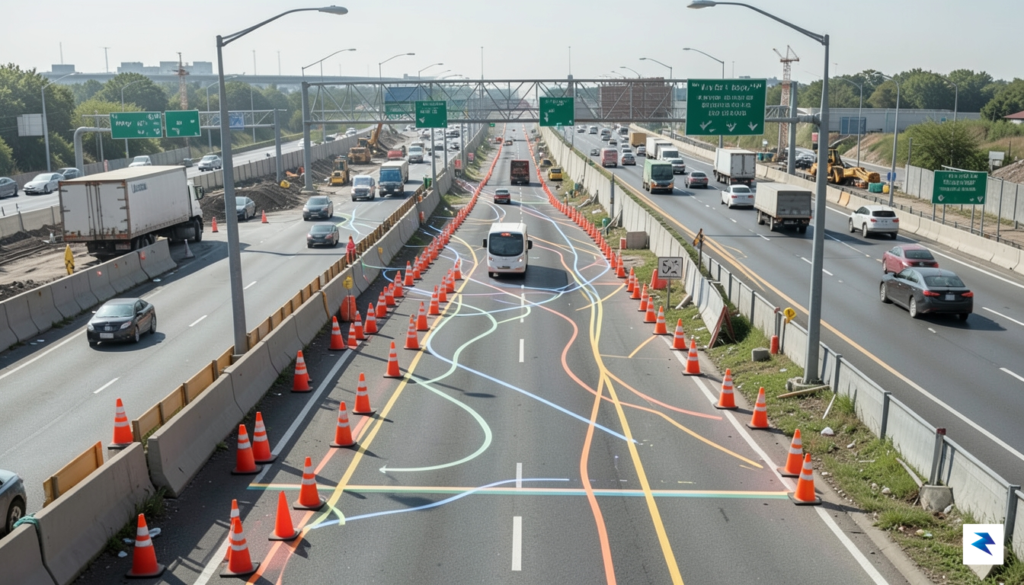
The beauty of this OTA (Over-the-Air) update mechanism lies in its ability to synchronize the intelligence of the entire fleet instantaneously. Once the safety patch is validated, Waymo can deploy the update to every vehicle in its network simultaneously, creating a uniform, upgraded standard of performance. This fleet-wide “leveling up” is a distinct advantage over traditional vehicle recalls, which typically necessitate a time-consuming trip to a service center. By treating software as a living, evolving entity, Waymo demonstrates how modern autonomous systems can learn from singular errors and apply that wisdom universally, drastically shrinking the window of vulnerability.
The transition from reactive human intervention to proactive software-based safety requires that autonomous systems treat temporary infrastructure changes as high-priority signals rather than background noise.
Even with the most advanced software, redundancy remains a vital safety layer. When the perception system encounters an ambiguity it cannot resolve, the vehicle is programmed to initiate a “minimum risk condition,” which includes slowing down or pulling over safely. The recent update further refines these fail-safes, ensuring that if the software experiences a momentary lapse in interpreting a complex construction barrier, the vehicle’s secondary safety layers are already primed to favor stability and caution over navigation speed. This multi-layered architecture ensures that even as the AI grows more sophisticated, the fundamental commitment to passenger and public safety remains the primary constraint for every movement the robotaxi makes.

The recent decision by Waymo to issue a voluntary recall following incidents involving construction zones marks a significant turning point in the maturation of autonomous vehicle (AV) oversight. For years, the industry operated under a “move fast and break things” philosophy, but this episode demonstrates that federal regulators, particularly the National Highway Traffic Safety Administration (NHTSA), are shifting toward a more rigorous, data-driven approach to safety. By formalizing these software updates as recalls, the industry is acknowledging that autonomous systems are not static products but evolving software entities that require the same level of scrutiny as traditional mechanical components like brakes or steering columns.
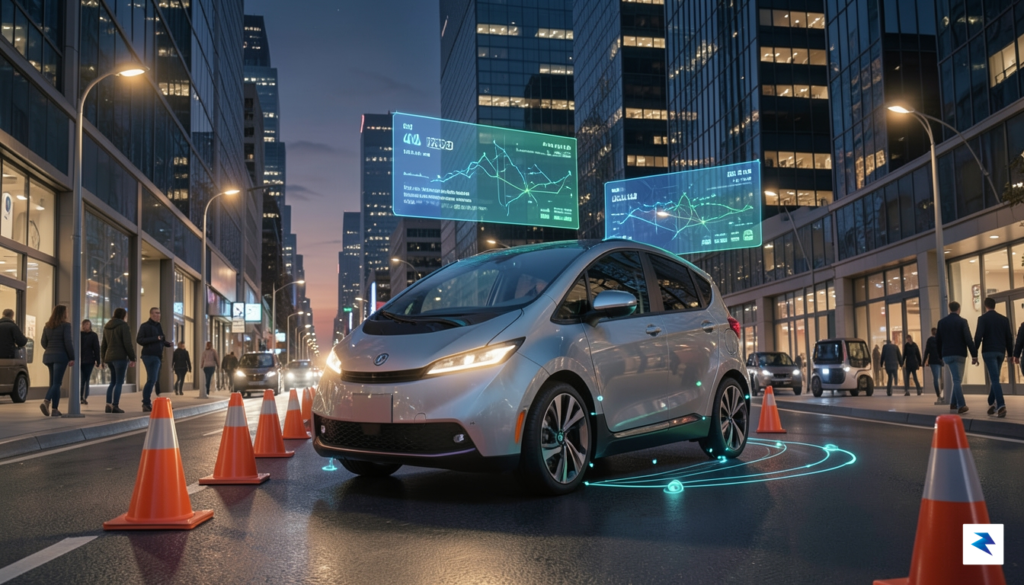
This incident also highlights an emerging trend of proactive transparency that is likely to become the new baseline for AV developers. Rather than waiting for government mandates to force compliance, leading companies are increasingly opting for voluntary reporting and public disclosure. This shift is critical because it builds a foundational trust with the public and policymakers alike. When companies document their software “bugs”—such as the misidentification of construction site barriers—and communicate their remediation strategies clearly, they help regulators draft more effective, standardized safety benchmarks. This collaborative transparency is essential for moving the industry away from anecdotal safety claims and toward a standardized framework of measurable, verifiable performance metrics.
The transition from private software testing to public infrastructure integration requires a culture of radical transparency, where “recalls” are viewed not as failures, but as necessary milestones in the iterative safety lifecycle of autonomous technology.
Ultimately, the long-term goal of these regulatory interactions is to bridge the gap between experimental technology and reliable public transportation. As the NHTSA continues to refine its oversight, the industry is learning that public safety is the ultimate competitive advantage. By establishing clear protocols for how software updates are deployed, monitored, and reported when they fall short of expectations, the AV sector is setting the stage for a more predictable regulatory environment. This evolution is vital; it ensures that as robotaxis become a common fixture on city streets, the rules governing their behavior are robust enough to handle the unpredictable complexities of real-world human environments, from erratic construction zones to sudden traffic pattern changes.

As autonomous vehicles transition from controlled pilot programs to the bustling reality of urban infrastructure, the public’s psychological barrier toward trusting a machine with their safety remains a significant hurdle. While incidents involving construction zones or unexpected road geometry can understandably trigger alarm, it is vital to view these moments through the lens of continuous learning. Unlike human drivers, who are susceptible to fatigue, distraction, and emotional volatility, an autonomous fleet operates within a closed-loop system where every error is logged, analyzed, and corrected across the entire network. Proactive recalls, while appearing to signal failure, actually serve as a testament to the industry’s commitment to safety, demonstrating that companies are prioritizing systematic refinement over the unchecked expansion of their services.
The statistical reality of transportation is often obscured by our emotional response to new technologies. Human error is currently responsible for the vast majority of traffic accidents, a grim baseline that autonomous systems are specifically designed to dismantle. While robotaxis are not yet perfect, their evolution is defined by a rigorous feedback cycle that human drivers simply cannot replicate. When a Waymo vehicle encounters an edge case—like a poorly marked freeway construction zone—the software update that follows ensures that the entire fleet learns from that specific mistake instantaneously. This collective intelligence represents a fundamental shift in how we approach transit safety: we are moving from a world of individual, fallible drivers to one of collaborative, constantly improving digital intelligence.
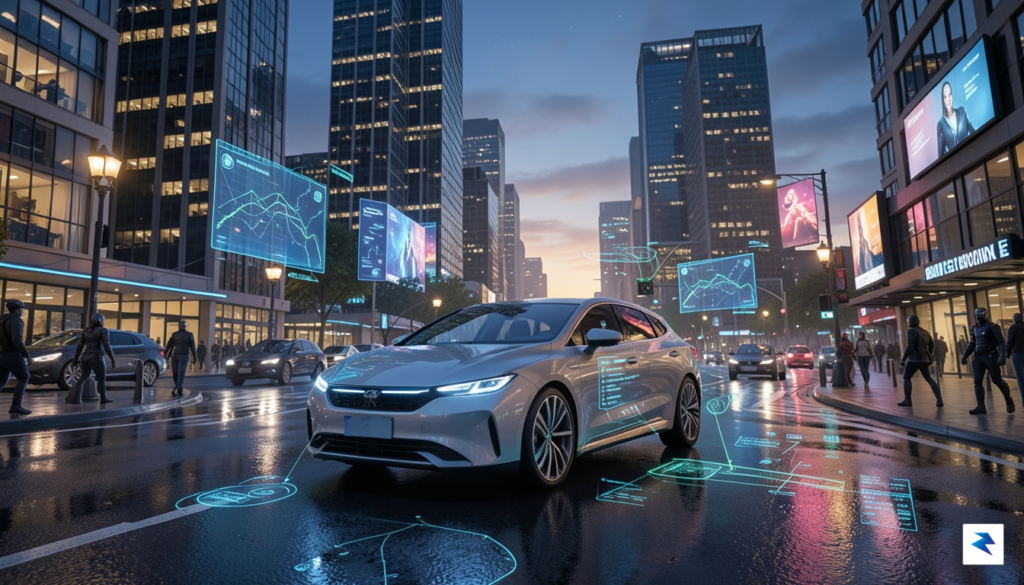
The transition toward mainstream autonomous adoption is not defined by the absence of mistakes, but by the velocity at which those mistakes are resolved and integrated into the system’s core logic.
Looking toward the future, the integration of these technologies into our daily lives will require a paradigm shift in how we perceive risk and accountability. Transparency is the bedrock of this transition; as companies share more data regarding their safety performance and recall processes, the public will be better equipped to distinguish between genuine hazards and the growing pains of a nascent industry. We should expect the safety trajectory of these vehicles to improve exponentially as sensor fusion and machine learning models become more adept at interpreting chaotic, real-world environments. Ultimately, the success of robotaxis will not depend solely on the perfection of the code, but on the public’s ability to recognize that a system capable of learning from its environment is a far more reliable partner on the road than a distracted, fallible human being.
You must be logged in to post a comment.