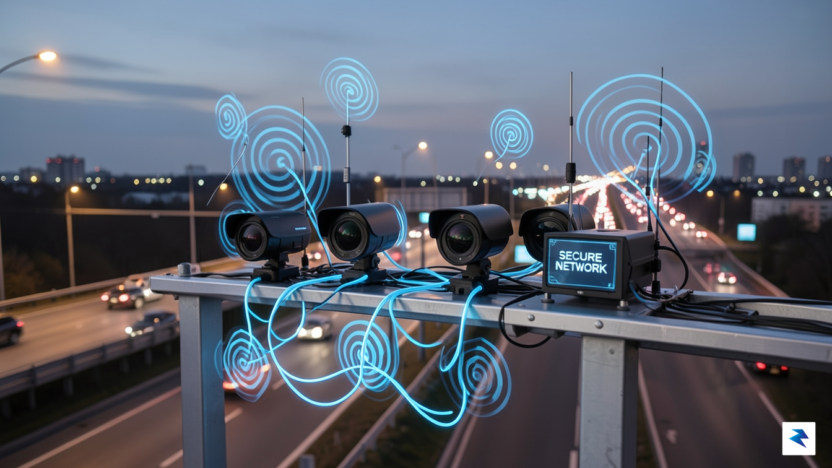
The Evolution of ALPR: Beyond License Plates

For decades, Automated License Plate Recognition (ALPR) systems have served as the silent sentinels of our roadways. Traditionally, these systems relied exclusively on high-speed optical cameras capable of capturing alphanumeric strings from metal plates, cross-referencing them against law enforcement databases to flag stolen vehicles or individuals with active warrants. While effective, this visual-only approach had inherent limitations: license plates can be obscured by dirt, masked by physical covers, or simply avoided by those who recognize the camera’s fixed position. The reliance on line-of-sight identification meant that if a vehicle moved out of view or obstructed its plate, the surveillance chain was effectively broken, leaving authorities with a significant gap in their data collection efforts.
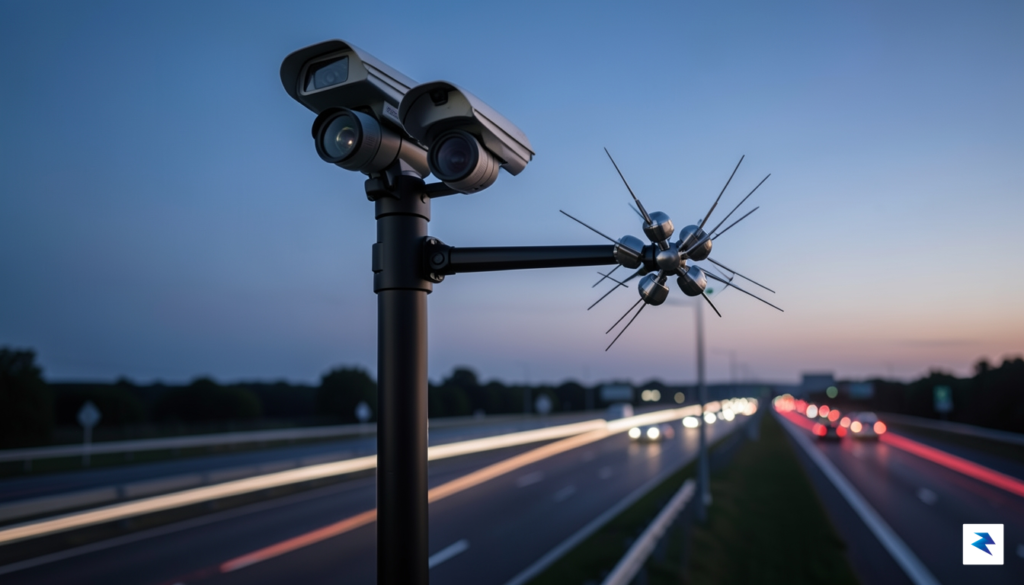
The landscape of traffic monitoring is currently undergoing a radical transformation, moving away from purely visual identification toward a more pervasive, multi-modal surveillance architecture. At the forefront of this shift is Leonardo’s SignalTrace technology, a system that essentially turns standard traffic infrastructure into high-fidelity signal interception hubs. Instead of waiting for a camera to “read” a physical plate, SignalTrace actively scans for the constant, invisible “handshakes” emitted by mobile devices. Whether it is an iPhone, a pair of AirPods, or a smart wearable, these devices are in a state of perpetual communication with their environment, broadcasting unique identifiers that this new technology can capture with alarming precision.
By shifting the focus from the vehicle itself to the electronic footprint of its occupants, law enforcement and private security firms are creating a persistent digital trail that is nearly impossible to evade.
This evolution represents a significant leap in surveillance capability because it removes the requirement for physical visibility. Unlike a license plate, which is a static object, the Bluetooth and Wi-Fi signals emitted by personal electronics act as a persistent digital beacon. Even if a driver attempts to evade traditional cameras, their personal device continues to announce its presence to any SignalTrace-enabled sensor within range. This creates a far more resilient net; it does not matter if a vehicle is traveling in a crowded lane or passing through a poorly lit area, as the electronic signature of the passengers effectively “tags” the vehicle with high reliability. As these systems become more integrated into our urban infrastructure, the fundamental nature of road travel is changing from a relatively anonymous experience to one where our personal devices act as constant, unwilling informants.
How SignalTrace Works: The Physics of Bluetooth Tracking
SignalTrace operates on a principle fundamentally different from traditional license plate readers. Instead of visually identifying vehicles by their registration plates, this innovative system focuses on the unseen world of radio signals constantly emanating from our personal electronic devices. It essentially functions as a sophisticated sensor, designed to detect and interpret the unique wireless emissions that act as digital fingerprints for smartphones, smartwatches, and even wireless earbuds. This shift in methodology allows it to track not just vehicles, but the presence of individuals carrying these ubiquitous gadgets, creating a new layer of digital surveillance on our roadways.
The heart of SignalTrace’s detection capability lies in its ability to pick up two primary types of wireless identifiers: Media Access Control (MAC) addresses and Bluetooth signal beacons. Every Wi-Fi and Bluetooth-enabled device possesses a unique, hard-coded MAC address, a serial number of sorts, which serves as its individual network identifier. While many modern operating systems employ MAC address randomization to enhance privacy by masking this unique ID, devices still frequently broadcast unique, albeit often rotating, identifiers or “beacons” as they search for networks or other devices to connect with. These beacons are short, repetitive bursts of radio waves that announce a device’s presence and capabilities, making them detectable by specialized receivers like SignalTrace.
The contrast between traditional license plate recognition and SignalTrace’s method is stark. A conventional LPR camera captures an image, processes it to read alphanumeric characters, and then cross-references that data with vehicle registration databases. This process identifies a specific vehicle. SignalTrace, however, doesn’t care about the make or model of your car; it’s listening for the subtle chatter of your devices. It identifies the presence of a device, essentially noting that “a unique Bluetooth or Wi-Fi signal was detected at this specific location at this specific time.” This fundamental difference means the system is tracking personal electronics rather than state-issued vehicle identifiers, opening up entirely new dimensions of tracking capability.
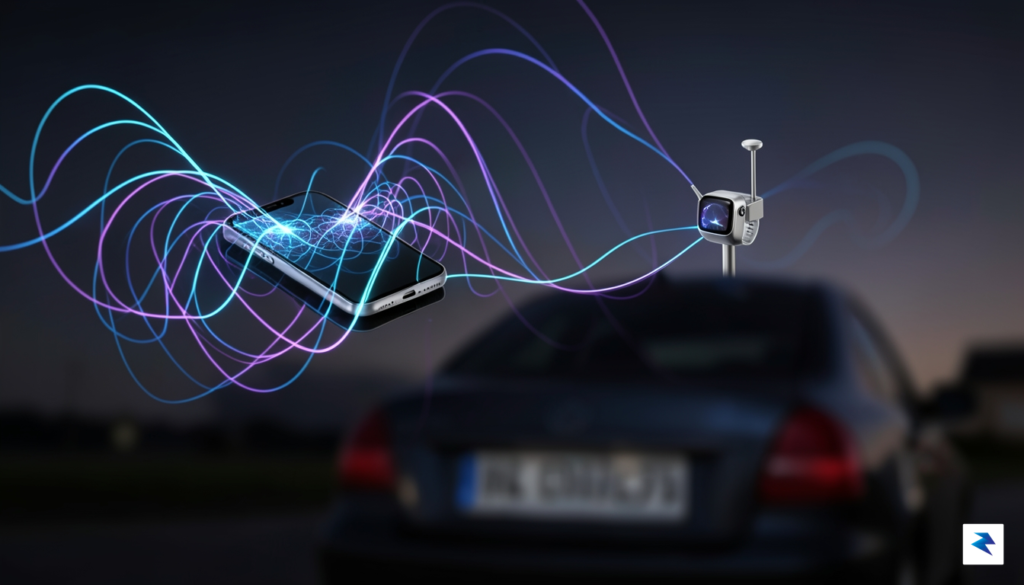
It’s crucial to understand that SignalTrace isn’t designed to “read” the data on your phone, access your photos, or listen to your conversations. The technology operates at a much lower level of interaction. Instead, it merely registers the presence of your device’s signal. Think of it like a digital headcount: it knows a device was there, and often, it can even distinguish which unique device it was (even with randomized MAC addresses, patterns or other identifiers can still be tracked over time). This distinction is vital for understanding the scope of its capabilities; it’s about tracking movement and association patterns of devices, not invading the content stored within them. The system essentially maps out the digital footprint of a device as it traverses different locations
Privacy Implications and the Digital Footprint

The integration of advanced signal-detection technology into roadside infrastructure fundamentally alters the relationship between the individual and the public sphere. For years, we have grown accustomed to the idea that our digital devices occasionally communicate with towers or Wi-Fi hotspots, but the deployment of sensors capable of sniffing out Bluetooth signals from AirPods, smartwatches, and smartphones creates a new paradigm of involuntary surveillance. By treating every passing vehicle as a carrier of multiple “digital beacons,” authorities and private entities can effectively map an individual’s movements with a level of precision that was previously reserved for targeted criminal investigations. This transition from incidental connectivity to systematic, passive tracking turns our own personal electronics into silent informants, broadcasting unique hardware identifiers to any sensor positioned along the commute.

The core concern here lies in the permanence and reach of the digital footprints we leave behind as we navigate our daily lives. Unlike a physical license plate, which is a government-mandated identifier, the MAC addresses and device signatures emitted by our wearable tech are often broadcasted automatically as a byproduct of their basic functionality. When these roadside sensors “ping” our devices, they capture metadata that can be aggregated over time, transforming fragmented data points into comprehensive movement profiles. Consequently, the brief journey from home to work—once a mundane, private act—becomes a series of timestamped events. These logs can document not just where you are, but the specific path you chose, how often you stop, and which locations you frequent, effectively stripping away the anonymity we once enjoyed in public spaces.
The danger is not necessarily in a single data point, but in the aggregation of thousands of points that, when combined, create an intimate map of a human life.
Perhaps the most alarming aspect of this technology is the potential for cross-referencing these movement profiles with other existing databases. When the digital signature harvested by a roadside sensor is matched against registration records, social media check-ins, or third-party marketing datasets, the resulting picture becomes incredibly granular. A driver might be identified by their license plate, but their passenger or their children in the backseat could be tracked via their own smartwatches or earbuds. This ability to link disparate data silos means that personal privacy is no longer just about hiding one’s identity; it is about the inability to move through the world without generating a persistent, searchable trail. As these systems become more prevalent, the expectation of being “untracked” in public becomes an outdated concept, leaving us to navigate a world where our personal devices act as involuntary witnesses to our every movement.
Legal and Ethical Debates Surrounding Roadside Surveillance

The rapid evolution of roadside surveillance technology has ignited a fiery debate, pitting the undeniable utility for law enforcement against fundamental civil liberties and privacy rights. As devices capable of identifying and tracking not just vehicle license plates, but also the unique signals emitted by our personal electronics like phones, AirPods, and smartwatches, become more prevalent, legal experts and privacy advocates are raising urgent questions about the permissible scope of such surveillance on public roads. This technological leap fundamentally alters the landscape of public observation, pushing the boundaries of what was previously considered acceptable under existing legal frameworks.
Traditional Automatic License Plate Readers (ALPRs) have been a staple in law enforcement for years, scanning and recording vehicle license plates to identify stolen cars, track suspects, and gather intelligence. Generally, courts have upheld their use, reasoning that there is no reasonable expectation of privacy when a vehicle is driven on public roads and its license plate is openly displayed. However, even with traditional ALPRs, debates have raged concerning the retention of vast databases of non-suspect vehicle movements, the potential for data misuse, and the lack of clear, consistent regulations governing how long this information can be
Balancing Public Safety with Individual Anonymity

As we stand on the precipice of a new era in urban surveillance, the challenge for the coming decade is not merely the development of smarter security, but the establishment of robust, legally binding safeguards that prevent the total erosion of anonymity in our public spaces. While the ability to track Bluetooth and Wi-Fi signatures can undoubtedly assist law enforcement in locating stolen vehicles or missing persons, these tools carry the inherent risk of becoming a dragnet that captures the movements of every law-abiding citizen. Consequently, the conversation must shift from whether we can deploy these advanced signal-tracking readers to whether we should, and under what specific constraints they must operate to remain compatible with a free society.
The necessity for strict data retention policies cannot be overstated. If every roadside sensor keeps a permanent log of device identifiers, the infrastructure effectively creates a searchable map of our private lives, susceptible to data breaches, unauthorized surveillance, or mission creep. To mitigate this, regulatory frameworks must mandate aggressive data deletion timelines, where non-relevant signal data is scrubbed within hours or even minutes of collection. Furthermore, such systems should be subject to independent, transparent auditing processes. By allowing third-party oversight to verify that data is being handled according to strict privacy protocols, we can ensure that these tools serve as precise instruments for public safety rather than persistent beacons for mass tracking.

The true measure of a smart city is not how well it tracks its inhabitants, but how effectively it protects the fundamental right to move through the world without being constantly monitored.
Looking toward the future, we must recognize that our personal privacy is becoming inextricably linked to the infrastructure of our roads and transit systems. The rapid proliferation of connected devices means that our digital footprints are now broadcasting our location with unprecedented frequency and precision. Unless we codify our expectations of privacy into law—requiring informed consent, strict limitations on data cross-referencing, and robust cybersecurity standards—we risk sliding into a reality where public anonymity becomes a relic of the past. Ultimately, the next decade will be defined by our willingness to demand a regulatory balance that respects individual agency, ensuring that our technological progress does not come at the cost of the basic freedoms that define our daily lives.