
Understanding Anthropic Mythos: A New Standard for Enterprise AI

The recent authorization by the Trump administration for over 100 U.S. companies and agencies to deploy Anthropic’s Mythos 5 model marks a watershed moment, fundamentally reshaping the landscape of artificial intelligence within the enterprise sector. This pivotal decision transcends a simple technological upgrade; it represents a deliberate strategy to integrate advanced AI capabilities into the national infrastructure, moving beyond experimental phases to a standardized, federally sanctioned rollout. The implications are vast, signaling a new era where private sector innovation is closely intertwined with federal oversight and strategic national objectives.
At its core, Mythos 5 distinguishes itself from preceding large language models (LLMs) through a unique blend of sophisticated reasoning, enhanced safety protocols, and unparalleled explainability features specifically tailored for enterprise environments. While earlier LLMs often prioritized raw generative power, Mythos 5 emphasizes reliability, auditability, and ethical alignment, critical factors for widespread adoption in sensitive sectors like finance, healthcare, and defense. Its architecture reportedly incorporates advanced “Constitutional AI” principles, allowing for self-correction against harmful biases and ensuring outputs adhere to predefined ethical guidelines, a significant leap forward in responsible AI development.
The administration’s decision to champion Mythos 5 for such a broad rollout was not arbitrary. It reflects a strategic intent to establish a trusted, secure, and uniquely American-aligned foundation for the nation’s AI infrastructure. By selecting a model developed by a U.S.-based company with a strong commitment to safety and transparency, the government aims to mitigate risks associated with foreign-developed AI, particularly concerning data sovereignty and national security. Furthermore, standardizing on a single, robust platform like Mythos 5 is expected to foster interoperability across diverse agencies and companies, streamlining development efforts and accelerating the adoption of critical AI applications.
This move signifies a profound shift from the often fragmented and experimental deployment of AI we’ve seen in recent years to a more cohesive and strategic enterprise-wide integration. The strategic implications are far-reaching: it will likely accelerate productivity gains across various industries, enhance competitive advantage on a global scale, and drive innovation by providing a stable, high-performance AI backbone. However, it also introduces new challenges, particularly regarding data governance, ethical oversight at scale, and ensuring equitable access to these powerful new tools. The federal backing of Mythos 5 sets a precedent, suggesting that future AI advancements will increasingly be viewed through the lens of national strategic importance, rather than solely as private sector ventures.
Consequently, this deployment isn’t just about giving companies access to a new AI model; it’s about embedding a specific vision for AI’s future into the fabric of American enterprise. Companies and agencies now have a clear directive and a powerful, vetted tool to leverage AI for complex problem-solving, operational efficiency, and transformative innovation. The coming months will undoubtedly reveal the tangible benefits and potential new frontiers unlocked by this monumental shift towards standardized, enterprise-grade AI deployment across the nation.

The Scope of Deployment: Beyond US Borders
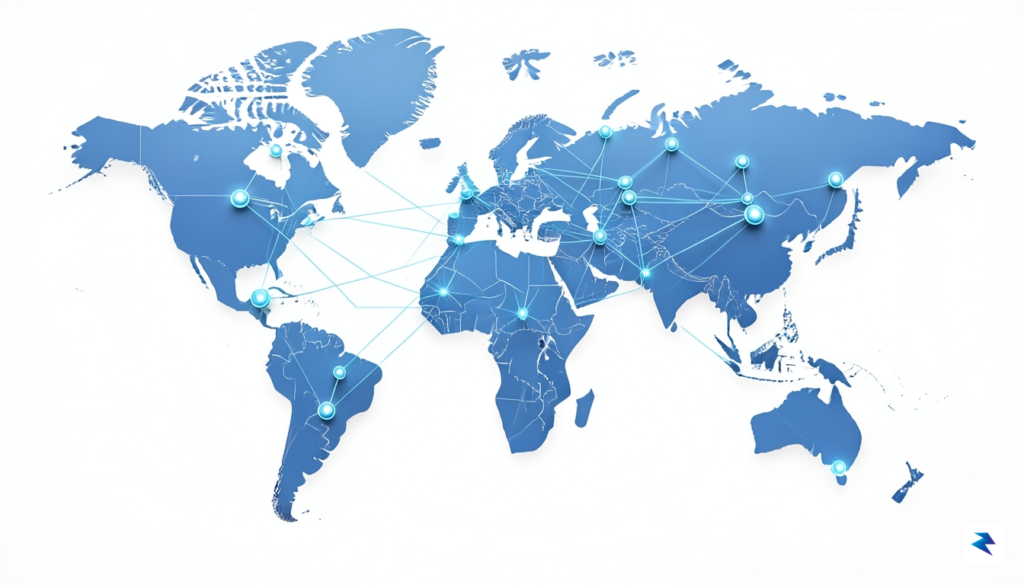
One of the most defining and arguably most debated aspects of the Anthropic Mythos 5 rollout is its unprecedented scope, extending access beyond solely American soil. While the initial deployment targets over 100 US companies and federal agencies, a critical distinction lies in the authorization granted to non-American employees within these entities. This decision represents a significant acknowledgment of the deeply interconnected, globalized nature of modern corporate structures and international collaborations, allowing multinational corporations to leverage the tool’s capabilities across their worldwide operations without artificial, nationality-based barriers.
The rationale behind this broad inclusion is rooted in operational reality. Many US-based corporations operate extensive international branches, research facilities, and production lines, where critical teams are composed of individuals from diverse nationalities. Restricting Mythos 5 access solely to American citizens within these global frameworks would severely hobble its utility, creating fragmented workflows and hindering collaborative innovation. For instance, a US tech giant with R&D hubs in Europe or Asia needs its entire product development team, regardless of passport, to access and utilize advanced AI tools for consistency and efficiency. The administration, therefore, seems to have prioritized the seamless integration and maximized utility of Mythos 5 for these globalized entities, ensuring that the tool can genuinely empower their entire workforce, not just a subset.
However, this expansive approach naturally introduces a complex web of considerations, particularly concerning data sovereignty and operational security. When an AI system, especially one developed under government auspices and handling potentially sensitive information, is accessed by employees in various international jurisdictions, questions inevitably arise about where the data resides, who has ultimate control over it, and which national laws apply. Different countries have varying regulations regarding data privacy, intellectual property, and government access to information. Navigating this intricate legal landscape requires robust frameworks and agreements to ensure that data integrity is maintained and that sensitive information processed by Mythos 5, even if handled by non-American personnel, remains protected in accordance with US interests and the policies governing its use.
Beyond legal frameworks, the operational security implications are substantial. Expanding access to a global user base inherently broadens the attack surface and introduces new vectors for potential security breaches or intellectual property theft. Safeguarding proprietary algorithms, confidential data, and strategic insights becomes a more intricate challenge when personnel in diverse geopolitical regions are interacting with the system. This necessitates incredibly stringent access controls, sophisticated monitoring capabilities, and continuous auditing to detect and mitigate risks effectively. The balance between empowering global teams for efficiency and maintaining an ironclad security posture against potential state-sponsored espionage or unauthorized data leakage is a tightrope walk that will define the long-term success and trustworthiness of Mythos 5’s international deployment.
Ultimately, the decision to allow non-American employees access to Mythos 5 reflects a pragmatic understanding of the 21st-century global economy. It acknowledges that innovation and progress often transcend national borders and require collaborative efforts from diverse international talent. Yet, this pragmatism is tempered by profound challenges related to data governance, national security, and intellectual property protection. The ongoing rollout will serve as a critical test case, demonstrating how a powerful, government-backed AI tool can be deployed globally while attempting to uphold core principles of security and sovereignty in an increasingly interconnected world.

Security, Compliance, and National Interest

The widespread integration of Anthropic Mythos 5 across over a hundred US companies and government agencies inherently brings a critical focus to the robust frameworks designed to protect sensitive information and uphold national security. The administration has meticulously crafted a multi-layered approach to compliance, ensuring that while the AI’s powerful capabilities are leveraged for innovation and efficiency, they do not inadvertently compromise proprietary data or state secrets. This proactive stance is fundamental to building public and institutional trust, particularly as advanced artificial intelligence becomes an integral part of critical infrastructure and strategic operations.
A cornerstone of this deployment strategy involves establishing comprehensive regulatory frameworks that govern every aspect of Mythos 5’s operation. These frameworks are not merely guidelines; they are legally binding protocols that mandate stringent data handling practices, algorithmic transparency, and accountability measures. Agencies and companies utilizing Mythos 5 must adhere to specific federal directives concerning data privacy, cybersecurity standards, and ethical AI use, often building upon existing legislation like the Federal Information Security Modernization Act (FISMA) and incorporating new AI-specific guidelines tailored to the unique challenges presented by large language models. This ensures a consistent baseline of security and ethical conduct across diverse applications, from enhancing administrative tasks to informing critical national defense strategies.
Furthermore, the implementation of internal firewalls and strict data-sharing limitations is paramount to safeguarding sensitive information within individual organizations. Each entity employing Mythos 5 is required to establish secure, segmented environments where the AI interacts only with pre-approved datasets, preventing unauthorized access or cross-contamination of proprietary data. This involves sophisticated access control mechanisms, encryption protocols, and auditing trails that meticulously record every interaction with the model. The architecture is designed to create digital “air gaps” where necessary, ensuring that highly classified or commercially sensitive information remains isolated from less secure domains, thereby mitigating the risk of data leakage or unintended exposure to external threats.
Protecting both corporate proprietary information and state secrets demands not only technical solutions but also robust contractual agreements and ongoing oversight. Companies engaging with Mythos 5 are subject to rigorous vetting processes and must sign detailed non-disclosure agreements that explicitly outline permissible data usage and storage. For government agencies, the protocols are even more stringent, often involving dedicated, air-gapped instances of the model operating within secure facilities. These measures are complemented by strict data anonymization and pseudonymization techniques where feasible, minimizing the direct exposure of personally identifiable information or sensitive operational details while still allowing the AI to glean valuable insights and perform its designated tasks effectively.
The administration maintains a vigilant role in continuously monitoring Mythos 5’s performance and actively preventing potential misuse across all deployments. This oversight includes regular security audits, performance reviews, and the establishment of incident response protocols to address any vulnerabilities or breaches swiftly. Dedicated task forces are likely in place to track the model’s outputs for any signs of algorithmic bias, unintended consequences, or attempts at malicious manipulation. Moreover, agencies are encouraged to report on their usage patterns and any anomalies, creating a feedback loop that allows the overarching regulatory framework to evolve and adapt to new threats or emerging best practices, ensuring the AI remains a secure and reliable tool serving the broader national interest.
How Mythos 5 Changes the Competitive Landscape

The Trump Administration’s strategic designation of Anthropic’s Mythos 5 as a foundational AI platform for over a hundred US companies and government agencies represents a watershed moment for the nation’s digital transformation journey. This move isn’t merely an adoption; it’s a powerful market signal, effectively establishing a new benchmark for AI capabilities and accelerating the pace at which both public and private sectors must integrate advanced artificial intelligence. Such a clear endorsement from the highest levels of government immediately reshapes competitive dynamics, compelling every player in the technology landscape to re-evaluate their AI strategy and investment priorities.
For legacy software providers, this rollout presents a significant inflection point, demanding rapid adaptation or risking obsolescence. Companies entrenched with older, less sophisticated AI models or traditional software architectures now face intense pressure to either integrate seamlessly with Mythos 5’s capabilities, develop truly superior alternatives, or pivot their entire product roadmap. The challenge isn’t just about competing head-to-head with a new powerful tool; it’s about navigating a future where the government-backed standard dictates a new baseline for operational efficiency and data intelligence. This scenario could trigger a wave of strategic partnerships, urgent mergers and acquisitions, or substantial internal research and development overhauls as these established firms scramble to remain relevant in a rapidly evolving ecosystem.
Conversely, within the authorized agencies and companies, the immediate impact is poised to be a surge in productivity and innovation. With a robust, standardized AI platform at their disposal, organizations can streamline complex operations, automate repetitive tasks, and extract deeper, more actionable insights from vast datasets than ever before. This newfound analytical power and operational fluidity promise to enhance decision-making, optimize resource allocation, and unlock novel capabilities that were previously beyond reach. Furthermore, Mythos 5’s comprehensive framework could foster a vibrant ecosystem of innovation, encouraging authorized entities to build specialized applications and services atop its foundation, thereby accelerating the development of sector-specific AI solutions and driving unprecedented advancements across various industries.
However, this strategic government endorsement also sparks considerable concern regarding market consolidation and fair competition. By effectively ‘picking a winner’ in the burgeoning AI space, the administration grants Anthropic a monumental advantage, potentially creating formidable barriers for other innovative AI developers. Smaller startups and competing AI research initiatives may find it increasingly difficult to secure funding, attract talent, or gain market share when a single, government-backed platform dominates the landscape. This powerful market signal could inadvertently stifle the diversity of AI development, limiting the range of approaches and solutions available to the broader market and raising legitimate questions about potential antitrust implications in the long run.
“The designation of Mythos 5 is a double-edged sword: a catalyst for national digital transformation, yet a significant challenge to the competitive balance of the AI industry.”
Ultimately, the rollout of Anthropic’s Mythos 5 represents a pivotal moment that will undeniably reshape the competitive landscape of the AI industry and the corporate market. While it promises unparalleled gains in productivity and innovation for authorized users, it also casts a long shadow over the future of competition, potentially consolidating power around a single dominant player. The ensuing years will reveal how legacy providers adapt, how authorized agencies leverage this new power, and whether the broader market can sustain a healthy level of competition and innovation under the weight of such a significant governmental endorsement.
The Future of Government-Industry AI Collaboration

The recent deployment of Anthropic Mythos 5 across a vast network of over one hundred U.S. companies and government agencies represents far more than just a technological upgrade; it serves as a foundational blueprint for how artificial intelligence will be integrated into the public and private sectors for decades to come. This ambitious initiative, spearheaded by the Trump Administration, is a pivotal moment that will undoubtedly shape the trajectory of federal AI procurement, influence the depth of collaboration between leading tech giants and public institutions, and set new precedents for national AI policy. Its success, or indeed its challenges, will provide critical data points for future large-scale governmental technology adoption.
From this initial rollout, several key lessons are already emerging, hinting at the complexities and opportunities inherent in such grand endeavors. Firstly, the paramount importance of robust ethical frameworks and governance structures cannot be overstated. Integrating powerful AI into critical public services demands meticulous attention to issues like algorithmic bias, data privacy, and accountability mechanisms. Secondly, the deployment highlights the necessity of seamless interoperability between proprietary AI solutions and diverse legacy government systems, a technical hurdle that requires significant upfront planning and ongoing maintenance. Furthermore, the collaborative model itself, bridging the innovative capabilities of Anthropic with the specific needs and security demands of federal agencies, showcases a potential pathway for pooling resources and expertise that might otherwise remain siloed.
Looking ahead, the successful integration of advanced AI models like Mythos 5 into the federal ecosystem is poised to become the standard, rather than the exception. We can anticipate a future where AI extends beyond current applications, moving from specific departmental tasks to more holistic, cross-agency solutions that enhance everything from national security and logistical operations to public health initiatives and citizen services. This could involve the development of standardized federal AI frameworks, comprehensive training programs for public servants, and potentially even a shift towards AI-first procurement policies that prioritize intelligent automation in future contracts. The initial experience will guide the evolution of procurement strategies, moving towards agile, outcome-based contracts that can adapt to rapid technological advancements.
However, this bold leap into large-scale government AI adoption comes with a dual set of significant risks and rewards that demand careful consideration. On the reward side, the potential for unprecedented efficiencies, enhanced data-driven decision-making, and superior public service delivery is immense. AI can streamline bureaucratic processes, provide deeper insights from vast datasets, and even augment human capabilities in complex problem-solving. Conversely, the risks are equally profound. Concerns around job displacement within the federal workforce, the potential for over-reliance on private sector technology providers, and the inherent security vulnerabilities of centralized AI systems must be rigorously addressed. Moreover, the ethical dilemmas surrounding automated decision-making and the preservation of civil liberties in an AI-powered state will require ongoing public discourse and adaptive policy adjustments to ensure that technology serves humanity, rather than the other way around.
Ultimately, the journey embarked upon with the Mythos 5 rollout is a testament to both the ambition and the inherent challenges of modern governance in an AI-driven world. Its long-term implications for future AI policy will hinge on a continuous feedback loop of deployment, evaluation, and adaptation. The blueprint laid down today will not only dictate the technological infrastructure of tomorrow’s government but also shape the very principles by which advanced artificial intelligence is governed, ensuring a balanced pursuit of innovation, security, and public trust.