
The Global Capital Flow into Local Housing
For decades, the concept of a home was tethered to the idea of shelter—a fundamental human necessity and the cornerstone of stable, healthy communities. However, the modern real estate landscape has undergone a radical transformation, shifting from a localized service sector into a highly liquid, global asset class. This evolution has been fueled by the unprecedented mobility of international capital, which now views urban residential properties not as places to live, but as high-yield vehicles for wealth preservation and speculation. As these vast pools of cross-border investment seek safe havens from volatile stock markets or unstable domestic economies, they have gravitated toward the premium residential markets of major global cities, fundamentally decoupling local home prices from the actual earnings of the families who live there.

The influx of foreign capital is rarely distributed evenly; instead, it tends to concentrate in specific urban hubs that offer high transparency, political stability, and the promise of long-term appreciation. Investors from around the world aggressively target “gateway” cities—metropolises like London, Vancouver, New York, and Sydney—where the prestige of the address acts as a hedge against inflation. Because these investors are often insulated from the local labor market, they are frequently willing to pay a significant premium above what a local buyer could afford. Consequently, this creates a competitive imbalance where residents are effectively priced out of their own neighborhoods by capital that is indifferent to the social fabric of the community.
The commodification of housing has turned the domestic roof over one’s head into a speculative financial instrument, prioritizing the ROI of a distant portfolio over the right to affordable urban living.
Recent empirical research highlights the severity of this price distortion, suggesting that the arrival of foreign investment acts as a catalyst for rapid, artificial inflation. When international funds enter a local market, they do not simply increase the demand for housing; they redefine the market’s value proposition entirely. Studies indicate that as foreign ownership rates rise in concentrated zones, local property values often disconnect from regional income growth, creating a “wealth effect” for existing property owners while simultaneously creating a permanent barrier to entry for first-time buyers. This phenomenon forces a shift in the local housing inventory, as developers pivot to build luxury units designed for investment portfolios rather than the modest, multi-family dwellings required to sustain a healthy, diverse workforce.
Ultimately, the globalization of real estate has created a paradox: while property has become more valuable than ever on the international stage, it has become increasingly inaccessible to the very people who power the city’s economy. When housing is treated primarily as an investment asset, the social consequences are profound, leading to heightened displacement, longer commutes for essential workers, and a erosion of the middle-class stability that once defined these urban centers. Addressing this affordability crisis requires more than just building new units; it demands a critical look at how we regulate the flow of international capital to ensure that the fundamental right to shelter is not sacrificed on the altar of global finance.
Understanding the Mechanism: How Institutional Investment Impacts Prices
The relationship between global capital and local housing markets has transcended simple supply-and-demand dynamics, evolving into a sophisticated financial mechanism that fundamentally alters how properties are valued. Research from the McCombs School of Business highlights that when foreign-backed institutional entities enter a market, they do not merely participate as typical buyers; they act as market-makers with unique fiscal incentives. Unlike individual homebuyers who are constrained by local wages and mortgage interest rates, these entities operate with vast pools of liquidity that allow them to absorb large tranches of housing stock simultaneously. This bulk acquisition strategy effectively shifts the neighborhood baseline, as the price paid for a single property becomes the new floor for every comparable unit in the vicinity.
At the heart of this inflation is the creation of a “scarcity premium.” When capital-rich entities pursue aggressive buy-to-hold strategies, they essentially remove functional inventory from the market for years or even decades. By acquiring clusters of homes—often in high-demand urban corridors—these investors create artificial scarcity, which drives up the competitive tension for the remaining available properties. Consequently, local families find themselves bidding against an adversary that is not seeking a place to live, but is instead optimizing a portfolio for long-term yield or speculative appreciation. This creates a feedback loop where the more institutional money flows into a neighborhood, the more expensive that neighborhood becomes, further insulating it from the reach of traditional buyers.
The influx of institutional capital transforms residential real estate from a social necessity into a high-performance financial asset, decoupling property values from the economic reality of the local workforce.
Furthermore, the valuation models utilized by these firms frequently overlook the micro-economic fluctuations that dictate the buying capacity of average residents. Instead, these investors apply a globalized lens, valuing assets based on international rental yields and macro-economic hedging rather than the affordability of the local community. Through these speculative valuation models, firms can justify paying prices that far exceed the historical appraisal values of the area. This behavior forces a rapid re-pricing of local real estate, which creates an environment where home ownership becomes increasingly elusive. As buy-to-hold strategies continue to proliferate, the resulting pressure effectively turns residential districts into investment vehicles, systematically eroding the dream of home ownership for the very people whose local economic activity sustains the community in the first place.
The Displacement Effect: Beyond Simple Supply and Demand
When the influx of foreign capital transforms housing from a fundamental human necessity into a high-yield global asset class, the repercussions extend far beyond mere price tags. In many metropolitan hubs, the decoupling of real estate values from local wage growth has triggered a profound shift in urban demographics. As investment capital floods into luxury developments, the resulting surge in surrounding property values often forces long-term residents, local business owners, and essential workers to migrate toward the urban periphery. This creates a ripple effect, effectively hollowing out the middle class and eroding the diverse social fabric that once defined these neighborhoods.
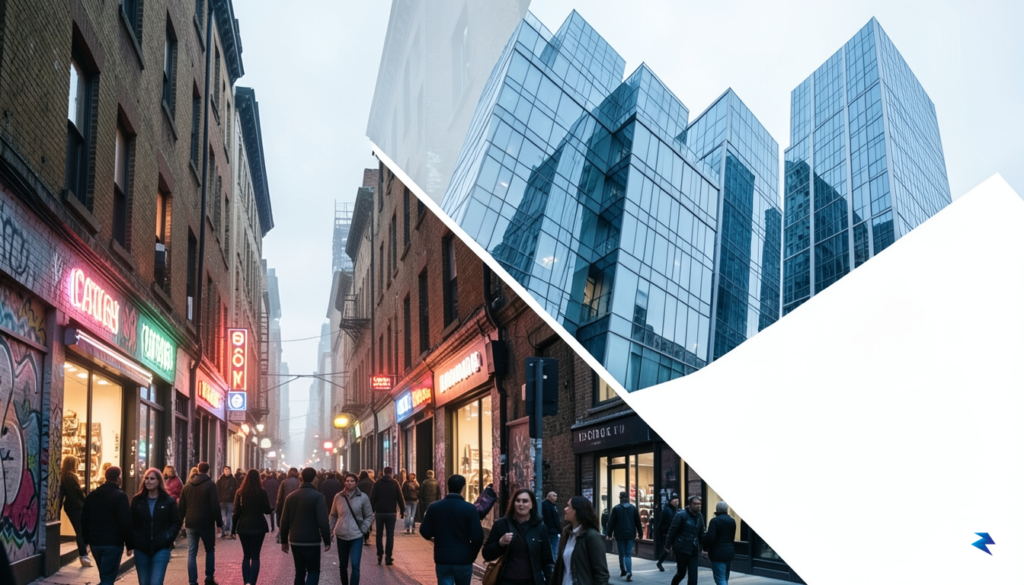
The “neighborhood effect”—the sociological phenomenon where a community’s character is defined by the stability and social capital of its inhabitants—is particularly vulnerable under the pressure of speculative investment. When long-term residents are displaced, the informal support networks, multi-generational connections, and local cultural touchstones that make a city livable are irreparably damaged. As lower-income families are pushed out, we observe a homogenization of urban centers, where only those with significant wealth can afford to participate in the local economy. This is not merely an economic shift; it is a cultural erosion that turns thriving, organic communities into transient zones for global investors who may never set foot in the units they own.
The financialization of housing prioritizes the portfolio performance of global investors over the survival of the local community, creating a city that functions as a safety deposit box rather than a home.
Furthermore, the rise of “ghost properties”—units purchased as speculative vehicles that remain vacant for the majority of the year—exacerbates the crisis by artificially restricting supply. These empty windows in the skyline represent a failure of the housing market to serve its primary purpose: providing shelter for the people who work and live in the city. When residential blocks are effectively turned into private vaults, local homeownership rates plummet, trapping younger generations in a cycle of precarious renting. This decline in ownership acts as a barrier to wealth accumulation for local residents, further widening the socioeconomic divide between global capital holders and the labor force required to keep the city functioning.
Ultimately, the human cost of this trend is found in the daily struggle of families who find themselves priced out of their own backyards. When a city becomes a playground for international wealth, it risks losing the very human infrastructure—the teachers, nurses, artists, and service workers—that makes it a functional, vibrant place to live. Addressing this crisis requires a fundamental shift in how we view urban real estate: as a social good rather than an abstract commodity. Without policy interventions that prioritize the needs of residents over the mobility of capital, we risk creating sterile cities that are wealthy in assets but hollowed out of the human connection that gives them meaning.
Policy Interventions and the Path Forward

Addressing the growing crisis of housing affordability requires more than simply expanding supply; it demands a sophisticated recalibration of how global capital integrates with domestic property markets. As foreign investment continues to exert upward pressure on prices, many jurisdictions have begun experimenting with targeted policy interventions, such as foreign buyer taxes and mandatory beneficial ownership registries. These measures are designed to dampen speculative demand and improve market transparency, ensuring that homes are treated primarily as essential infrastructure for residents rather than volatile assets for international portfolios. While these taxes—often ranging from 15% to 25% of a property’s value—have succeeded in curbing speculative frenzies in cities like Vancouver and Sydney, their long-term efficacy remains a subject of intense debate among urban economists.
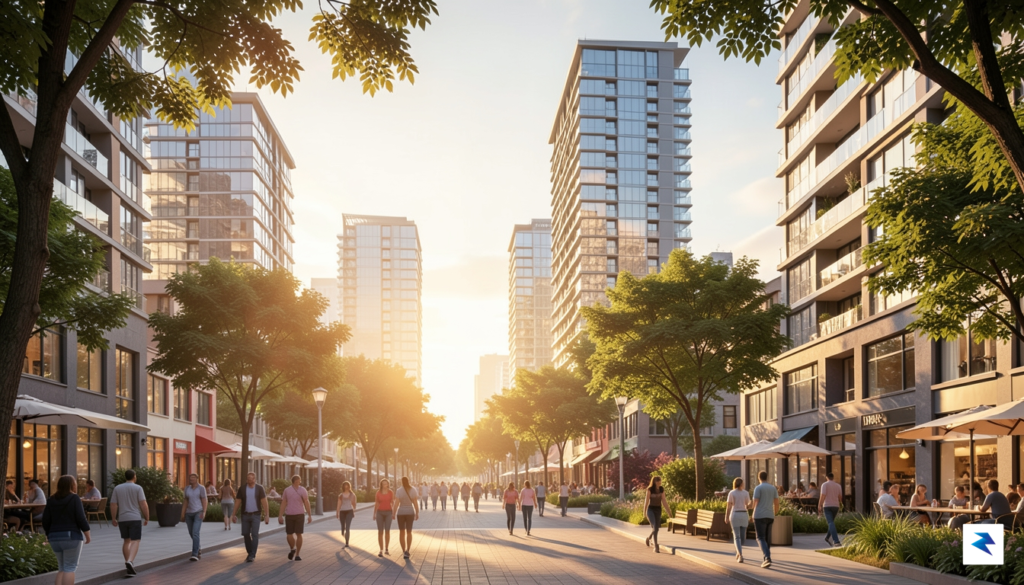
The fundamental tension lies in the friction between free-market principles and the urgent need for local housing stability. Critics of restrictive policies argue that discouraging international investment could inadvertently starve the construction sector of the liquidity required to build new housing stock, potentially worsening the supply deficit. Conversely, proponents argue that when global capital flows prioritize yield-seeking investments over housing utility, the market ceases to function for the average citizen. A sustainable regulatory framework must therefore move beyond blunt instruments like blanket bans. Instead, governments should consider a “tiered approach” that distinguishes between passive, speculative capital and long-term, productive investment—such as capital directed toward purpose-built rentals or affordable housing projects.
Effective regulation is not about severing ties with the global economy, but about establishing clear boundaries that prioritize the shelter needs of local populations over the speculative interests of offshore entities.
To achieve a more balanced path forward, policymakers must prioritize comprehensive data collection. Without transparent ownership registries that identify the true beneficiaries behind shell companies, it is nearly impossible to enforce tax codes or gauge the actual impact of offshore money on local neighborhoods. By integrating these registries with more nuanced tax structures—such as progressive levies on vacant properties or non-resident ownership—nations can foster an environment where housing remains accessible to those who live and work in the community. Ultimately, the goal is to decouple the domestic real estate market from global volatility, ensuring that homeownership remains a cornerstone of economic stability rather than a casualty of unchecked capital mobility.