
Russian Hackers Linked to Massive $2.5B Jaguar Land Rover Breach
The Anatomy of the Jaguar Land Rover Breach The infiltration of Jaguar Land Rover’s digital infrastructure was not a singular, brute-force…


For nearly a decade, Nvidia has acted as the undisputed architect of the modern artificial intelligence landscape. By positioning its graphics processing units (GPUs) as the essential engine for training massive neural networks, the company transformed from a gaming hardware manufacturer into the most valuable gatekeeper of the digital age. This dominance, however, has created significant market friction. As AI models have grown exponentially in complexity, the demand for compute power has vastly outpaced supply, leaving industry giants at the mercy of Nvidia’s production cycles, distribution priorities, and premium pricing. For many of the world’s most ambitious technology firms, relying on a singular, third-party vendor has shifted from a logistical convenience to a strategic bottleneck that threatens to cap their long-term growth and innovation.
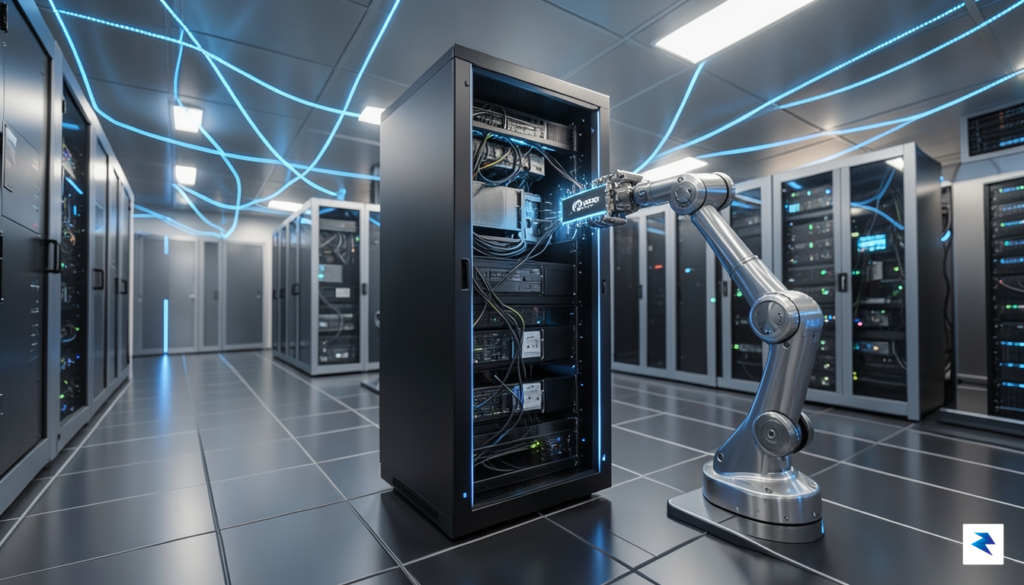
The industry is now witnessing a seismic shift as companies ranging from OpenAI to SpaceX begin to aggressively pivot toward vertical integration. Rather than settling for off-the-shelf solutions that are designed to serve a broad spectrum of customers, these organizations are investing billions into proprietary silicon. This transition is driven by the realization that general-purpose hardware cannot keep pace with the specific, highly specialized demands of proprietary AI architectures. By designing chips tailored to their own software stacks, these companies are not merely seeking to cut costs; they are aiming to reclaim control over their own development roadmaps and eliminate the performance compromises inherent in mass-market hardware.
The move toward custom silicon represents a fundamental transition from purchasing infrastructure to engineering it, effectively ending the era where software developers were mere tenants in Nvidia’s hardware ecosystem.
A primary catalyst for this trend is OpenAI’s internal “Jalapeño” initiative, a clandestine effort to rethink the intersection of hardware and model training. By pursuing custom AI accelerators, OpenAI is signaling that the future of artificial intelligence will be defined by the tight integration of proprietary silicon and cutting-edge algorithms. This shift toward in-house hardware design is echoed across the tech sector, as companies like SpaceX look to optimize their own data processing needs—particularly regarding satellite constellations and real-time navigation—that require low-latency, high-efficiency processing power that standard GPUs were never intended to deliver. As these custom chips move from the laboratory to the server rack, the long-standing reliance on a single monopoly is rapidly dissolving, replaced by a competitive, fragmented, and hyper-specialized new landscape for AI hardware.

For decades, the standard operating procedure for tech companies was to rely on general-purpose hardware. You built the software, and you bought the off-the-shelf chips to run it. However, in the era of hyperscale artificial intelligence and complex orbital computing, that model has become a structural liability. Vertical integration—the practice of designing one’s own silicon—has shifted from an expensive luxury for the elite few to a strategic imperative for any firm that wants to dictate its own future. By seizing control over the hardware stack, organizations can finally align their physical compute resources with the unique demands of their proprietary software architectures, effectively cutting out the middleman and reclaiming total sovereignty over their product roadmaps.
The “build versus buy” dilemma has reached a breaking point because off-the-shelf solutions, while powerful, are inherently designed for mass-market versatility rather than specialized performance. When a company like OpenAI relies entirely on third-party accelerators, they are essentially playing by someone else’s rules, subject to global supply chain constraints and hardware limitations that they cannot influence. By moving into hardware design, these firms can strip away unnecessary instruction sets and features that bloat general chips, creating lean, hyper-efficient engines that are purpose-built for their specific neural network workloads. This is not merely about cost reduction; it is about eliminating the performance bottlenecks that occur when software is forced to “speak” to hardware that wasn’t built with its specific quirks in mind.

Vertical integration is the ultimate hedge against market volatility; when you own the silicon, you no longer have to wait for the rest of the industry to catch up to your requirements.
We have seen this transformation play out successfully in the consumer space with Apple’s transition to its own Silicon, which allowed the company to achieve power efficiency and performance parity that Intel-based Macs simply could not reach. Similarly, Google’s long-standing investment in Tensor Processing Units (TPUs) provided the foundation for their dominance in search and machine learning long before the current AI boom made Nvidia a household name. Now, the shift is accelerating across more sectors, including space exploration and robotics, where hardware must be rugged, lightweight, and incredibly efficient. When SpaceX or OpenAI decides to design a custom chip, they are doing so because they have reached a scale where the “one-size-fits-all” approach to hardware is no longer sufficient to push the boundaries of what their software can actually achieve.
Ultimately, this move towards vertical integration signals a fundamental maturation of the tech industry. As these companies become the primary architects of their own physical infrastructure, they gain the ability to iterate at the speed of software. Instead of waiting years for a hardware supplier to release a new generation of chips that might—or might not—suit their needs, these organizations can engage in co-design, where the software requirements dictate the chip layout and vice versa. This tight feedback loop is the new competitive moat, ensuring that while the rest of the market remains tethered to the constraints of standardized hardware, the leaders of the new era are free to innovate without limits.

General-purpose graphics processing units, or GPUs, have long been the workhorses of the artificial intelligence revolution, prized for their versatility and massive parallel processing capabilities. However, this flexibility comes at a significant cost: architectural bloat. A standard GPU is designed to handle a vast array of tasks, from rendering high-fidelity video game textures to performing complex mathematical simulations. Because these chips must accommodate such a broad spectrum of functions, they are packed with circuitry, logic gates, and memory controllers that often sit idle during specific AI training or inference tasks. This “jack-of-all-trades” approach inherently limits how much energy can be dedicated to the singular operations that actually drive large language models.
In contrast, Application-Specific Integrated Circuits—or ASICs—are meticulously engineered to perform one job exceptionally well. By stripping away the extraneous hardware required for general computing, engineers can reclaim that precious silicon real estate to house more specialized processing cores and faster, closer-integrated memory architectures. This architectural pruning allows companies like OpenAI and SpaceX to design chips that prioritize the specific matrix multiplication and tensor operations fundamental to neural networks. Consequently, these custom chips can execute AI workloads with a level of precision that general-purpose hardware simply cannot match, effectively cutting out the “middleman” logic that slows down performance.

Beyond raw speed, the move toward custom silicon is fundamentally a battle against the laws of thermodynamics. When a GPU is forced to run a workload it wasn’t perfectly optimized for, a disproportionate amount of energy is wasted as heat rather than being converted into useful computational output. Custom ASICs solve this by streamlining the data flow, ensuring that every watt of electricity is channeled directly into the task at hand. This efficiency gains exponential importance when scaled across massive data centers, where even a marginal reduction in power consumption translates to millions of dollars in operational savings and a significantly smaller carbon footprint.
The true advantage of custom hardware lies in its ability to eliminate the “dead weight” of general-purpose logic, allowing for a hyper-specialized pipeline that drastically reduces latency and slashes energy overhead.
Furthermore, the reduction in latency achieved through custom hardware is a game-changer for real-time applications. By tailoring the memory bandwidth and cache hierarchy to match the specific size and structure of a model, custom silicon ensures that data reaches the processing units with minimal delay. This is particularly vital for edge computing scenarios or SpaceX’s satellite-based AI systems, where computing must happen locally and instantaneously without relying on slow cloud round-trips. By moving from a “one-size-fits-all” hardware model to a bespoke silicon strategy, tech giants are not just improving performance; they are fundamentally reshaping the economics of artificial intelligence.

For years, the tech industry operated under the assumption that hardware was a commodity to be purchased from established giants. However, as artificial intelligence and aerospace capabilities have evolved into the lifeblood of global enterprise, that reliance has transformed into a profound existential vulnerability. By tethering their entire infrastructure to a single hardware provider, companies like OpenAI and SpaceX effectively handed over the keys to their future growth. This vendor lock-in created a dangerous bottleneck where the speed of innovation was dictated not by engineering talent, but by the availability and pricing whims of a third-party manufacturer. When a company’s primary asset—its compute power—is controlled by an external entity, it loses the ability to pivot, scale, or optimize its software stack without permission, creating a fragile foundation for long-term operations.
Bringing chip design in-house is a calculated move to reclaim this lost autonomy. By moving away from off-the-shelf components, these organizations are insulating themselves against the volatility of the global market, including the threat of sudden price gouging and catastrophic supply chain disruptions. When demand for specialized hardware spikes, companies relying on standard distribution channels are often left at the back of the queue. Developing custom silicon allows these firms to bypass traditional intermediaries, moving from a position of passive consumer to an active architect of their own resource destiny. This shift grants them direct leverage, as they no longer have to compete with every other startup for limited inventory; instead, they become primary partners with the world’s most sophisticated foundries.

The strategic partnerships formed with foundries like TSMC or Broadcom represent a fundamental restructuring of the tech ecosystem. Rather than waiting for a hardware vendor to update their product roadmap, firms are now co-designing chips that are purpose-built for their specific software requirements. This collaborative model allows them to engage directly with the manufacturers of the silicon itself, effectively cutting out the middleman and securing dedicated production capacity. This ensures that even during periods of geopolitical instability or global logistics crises, these companies maintain a steady stream of the hardware necessary to run their most advanced models.
True technological independence is found at the intersection of custom engineering and direct foundry access, allowing firms to dictate the terms of their supply rather than being dictated to by the market.
Ultimately, this trend toward vertical integration is about creating a buffer against the unpredictability of the modern world. By diversifying their hardware strategy and asserting control over the silicon lifecycle, these industry leaders are building a form of economic sovereignty. This resilience is not merely about cost-cutting; it is about ensuring that their most critical intellectual property remains functional regardless of the external pressures exerted by hardware shortages or shifting geopolitical alliances. As these custom chips move from the drafting board to the data center, the era of total reliance on external hardware providers is rapidly drawing to a close.

The transition we are witnessing from generalized computing to highly specialized AI silicon marks nothing less than a fundamental re-architecture of the technological landscape. For decades, the industry largely operated on the premise that a powerful, versatile CPU or GPU could handle a vast array of tasks efficiently enough. However, the insatiable demands of modern AI models, particularly large language models and complex neural networks, have rendered this “one-size-fits-all” approach increasingly insufficient. Companies from diverse sectors are now realizing that to truly push the boundaries of AI, they must design the hardware specifically for their unique software, creating a symbiotic relationship where silicon and algorithms evolve in tandem to unlock unprecedented levels of performance, efficiency, and capability.
This paradigm shift places immense pressure on traditional hardware giants, who have long dominated the chip market. Companies like Nvidia, Intel, and AMD, while still formidable, can no longer rest solely on their general-purpose or even broadly-specialized GPU architectures. They are now compelled to innovate at an accelerated pace, offering more modular, customizable, and open-source-friendly solutions. Expect to see these incumbents pour even more resources into developing highly configurable IP blocks, specialized AI accelerators, and robust software development kits that empower their customers to tailor hardware more precisely to their specific AI workloads. The competitive landscape will demand not just raw power, but also unparalleled flexibility and integration capabilities, forcing a rapid evolution of their product portfolios and strategic partnerships.
Consequently, the market for AI hardware is poised to become significantly more segmented and intensely competitive over the next decade. Instead of a handful of dominant chip suppliers, we are likely to see a flourishing ecosystem of specialized hardware providers, each excelling in particular niches. Some might focus on ultra-low-power edge AI chips for IoT devices, others on high-throughput inference engines for cloud services, or even highly specific accelerators for scientific computing or autonomous systems. This fragmentation will foster rapid innovation within these specialized domains, potentially driving down costs and increasing performance within those specific applications. However, it also introduces complexity for developers, who will need to navigate a more diverse hardware landscape, and for companies, who must choose the precise silicon that aligns with their strategic AI objectives.
Ultimately, this strategic imperative to build custom silicon is not merely about cost savings or marginal performance gains; it’s about forging a profound competitive advantage and controlling one’s destiny in the burgeoning AI era. By optimizing the entire stack from the ground up – from the fundamental transistor layout to the highest-level software algorithms – companies can achieve levels of efficiency and innovation that are simply unattainable with off-the-shelf components. The next ten years will thus be defined by this race for architectural supremacy, transforming the technology sector into a battleground where leadership in AI will hinge not just on groundbreaking algorithms, but equally on the brilliance of bespoke hardware designs. This shift promises to reshape global supply chains, talent acquisition strategies, and the very nature of intellectual property in the digital age.
You must be logged in to post a comment.