The Shift: Why Apple’s Vision Pro Lead is Heading to OpenAI
Paul Meade’s transition from Apple’s prestigious Vision Products Group to the rapidly evolving corridors of OpenAI represents far more than a routine executive shuffle; it signals a profound recalibration of talent within the upper echelons of Silicon Valley. Having spent years as a key architect behind the complex hardware ecosystem of the Vision Pro, Meade brought a rare expertise in integrating high-fidelity sensors, thermal management, and sophisticated optics into a consumer-friendly form factor. His departure suggests that the most ambitious minds in the industry are no longer satisfied with merely refining the physical vessel of computing. Instead, they are gravitating toward the “brain” of the operation—the generative AI models that promise to redefine how humans interact with machines, regardless of the screen or lens involved.
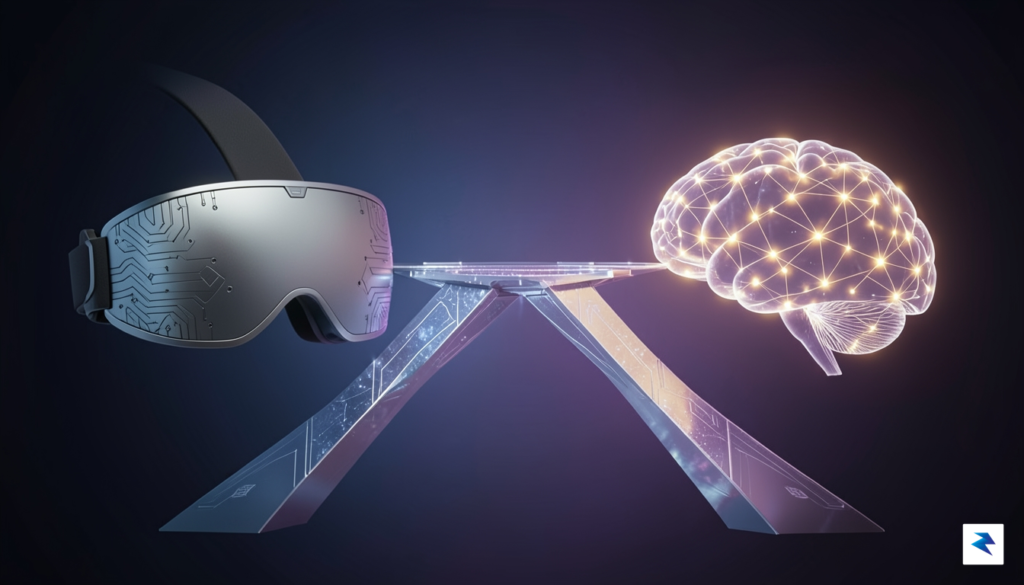
The movement of leaders between hardware giants and pure-play AI research firms highlights a broader industry trend: the inevitable collision between physical computing and artificial intelligence. For years, companies like Apple were obsessed with the “how” of hardware—building faster chips and lighter headsets—while AI labs focused exclusively on the “what” of software. However, the current landscape is forcing a marriage of these two worlds. As OpenAI looks toward the future, it is becoming increasingly clear that their powerful models need a sophisticated, intuitive physical medium to reach the average user. By recruiting talent with deep experience in Apple’s rigid, design-first product philosophy, OpenAI is likely preparing to bridge the gap between abstract intelligence and tangible, everyday utility.
The migration of hardware veterans to AI-first organizations is a leading indicator that we are entering an era where software intelligence must be anchored by intentional, human-centric hardware design.
This pivot reflects a strategic realization among tech titans that the next computing platform will not be defined by hardware specifications alone, but by the seamless integration of ambient intelligence. When a veteran like Meade leaves the world of spatial computing for a company like OpenAI, it underscores a shift in prestige and resource allocation; the most groundbreaking innovations are currently being forged in the labs where large language models are reaching their maturity. The industry is effectively moving away from the “screen-centric” era, where we are trapped behind glass, and toward an era where intelligence is embedded into the environment through specialized hardware. As these giants continue to poach top-tier talent from one another, we are witnessing the formation of a new breed of technology company: one that treats the interface between human and machine as a holistic challenge, requiring equal parts advanced logic and expert industrial design.
The Convergence of Spatial Computing and Generative AI
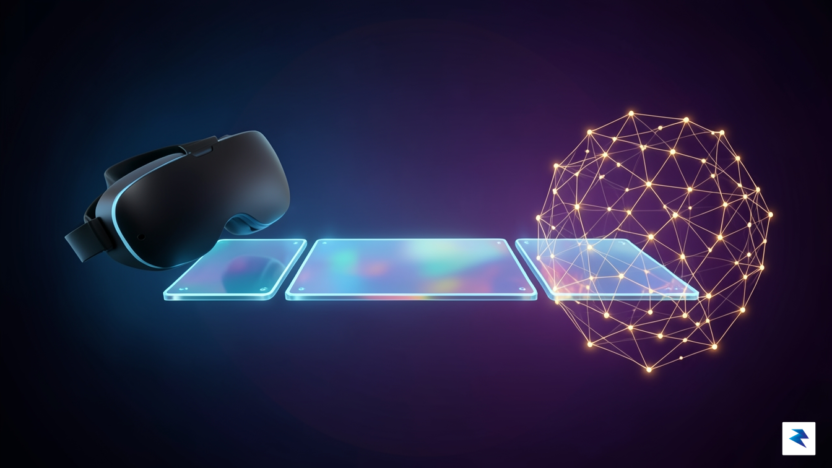
We are currently witnessing a profound transformation in how we interact with digital environments, as the rigid boundaries between spatial computing and generative artificial intelligence begin to dissolve. For years, augmented reality was primarily a medium for overlaying static graphics onto physical spaces, acting as little more than a sophisticated screen strapped to the face. However, by integrating large language models (LLMs) with high-fidelity spatial hardware, we are transitioning toward a paradigm where the interface possesses true semantic awareness. This synergy allows a device to move beyond merely displaying data to actively interpreting the user’s intent within their physical surroundings, turning the environment itself into a responsive, intelligent canvas.
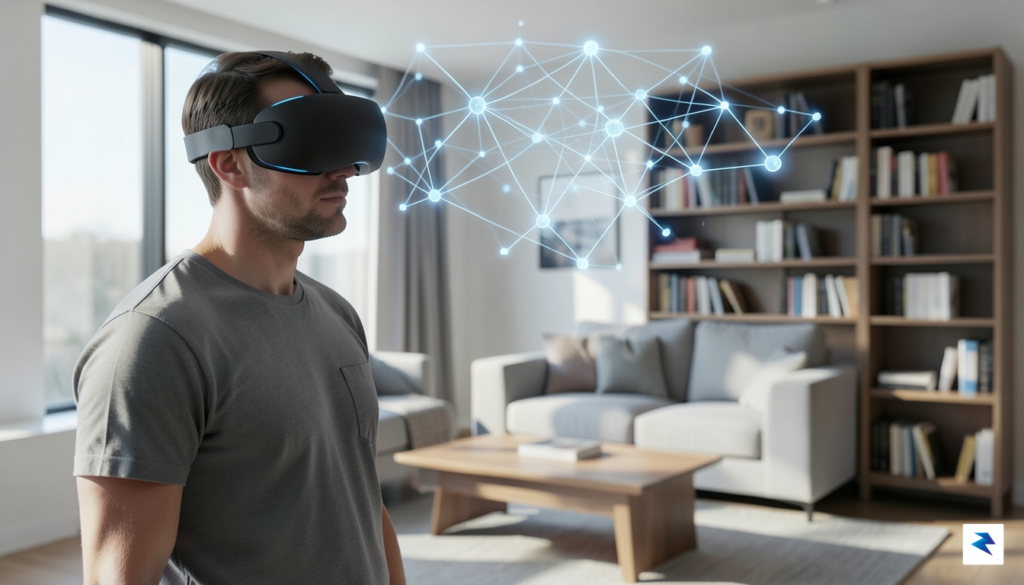
The technical marriage of these two fields is far from trivial, as it requires a massive uptick in real-time perception processing. While current headsets excel at tracking eye movements and mapping room geometry through LiDAR, they have historically struggled to understand the context of what they are seeing. By embedding advanced multimodal AI directly into the spatial pipeline, hardware can transform raw sensor data—such as recognizing a specific kitchen appliance or a complex architectural blueprint—into actionable insights. This necessitates a sophisticated architecture capable of balancing the latency requirements of a smooth visual overlay with the heavy computational load of a generative model, creating a seamless feedback loop where the machine understands the world as clearly as it renders it.
Despite the promise, contemporary headsets still face significant hurdles, particularly regarding the disconnect between what the machine sees and what it truly understands. Current users often find themselves navigating menus that feel detached from their physical reality, which limits the utility of spatial computing to niche productivity or gaming use cases. Artificial intelligence acts as the essential bridge here, serving as an intuitive layer that translates ambiguous user inputs into precise digital actions. By leveraging the reasoning capabilities of models like those developed by OpenAI, spatial devices can finally move away from complex hand gestures and toward natural, context-aware interactions that make digital objects behave with the permanence and logic of physical ones.
The true potential of the next generation of computing lies not in the resolution of the display, but in the capability of the underlying AI to make sense of the user’s immediate environment in real-time.
Ultimately, the movement of talent from hardware-centric firms to AI-first organizations signals a pivotal shift in industry priorities. It suggests that the future of computing is no longer about the hardware alone, but about the intelligence required to make that hardware disappear into the background of our daily lives. As these multimodal models become more efficient and capable of running on edge devices, the distinction between the physical world and the digital layer will vanish, ushering in an era where our devices act less like tools and more like collaborative partners that perceive, interpret, and adapt to our reality.
What This Move Signals for OpenAI’s Hardware Ambitions
For years, OpenAI has functioned primarily as a software-first powerhouse, defining the modern era of generative AI through large language models that live in the cloud. However, the strategic decision to recruit high-level talent from Apple’s Vision Pro team suggests that the organization is no longer content with being a mere service provider accessible via browser tabs and API calls. By aggressively pursuing leaders who have mastered the intricate intersection of industrial design, user experience, and mass-market consumer hardware, OpenAI is signaling a pivot toward vertical integration. The goal is clearly to control the very physical mediums through which humans interact with artificial intelligence, moving beyond screen-bound interfaces toward more immersive, ambient computing experiences.
This shift toward proprietary hardware represents a significant evolution in OpenAI’s business model, one that mirrors the trajectories of tech giants like Google and Meta. While Google has leveraged its massive smartphone footprint to distribute its AI agents, and Meta has bet heavily on smart glasses and virtual reality headsets, OpenAI has largely lacked a physical vehicle for its intelligence. Hiring veterans from the Vision Pro project implies that OpenAI is scouting the future of wearables—devices that can perceive the world in real-time, process that visual data through advanced neural networks, and provide instantaneous, context-aware feedback to the user. Such a move would allow the company to bypass the limitations of third-party hardware, ensuring that its models run on devices optimized specifically for their unique computational needs.
The transition from cloud-based software to hardware-integrated AI is the ultimate frontier for companies seeking to own the user experience entirely.
Entering the hardware market is notoriously difficult, filled with high capital requirements and the risk of supply chain failure, yet the potential payoff is immense. Building custom hardware allows OpenAI to solve latency issues that currently plague cloud-dependent AI, enabling a “local-first” approach where models can run directly on the device. This provides a distinct advantage in both privacy and reliability, as users would no longer be entirely dependent on consistent internet connectivity for basic AI assistance. Furthermore, by designing its own wearables, the company can create a unified ecosystem where the hardware and the software are inextricably linked, creating a “walled garden” effect that makes its AI feel more like a seamless extension of the user rather than an external tool.
Ultimately, this hiring strategy reflects a broader industry consensus: the next evolution of AI will not be found in chatbots, but in intelligent hardware that integrates into our physical environment. By pulling top-tier expertise away from Apple, OpenAI is effectively declaring that it intends to define the form factor of the future. Whether this results in a standalone device, a pair of augmented reality glasses, or an entirely new category of wearable, one thing is clear—OpenAI is preparing to move from the digital ether into our physical reality, fundamentally changing how we carry and interact with its powerful intelligence.
The Future of Human-Computer Interaction: Beyond the Headset
We are currently witnessing the sunset of the smartphone era, a period defined by our constant need to look down at rectangular screens that act as portals to the digital world. While these devices have connected the globe, they have also created a profound sense of isolation, tethering our attention to a physical object rather than the environment around us. The next frontier in computing aims to shatter this barrier, moving toward a paradigm where the digital and physical layers are seamlessly integrated. This transition represents more than just a hardware upgrade; it is a fundamental shift toward ambient computing, where technology anticipates our needs without demanding our full, undivided gaze.
Current VR and AR headsets, including the Vision Pro, represent the “awkward teenage years” of this evolution. While they offer breathtaking technical capabilities, they are often bulky, socially isolating, and physically taxing to wear for extended periods. The industry is currently struggling with the “goggle problem”—the challenge of miniaturizing high-fidelity displays and powerful processors into a form factor that feels as natural as a pair of everyday eyeglasses. To move beyond these limitations, hardware developers and AI researchers must collaborate to prioritize lightweight, unobtrusive designs that prioritize human comfort over raw graphical power.
The Role of AI in Contextual Awareness
The true catalyst for this transition is not just the glass in front of our eyes, but the intelligence driving it. For wearables to become truly useful, they must move away from manual input methods—like hand gestures or voice commands—and toward genuine contextual awareness. Imagine a device that understands what you are looking at, recognizes the people in your field of vision, and surfaces relevant information only when it is truly additive to the moment. This is where the synthesis of hardware expertise and advanced language models becomes critical; by offloading the heavy lifting of spatial understanding to sophisticated AI, we can reduce the computational burden on the headset itself, allowing for smaller, more efficient devices.
The goal of next-generation computing is to vanish into the background, becoming a silent partner that augments our reality rather than distracting us from it.
As talent shifts between giants like Apple and OpenAI, we are seeing a convergence of these two worlds: the spatial precision of hardware engineering and the cognitive depth of artificial intelligence. This professional migration suggests that the next generation of wearables will be defined by their ability to “think” as much as they “see.” By marrying these disciplines, we are inching closer to an era where the boundary between the digital and the physical becomes entirely permeable, fundamentally changing how we work, learn, and interact with the world around us.
Strategic Implications for Apple’s XR Roadmap
The departure of a pivotal executive from Apple’s Vision Pro division serves as a stark reminder that even the most well-resourced engineering teams are not immune to the gravitational pull of the artificial intelligence boom. While Apple has long prided itself on a deep bench of talent, the loss of a key architect in its spatial computing strategy forces a necessary re-evaluation of the company’s long-term hardware roadmap. For years, Apple’s secret sauce has been its ability to cultivate internal expertise that spans across hardware, software, and silicon integration; however, as the industry shifts toward AI-native devices, the internal friction between maintaining a complex XR ecosystem and pivoting toward generative AI models becomes increasingly palpable.
This leadership gap could introduce temporary friction into the Vision Pro development cycle, particularly as the company attempts to refine the product’s weight, price point, and software ecosystem. If the departure signals a broader shift in institutional focus, we might expect Apple to prioritize “Apple Intelligence” integration over iterative hardware updates for its headset. The risk here is that the momentum required to capture the early adopter market may stall, giving competitors—who are currently racing to combine spatial computing with advanced AI agents—a narrow but significant window to close the innovation gap. Nevertheless, Apple’s historical resilience suggests that its structural engineering depth is robust enough to absorb such departures without derailing the overarching project.
To remain competitive, Apple will likely need to pivot its research and development strategy toward a more aggressive synthesis of spatial computing and personalized intelligence. Rather than viewing the Vision Pro as a standalone entertainment device, the company must transform it into the premier interface for its burgeoning AI services. This shift requires not just personnel, but a fundamental rethinking of how hardware interacts with real-time data processing. By leveraging its proprietary silicon, Apple can theoretically create a unique value proposition that standalone AI startups cannot easily replicate.
The true test for Apple lies not in who leaves the company, but in how effectively it can align its legendary hardware craftsmanship with the rapid, software-driven evolution of artificial intelligence.
Ultimately, the departure of a high-profile leader is rarely a single point of failure for an organization of Apple’s magnitude, but it does act as a stress test for its internal culture. Whether the company chooses to double down on the original, high-fidelity vision of the Vision Pro or opts to pivot toward a more streamlined, AI-integrated approach remains the defining question of the next fiscal cycle. Regardless of the immediate leadership changes, Apple remains uniquely positioned to define the “spatial AI” era, provided it can maintain its focus amidst the broader industry-wide scramble to dominate the next generation of computing.