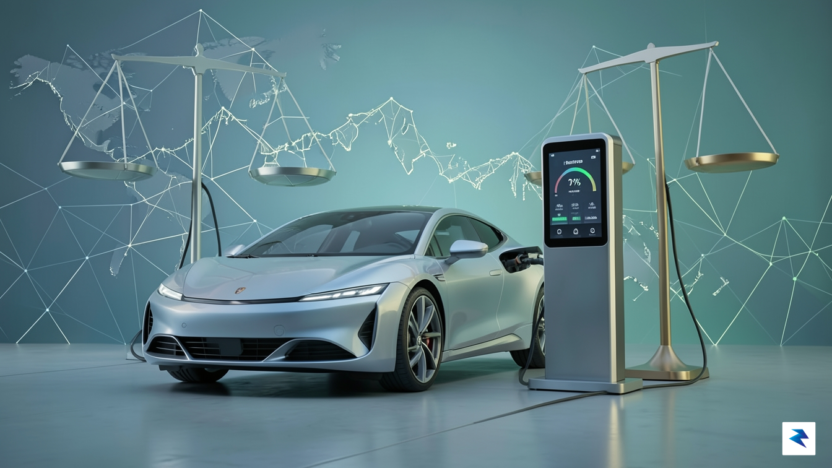
The Regulatory Pivot: How Polestar Found Itself in the Crosshairs


The recent intensification of federal trade policy has created a complex landscape for international automakers, primarily driven by the aggressive expansion of Section 301 tariffs. These tariffs, which are designed to protect domestic manufacturing interests, have disproportionately impacted Polestar due to its heavy reliance on production facilities located within China. While many brands have navigated these waters by diversifying their global footprint, Polestar’s immediate supply chain is inextricably linked to Chinese manufacturing, placing it squarely in the crosshairs of regulators who are increasingly wary of the influence and origin of imported electric vehicle technology. This regulatory maneuver isn’t merely about standard import taxes; it represents a strategic push by the U.S. government to force a decoupling from Chinese-controlled automotive ecosystems, a policy shift that has left Polestar with significantly higher overhead costs than its more established competitors.
The divergence in how regulators treat Polestar compared to its corporate sibling, Volvo, boils down to a fundamental distinction in “Country of Origin” legal nuances and localized production capacity. Volvo, despite being owned by the Chinese conglomerate Geely, has spent decades cultivating a robust manufacturing presence in North America, most notably with its state-of-the-art facility in South Carolina. Because Volvo manufactures a substantial portion of its fleet on U.S. soil, it effectively sidesteps the most punitive aspects of the recent trade statutes. Conversely, Polestar’s lack of a comparable U.S.-based assembly line means that nearly every vehicle destined for the American market is subject to these steep duties. Consequently, the regulatory environment perceives Volvo as a localized contributor to the American economy, whereas Polestar is categorized strictly as an importer of finished goods from a restricted region.
The regulatory framework has effectively created a two-tiered system where the definition of an “American” car is no longer based solely on the badge, but on the geographic path of its assembly line.
Ultimately, this disparate treatment signals a broader, more aggressive phase in U.S. automotive trade policy. Regulators are no longer content with simple oversight; they are actively using tariff structures to incentivize companies to relocate their supply chains away from sensitive geopolitical zones. For Polestar, the challenge is twofold: they must not only navigate the current financial burden of the 100% tariff threat but also accelerate plans to establish North American production to regain parity with Volvo. Until such a transition is complete, the brand finds itself in a precarious position, serving as a high-profile case study for how modern trade policies can rapidly alter the competitive landscape for electric vehicle manufacturers that have not yet fully localized their production strategies.
Understanding the Distinction: Geely, Volvo, and the Complexity of Ownership

To navigate the current regulatory landscape, one must first untangle the intricate web of ownership surrounding these automotive entities. At the apex sits the Geely Holding Group, a Chinese automotive conglomerate that serves as the parent company for both Volvo Cars and Polestar. While they share the same ultimate benefactor, the federal government does not view them as monolithic entities. Instead, regulators distinguish between the two based on their operational history, their integration into Western economies, and, most crucially, the geography of their supply chains. The perception of Volvo as a “domesticated” global brand stands in stark contrast to the perception of Polestar as an extension of China’s industrial export strategy, a distinction that has profound implications for how trade policy is applied.
Volvo’s path to regulatory safety was paved decades ago, cemented by a massive, long-term commitment to North American infrastructure. By establishing a major manufacturing hub in Ridgeville, South Carolina, Volvo effectively localized its production, ensuring that a significant portion of its vehicles sold in the United States are physically built by American workers using components that comply with stringent trade agreements. This localized model provides the transparency federal regulators demand; it is far easier to audit a supply chain when the primary assembly happens within domestic borders. Consequently, Volvo has managed to insulate itself from the punitive tariffs that have recently crippled other imported EV models, as its footprint is viewed as a contribution to the domestic industrial base rather than an external threat.
The federal approach to automotive trade is no longer just about the badge on the grille; it is about the “provenance of parts” and the geopolitical risk inherent in a company’s global supply chain.
In contrast, Polestar has remained largely tethered to Chinese manufacturing facilities, a legacy of its origin as a performance-oriented division spun off to capitalize on China’s rapid EV scaling. While Polestar has made efforts to shift some production to markets like South Korea to diversify its logistical risks, the bulk of its operational reliance remains tied to China-centric supply chains. In the eyes of federal trade authorities, this creates a transparency gap. When a company cannot fully account for the origins of its battery minerals or integrated circuit components—or when those components are sourced from regions flagged by current trade sanctions—it becomes a target for restrictive measures. For Polestar, the lack of a deep, historical manufacturing presence in the U.S. meant that it lacked the political and economic buffer that protected its sister brand, Volvo, from the harsh realities of modern protectionist trade policy.
Ultimately, the divergence in treatment highlights a paradigm shift in how global trade is being managed. Supply chain transparency has transitioned from a back-office compliance task to a mandatory requirement for survival in the American market. Companies that cannot demonstrate a clear, non-sanctioned path from raw material to showroom floor are finding themselves increasingly marginalized by federal regulators. By prioritizing manufacturing localization, Volvo has successfully navigated this shifting landscape, while Polestar’s ongoing reliance on older, import-heavy logistics models has left it vulnerable to the tightening constraints of international trade law.
The Precedent Problem: What This Means for Global Automakers
The recent federal intervention that effectively stifled Polestar’s burgeoning market momentum in the U.S. while simultaneously exempting its sibling brand, Volvo, from similar punitive measures marks a significant and concerning shift in the application of trade policy. Traditionally, trade regulations aim to ensure fair competition and protect national interests on a broad scale; however, this specific decision appears to transcend traditional trade mechanisms, acting instead as a potent industrial policy tool. By selectively applying tariffs or granting exemptions, governments can now overtly pick winners and losers within a competitive market, thereby shaping the industrial landscape far beyond what was previously envisioned. This strategic intervention sends a clear signal that market access and competitive advantage can be wielded as instruments to foster or hinder specific players, regardless of their intrinsic product merit or broader economic contribution.
Such a precedent carries profound implications, particularly the elevated risk of retaliatory measures from other major global economies. When one nation leverages trade policy to bestow an unfair advantage upon certain companies or deliberately impede others, it inevitably invites similar protectionist responses from affected countries. Imagine the European Union, China, or Japan implementing their own selective tariffs or exemptions, creating a fragmented global automotive market where every major player is subject to an unpredictable patchwork of nationalistic regulations. This scenario would not only undermine the foundational principles of free trade but could also escalate into damaging trade wars, ultimately harming consumers through diminished choices, higher vehicle prices, and a stifled pace of innovation across the entire automotive sector.
The uncertainty introduced by this selective application of trade rules poses
Consumer Implications: Should You Be Worried About Your EV's Future?

For the average Polestar owner, the abstract nature of international trade policy often feels distant until it lands squarely in the driveway. When headlines suggest that federal regulations are tightening around specific manufacturers, the immediate anxiety typically centers on the longevity of the vehicle. However, it is essential to distinguish between a regulatory barrier to market entry and a fundamental failure of the product itself. The current tensions surrounding Polestar are primarily a matter of trade geography rather than an indictment of the engineering, safety, or performance of the vehicles. Because these cars are built upon the same robust architectures and global supply chains shared with Volvo, the mechanical backbone of your vehicle remains supported by one of the most established automotive networks in existence.
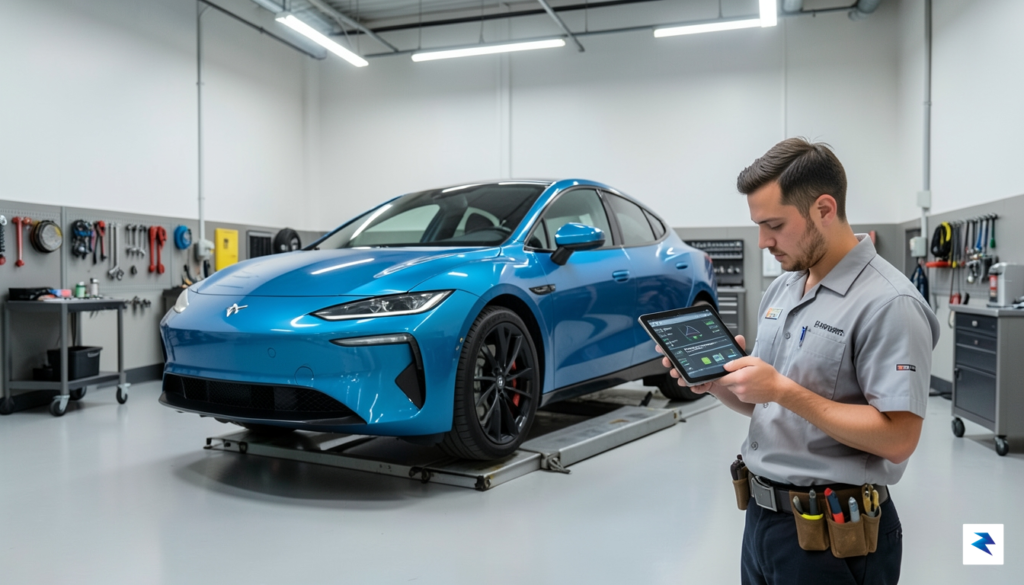
One of the most persistent fears among prospective buyers is the availability of replacement parts and routine maintenance. Fortunately, Polestar’s deep-rooted technical synergy with Volvo provides a significant safety net for owners. Many service centers are already integrated, meaning that the logistical infrastructure for hardware repairs—from suspension components to braking systems—is largely shared between the two brands. This continuity ensures that even if federal trade policies shift the landscape for new sales, the existing fleet does not suddenly become an “orphan” product. Dealers are contractually and operationally equipped to handle these vehicles, ensuring that your long-term ownership experience is shielded from the volatility of international tariff negotiations.
The primary concern for owners—software support and long-term connectivity—remains protected by Polestar’s parent company, Geely, which maintains a massive global commitment to EV software development and infrastructure.
When it comes to software updates and charging network compatibility, the outlook is equally stable. Polestar has invested heavily in the Google Automotive Services ecosystem, which operates independently of the manufacturing origin of the vehicle. Because these systems are cloud-based and managed by global teams, they are not susceptible to the same supply chain disruptions that might affect physical vehicle assembly. Furthermore, Geely’s significant financial backing provides the capital necessary to maintain these digital services for years to come. Ultimately, while federal regulators may be attempting to reshape the market access landscape, the daily reality for a Polestar driver is one of continuity. The brand is not vanishing; it is simply navigating a complex regulatory environment that necessitates a strategic evolution in how these vehicles reach American roads.
The Future of Trade Policy and Domestic Manufacturing

The divergence in how federal trade policies treat Polestar versus Volvo serves as a potent microcosm for the broader, often turbulent transition toward domestic electric vehicle manufacturing. As the United States government aggressively utilizes mechanisms like the Inflation Reduction Act (IRA) to incentivize local production, the automotive landscape is undergoing a fundamental restructuring. This legislative push is designed to move supply chains away from foreign dependencies and toward a North American-centric model, effectively rewarding manufacturers that invest in domestic soil. For companies operating on global platforms, this creates a high-stakes environment where proximity to the consumer—and to the factory floor—is no longer just a logistical choice, but a primary determinant of market viability.

To navigate these shifting trade winds, automakers are finding that compliance is not merely about meeting technical standards; it is about strategic geographic positioning. Brands that wish to remain competitive in the American EV market must increasingly look toward localized assembly and regional sourcing of critical components, such as battery cells and raw minerals. Failure to align with these federal mandates leaves brands susceptible to punitive tariffs and the loss of consumer-facing tax incentives, which can instantly render a vehicle model overpriced compared to its domestically manufactured peers. Consequently, we are witnessing a migration of capital as global manufacturers reassess their global manufacturing footprints to prioritize facilities located within the United States or its trade-aligned partners.
The future of the automotive sector will be defined by those who can successfully balance the efficiency of global supply chains with the political necessity of local manufacturing footprints.
However, this transition forces us to confront a difficult tension: the delicate balance between protecting domestic industrial interests and preserving the breadth of consumer choice. While the goal of fostering a robust American EV sector is laudable from a national security and economic standpoint, it undeniably complicates the landscape for international brands that have historically thrived on globalized production. Consumers may eventually face higher costs or limited model availability as manufacturers grapple with the logistical burden of rerouting production lines to satisfy federal criteria. Ultimately, the complexity of trade politics is now a permanent feature of the automotive industry, signaling that the era of “producing anywhere for everywhere” is rapidly being replaced by a more fragmented, policy-driven reality that will dictate which brands succeed in the coming decade.