Understanding the Bitcoin-Yen Correlation Shift

In the complex world of global finance, a correlation coefficient acts as a mathematical compass, measuring how two distinct assets move in relation to one another. A value of 1.0 indicates a perfect positive correlation, meaning assets move in lockstep, while a value of -1.0 suggests a perfect inverse relationship, where one asset climbs as the other retreats. When analysts observe a correlation of -0.90 between Bitcoin and the USD/JPY pair, they are witnessing a rare, near-perfect inverse alignment. This statistical phenomenon suggests that the forces driving the Japanese yen against the U.S. dollar are currently exerting a powerful, opposing pressure on the price of digital assets, effectively dismantling the narrative that Bitcoin acts as a simple mirror to traditional currency fluctuations.
Recent 52-week data analysis highlights the intensity of this shift, revealing that the relationship has become increasingly rigid over the past year. While Bitcoin has historically experienced periods of volatility that seemed disconnected from foreign exchange markets, the current -0.90 reading is statistically significant because it exceeds the threshold of mere coincidence. It indicates that institutional capital flows, often managed through complex algorithmic strategies, are treating these two assets as fundamental hedges against one another. When the yen weakens, Bitcoin often finds itself in a position of strength, suggesting that traders are rotating liquidity between these markets with heightened sensitivity to interest rate differentials and macroeconomic policy changes.
The -0.90 correlation threshold represents a pivot point in market psychology, signaling that Bitcoin has moved from being a speculative outlier to an integral piece of the global macro puzzle.

Historically, the relationship between Bitcoin and the Japanese yen was defined by periods of erratic behavior rather than predictable inverse trends. For years, Japan served as one of the most active hubs for retail crypto adoption, leading many to believe that the yen and Bitcoin would move in tandem due to shared user bases and regional regulatory environments. However, the current shift suggests that the “carry trade”—the strategy of borrowing in low-interest-rate currencies like the yen to invest in higher-yielding assets—has been fundamentally disrupted. By moving toward a -0.90 coefficient, the market is demonstrating that Bitcoin is no longer just a digital commodity; it is now being utilized as a sophisticated tool for currency risk management, reacting precisely when traditional fiat structures show signs of strain.
Ultimately, this deep-seated inverse correlation forces investors to rethink their hedging strategies. If Bitcoin’s price movement is truly tethered to the USD/JPY rate with such high intensity, market participants must now monitor the Bank of Japan’s monetary policy and the Federal Reserve’s rate trajectory with the same vigilance they apply to crypto-native indicators. This transition marks the maturation of the digital asset class, proving that Bitcoin is increasingly sensitive to the mechanics of the global financial engine, rather than existing in the isolated vacuum of speculative trading.
Deconstructing the Carry Trade Narrative

For years, the financial establishment has leaned on a specific narrative to explain Bitcoin’s volatility: the yen-funded carry trade. In this mechanism, investors borrow Japanese yen at historically low interest rates to purchase higher-yielding assets elsewhere in the global market. Because the yen has long served as a primary funding currency for global speculation, analysts frequently posited that Bitcoin acted as a high-beta proxy for this trade. The logic was straightforward: when the yen weakened, liquidity flooded into risk-on assets like Bitcoin; conversely, when the yen strengthened, investors were forced to unwind their positions, leading to a sharp sell-off in digital assets. This correlation suggested that Bitcoin was little more than a speculative vessel for cheap Japanese credit.
However, the latest data—revealing a striking -0.90 correlation—shatters the simplicity of this long-held assumption. An inverse correlation of this magnitude suggests that Bitcoin is no longer moving in tandem with the yen’s fluctuations, but rather reacting in direct opposition to them. If the carry trade theory held true, we would expect to see a positive correlation where Bitcoin gains as the yen weakens. Instead, the current market dynamic indicates that Bitcoin is decoupling from traditional currency-based liquidity cycles. This shift implies that the drivers of Bitcoin’s price are increasingly endogenous to the crypto ecosystem or dictated by broader geopolitical hedges, rather than being tethered to the interest rate differential between Japan and the rest of the world.

When the correlation between two major financial assets flips to such a extreme negative value, it acts as a signal that the underlying mechanics governing their relationship have fundamentally shifted.
The implications of this breakdown are profound for institutional investors who have historically utilized carry trade models to predict crypto market movements. As liquidity flows begin to ignore the traditional “cheap money” signals from Tokyo, we are witnessing a transition toward a new market regime. Investors who continue to rely on the yen as a barometer for Bitcoin’s health may find themselves mispositioned, as the digital asset now appears to be responding to a different set of global catalysts—potentially including institutional adoption cycles, sovereign treasury shifts, and the maturing of decentralized finance protocols. Consequently, the carry trade narrative, while useful in retrospect, now appears to be an outdated lens through which to view the future of digital asset valuation.
Ultimately, this shift suggests that Bitcoin is attaining a level of maturity where it is less sensitive to the mechanical unwinding of FX trades. As the asset class becomes more deeply integrated into the global macro landscape, it is developing a unique rhythm that is increasingly independent of the specific monetary policies of the Bank of Japan. For market participants, this means that the old “yen-up, Bitcoin-down” heuristic is effectively losing its explanatory power, paving the way for a more nuanced understanding of how global liquidity actually influences the crypto market in the modern era.
Why the -0.90 Correlation Matters for Investors

For portfolio managers and retail traders alike, a correlation coefficient of -0.90 between Bitcoin and the USD/JPY pair is far more than a statistical curiosity; it represents a fundamental shift in how global liquidity flows are impacting digital assets. When two assets move in near-perfect opposition, the traditional assumption that Bitcoin serves as an independent hedge or a standalone risk-on asset begins to fray. Instead, Bitcoin is increasingly behaving as a direct counterbalance to the yen, suggesting that market participants are using the largest cryptocurrency as a proxy for volatility against the carry trade. For the active investor, this means that your portfolio’s sensitivity to Japanese monetary policy—an area often overlooked by crypto-native traders—is now significantly higher than it was just a few months ago.
The primary danger lies in the trap of “hidden correlation,” where an investor believes they are diversified across uncorrelated asset classes, only to find their positions moving in lockstep during periods of market turbulence. If your portfolio holds a mix of technology stocks, Bitcoin, and yen-based carry trades, you are effectively over-exposed to a single narrative: the strength or weakness of global risk appetite. When the yen strengthens, signaling a potential unwinding of the carry trade, Bitcoin’s historically bullish reaction can inadvertently exacerbate your losses if you are simultaneously long on other risk-sensitive assets. Recognizing this inverse relationship is critical for risk management; it allows traders to adjust their exposure by treating Bitcoin not as a store of value, but as a tactical component of their currency hedging strategy.
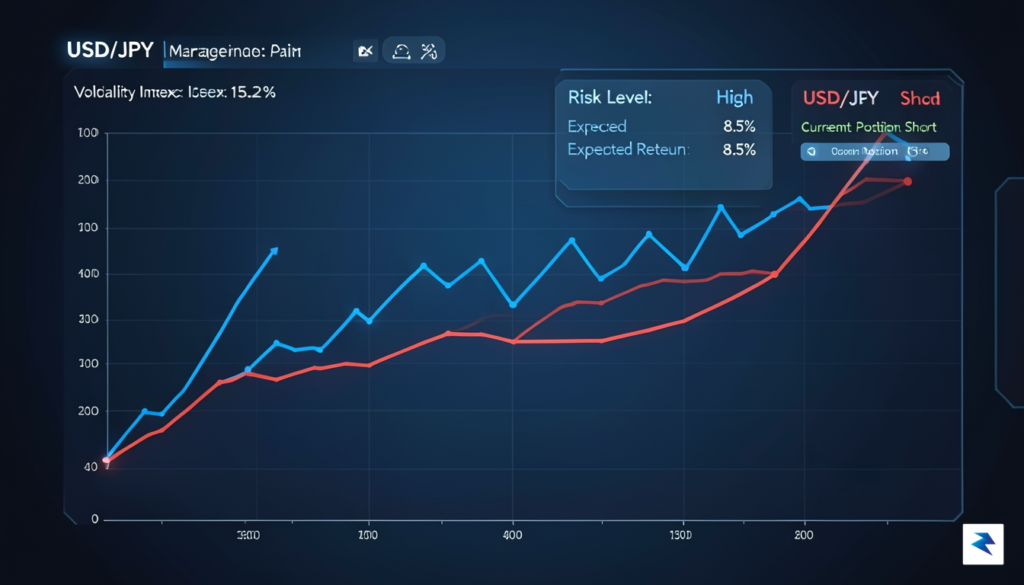
Investors must move beyond the “digital gold” narrative and start treating Bitcoin as an integral component of their global macro exposure, particularly when monitoring the yen’s influence on liquidity.
Institutional desks are currently leveraging this -0.90 correlation to deploy sophisticated hedging strategies that were previously reserved for traditional FX markets. Rather than simply holding Bitcoin in a cold wallet, institutional traders are increasingly using derivatives to offset volatility in their FX positions, essentially using crypto as a high-beta insurance policy. For the retail investor, the actionable takeaway is to incorporate currency-pair monitoring into your daily routine. If you see the yen making significant moves against the dollar, you should anticipate a reflexive move in Bitcoin, regardless of what the crypto-specific news cycle might be suggesting. By monitoring the USD/JPY rate, you can better time your entries and exits, effectively “front-running” the broader market’s realization that the carry trade dynamics are undergoing a massive transition.
- Rebalance Asset Allocation: Reduce concentration in risk-on assets if the USD/JPY shows signs of rapid volatility.
- Monitor Liquidity Flows: Pay close attention to Bank of Japan announcements, as these now have a more direct impact on Bitcoin’s price action than ever before.
- Implement Dynamic Hedging: Use crypto options to hedge against currency fluctuations if your overall portfolio has significant exposure to the yen.
Ultimately, the current market environment demands a more holistic approach to technical analysis. By acknowledging that Bitcoin’s price is deeply tethered to the mechanics of the carry trade, you can navigate the coming months with greater precision and less emotional reaction to price swings. While the correlation may fluctuate over time, the current degree of inverse movement serves as a warning that we have entered a phase where global currency dynamics are the primary driver of crypto volatility. Traders who ignore this macro-level shift do so at their own peril, while those who adapt their strategies to account for the yen’s influence will find themselves much better positioned to capture alpha in an increasingly interconnected global market.
Macroeconomic Drivers: Beyond the Yen

While the yen-Bitcoin correlation is a compelling metric, it is merely one gear in a vast, global financial machine. To understand Bitcoin’s price action, we must look at the widening interest rate differentials between the United States and Japan, which serve as a critical barometer for global capital flows. When the Federal Reserve maintains a hawkish stance compared to the Bank of Japan’s traditionally accommodative policy, the resulting yield gap incentivizes investors to borrow cheaply in yen to fund higher-yielding dollar-denominated assets. This dynamic creates a constant tug-of-war for liquidity, where Bitcoin often finds itself caught in the middle, swinging between its identity as a hedge against fiat debasement and its reality as a high-beta asset sensitive to the cost of capital.
Beyond the specific mechanics of the yen, the global M2 money supply acts as the ultimate tide that lifts or lowers all boats. Bitcoin has historically demonstrated a profound sensitivity to periods of monetary expansion, where central bank balance sheets swell and global liquidity increases. When global M2 growth accelerates, investors typically move further out on the risk curve, seeking assets that offer asymmetric upside. Conversely, when central banks engage in quantitative tightening, the resulting liquidity vacuum often forces investors to liquidate speculative positions—including Bitcoin—to cover margin calls or secure cash in more stable instruments.

The “risk-on, risk-off” sentiment remains the primary psychological driver of the broader market, frequently overshadowing technical correlations. In a risk-on environment, Bitcoin is treated as a high-growth tech stock, surging alongside the Nasdaq and other speculative ventures. However, when geopolitical instability or economic volatility triggers a flight to safety, capital often rotates out of digital assets and into the U.S. Dollar Index (DXY). This inverse relationship with the DXY is arguably more foundational than the yen correlation, as the dollar remains the world’s primary reserve currency and the ultimate benchmark for measuring Bitcoin’s purchasing power.
Ultimately, Bitcoin is not beholden to any single currency pair; it is a global liquidity sponge that reacts to the aggregate decisions of central bankers worldwide.
Investors should therefore view the yen’s influence not as an isolated phenomenon, but as a symptom of a larger, interconnected environment defined by debt cycles and monetary policy. As we navigate this period of market realignment, discerning whether Bitcoin is responding to Japanese interest rates or broader Federal Reserve expectations is essential for any serious market participant. By looking beyond the yen, we gain a clearer picture of Bitcoin’s role as a unique asset class that sits at the intersection of traditional finance and the future of digital value storage.
Future Outlook: Navigating Volatility in a Correlated Market

As Bitcoin continues its transition from a niche digital experiment to a mainstay of the global financial ecosystem, its relationship with traditional currency markets has become increasingly fluid. The recent plummet of the correlation coefficient between Bitcoin and the Japanese yen to -0.90 serves as a powerful reminder that crypto-assets are no longer operating in a vacuum. Instead, they are deeply tethered to the shifting tides of global monetary policy, interest rate differentials, and institutional liquidity. Moving forward, investors must recognize that this inverse relationship is not a static constant but rather a reflection of current macro-economic pressures; as central banks adjust their stances, we should anticipate that this correlation will inevitably fluctuate, potentially breaking or normalizing in ways that current models may not fully predict.
For those navigating this complex landscape, the key to success lies in maintaining a data-driven framework that looks beyond superficial price action. Investors should prioritize tracking the broader “carry trade” dynamics, specifically monitoring how volatility in the yen affects broader market risk appetite. By keeping a close watch on the spread between US Treasury yields and Japanese government bonds, market participants can better anticipate shifts in Bitcoin’s behavior before they manifest as sudden price swings. Rather than relying on historical assumptions, a forward-looking strategy should integrate real-time correlation metrics alongside traditional indicators like inflation prints and liquidity injections. This agile approach allows for a more nuanced understanding of whether Bitcoin is currently acting as a speculative risk asset or a hedge against currency devaluation.
The maturity of an asset class is often defined by its integration into broader macro-finance; Bitcoin is currently moving through a critical phase where its utility as a global collateral component is being tested against the reality of fiat volatility.
Looking toward the long term, the integration of Bitcoin into global macro finance appears inevitable, yet it remains a volatile journey. While short-term correlations with the yen or the dollar may provide tactical trading signals, the structural long-term value proposition of Bitcoin—its scarcity, censorship resistance, and global reach—remains distinct from the cyclical nature of currency markets. As the asset class matures, we may see the correlation coefficients stabilize toward a more neutral stance, reflecting Bitcoin’s status as a unique asset that behaves differently depending on the specific stressor affecting the global economy. Ultimately, the most resilient investors will be those who view these correlations as temporary guideposts rather than permanent maps, ensuring their portfolios remain balanced enough to weather the inevitable turbulence that accompanies the evolution of modern money.