Why Qwen 3.6 27B is the New Standard for Local LLMs
For years, the local artificial intelligence landscape has been dominated by a frustrating binary choice: settle for the rapid, lightweight performance of 7B-8B parameter models, or commit to the hardware-crushing demands of 70B+ behemoths. Smaller models often lack the nuanced reasoning and deep contextual grasp required for complex coding or creative tasks, frequently hallucinating or simplifying information to a fault. Conversely, while massive models provide near-human insight, they typically require multi-GPU setups or expensive enterprise-grade hardware that remains out of reach for the average developer. This divide has forced many to compromise, either sacrificing quality for speed or convenience for capability.

The emergence of the 27B parameter scale, exemplified by Qwen 3.6, finally resolves this tension by occupying the elusive “Goldilocks” zone of local computing. By packing substantial reasoning capabilities into a footprint that can comfortably fit within the VRAM of a high-end consumer graphics card, this model bridges the gap between toy projects and production-grade intelligence. It offers the depth of thought that developers crave—capable of handling multi-step logic and intricate architectural planning—without the prohibitive latency that makes larger models feel sluggish during iterative development cycles.
The true power of the 27B parameter class lies in its efficiency; it provides enough “brainpower” to handle complex reasoning tasks while remaining agile enough to run on hardware that sits on a standard desktop or high-end laptop.
This mid-sized architecture represents a fundamental shift in how we approach local AI development. Rather than viewing model size as a direct proxy for quality, the industry is beginning to recognize that optimized parameter counts—where the density of knowledge is prioritized over sheer volume—can outperform larger, less efficient counterparts. Qwen 3.6 27B leverages this optimization, allowing developers to maintain full data privacy and low-latency interaction without relying on remote API calls. For the professional developer, this means the ability to integrate sophisticated, private, and lightning-fast AI agents directly into local IDEs, transforming the local machine into a powerhouse of intelligent automation that functions seamlessly offline.
Ultimately, this model size is not just a technical milestone; it is an accessibility breakthrough. It democratizes the ability to perform high-fidelity local inference, ensuring that developers can maintain complete control over their workflows while still enjoying the benefits of cutting-edge research. As we look toward the future of local AI, the 27B class is positioned to become the workhorse of the industry, proving that we no longer need to choose between the portability of a smartphone app and the raw power of a supercomputer.
Technical Specifications and Performance Benchmarks
Performance in the modern era of large language models is no longer defined solely by the sheer volume of parameters. While larger models often boast impressive raw knowledge, Qwen 3.6 27B demonstrates that architectural efficiency and high-quality training data can yield results that rival or exceed significantly larger counterparts. By refining the attention mechanisms and optimizing the dense-to-sparse transition layers, the developers have created a model that maintains a compact memory footprint while delivering high-fidelity outputs. This efficiency is particularly noticeable during local inference, where the model manages to balance rapid token generation with a sophisticated understanding of complex linguistic nuances.

Benchmarking Logic and Linguistic Precision
When examining the quantitative performance metrics, Qwen 3.6 27B consistently punches above its weight class. In rigorous coding benchmarks such as HumanEval and MBPP, the model displays a marked improvement in syntax accuracy and edge-case handling compared to its predecessors. Beyond mere code generation, its logic-based reasoning—tested against standard benchmarks like GSM8K—shows a heightened ability to decompose multi-step problems into actionable, logical sequences. Furthermore, the model exhibits a unique aptitude for creative writing, maintaining stylistic consistency and narrative coherence over longer passages that often cause smaller models to drift or lose focus.
The 27B parameter threshold represents a critical inflection point where the cost of local hardware resources meets the capability of enterprise-grade reasoning.
Multilingual Versatility and Structured Data Handling
A standout feature of this iteration is its robust proficiency in multilingual tasks and the parsing of structured data formats. Unlike previous versions that occasionally struggled with non-English syntax, Qwen 3.6 27B handles diverse linguistic structures with increased fluency and lower error rates, making it an ideal candidate for global development projects. Its handling of JSON and XML schemas is equally impressive; the model demonstrates a high degree of fidelity when asked to transform unstructured text into structured outputs. This reliability is essential for developers building RAG (Retrieval-Augmented Generation) pipelines, as the model’s ability to adhere strictly to formatting requirements reduces the need for complex post-processing scripts. By combining this structural integrity with a significantly expanded context window, the model effectively bridges the gap between lightweight utility and heavy-duty analytical power.
Resource Requirements: Balancing VRAM and Inference Speed
The primary barrier to entry for local AI has long been the steep hardware tax imposed by larger models. While a 70B parameter model typically demands the raw power of dual enterprise-grade GPUs or significant multi-card setups that price out most hobbyists, the Qwen 3.6 27B model changes the calculus entirely. By occupying a middle ground in parameter density, it allows developers to leverage high-end consumer hardware without needing to architect an expensive server rack. The secret to this accessibility lies in the strategic use of quantization, which reduces the precision of model weights to shrink memory footprints while maintaining an impressive degree of logical coherence.
For most users, the VRAM requirement is the ultimate gatekeeper. At a Q4 (4-bit) quantization level, the 27B model fits comfortably within the 24GB VRAM ceiling of an RTX 3090 or 4090, leaving enough overhead for context windows and system processes. Moving up to Q6 or Q8 quantization—which offers higher fidelity and reduced perplexity—requires approximately 20GB to 28GB of VRAM respectively. If you are running this on a unified memory architecture like Apple’s M-series chips, the 27B model shines even brighter; a MacBook Pro with 32GB or 64GB of RAM can load the model entirely into memory, bypassing the performance bottlenecks often associated with offloading layers to system RAM or slower storage drives.
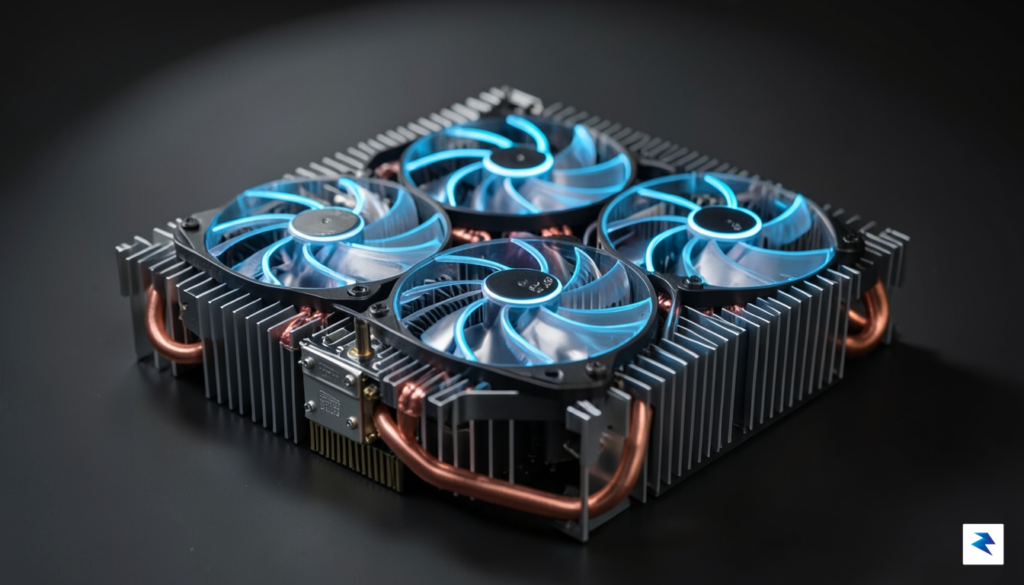
In terms of inference speed, the 27B architecture is remarkably efficient. On an RTX 4090, users can generally expect to see speeds well above 30–40 tokens per second, which provides a near-instantaneous, fluid conversational experience that feels indistinguishable from cloud-based APIs. M-series chips, specifically the M2 and M3 Max configurations, offer highly competitive performance by leveraging the high-bandwidth unified memory, often achieving 20–25 tokens per second. These figures are not just benchmarks; they represent the difference between a tool that feels like a sluggish experiment and one that feels like a native extension of your development environment.
To maximize efficiency, prioritize quantization levels that leave at least 2–4GB of buffer space in your VRAM for context caching; filling your memory to the absolute brim can lead to significant latency spikes during longer, more complex prompts.
To get the most out of your hardware, consider implementing memory optimization strategies such as KV-cache quantization or utilizing specific inference engines like llama.cpp or ExLlamaV2, which are optimized for these specific model sizes. If you find yourself hitting a memory wall, do not hesitate to experiment with the Q4_K_M quantization level; it is widely regarded as the “sweet spot” where you retain nearly all of the model’s reasoning capabilities while gaining significant breathing room in your hardware’s memory capacity. By understanding these technical levers, you transform your local development station into a powerhouse capable of handling complex reasoning tasks that were previously locked behind the gates of expensive, cloud-bound infrastructure.
Practical Use Cases for Local Development

The true power of Qwen 3.6 27B becomes apparent when you move beyond generic chat interfaces and integrate it directly into your professional development environment. Because this model occupies a unique middle ground—large enough to handle complex reasoning but light enough to run on high-end consumer hardware—it serves as a versatile engine for local automation. Developers can now leverage it as an always-on, offline coding assistant that understands the nuances of a private codebase without ever sending a single line of proprietary logic to a third-party cloud provider. This capability is transformative for teams working in regulated industries or on sensitive intellectual property, where data sovereignty is not just a preference but a strict requirement.

One of the most practical applications is the automated generation of unit tests and documentation. By running a local inference server—such as Ollama or LocalAI—you can point the model at your specific project files, allowing it to generate comprehensive test suites that align perfectly with your existing architectural patterns. Unlike generic cloud models that often guess at your project structure, a locally hosted Qwen 3.6 27B maintains context across your entire directory, ensuring that the generated code is syntactically consistent and functionally relevant. Furthermore, it excels at complex data restructuring tasks, such as converting legacy JSON schemas or refactoring monolithic functions into clean, modular components, all while maintaining the security of your internal environment.
The sweet spot for local AI isn’t just about speed; it is about the intersection of privacy, context-awareness, and the ability to iterate without the latency or costs associated with external API calls.
Integration into your IDE via local server setups is remarkably straightforward. By utilizing extensions that allow your editor to communicate with a localhost endpoint, you can enable features like real-time code completion, intelligent refactoring suggestions, and natural language query support for your documentation. This setup effectively turns your local machine into a private intelligence hub:
- Codebase Analysis: Query your own documentation and source files to find implementation details or architectural debt without exposing your code to external crawlers.
- Offline Documentation: Generate README files and inline comments instantly, even when working in environments without internet access, such as during travel or in secure server rooms.
- Sensitive Data Processing: Perform bulk data cleaning or anonymization tasks on sensitive datasets where cloud-based AI processing would violate compliance or privacy agreements.
- Automated Test Creation: Generate boilerplate test structures that respect your specific framework and coding style, significantly reducing the friction of TDD (Test-Driven Development).
Ultimately, the move toward a “desktop-first” AI experience is about reclaiming control over your workflow. With Qwen 3.6 27B, you no longer have to compromise between the intelligence of a large model and the safety of a local environment. As you integrate this model into your daily cycle, you will find that the reduction in context-switching and the peace of mind provided by keeping your data local far outweighs the overhead of managing a local inference instance.
Optimizing Workflow: Integration and Implementation
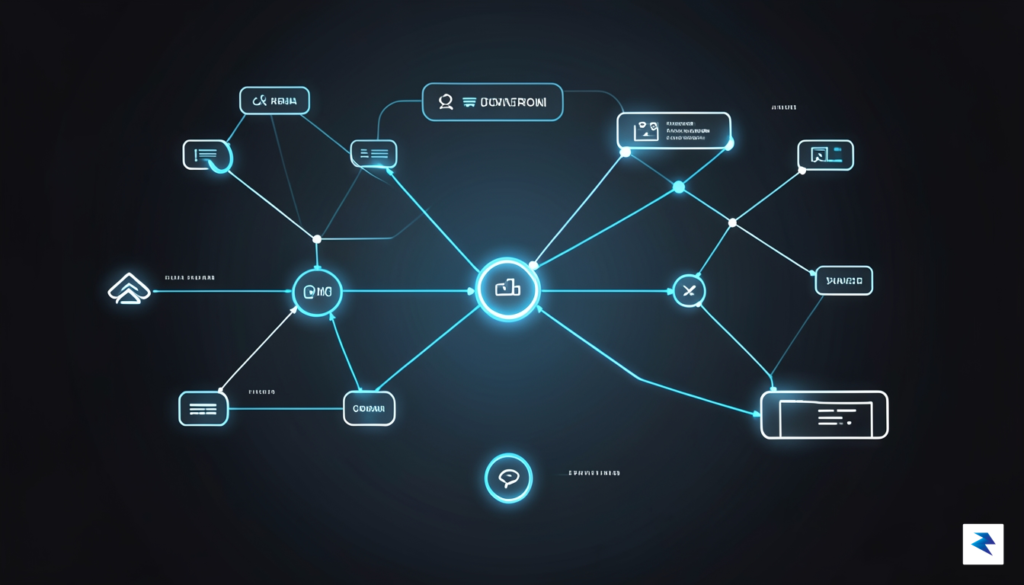
Transitioning from cloud-based APIs to a local-first development environment begins with selecting the right orchestration layer. For most developers, Ollama offers the most frictionless entry point, allowing you to pull and serve the Qwen 3.6 27B model with a single command line instruction. By running the model locally, you eliminate latency issues and ensure complete data privacy, which is essential when working with proprietary codebases. Alternatively, if you prefer a graphical interface for monitoring hardware utilization and fine-tuning inference parameters, LM Studio provides an intuitive dashboard that makes managing the 27B model’s memory footprint straightforward and visually transparent.
Refining Your Prompt Strategy
Because the 27B architecture sits in that unique “Goldilocks” zone of intelligence—powerful enough to reason through complex logic but efficient enough to run on consumer hardware—your prompt engineering strategy should shift toward structured interaction. Unlike smaller models that often struggle with nuanced instructions, Qwen 3.6 excels at handling multi-step reasoning tasks. To get the best results, you should adopt a Chain-of-Thought prompting style, explicitly asking the model to break down its internal logic before providing a final code snippet or architectural recommendation. By encouraging the model to “think out loud,” you significantly reduce the likelihood of hallucinations and improve the quality of the generated output for complex refactoring tasks.
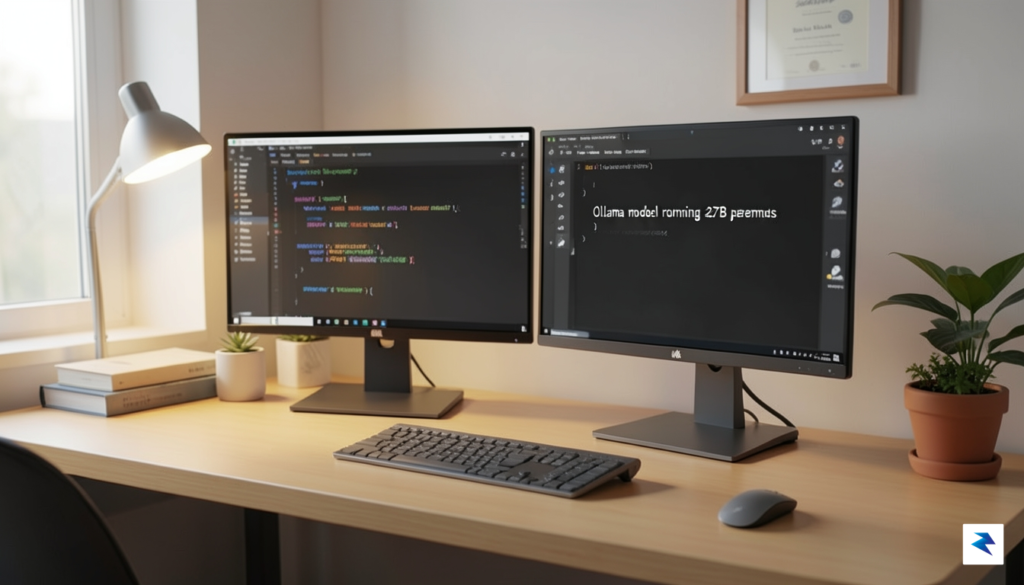
The true power of a 27B parameter model is found in its ability to balance context retention with speed; it is the ideal engine for a local copilot that doesn’t sacrifice depth for responsiveness.
Building a Local-First AI Stack
Integration is where the model truly becomes an extension of your development pipeline. You can chain Qwen 3.6 27B with local tools like Continue.dev or other IDE extensions that support OpenAI-compatible endpoints. By configuring these extensions to point toward your local Ollama instance, you transform your existing editor into an AI-powered powerhouse that operates entirely offline. Furthermore, consider integrating the model into your local shell environment using CLI tools that can pipe terminal error logs directly into the model for instant debugging. This creates a cohesive “local-first” AI stack where your development environment, your documentation retrieval, and your code generation all live on your machine, ensuring that your workflow remains uninterrupted by internet connectivity or API rate limits.
- Hardware Optimization: Ensure you have sufficient VRAM to load the quantized versions of the model for optimal tokens-per-second performance.
- Context Management: Utilize a system prompt that defines the model’s role as a “senior software engineer” to prime it for high-quality technical output.
- Tool Chaining: Combine the model with local vector databases like ChromaDB to provide the 27B engine with RAG (Retrieval-Augmented Generation) capabilities for your specific project documentation.