
How Android’s Earthquake Alerts Protected 11.4 Million People in Venezuela
The Science Behind Android Earthquake Alerts At the heart of this global safety initiative lies a sophisticated application of the hardware…


The global digital asset ecosystem is currently navigating a period of unprecedented transformation, where the primary objective for many blockchain pioneers has shifted from aggressive expansion to strategic survival. For years, the industry operated in a relatively permissive environment, but the recent push for comprehensive oversight has created a friction-heavy landscape. As major jurisdictions move to implement strict compliance mandates, firms are discovering that the cost of navigating fragmented and often punitive regulatory hurdles is beginning to stifle the very innovation that originally fueled the sector. This tension between the need for investor protection and the desire to foster technological advancement has left many founders feeling cornered, forcing them to weigh the benefits of established markets against the existential risks posed by shifting legislative goalposts.
Consequently, we are witnessing a pronounced phenomenon known as regulatory arbitrage, where companies are actively relocating their headquarters to jurisdictions that offer legal clarity rather than just punitive enforcement. This movement is not merely a reaction to bureaucratic red tape; it is a calculated effort to secure a long-term operational foundation. Founders are increasingly prioritizing regions where policy is developed through collaborative dialogue rather than unilateral mandates. In this context, the United Arab Emirates has rapidly ascended as the preeminent sanctuary for Web3 businesses, positioning itself as a global hub that balances rigorous oversight with a genuinely hospitable environment for digital growth.

The UAE’s success stems from its ability to treat cryptocurrency not as a threat to be contained, but as a strategic asset class to be integrated into the broader digital economy.
The UAE’s proactive stance is anchored by the Virtual Assets Regulatory Authority (VARA), the world’s first independent regulator dedicated specifically to the virtual asset sector. By establishing a framework that is both comprehensive and flexible, the UAE has effectively lowered the barrier to entry for legitimate startups while maintaining the high institutional standards required to attract major global players. This approach stands in stark contrast to the tightening grip of European policies, where the impending finality of comprehensive frameworks has created a sense of unease among firms that fear the administrative burden will outweigh the market potential. As these companies reassess their European footprints, the UAE represents more than just a geographic alternative; it serves as a robust, forward-thinking jurisdiction that understands the unique operational requirements of blockchain-native enterprises.

For many European blockchain entrepreneurs, the implementation of the Markets in Crypto-Assets (MiCA) regulation has inadvertently triggered a wave of “regulatory fatigue.” While the framework was designed to provide clarity, the reality on the ground has often been characterized by bureaucratic bottlenecks, ambiguous compliance requirements, and a slow, fragmented application process across different EU member states. Founders find themselves tethered to endless legal paperwork and administrative hurdles, which essentially stifles the rapid innovation cycles essential for survival in the volatile crypto market. This friction has created a stark contrast between the cautious, legacy-minded approach of European regulators and the agile, tech-forward environment that has become the hallmark of the United Arab Emirates.
Dubai has effectively positioned itself as the antithesis of this stagnation by prioritizing a “fast-track” licensing culture that respects the inherent speed of the digital asset industry. At the center of this shift is the Virtual Assets Regulatory Authority (VARA), the world’s first independent regulator specifically established to govern the crypto sector. Unlike European financial centers, where crypto firms are often forced to navigate legacy banking regulations never designed for decentralized technology, VARA offers a bespoke, streamlined pathway for companies to obtain operational licenses. By providing a clear, predictable roadmap for compliance, Dubai allows founders to transition from the initial application phase to full-scale market operations in a fraction of the time it would take to secure similar approvals in a European jurisdiction.

The fundamental shift isn’t just about fiscal benefits; it is about the transition from a mindset of restrictive oversight to one of institutional partnership, where regulators and founders work in tandem to foster a safe, high-growth ecosystem.
The operational efficiency found in the UAE is further bolstered by a unified regulatory approach that minimizes the need for multi-jurisdictional legal wrangling. While a company in Europe might face disparate interpretations of MiCA depending on whether they are operating in Germany, France, or Lithuania, Dubai provides a centralized, robust framework that covers the entire emirate. This consistency is a massive advantage for startups that lack the capital to maintain large, expensive legal teams dedicated solely to deciphering local regulatory nuances. By lowering the barrier to entry and eliminating unnecessary friction, Dubai is not merely attracting crypto firms; it is actively nurturing a concentration of talent and capital that is increasingly difficult to replicate in the more rigid financial hubs of the West.
Ultimately, the migration of these firms is a pragmatic response to the reality of global competition. When founders can choose between an environment that views their business model with suspicion and one that treats them as a vital pillar of a future-proof economy, the choice becomes clear. The combination of VARA’s proactive guidance, a business-friendly administrative infrastructure, and a government that views crypto as a core growth vertical has transformed Dubai into a global lighthouse for firms seeking to escape the uncertainty of the European regulatory landscape.
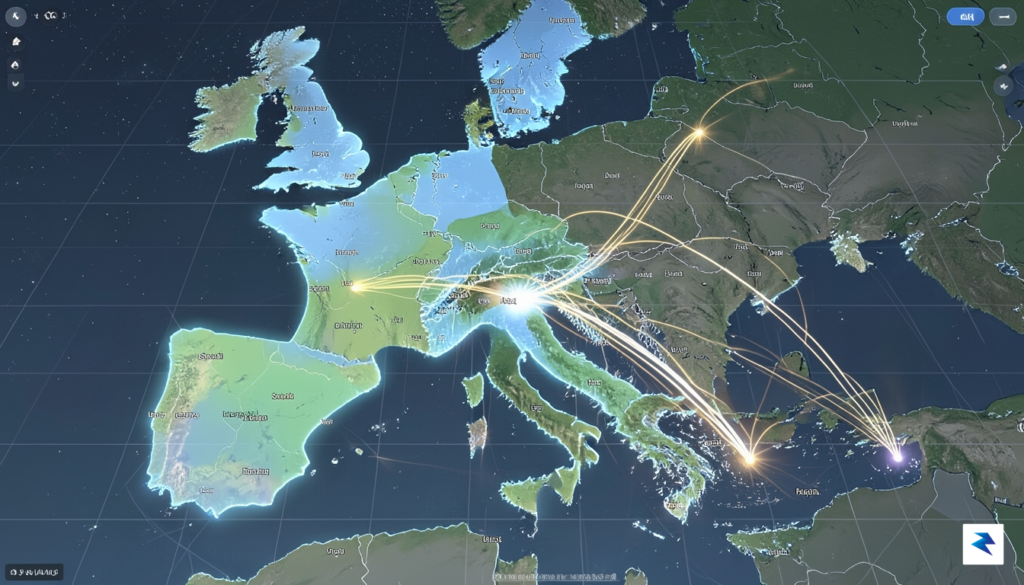
The Markets in Crypto-Assets (MiCA) regulation was architected with the noble intention of transforming the wild west of European digital finance into a transparent, secure, and unified marketplace. By establishing a comprehensive rulebook, the European Union aimed to provide the legal certainty that institutional investors and retail users have long demanded. However, as the final implementation deadlines approach, the practical reality of these mandates is clashing with the operational realities of early-stage startups. For many, the weight of compliance—ranging from stringent capital requirements to exhaustive reporting protocols—has shifted from being a hallmark of legitimacy to a formidable barrier to entry.
At the heart of the friction is the sheer cost and complexity of the MiCA framework, which often treats a lean, agile decentralized finance team with the same rigorous scrutiny as a multinational banking institution. Startups that once thrived on rapid iteration and permissionless innovation now face a landscape defined by significant legal fees, mandatory organizational restructuring, and the constant threat of regulatory overreach. This administrative burden is not merely a financial hurdle; it is a strategic bottleneck that threatens to stifle the very creativity that drove the European crypto ecosystem forward in the first place. Consequently, many founders are questioning whether the price of admission to the European market is simply too high, especially when other jurisdictions offer a more streamlined, growth-oriented environment.

The looming deadline acts as a powerful catalyst, forcing companies to reach a “go or stay” decision regarding their operational headquarters. It has become a strategic tipping point where the immediate need for operational flexibility outweighs the long-term, albeit theoretical, benefits of a harmonized EU market. Firms that prioritize rapid product development are increasingly viewing Dubai—with its dedicated crypto-friendly authorities and clear, tech-forward guidelines—as a more attractive, friction-free alternative. This migration is not necessarily a rejection of regulation as a concept, but rather a preference for a framework that supports innovation rather than burdening it with legacy-style procedural demands.
The long-term success of MiCA will depend on whether the EU can maintain the trust of digital asset innovators while simultaneously protecting consumers; if the compliance threshold is set too high, the risk is not just a migration of talent, but a permanent loss of competitiveness in the global digital economy.
Ultimately, there is a balanced perspective to be found in this trend. While MiCA will undoubtedly drive out bad actors and create a safer environment for mainstream adoption, the immediate transition period is inherently painful for the startup sector. The regulatory environment in Europe is currently undergoing a “stress test” of its own; it must prove that it can foster a sustainable ecosystem without forcing its most agile participants to seek more fertile ground elsewhere. As the dust settles, the industry will likely see a bifurcation: established players who can afford the high cost of compliance will cement their presence in Europe, while the next generation of experimental startups will continue to favor jurisdictions that offer a more balanced and welcoming regulatory architecture.

The United Arab Emirates has effectively transformed itself into a global crossroads for digital finance, transcending the role of a mere tax-efficient jurisdiction to become a vital bridge between Eastern and Western markets. By positioning Dubai at the center of this financial nexus, the UAE offers crypto companies unparalleled access to the rapidly expanding economies of Asia, Africa, and the Middle East. Unlike regions where digital assets face regulatory stagnation, the UAE’s strategic focus on the “Future Economy” ensures that firms can leverage a robust infrastructure designed to connect emerging market liquidity with mature institutional capital. This geographic advantage is further bolstered by a time zone that allows businesses to operate efficiently across both Asian and European trading hours, making it an essential hub for international operations.

A cornerstone of this transformation is the Virtual Assets Regulatory Authority (VARA), the world’s first independent regulator dedicated specifically to the virtual asset sector. VARA’s framework provides a level of clarity that is often missing in other global markets, offering sector-specific licensing that allows firms to innovate without the friction of outdated financial regulations. By establishing clear, predictable rules, VARA has successfully attracted top-tier institutional players who require a high degree of legal certainty to operate. This regulatory maturity is complemented by an increasing willingness from local banks to engage with crypto-native businesses, signaling a broader national strategy that views digital assets not as a peripheral risk, but as a fundamental component of the UAE’s long-term economic integration.
The UAE’s regulatory environment is characterized by a “pro-innovation, pro-compliance” philosophy, which replaces the ambiguity found elsewhere with a structured pathway for long-term growth and institutional trust.
Beyond the regulatory benefits, Dubai has cultivated a thriving ecosystem of human capital and venture capital that supports the entire lifecycle of a crypto project. The city has become a magnet for global talent, drawing in developers, blockchain engineers, and financial experts who are attracted by the UAE’s high quality of life and business-friendly environment. This concentration of expertise is matched by a deep pool of venture capital, with family offices and sovereign wealth funds increasingly allocating resources to digital asset infrastructure. This synergy between regulatory foresight, banking integration, and a concentrated tech community creates a “flywheel effect” that makes the UAE not just an alternative to Europe, but a superior destination for firms looking to scale on a global level.

The current landscape of digital asset regulation reveals a stark contrast in philosophy between the European Union and the United Arab Emirates. While the EU’s Markets in Crypto-Assets (MiCA) regulation offers a comprehensive, unified legal framework designed to provide maximum consumer security and market stability, its rigid nature is proving to be a double-edged sword. In contrast, Dubai’s approach—anchored by the Virtual Assets Regulatory Authority (VARA)—prioritizes agility and specialized industry support, creating an environment that feels more like a partnership than a top-down mandate. This fundamental divergence has sparked a migration of talent and capital, as firms weigh the comfort of European market size against the operational freedom and proactive support found in the Gulf.

Whether Europe can retain its status as a global innovation hub depends entirely on its willingness to iterate. If the brain drain continues, European policymakers may eventually face pressure to introduce “sandboxes” or regulatory relief measures that mirror the flexibility of Middle Eastern jurisdictions. The long-term viability of the EU as a crypto-friendly region will hinge on whether it can evolve MiCA from a static rulebook into a dynamic framework that responds to technological shifts in real-time. Without this pivot, the continent risks being relegated to a secondary market where firms operate only when necessary, rather than where they choose to build their core infrastructure.
The ultimate success of any global jurisdiction in the blockchain era will be determined by its ability to harmonize stringent safety standards with the high-speed operational requirements of decentralized networks.
Looking ahead, the competition between these two regions is not necessarily a zero-sum game, but rather a catalyst for global maturation. Regulatory competition forces all governments to prove the value of their legal systems, which ultimately benefits the entire crypto ecosystem by driving best practices. While Dubai currently holds the advantage in terms of attracting early-stage ventures and high-growth firms, Europe’s sheer economic scale and institutional investor base remain formidable strengths. If the EU learns to marry its protectionist goals with a more entrepreneurial spirit, the result will be a more resilient global market. Ultimately, the jurisdictions that succeed will be those that view blockchain not merely as a sector to be policed, but as a technological foundation for the next century of finance.
In summary, the ongoing shift of crypto operations toward the UAE serves as a loud signal that capital will always flow toward the path of least, yet most efficient, resistance. For Europe, the challenge is clear: it must decide if it wants to be the world’s most regulated market or the world’s most innovative one. Achieving both is the goal, but it requires a level of regulatory humility and adaptability that remains to be seen. As the industry continues to mature, we can expect to see a balancing act where regional policies are continuously refined, ensuring that the global growth of crypto is marked by both responsible oversight and unbridled technological progress.
You must be logged in to post a comment.