
The Future of SSH: Why Native Graphical Shells Are Changing Remote Work
The Evolution of Remote System Management For more than three decades, Secure Shell (SSH) has stood as the undisputed bedrock of remote server…
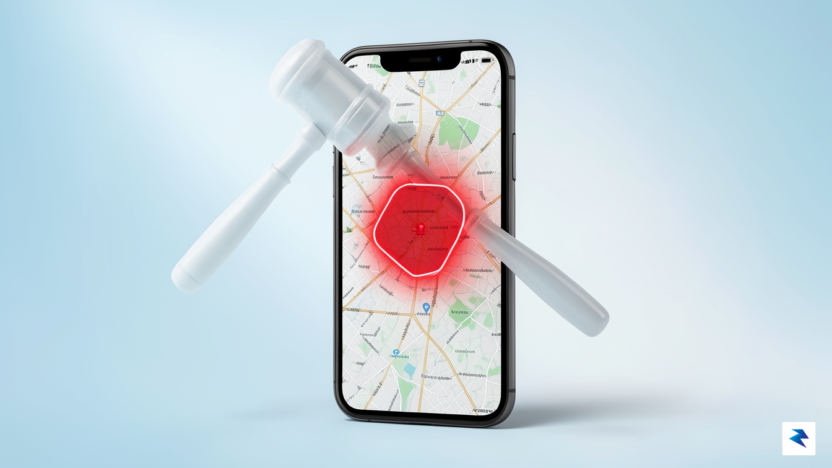

At its core, a geofence warrant—often referred to as a “reverse location search”—is a digital dragnet that flips the traditional investigative process on its head. Instead of law enforcement identifying a specific suspect and then seeking data related to that individual, they start with a geographic area and a time window, asking tech companies to identify every user who happened to be within those boundaries. By compelling platforms like Google to mine their vast “Sensorvault” databases, police effectively turn a general location into a digital lineup. This method allows authorities to cast an incredibly wide net, capturing the movements of innocent bystanders, protesters, and local residents who share no connection to the crime being investigated, all without prior suspicion of wrongdoing.

For years, this practice operated in a legal gray area, leading to significant friction between tech giants and law enforcement agencies. Tech companies initially struggled to balance their cooperation with legal requests against the privacy expectations of their billions of users. As the volume of these requests surged—climbing from a handful of incidents to thousands annually—critics began to highlight the inherent danger of these “digital dragnets.” Privacy advocates argued that geofence warrants are fundamentally at odds with the Fourth Amendment, which protects citizens against unreasonable searches and seizures. Unlike a traditional warrant that specifies a person or a place with particularity, a geofence warrant relies on mass surveillance to find a target, effectively treating an entire neighborhood as a digital crime scene.
The constitutional crisis centers on the concept of “particularity.” In a free society, the government should not be permitted to sweep up the private location history of dozens or hundreds of innocent individuals simply because they walked past a crime scene.
The controversy reached a fever pitch because these warrants do not just capture a single data point; they expose intimate patterns of life, including visits to medical clinics, places of worship, or political rallies. Because the Fourth Amendment requires probable cause to justify a search, the indiscriminate nature of these warrants created a direct clash with long-standing legal protections. If the government can simply draw a circle on a map and demand to know who was inside, the very notion of a “reasonable expectation of privacy” in the digital age begins to erode. Consequently, the legal system was forced to intervene, moving to curb a practice that many viewed as a shortcut that bypassed the rigorous judicial scrutiny required to protect the constitutional rights of the public.

The core of the legal challenge surrounding geofence warrants rests on the evolving interpretation of the Fourth Amendment’s “reasonable expectation of privacy” standard. In an era where smartphones act as tethered companions, constantly pinging cell towers and recording precise GPS coordinates, our physical movements have become digital footprints. The Supreme Court’s recent involvement highlights a growing judicial recognition that the sheer volume of personal data collected—often without a specific suspect in mind—fundamentally alters the balance between law enforcement utility and individual liberty. As technology continues to outpace traditional legal frameworks, the judiciary is increasingly forced to ask whether a person truly forfeits their expectation of privacy simply by carrying a device that tracks their every step.
Central to this dispute is the requirement of “probable cause,” the bedrock of any lawful search or seizure. Critics of geofence warrants have long argued that these investigative tools function as modern-day general warrants, sweeping up data on hundreds or even thousands of innocent bystanders to identify a single perpetrator. Because a geofence request targets a geographic area rather than a specific individual, it inherently lacks the particularity demanded by the Constitution. By casting such a wide, digital net, investigators effectively treat the movements of the general public as evidence to be sifted through, rather than as protected information requiring a narrow, focused justification. This lack of specificity is exactly what the Fourth Amendment was designed to prevent, serving as a safeguard against the government’s overreach into the lives of the citizenry.

Beyond the technical arguments of specificity, this case touches upon the burgeoning concept of “digital personhood” and the right to move through public spaces without being subject to persistent state surveillance. If the government can catalog every person who visits a clinic, a political protest, or a place of worship through a retroactive geofence request, the chilling effect on public life could be profound. The ability to navigate the world anonymously—or at least without being tracked by the state as a default state of existence—is a vital component of a free society. Ultimately, the Supreme Court’s intervention signals a critical shift toward protecting that anonymity, ensuring that the convenience of modern surveillance does not permanently erode the constitutional protections that define our democracy.
The Fourth Amendment was never intended to act as a barrier to effective policing, but it was explicitly written to prevent the state from treating the entire population as a pool of potential suspects.
By forcing law enforcement to meet higher constitutional thresholds, the Court has effectively mandated a more precise, individualized approach to digital investigations. This decision serves as a powerful reminder that our digital lives are not exempt from the protections of the Bill of Rights. As we move forward, the legal system must remain vigilant in ensuring that technological efficiency does not override the fundamental rights of the individual to be secure in their person and their movements.

The Supreme Court’s recent decision represents a fundamental recalibration of the balance between digital privacy and law enforcement investigative powers. By mandating that geofence warrants must adhere to rigorous constitutional protections, the Court has effectively ended the era of “dragnet” digital surveillance. Previously, investigators often treated location data as a commodity that could be vacuumed up from service providers without significant scrutiny. Now, police departments are legally required to demonstrate that such requests are not merely fishing expeditions, but rather essential components of a specific, narrow criminal inquiry.
Central to this new mandate is a heightened threshold for establishing probable cause. It is no longer sufficient for officers to provide a generic justification for why they need location data; instead, they must now articulate a compelling, evidence-backed narrative that links specific individuals to a crime within a defined space and time. This shift places the burden of proof squarely on the state, forcing investigators to demonstrate that the digital net they are casting is proportionate to the severity of the offense being investigated. Consequently, the days of requesting anonymized location data for thousands of innocent bystanders—only to filter that data later—have been largely curtailed by these new legal constraints.

The Court’s ruling establishes that location data is not merely a technical log, but a deeply intimate record of a person’s life that demands the highest level of Fourth Amendment scrutiny.
Beyond the legal hurdles, this ruling forces a practical shift away from broad, sweeping requests toward highly targeted, individual-specific warrants. Law enforcement agencies must now rethink their investigative workflows to ensure they are not infringing upon the privacy of those who happen to be in the wrong place at the wrong time. This transition requires a more sophisticated level of collaboration between tech-savvy investigators and legal counsel to draft warrants that are narrow in scope, precise in duration, and limited in geographic reach. Failure to meet these heightened standards now risks the complete suppression of any evidence gathered, rendering the investigation potentially fruitless in a court of law.
Ultimately, this ruling is likely to create a “chill” on aggressive digital surveillance practices that have become commonplace over the last decade. While police retain the ability to use technology to solve crimes, they must now operate with a newfound awareness of the digital footprints they are tracking. This change is poised to curb the reflexive reliance on big-data surveillance, encouraging departments to return to traditional investigative methods that rely on witness testimony, physical evidence, and targeted suspicion rather than mass digital sweeps. As a result, the privacy of the average citizen is better protected against the unintended consequences of high-tech policing.

In the pursuit of justice, law enforcement agencies have increasingly turned to geofence warrants—a digital dragnet that captures the location history of every mobile device within a specific geographic area at a given time. Proponents of this investigative tool argue that it is an indispensable asset for solving high-stakes crimes, such as kidnappings, homicides, or large-scale acts of domestic terrorism. By analyzing the massive influx of location data provided by tech giants, investigators can identify patterns and potential suspects who would otherwise remain anonymous. When applied to critical situations where time is of the essence, these warrants have undeniably helped authorities close cases that might have gone cold without a digital trail.
However, the convenience of this technology often clashes with the fundamental right to privacy, creating a significant risk of “false positives.” Because these warrants do not target a specific individual but rather a physical space, the dragnet inevitably sweeps up the location history of innocent bystanders—people who were simply walking their dogs, commuting to work, or visiting a nearby store at the wrong time. This indiscriminate collection of sensitive data turns ordinary citizens into potential suspects, subjecting them to unnecessary scrutiny and the stress of being flagged by automated law enforcement algorithms. The fear is that such digital surveillance creates a chilling effect, where the mere presence of a smartphone in a public area could lead to an invasive investigation of one’s private movements.

Consequently, the role of major technology companies has shifted from mere data custodians to the primary gatekeepers of individual privacy. These corporations now hold the immense responsibility of vetting law enforcement requests and determining which data points are relevant enough to be handed over without violating the Fourth Amendment rights of millions of users. As the Supreme Court clarifies the constitutional boundaries of these warrants, tech firms are increasingly compelled to implement more rigorous internal policies to push back against overly broad data requests. This creates a complex tug-of-war between private enterprise and government authority, where the goal is to define a middle ground: ensuring that law enforcement retains the tools necessary to protect the public, while simultaneously shielding the digital footprints of innocent individuals from unjustified intrusion.
The core challenge lies in building a legal framework that treats digital location history with the same level of sanctity as a person’s physical diary, recognizing that in the modern age, our devices are extensions of our private selves.
Finding this balance requires more than just judicial intervention; it necessitates a commitment to transparency and technological accountability. As we move forward, society must determine whether the efficiency of digital surveillance is worth the potential erosion of anonymity in public spaces. By emphasizing the need for probable cause and narrowing the scope of these warrants, the legal system is finally beginning to acknowledge that public safety does not have to come at the expense of our constitutional liberties.


The Supreme Court’s decision to mandate constitutional protections for geofence warrants serves as a significant turning point, yet it is likely only the opening chapter in a much larger struggle over digital sovereignty. By establishing that wide-reaching “reverse location” searches require a standard rooted in the Fourth Amendment, the Court has signaled that the dragnet collection of historical movement data cannot continue unchecked. This precedent will almost certainly create a ripple effect, forcing courts to re-examine other invasive technologies like real-time facial recognition, predictive social media mining, and third-party metadata harvesting. As law enforcement agencies become increasingly reliant on algorithmic tools to solve crimes, this ruling provides a vital legal framework to challenge the notion that digital footprints are inherently “public” or fair game for government surveillance.
Beyond judicial interpretation, this ruling places immense pressure on Congress to move beyond reactive litigation and toward comprehensive federal privacy legislation. While the Court has set a floor for constitutional protections, lawmakers now face a clear mandate to codify these rights into statute, providing clarity that prevents law enforcement from simply switching to more invasive—and potentially unregulated—technologies. A robust federal privacy law would not only solidify the status of location data as private but also address the murky waters of data brokers who currently sell sensitive location information to government agencies without ever needing a warrant. Legislative reform is the only way to ensure that these protections are consistent across all fifty states, rather than leaving individual privacy rights to the mercy of varying local jurisdictions.
True digital privacy requires more than just judicial intervention; it necessitates a fundamental shift in how we regulate the intersection of law enforcement and the massive data ecosystems maintained by tech giants.
While the wheels of justice and policy turn slowly, you do not have to wait for new laws to take control of your digital footprint. Managing your personal location history is a proactive step you can take today to minimize your exposure to overreaching data collection:
Ultimately, this ruling is a reminder that your digital presence is an extension of your physical self. As the boundaries between our online lives and real-world interactions continue to blur, the fight for privacy is not just about hiding secrets—it is about maintaining the right to move through the world without being treated as a perpetual subject of government surveillance.
You must be logged in to post a comment.