
Supreme Court Limits Geofence Warrants: What It Means for Your Privacy
Understanding the Geofence Warrant Controversy At its core, a geofence warrant—often referred to as a "reverse location search"—is a digital…


For years, Rocket Lab has been defined by its prowess as a launch provider, consistently demonstrating that its Electron rocket is a reliable workhorse for small satellite deployment. However, the decision to acquire Iridium signals a seismic shift in the company’s corporate trajectory, marking a definitive evolution from a pure-play launch service toward a comprehensive space-as-a-service model. By moving beyond simply delivering payloads to orbit and instead owning the assets that reside there, Rocket Lab is fundamentally changing its value proposition. This vertical integration allows the firm to capture value at every stage of the space mission lifecycle, effectively transforming from a “space taxi” service into an end-to-end infrastructure giant that controls both the delivery mechanism and the operational destination.
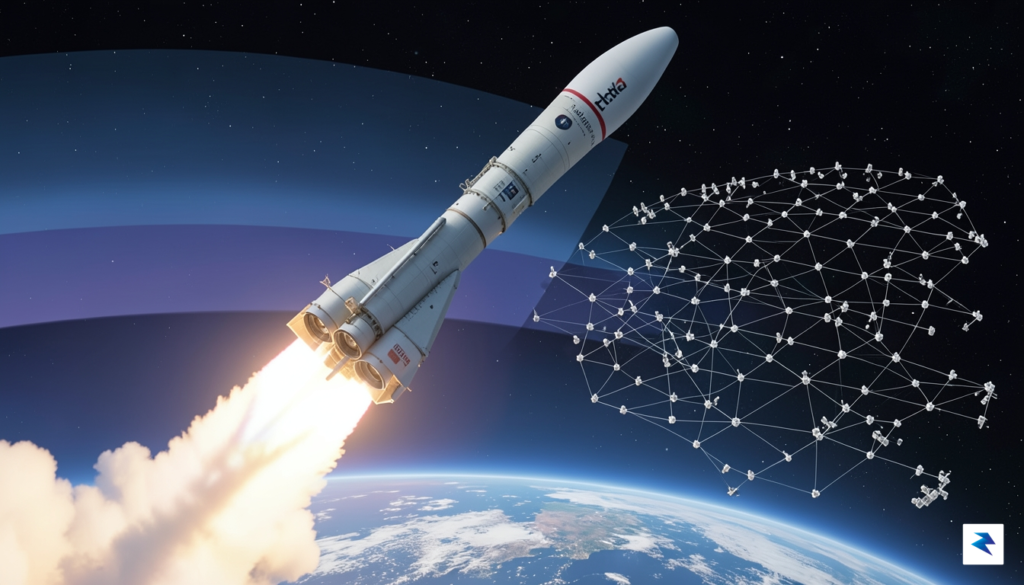
The strategic logic behind this move lies in the pursuit of architectural synergy. When a company controls the entire stack—from the propulsion systems and aerospace hardware to the satellite constellations and the ground-based software that manages data throughput—it gains unparalleled efficiency. By owning the Iridium constellation, Rocket Lab can optimize its satellite production to align perfectly with its launch schedules, drastically reducing the friction and overhead typically associated with third-party logistics. This integration enables a seamless feedback loop where flight data from launch operations directly informs the engineering of future satellite iterations, creating a recursive improvement process that competitors relying on fragmented supply chains simply cannot match.
The acquisition represents more than just a merger of assets; it is a fundamental shift toward controlling the “space utility” layer, turning orbital infrastructure into a reliable, scalable service for the modern digital economy.
Furthermore, this transition addresses the burgeoning demand for persistent orbital connectivity. As industries ranging from telecommunications to real-time climate monitoring require more robust, always-on data streams, Rocket Lab is positioning itself to be the primary provider of this backbone. Owning the hardware is only half the battle; the integration of sophisticated software-defined networking allows the company to pivot its capacity based on market demand without needing to launch entirely new assets. By consolidating these capabilities, Rocket Lab is not merely playing in the space sector; it is building the very foundation upon which the next generation of global infrastructure will rest, ensuring it remains the indispensable partner for any entity looking to leverage the power of orbit.

By absorbing Iridium into its operational fold, Rocket Lab is fundamentally transforming from a launch provider into a comprehensive space infrastructure powerhouse. At the heart of this synergy is Iridium’s established L-band satellite constellation, a gold standard for global connectivity that operates with exceptional reliability across the entire planet, including the polar regions where traditional geostationary satellites often falter. This integration grants Rocket Lab immediate access to a robust, battle-tested communication backbone, effectively bypassing the decade-long hurdle of building such an expansive network from scratch. By leveraging this existing architecture, Rocket Lab can now offer end-to-end mission solutions that combine high-frequency launch cadence with guaranteed, persistent data transmission capabilities.

The technical advantages extend well beyond simple connectivity. Rocket Lab’s sophisticated manufacturing division is uniquely positioned to iterate on future generations of Iridium satellites, optimizing them for lighter weights, higher efficiency, and increased data throughput. By bringing the satellite design and manufacturing process in-house, Rocket Lab can streamline the production lifecycle, ensuring that new iterations of the constellation are launched with significantly reduced lead times. This vertical integration allows for a seamless feedback loop where the mission requirements of the communication network directly influence the engineering specifications of the next generation of spacecraft, resulting in a more agile and cost-effective orbital presence.
The acquisition represents a strategic shift where the value lies not just in the hardware currently in orbit, but in the proprietary frequency rights and regulatory approvals that Iridium has secured over decades of operation.
Beyond the hardware, the acquisition provides Rocket Lab with a significant regulatory and commercial advantage. Securing international frequency rights is notoriously difficult and time-consuming, yet Iridium already holds the necessary approvals to operate across global jurisdictions. By inheriting these rights, Rocket Lab effectively gains a “fast-track” status for future satellite deployments, allowing them to expand their network without getting bogged down in years of international red tape. Furthermore, this move unlocks massive cross-selling potential; Rocket Lab can now bundle launch services with bandwidth subscriptions, offering enterprise and government clients a singular, streamlined solution for their space-based data needs. This comprehensive ecosystem approach makes Rocket Lab an indispensable partner for any entity looking to establish a secure, reliable, and scalable presence in low Earth orbit.
The space industry is currently undergoing a period of rapid consolidation, shifting from an era of experimental startups to one defined by industrial-scale competition. By absorbing Iridium’s extensive satellite infrastructure and technical expertise, Rocket Lab is fundamentally changing its posture in the low-earth orbit (LEO) arena. While SpaceX’s Starlink continues to dominate the consumer broadband market through its unmatched launch frequency and Amazon’s Project Kuiper prepares for a massive deployment, Rocket Lab is carving out a distinct strategic advantage. Rather than simply competing on launch cadence, the company is positioning itself as a comprehensive, end-to-end space utility provider that can manage the entire lifecycle of a mission—from the initial design and satellite manufacturing to the final deployment and orbital management.

This aggressive acquisition strategy highlights a critical evolution in the space race: the move toward vertical integration. SpaceX has long benefited from controlling both the rocket and the payload, a model that allows for rapid iteration and cost reduction. By acquiring Iridium, Rocket Lab is effectively bridging the gap between its existing launch services and the complex world of constellation operations. This transition is vital because modern mission success is no longer just about putting hardware in space; it is about maintaining a persistent, resilient presence that can adapt to changing commercial and national security requirements. In an increasingly crowded orbital environment, the ability to manage satellite health and data throughput internally—without relying on third-party vendors—provides a significant competitive moat that few other firms can replicate.
The integration of Iridium’s legacy assets into Rocket Lab’s agile ecosystem signals that the next phase of the space economy will be won by those who can provide seamless, turn-key solutions rather than fragmented individual services.
Furthermore, the competitive pressure exerted by all-stock deals and strategic acquisitions is forcing players to scale infrastructure faster than ever before. As LEO becomes more congested, the challenges of orbital debris mitigation, spectrum management, and signal interference are becoming existential hurdles for incumbents and challengers alike. While Starlink and Kuiper focus on massive, hyper-scale consumer connectivity, Rocket Lab is betting that the future lies in high-reliability, mission-critical infrastructure that serves government and specialized commercial sectors. By leveraging Iridium’s established regulatory footprint and orbital expertise, Rocket Lab is not merely keeping pace with industry giants; it is strategically diversifying its service portfolio to remain indispensable in a market where reliability and full-stack capabilities are becoming the ultimate currency.

The $8 billion all-stock agreement between Rocket Lab and Iridium represents a monumental financial commitment, signaling profound investor confidence in the long-term potential of the combined entities within the rapidly expanding space economy. This strategic maneuver, valued at a substantial $8 billion, is structured entirely as an exchange of shares, meaning Iridium shareholders will receive new Rocket Lab shares rather than a cash payout. This approach is particularly advantageous for Rocket Lab as it allows the company to conserve its considerable cash reserves, essential for funding ongoing research and development, operational expansion, and continued investment in its capital-intensive launch and satellite manufacturing capabilities. Furthermore, an all-stock deal often implies that both parties, particularly the acquired company’s shareholders, believe in the future growth trajectory and enhanced value of the merged entity, choosing ownership in the combined enterprise over immediate liquidity.
Naturally, such a significant all-stock transaction will lead to share dilution for existing Rocket Lab shareholders. As new shares are issued to Iridium’s current owners, the total number of outstanding Rocket Lab shares will increase, meaning each existing share will represent a slightly smaller percentage of ownership. However, this dilution is typically viewed through the lens of strategic gain; the expectation is that the added value from Iridium’s established revenue streams, global satellite constellation, and robust customer base will significantly expand the combined company’s market capitalization, ultimately outweighing the initial per-share dilution over time. The market’s reception will largely hinge on how quickly the integrated company can demonstrate the synergistic benefits and unlock new revenue opportunities, justifying the substantial valuation and the enlarged share base.
Analyst sentiment concerning the $8 billion valuation is multifaceted, reflecting both the premium paid and the immense strategic value Iridium brings to the table. Many experts view this figure as a testament to Iridium’s irreplaceable assets, including its fully operational low Earth orbit (LEO) constellation, critical regulatory licenses, and a deep-rooted customer base spanning defense, maritime, and aviation sectors. While some might consider it a premium valuation based on Iridium’s standalone financials, others argue it is justified by the long-term market opportunities in secure satellite communications, IoT connectivity, and advanced space services, where the combined entity is poised to become a dominant force. The all-stock nature further underscores a belief in the future earnings power and strategic advantage of the integrated business, with Rocket Lab’s management betting on substantial growth and operational efficiencies post-merger.
A cornerstone of any major acquisition, particularly one of this magnitude, is the expectation of significant cost synergies and their impact on future capital expenditure. Post-merger, the combined Rocket Lab-Iridium entity anticipates realizing substantial operational efficiencies by streamlining overlapping administrative functions, consolidating procurement processes, and optimizing supply chains across both companies. Beyond these immediate savings, the technological integration promises even deeper synergies: Rocket Lab’s expertise in satellite manufacturing and launch services can be leveraged to reduce the cost and accelerate the deployment of future Iridium satellites or constellation upgrades, thereby mitigating substantial future capital expenditures. Moreover, the ability to cross-sell services—Rocket Lab offering launch solutions to Iridium’s clientele, and Iridium’s communication services being integrated into Rocket Lab’s broader satellite solutions—is expected to drive revenue growth while simultaneously lowering the per-unit cost of delivering these advanced space capabilities. This strategic alignment aims to free up capital that can then be reinvested into innovation, market expansion, or ultimately, returned to shareholders, propelling long-term value creation.

The integration of Iridium’s sophisticated satellite constellation with Rocket Lab’s agile launch and spacecraft manufacturing capabilities signals a seismic shift in the global aerospace landscape. By unifying end-to-end orbital logistics with a robust, established communications network, this new powerhouse is uniquely positioned to redefine the benchmarks for space-based connectivity. We are moving toward an era where the barrier between designing a satellite and delivering its operational data to the end user is virtually erased, creating a seamless pipeline that will likely force competitors to rethink their own fragmented business models.

In the realm of national security and commercial infrastructure, the implications are profound. Governments and private enterprises alike are increasingly demanding resilient, low-latency communication networks that can withstand the complexities of an contested orbital environment. With Rocket Lab now controlling the hardware that puts systems into orbit and the network that keeps them connected, they can provide unparalleled security assurances and rapid deployment cycles that traditional defense contractors struggle to match. This vertical integration allows for a “plug-and-play” architecture where specialized mission payloads can be launched and integrated into the global Iridium network with unprecedented speed, effectively shortening the decision-making cycle for critical defense and emergency communications.
The synergy between high-frequency launch cadence and a global satellite network creates a self-sustaining ecosystem that reduces reliance on third-party vendors, effectively insulating the firm from external supply chain shocks.
Looking further ahead, the roadmap for technological integration suggests that this merger will act as a catalyst for a more efficient aerospace supply chain. By internalizing the production of critical components—from satellite buses to transceivers—the combined entity can drive down costs through economies of scale and iterative engineering loops. This is not merely about consolidating market share; it is about establishing a foundational infrastructure that supports the next generation of space exploration, including deep-space relays and high-bandwidth orbital data centers. As these technologies mature, the industry will likely see a transition toward standardized, modular space platforms that can be rapidly customized for everything from climate monitoring to global internet services, cementing this newly formed entity as the primary architect of the modern orbital economy.
You must be logged in to post a comment.