
The Great AI Disruption Myth
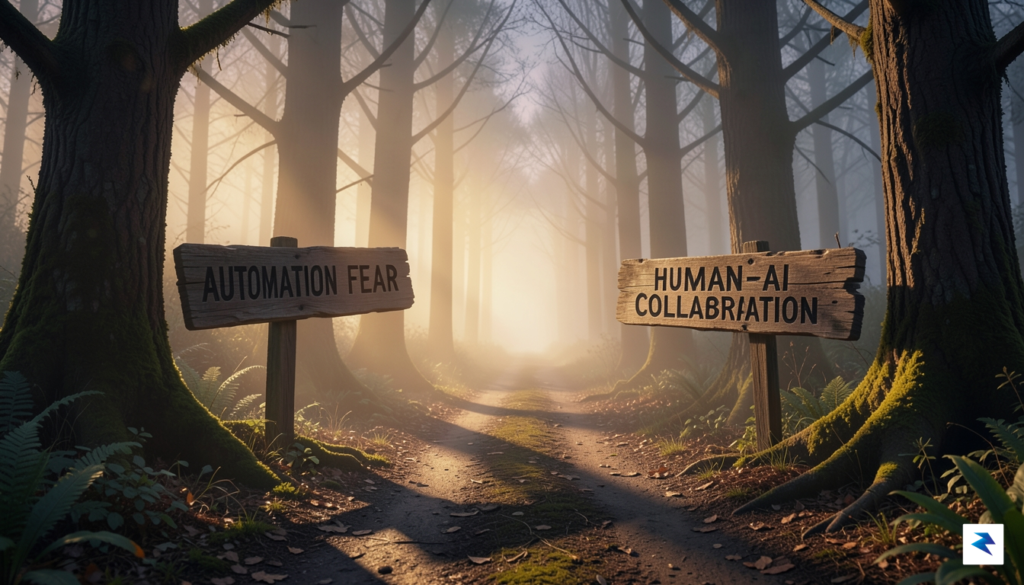
For years, the collective consciousness of the tech world has been dominated by a singular, persistent anxiety: that generative AI represents an existential threat to the modern workforce. This prevailing doomsday narrative suggests a future where algorithms and large language models systematically hollow out entry-level roles, leaving recent graduates and junior professionals with no ladder to climb. We have been conditioned to view every software update and automation breakthrough through a lens of scarcity, fearing that machines are inevitably moving toward a point where human labor becomes a redundant line item on a corporate balance sheet. This fear-based rhetoric has saturated boardrooms and dinner tables alike, fueling a pervasive sense of instability regarding the future of professional development.
However, recent empirical data from the High-Intensity AI Adopter report offers a strikingly different perspective that challenges this grim orthodoxy. Rather than serving as a harbinger of mass unemployment, the findings suggest that the integration of AI is functioning as a powerful economic catalyst. While the public discourse remains fixated on the potential for downsizing, the data reveals that organizations aggressively adopting these technologies are not shrinking their headcounts; instead, they are experiencing significant hiring growth. This disconnect between the popular narrative and the tangible economic reality points to a fundamental misunderstanding of how new technology interacts with labor markets.

The core of this counter-intuitive trend lies in the relationship between productivity and expansion. When companies successfully leverage AI to streamline rote tasks and accelerate workflows, they often find that their total output capacity increases far beyond their original projections. This newfound efficiency does not lead to the elimination of staff, but rather to the creation of new, more complex roles that require human oversight, creative strategy, and nuanced decision-making. By lowering the barrier to entry for complex projects, AI allows firms to take on more ambitious objectives, which in turn necessitates a larger, more skilled workforce to manage the increased volume of business.
The most significant finding is that AI is not merely replacing tasks—it is expanding the scope of what human teams can achieve, effectively forcing a pivot from task-oriented labor to value-oriented strategy.
Ultimately, this article aims to dismantle the fatalistic view that AI is destined to be a tool for corporate downsizing. By exploring the mechanisms behind these growth-oriented companies, we can begin to see AI as a force multiplier that rewards human ingenuity rather than replacing it. We are moving toward a professional landscape where the most successful organizations are those that use automation to empower their employees to do more, not less. Understanding this shift is essential for anyone looking to navigate the modern labor market with confidence, as we move away from the myth of disruption and toward a new era of productivity-driven expansion.
Decoding the Data: High-Intensity Adoption vs. Headcount

The prevailing narrative surrounding artificial intelligence has long been dominated by a singular, anxiety-inducing trope: the inevitable replacement of the human workforce. However, a closer examination of recent economic data reveals a strikingly different reality. Rather than initiating mass layoffs, organizations that have achieved the highest levels of AI integration are actually expanding their payrolls at a robust clip. In fact, firms characterized by high-intensity AI adoption have reported an average headcount increase of 10.2%, a figure that directly contradicts the grim predictions of widespread technological displacement. This growth suggests that AI is not functioning as a substitute for human labor, but rather as a catalyst for organizational scaling.
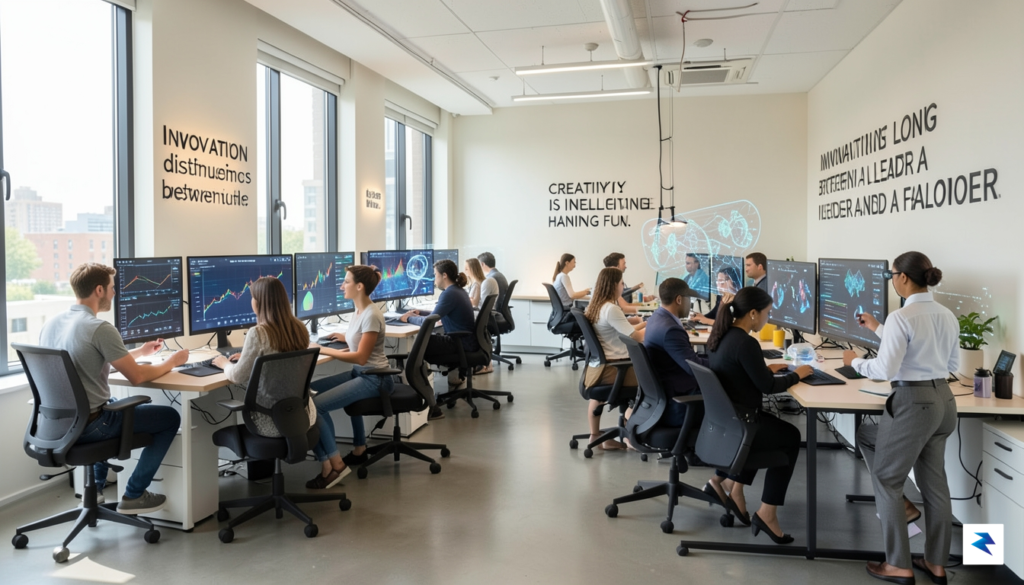
To understand this phenomenon, one must look at the correlation between high-intensity adoption and operational efficiency. When a company successfully embeds AI into its core workflows, it does not simply “save” time; it unlocks new competitive capabilities that were previously unattainable. By automating mundane, repetitive tasks, these organizations enable their employees to focus on high-value activities—such as strategic planning, creative problem-solving, and complex client relations. As these firms become more efficient, they typically experience a surge in output and market demand, necessitating an even larger team to manage the expanded scope of their operations. In this context, the technology acts as a force multiplier for human effort rather than a replacement for it.
The most successful companies are finding that AI-driven productivity gains do not lead to a reduction in staff, but rather a pivot toward more sophisticated, human-centric roles.
This dynamic is best explained through the concept of the “productivity dividend.” When AI drives down the cost of production or accelerates service delivery, companies often find themselves with newfound capital and operational breathing room. Instead of merely trimming margins or padding shareholder dividends, forward-thinking leaders are choosing to reinvest these gains into their human talent. They are hiring more specialists, analysts, and project managers to capitalize on the new business opportunities that their AI-enabled efficiency has created. Ultimately, this cycle of reinvestment creates a virtuous loop: the more a company adopts AI to handle the heavy lifting, the more human expertise it requires to navigate the increasingly complex and expansive landscape that the technology makes possible. Far from signaling a retreat from human labor, the data suggests that we are entering a phase of organizational growth where headcount and AI integration rise in tandem.
The Entry-Level Paradox: Why AI Might Save Junior Roles

Contrary to the prevailing narrative that artificial intelligence serves as a replacement for human labor, recent data reveals a counterintuitive trend: a 12% rise in entry-level hiring among organizations that have aggressively integrated AI into their workflows. Rather than rendering junior staff obsolete, these technologies are effectively acting as a force multiplier for talent that is still in the early stages of professional development. By automating the most mundane, repetitive aspects of daily office work—such as data entry, basic transcription, and rote formatting—AI is liberating junior employees to focus on the high-value tasks that typically required years of experience to reach. Consequently, businesses are finding that they can justify expanding their headcount because each new hire is now capable of producing work at a velocity and complexity previously reserved for mid-level managers.

This shift represents a fundamental change in the junior value proposition. In the past, entry-level roles often involved a “paying your dues” phase, where employees spent significant time performing low-level cognitive tasks to learn the ropes of an industry. Today, that barrier to entry has been lowered significantly by AI tools that handle the heavy lifting of synthesis and preliminary drafting. As a result, junior employees are increasingly being hired for their ability to manage, verify, and creatively deploy AI-generated outputs rather than for their proficiency in basic administrative execution. This transition toward “AI-assisted judgment” means that a fresh graduate is no longer judged solely by their ability to compile a report, but by their aptitude for critiquing, refining, and strategically directing the AI to produce superior results.
The most valuable skill for the next generation of workers will not be the ability to perform a task from scratch, but the ability to curate and refine the output of intelligent systems to meet specific business objectives.
Furthermore, the increase in entry-level hiring suggests that companies are recognizing a critical truth: AI is not a self-sustaining ecosystem. It requires a human layer of oversight to navigate nuance, ethical considerations, and brand alignment. Junior staff are uniquely positioned to serve as the “human-in-the-loop,” ensuring that AI outputs remain accurate and effective. Because these tools make complex technical or analytical tasks more accessible, newer employees can achieve professional competency at an accelerated pace. Instead of viewing AI as a replacement for the workforce of tomorrow, forward-thinking companies are leveraging it to bridge the skills gap, turning junior hires into highly productive assets from their very first day on the job. This symbiotic relationship between human oversight and machine efficiency is not just preserving entry-level roles; it is fundamentally elevating them.
Strategic Implementation: Beyond Automation

The most successful organizations today are moving away from the narrow, reductive view of artificial intelligence as a mere cost-cutting tool designed to displace human labor. Instead, they are embracing a paradigm of augmentation, where intelligent systems act as sophisticated “co-pilots” that amplify the unique capabilities of their workforce. By shifting the focus from task-replacement to task-augmentation, these companies create a symbiotic relationship between human intuition and machine efficiency. This cultural transition is not just a technical upgrade; it is a fundamental rethinking of how work is structured, allowing teams to shed repetitive, low-value administrative burdens to focus on high-impact, creative problem-solving that was previously bottlenecked by limited time and resources.
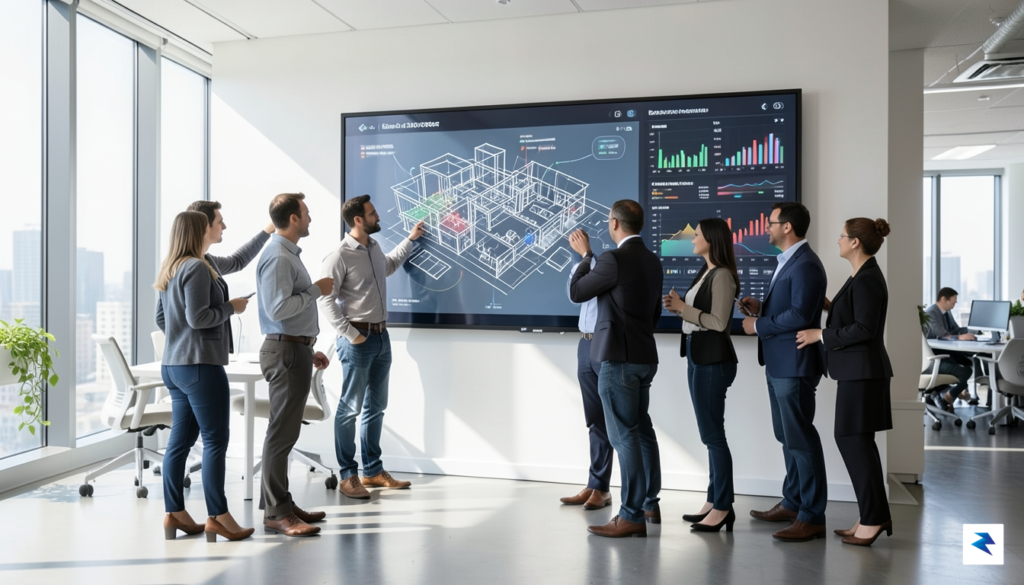
When businesses integrate AI to handle data synthesis, preliminary research, or routine coding, they effectively lower the barrier to entry for complex projects that were once deemed economically unfeasible. For instance, a marketing firm using AI to generate high-volume, personalized content variations can suddenly manage twenty global campaigns instead of three, necessitating the hiring of more creative directors and strategists to manage that expanded output. The technology does not replace the strategist; it creates the headroom for the strategist to oversee a much larger, more sophisticated operation. This ripple effect transforms the internal workflow, enabling employees to function as managers of intelligent systems rather than manual laborers of information.
The true competitive advantage of the AI era lies not in how much you automate, but in how much you empower your human talent to scale their expertise through intelligent assistance.
Central to this evolution is the “human-in-the-loop” requirement, which ensures that high-quality production remains tethered to human judgment and ethical oversight. While AI can process vast datasets at superhuman speeds, it lacks the context, nuance, and accountability inherent to human decision-making. By keeping skilled professionals at the heart of the loop, companies maintain a rigorous standard of quality while utilizing AI to handle the “heavy lifting” of data processing. This structural approach ensures that as a company scales, the quality of its output scales with it, rather than being diluted by unmonitored automation. Ultimately, the organizations that thrive in this new landscape are those that recognize that AI is not a substitute for human intelligence, but a catalyst that allows human potential to reach new, previously inaccessible heights.
Navigating the Future of Work

The prevailing anxiety surrounding artificial intelligence often obscures a fundamental truth: the greatest professional risk is not the emergence of automated tools, but the stagnation of human capability. Instead of viewing AI as an existential threat to job security, we must recognize it as a transformative layer that is fundamentally altering how value is generated. To remain indispensable, workers must shift their perspective from viewing technology as a replacement to seeing it as a sophisticated skill set. This requires a proactive commitment to digital literacy, where employees seek out AI-driven workflows not just to save time, but to expand the scope of their creative and strategic output. By mastering prompt engineering, data interpretation, and AI-assisted project management, professionals can offload mundane, repetitive tasks and focus on the high-level decision-making that AI is currently incapable of performing.
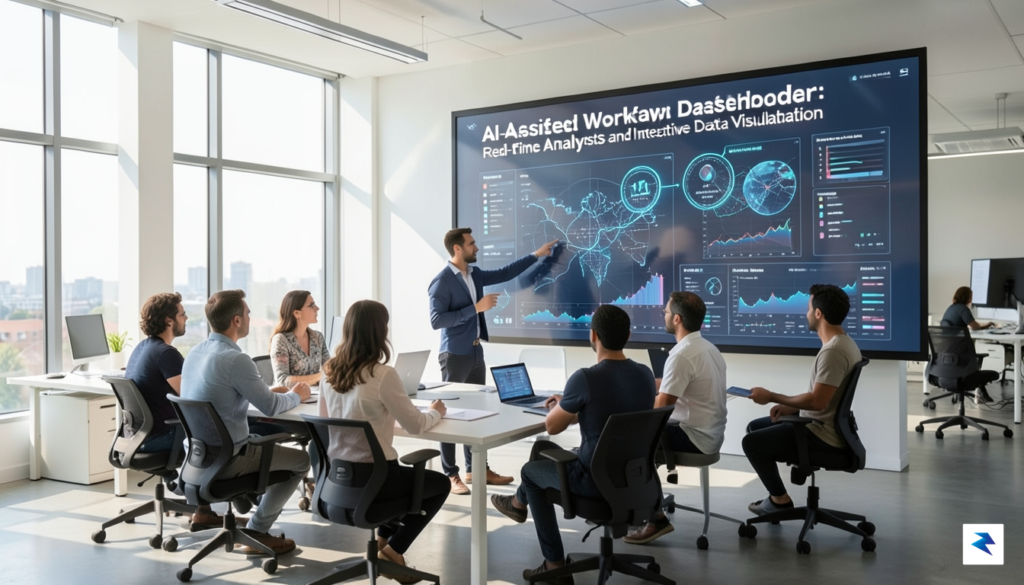
For employees, the path forward involves a blend of technical curiosity and core human resilience. It is no longer enough to be an expert in a specific vertical; one must also be an expert in the tools that accelerate that vertical. Consider how you might integrate generative tools into your daily routine: if you are a writer, use AI for structural brainstorming; if you are a coder, use it to debug routine syntax; if you are a marketer, use it to synthesize large datasets into actionable consumer personas. The goal is to move from being a manual operator to an architectural director of your own work.
The most resilient workers of the next decade will not be those who do the most work, but those who best orchestrate the intelligence of both human intuition and machine efficiency.
Managers and leadership teams bear an equal responsibility in this transition, as they are the architects of the workplace culture that dictates how these tools are adopted. Rather than implementing AI to aggressively trim headcount, forward-thinking organizations should view technology as a catalyst for employee growth. By providing training, fostering an environment of experimental learning, and rewarding those who successfully integrate AI into their departments, leaders can turn the fear of replacement into a culture of empowerment. When employees feel that their tools are designed to augment their expertise rather than render it obsolete, engagement rises and productivity follows. Ultimately, the future of work is not a zero-sum game between silicon and synapses. It is a collaborative evolution where the human workforce, empowered by the precision of AI, reaches new heights of ingenuity and impact that were previously impossible to achieve alone.