
Cursor on iOS: How AI Coding Agents Are Changing Mobile Development
The Evolution of Mobile Development: Cursor Comes to iOS For decades, the concept of mobile software development was confined to the realm of…


Anthropic has rapidly ascended the ranks of the artificial intelligence sector, moving from a niche research-focused organization to a primary architect of enterprise-grade machine learning. With the release of Claude 3.5 Sonnet, the company is signaling a decisive pivot in its development strategy. While early iterations of large language models were often evaluated solely on static benchmarks and raw parameter counts, this new release prioritizes a more pragmatic metric: agentic utility. By refining the delicate balance between high-level reasoning and operational speed, Anthropic is effectively moving the goalposts for what developers and corporate stakeholders should demand from their AI infrastructure.

The transition from the Claude 3 family to the 3.5 architecture is not merely an incremental update; it is a fundamental recalibration of how models interact with complex software environments. Where previous versions excelled at internalizing vast quantities of information, Claude 3.5 Sonnet is engineered to act as a bridge between data and execution. This model demonstrates a heightened ability to navigate nuanced instructions, interpret visual inputs with unprecedented accuracy, and maintain a logical thread across extended, multi-step tasks. For businesses that have been hesitant to integrate AI into their core production workflows due to concerns over latency or reliability, this update represents a critical inflection point where “intelligence” finally translates into measurable “productivity.”
Claude 3.5 Sonnet marks a strategic shift toward agentic performance, moving beyond passive text generation to become a reliable, high-speed engine for real-world enterprise automation.
Furthermore, the competitive landscape of LLMs has become increasingly crowded, with every major player vying for dominance in the enterprise sector. Anthropic’s approach distinguishes itself by focusing on the friction points that currently hinder adoption: consistency, cost-efficiency, and integration capability. By offering a model that is both faster and more capable than its predecessors—often at a more accessible price point—the organization is directly challenging the status quo established by competitors. This focus on practical, real-world application suggests that we are moving out of the era of speculative AI testing and into a period defined by deep integration, where Claude 3.5 Sonnet serves as the foundational layer for a new generation of autonomous business tools.

At the core of Claude 3.5 Sonnet lies a fundamentally refined architecture that bridges the gap between raw computational power and practical utility. Anthropic has moved beyond simple parameter scaling, focusing instead on optimizing the model’s internal reasoning pathways to handle complex, nuance-heavy tasks with unprecedented reliability. For developers, this translates to a significant leap in coding proficiency, where the model demonstrates a deeper understanding of syntax, library dependencies, and architectural patterns. By achieving top-tier scores on the HumanEval benchmark, the model proves that it is not merely generating text based on probability, but is actively interpreting the logical constraints of programming environments to produce functional, cleaner code.

The improvements extend well beyond the realm of software development into the sophisticated domain of multimodal reasoning. When processing visual data—such as intricate charts, diagrams, or handwritten notes—the model exhibits a heightened ability to parse and transcribe information with high-fidelity accuracy. This is a critical development for enterprise users who rely on the API to interpret dense corporate documentation or technical schematics. By reducing the “hallucination” rate during visual analysis, the model provides a more dependable partner for document extraction, data visualization, and complex analytical workflows that require a human-like level of contextual awareness.
The true breakthrough of Claude 3.5 Sonnet is not just its elevated intelligence, but the successful marriage of high-level reasoning with a significant reduction in latency.
Perhaps the most tangible shift for those building on the Anthropic API is the dramatic increase in output speed. Historically, there has been a persistent trade-off between the depth of a model’s reasoning capabilities and the time it takes to generate a response. Anthropic has effectively dismantled this barrier, ensuring that the model remains highly responsive even during intensive tasks. This efficiency is essential for modern applications, particularly those requiring real-time interaction, such as live coding assistants, dynamic customer support agents, and interactive data analysis tools. For developers, this means the ability to integrate state-of-the-art AI into production environments without sacrificing the user experience or waiting on heavy inference loads.
Ultimately, these technical refinements ensure that the model is better suited for the rigors of professional-grade software engineering and data analysis. By streamlining its internal operations, Anthropic has created a tool that is not only smarter but also more agile, allowing for faster iterative development cycles. This balance of speed and precision represents a major milestone in the evolution of large language models, signaling a shift toward systems that are designed specifically to integrate seamlessly into the heavy-duty workflows of today’s technology landscape.

The transition from a passive chatbot to an active participant in digital workflows marks the most significant evolution in Anthropic’s latest release. At its core, “agentic AI” refers to the model’s newfound ability to perceive a goal, decompose it into logical sub-tasks, and execute them in a sequential, iterative manner without constant human intervention. While previous iterations were primarily designed to provide static answers to isolated questions, Claude 3.5 Sonnet functions more like a digital collaborator capable of managing multi-step processes from start to finish.
This leap in capability is powered by a refined approach to long-context reasoning, which allows the model to maintain a coherent “state” across extended interactions. Instead of losing the thread of a complex operation, the model retains the context of previous actions, ensuring that each step of a workflow is informed by the results of the one preceding it. This recursive logic is essential for scenarios where an AI must verify its own work, identify potential errors in a data pipeline, and pivot its strategy based on real-time feedback. By bridging the gap between a simple query-response interface and a functional software agent, the model transforms how we approach high-level automation.
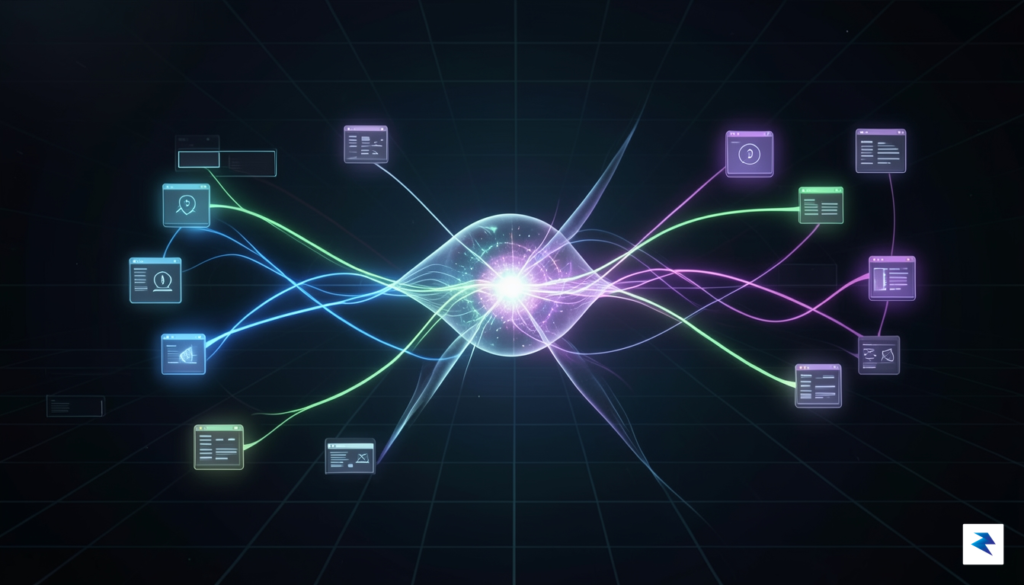
To understand the practical impact of this shift, consider the automation of complex data extraction and synthesis. In traditional setups, a user might need to prompt an AI to summarize a document, then manually feed that summary into another tool to format it, and finally move that output into a database. Claude 3.5 Sonnet streamlines this by handling the entire chain: it can ingest large, unstructured datasets, extract specific metrics based on nuanced instructions, cross-reference those findings with external documentation, and execute the final formatting requirements autonomously.
The true power of an agentic model lies in its ability to navigate ambiguity; it doesn’t just follow a script, but rather understands the objective and makes intelligent decisions about how to bridge the gaps between disparate tasks.
Furthermore, this architectural advancement enables more sophisticated query resolution for enterprise users. When faced with a multi-layered inquiry—such as auditing a company’s compliance logs against a shifting regulatory framework—the model can independently query internal databases, synthesize conflicting information, and draft a remediation plan. Because the model operates through a series of logical checkpoints, it minimizes the hallucination risks often associated with single-shot prompting. By empowering the model to “think” before it acts, Anthropic has effectively shifted the paradigm of productivity, moving away from simple text generation toward the realization of truly autonomous digital labor.
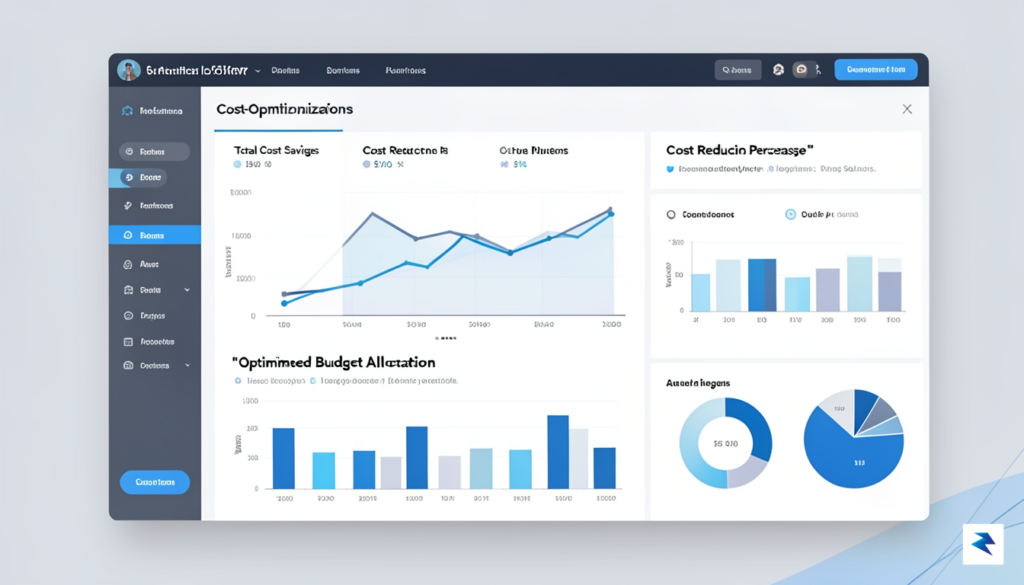
For IT departments and CTOs, the primary hurdle in adopting advanced generative AI has rarely been the lack of capability, but rather the sustainability of the underlying infrastructure. While many models boast impressive reasoning scores, they often come with a prohibitive price tag that makes widespread deployment fiscally irresponsible. Anthropic has fundamentally shifted this dynamic with the release of Claude 3.5 Sonnet, specifically architecting the model to provide a superior performance-to-cost ratio. By optimizing token efficiency, Anthropic has enabled businesses to integrate sophisticated AI workflows into daily operations without the risk of operational costs ballooning as the user base expands.
The economic advantage of this model is rooted in its ability to handle complex tasks—such as nuanced coding, data extraction, and multi-step reasoning—with fewer computational overheads than its predecessors or competitors. When an enterprise transitions to a more efficient model, the Return on Investment (ROI) becomes immediately apparent in the reduction of latency and the decreased need for expensive, high-frequency human oversight. Essentially, Claude 3.5 Sonnet allows teams to achieve higher throughput on the same budget, effectively lowering the barrier to entry for departments that previously found AI automation to be a luxury rather than a utility.

By prioritizing token efficiency, Anthropic ensures that enterprise-grade intelligence is no longer tethered to enterprise-grade price hikes.
Furthermore, the scalability of this model is bolstered by a pricing structure that accounts for the reality of high-volume business environments. Whether a company is running a small internal pilot or a massive, customer-facing chatbot system, the cost predictability provided by the new model allows for more accurate financial forecasting. Because the model maintains high accuracy while consuming fewer resources, enterprises can confidently roll out AI tools across diverse tiers of the organization, from junior developers seeking code suggestions to HR teams automating complex documentation reviews. This balance of speed and affordability transforms AI from a specialized experimental tool into a foundational layer of the modern corporate tech stack, ensuring that as a company grows, its AI capabilities can grow in lockstep without requiring a proportional increase in capital expenditure.
Ultimately, the strategic value of Claude 3.5 Sonnet lies in its viability for long-term integration. By solving the tension between high-tier performance and budget constraints, Anthropic has positioned this model as a robust candidate for businesses that demand both innovation and fiscal responsibility. As digital transformation continues to accelerate, the ability to deploy intelligent, cost-effective solutions will be the deciding factor for organizations looking to maintain a competitive edge in an increasingly automated landscape.

In the rapidly evolving landscape of generative AI, the distinction between a powerful model and a usable one lies entirely in its safety architecture. With Claude 3.5 Sonnet, Anthropic has moved beyond reactive filtering to a proactive safety paradigm, cementing its reputation as a leader in Constitutional AI. This approach embeds a set of guiding principles directly into the model’s training process, ensuring that it operates within a defined ethical framework rather than relying solely on post-hoc moderation. By internalizing these “constitutional” mandates, the model can self-correct during the generation process, significantly reducing the likelihood of producing biased, harmful, or hallucinated content before it ever reaches the user.
For organizations operating in highly regulated sectors—such as finance, healthcare, and legal services—the reliability of AI is not merely a technical preference but a prerequisite for adoption. Claude 3.5 Sonnet addresses the “black box” problem by providing more transparent reasoning paths and a strictly reinforced adherence to safety protocols. When an AI is tasked with complex, multi-step workflows, the risk of “drift”—where the model deviates from its intended instructions or safety boundaries—increases significantly. Anthropic’s updated guardrails act as a constant anchor, ensuring that even as the model tackles more autonomous tasks, its outputs remain aligned with the specific corporate policies and safety standards set by the enterprise.
The true measure of an AI model’s maturity is not just its speed or intelligence, but its predictability and adherence to human-centric values in high-stakes environments.
Beyond the architectural safeguards, the model’s ability to minimize hallucinations is a direct byproduct of its sophisticated alignment training. By refining how the model references source material and weighs its own confidence levels, Claude 3.5 Sonnet provides a level of truthfulness that is essential for enterprise-grade decision-making. This focus on reliability empowers IT leaders to integrate the model into internal tools with the confidence that the technology will act as a responsible agent. Ultimately, by weaving safety into the very fabric of the model’s intelligence, Anthropic has created a tool that bridges the gap between raw, experimental AI capabilities and the robust, secure requirements of modern, professional infrastructure.
For IT decision-makers and engineering leads, the arrival of Claude 3.5 Sonnet represents a pivotal moment to reassess the efficiency and intelligence of their existing AI infrastructure. Rather than viewing this as a simple version increment, leadership should treat it as a strategic opportunity to consolidate disparate toolchains into a more performant, cost-effective ecosystem. By leveraging a model that excels at both rapid execution and complex, agentic reasoning, organizations can finally bridge the gap between prototyping and production-grade reliability. The path forward requires a shift from viewing AI as a conversational utility toward treating it as a core component of the software development lifecycle that actively reduces technical debt and accelerates deployment cycles.
The transition to this new architecture should begin with a targeted pilot phase focused on high-impact, low-risk areas where latency and reasoning depth are simultaneously required. IT teams should start by benchmarking their current model outputs against Sonnet’s performance in tasks like code generation, automated documentation, and multi-step data synthesis. By establishing clear KPIs around token efficiency and task completion rates, departments can build a business case for a broader migration. As you migrate existing workflows from older iterations, prioritize refactoring your prompts to take advantage of the model’s improved instruction following, which often allows for shorter, less complex system prompts compared to previous generations.
Adopting Claude 3.5 Sonnet is less about replacing your current stack and more about optimizing it for the next generation of autonomous tasks. Focus on integrating the model into your CI/CD pipelines to witness immediate gains in code quality and automated testing coverage.
Looking ahead, Anthropic’s ecosystem is clearly trending toward deeper agentic capabilities, where the model acts more as a partner in execution than a simple text generator. Developers should begin architecting their applications with modularity in mind, ensuring that the interface between the application layer and the model remains decoupled. This flexibility will prove vital as the ecosystem evolves to include more advanced multi-modal features and persistent memory capabilities. By treating the model as an evolving API service rather than a static dependency, you position your organization to absorb future upgrades—such as the eventual release of Opus or Haiku updates—without requiring a complete overhaul of your underlying software architecture.
Ultimately, the most successful teams will be those that view this update as an invitation to experiment with more ambitious, agent-driven workflows. Whether you are automating complex backend migrations or creating sophisticated internal analysis tools, the current balance of cost and performance offered by this model provides the necessary runway to push boundaries. By prioritizing pilot-led testing and maintaining a decoupled architecture, you ensure that your technical infrastructure remains resilient, scalable, and ready to leverage whatever breakthrough arrives next in the Anthropic roadmap.
You must be logged in to post a comment.