
Claude 3.5 Sonnet: A Complete Guide to Anthropic’s New AI Model
Introduction: The Evolution of Claude 3.5 Sonnet Anthropic has rapidly ascended the ranks of the artificial intelligence sector, moving from a…


The U.S. Securities and Exchange Commission (SEC) has officially signaled a pivotal shift in its oversight of the investment landscape, launching a comprehensive public comment period to re-evaluate the regulatory framework governing Exchange-Traded Funds (ETFs). For years, the ETF market has functioned under a set of rules that were designed for a simpler financial era, but the rapid emergence of “novel” fund structures has pushed these legacy guidelines to their breaking point. By opening this dialogue, the Commission is acknowledging that the current oversight mechanisms may no longer be sufficient to address the complexities of modern financial engineering, which now includes everything from single-stock leveraged funds to complex cryptocurrency-linked derivatives. This initiative represents a proactive effort to modernize the rules, ensuring they remain robust enough to protect the investing public while simultaneously fostering an environment where legitimate market innovation can flourish.

At the core of this regulatory rethink is the SEC’s fundamental mandate: to maintain fair, orderly, and efficient markets. In the current context, “novel” ETFs—those that deviate from traditional broad-market index tracking—often involve high-risk strategies that can be difficult for the average retail investor to fully comprehend. These funds might utilize aggressive leverage, complex options strategies, or exposure to volatile, non-traditional asset classes that were not contemplated when the original ETF exemptions were drafted. Consequently, the SEC is tasked with the delicate balancing act of allowing these products to exist to satisfy market demand without compromising the integrity of the broader financial ecosystem. The comment period serves as a critical bridge, allowing market participants, academics, and consumer advocacy groups to provide input on how to categorize and govern these intricate structures without stifling the competitive drive that defines the American capital markets.
The SEC’s willingness to open the floor to public scrutiny underscores a move toward a more transparent, risk-aware regulatory framework that prioritizes investor clarity in an increasingly digital and automated financial era.
For both institutional and retail investors, this regulatory pivot carries profound implications. Institutional players, who often rely on the liquidity and predictability of ETFs for hedging and portfolio management, stand to benefit from a more standardized set of rules that reduce ambiguity and potential legal risk. Meanwhile, retail investors—who have increasingly turned to ETFs as their primary vehicle for wealth accumulation—may gain from enhanced disclosure requirements that force issuers to clearly articulate the specific risks associated with exotic fund structures. By formalizing the evaluation process for these newer, more complex products, the SEC is effectively trying to prevent the “Wild West” scenario that can occur when product innovation outpaces the oversight necessary to keep it in check. Ultimately, this move represents a maturation of the ETF industry, shifting away from a period of unregulated growth toward a more stable, sustainable future where innovation is balanced against the necessity of investor protection.

For decades, the exchange-traded fund (ETF) ecosystem was defined by a clear, singular purpose: providing retail investors with low-cost, transparent, and broad-based exposure to the world’s major stock and bond indices. Governed primarily by the Investment Company Act of 1940, these early vehicles were designed with strict guardrails intended to protect the average investor from unnecessary risk. Because the 1940 Act was constructed in an era of traditional securities, it inherently favored simplicity and diversification. However, as financial markets matured, the ETF wrapper became a victim of its own success, transforming from a passive tool for long-term index tracking into a versatile delivery mechanism for increasingly intricate and speculative trading strategies.
The regulatory landscape underwent a seismic shift in 2019 with the introduction of Rule 6c-11, often referred to as the “ETF Rule.” By codifying the process for bringing new ETFs to market, the SEC effectively streamlined what had previously been a cumbersome, case-by-case exemptive relief application process. While this move successfully democratized the creation of investment products and lowered barriers to entry for fund sponsors, it also inadvertently opened the floodgates for more exotic offerings. The rule was designed to facilitate standard equity and fixed-income products, but it eventually provided the structural framework that allowed fund managers to push the boundaries of what a “fund” could actually hold.
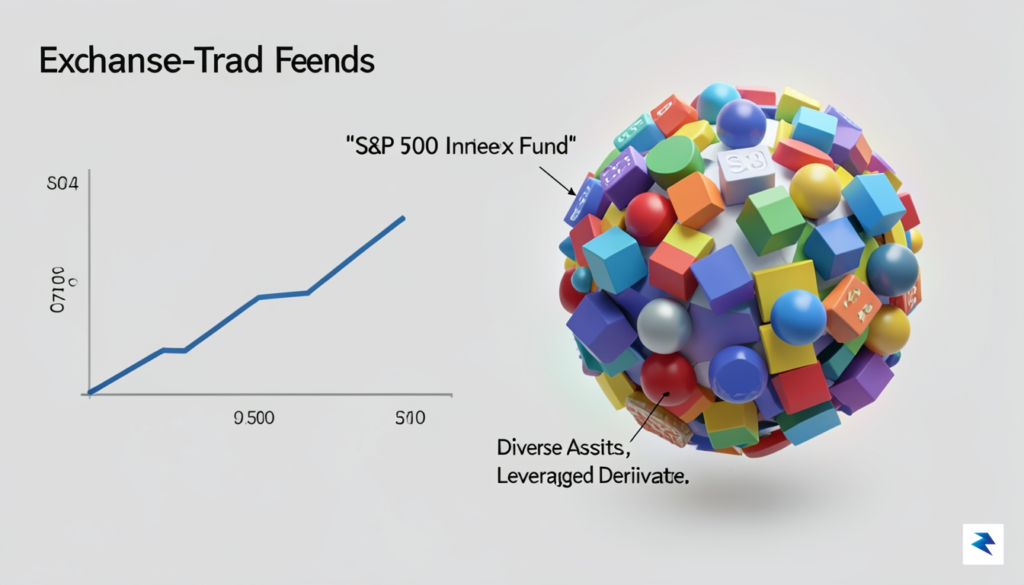
In recent years, the friction between traditional regulatory expectations and modern market demands has become impossible to ignore. We have moved far beyond the days of simple baskets of stocks; today’s ETF menus are populated by leveraged commodity funds, actively managed thematic bets, and, most controversially, crypto-linked assets. These products often utilize derivatives or synthetic structures that bear little resemblance to the plain-vanilla portfolios envisioned by the original framers of the 1940 Act. The challenge for regulators is that these nontraditional products introduce unique volatility profiles and liquidity risks that the existing rules were never equipped to handle.
The core tension facing the SEC today lies in reconciling the original intent of the 1940 Act—investor protection and market stability—with a financial industry that is now fundamentally driven by rapid innovation and speculative digital assets.
Consequently, the current regulatory framework is showing signs of significant strain. As fund sponsors attempt to shoehorn high-frequency trading strategies, volatile digital currencies, and complex derivative overlays into the ETF structure, the SEC is tasked with determining whether these vehicles still provide the transparency and safety that defined the category’s early reputation. This push for an overhaul is not merely a bureaucratic exercise; it is an acknowledgement that the “ETF” label has become a broad umbrella for an incredibly diverse set of risks, many of which require a modernized regulatory lens to ensure that the retail investor remains shielded from the complexities of the underlying architecture.

The Securities and Exchange Commission’s current push to overhaul ETF regulations stems from a fundamental disconnect between legacy frameworks and the realities of modern, high-octane investment products. For decades, the ETF structure was synonymous with broad-market exposure and transparent, liquid underlying assets. However, as issuers have pushed into derivatives, leveraged bets, and highly speculative niches, the traditional disclosure regime—designed for standard equities—has struggled to keep pace. The SEC is now deeply concerned that the average retail investor lacks the necessary tools to gauge the true nature of the risks buried within these sophisticated financial vehicles.
One of the primary catalysts for this regulatory rethink is the emergence of what analysts call “structural drift.” Unlike a vanilla index fund that mirrors a static basket of stocks, novel ETFs often utilize complex rebalancing strategies or synthetic instruments that can deviate significantly from their stated objectives during periods of extreme market stress. This volatility can lead to unexpected liquidity crunches, where the fund’s internal mechanics fail to match the price action of the assets they are meant to track. The SEC fears that without updated guardrails, investors might be blindsided by these structural disconnects, resulting in losses that are exacerbated by the very tools intended to provide market access.

Beyond structural concerns, the regulatory body is grappling with the burden of transparency in an era of hyper-niche trading. When an ETF is tethered to assets that do not trade with the frequency or transparency of blue-chip stocks, the valuation process becomes opaque and inherently risky. The Commission is questioning whether current disclosure requirements sufficiently alert investors to the possibility of wide bid-ask spreads or the potential for a fund to become unhinged from its net asset value during sudden market downturns. These concerns are amplified by the rise of retail trading platforms, which often gamify investment experiences, potentially masking the high-stakes reality of these complex financial instruments.
The SEC’s primary motivation is to ensure that innovation does not come at the cost of investor safety, particularly as the barrier to entry for complex, derivative-laden products continues to drop for everyday portfolio builders.
Ultimately, the SEC is tasked with determining whether the existing “one-size-fits-all” approach to ETF oversight is still fit for purpose. By opening the floor for public comment, the agency is signaling that it is no longer comfortable relying on the assumption that investors understand the risks of highly leveraged or bespoke funds. Whether through stricter requirements for portfolio disclosure, mandatory warnings about liquidity, or limitations on how these funds are marketed to retail participants, the goal is to shift the balance back toward clarity. The impending overhaul is not meant to stifle innovation, but rather to ensure that the rapid evolution of the ETF market does not leave the average participant without a compass in increasingly turbulent waters.

For the cryptocurrency industry, this regulatory pivot marks a critical juncture in the maturation of digital asset markets. As the Securities and Exchange Commission (SEC) reconsiders the framework for “novel” exchange-traded products, the primary tension lies in integrating decentralized assets into the rigid, highly regulated infrastructure of U.S. capital markets. This process is not merely about authorization; it is about establishing a permanent blueprint for how digital assets are custodied, valued, and reported. For investors, the outcome of this comment period could signal a shift toward a more standardized, institutional-grade environment that prioritizes investor protection over rapid, unchecked product proliferation.

One of the most consequential aspects of the proposed overhaul involves the potential for enhanced custody requirements. Currently, crypto ETFs rely on specialized mechanisms to hold digital assets, but regulators are clearly signaling a desire for more robust, traditional-style safeguards. We could see new mandates that require fund managers to hold assets with qualified custodians who meet specific capital and insurance requirements, effectively mirroring the protections found in gold-backed or commodity-based ETFs. By forcing this alignment, the SEC aims to mitigate the risk of insolvency or hacking, ensuring that even if the underlying asset is digital, the investor’s exposure remains protected by the bedrock principles of financial security.
Furthermore, the reporting obligations for fund managers are likely to become significantly more granular. The SEC is exploring ways to force managers to provide real-time or near-real-time transparency regarding holdings, lending activities, and valuation methodologies. Historically, commodity ETFs underwent similar scrutiny, moving from opaque private arrangements to the highly transparent, daily-disclosed products we recognize today. By applying this “commodity-style” transparency to crypto, the SEC is attempting to strip away the volatility associated with informational asymmetries, thereby making these niche products more palatable for institutional portfolios and retirement accounts.
The core of the SEC’s mission is not to stifle innovation, but to create a ‘rule of the road’ that prevents novelty from becoming a loophole for systemic instability.
The introduction of new registration categories for “novel” assets could fundamentally alter the speed at which future products come to market. While some industry participants fear that these classifications will act as a barrier to entry, they may also provide a clearer roadmap for approval. Instead of the current environment of protracted legal battles and opaque feedback loops, a defined “novel asset” framework would allow managers to know exactly what standards they must meet to achieve compliance. This regulatory clarity, while potentially restrictive in the short term, could ultimately enable a broader range of financial products to flourish under the SEC’s umbrella, bridging the gap between legacy finance and the digital frontier.

The Securities and Exchange Commission’s (SEC) invitation for public commentary is far more than a bureaucratic formality; it serves as a critical feedback loop that bridges the gap between theoretical regulatory frameworks and the realities of the financial marketplace. When the Commission proposes sweeping changes to how novel exchange-traded funds (ETFs) operate, it recognizes that internal policy drafting cannot always account for the nuanced operational friction that fund managers or retail investors might encounter. By opening this window for public discourse, the SEC effectively crowdsources the expertise of the entire financial ecosystem, ensuring that new rules are stress-tested against the diverse viewpoints of those who will be most impacted by the resulting oversight.
Participation in this process is open to a broad spectrum of stakeholders, and the SEC’s policy team places significant weight on diverse perspectives. While institutional issuers and legal experts often provide the most technical insights regarding market structure and liquidity, the voice of the retail investor is equally vital. When individual investors articulate how a proposed change might affect their ability to access specific assets or increase their transaction costs, it forces the Commission to consider the broader implications of market democratization. Consequently, the most effective submissions are those that offer concrete, evidence-based arguments rather than broad appeals to ideology. Effective feedback typically centers on:

Meaningful feedback is defined by its specificity. The Commission is less influenced by volume and more swayed by granular analysis that highlights unforeseen risks or potential market distortions that the initial proposal may have overlooked.
To maximize the impact of a submission, stakeholders should avoid generic statements and instead focus on how the proposed overhaul interacts with existing market mechanisms. If a proposed rule changes the disclosure requirements for a specific class of ETFs, a fund manager might provide a case study demonstrating how those requirements could lead to information leakage or front-running risks. By grounding these arguments in specific examples, participants provide the SEC with the necessary evidence to refine their proposals before they are codified into law. Ultimately, this collaborative process serves as a safeguard, ensuring that the next generation of ETF regulation remains both robust enough to protect participants and flexible enough to foster healthy market growth.

For investors navigating the shifting terrain of the modern exchange-traded fund landscape, the current regulatory rethink by the SEC should serve as a signal to prioritize due diligence over speculative fervor. While novel ETFs—such as those utilizing complex derivatives, high-frequency strategies, or niche thematic exposures—often promise outsized returns, they also carry heightened structural risks that may be exacerbated by new compliance standards. When vetting an ETF issuer, look beyond the marketing materials and examine the manager’s track record in navigating liquidity constraints and periods of market stress. A high-quality manager should be able to clearly articulate how their fund handles redemption pressures, especially if the underlying assets are illiquid or unconventional, as transparency in these operational mechanics is a primary indicator of long-term viability.

Staying ahead of these regulatory changes requires more than just passive oversight; it demands an active approach to monitoring official filings. Investors should periodically review the “Risk Factors” section in an ETF’s prospectus, as managers are increasingly updating these documents to address potential shifts in SEC guidelines. If you notice a sudden pivot in a fund’s investment objective or a significant change in its fee structure, it may be an indicator that the issuer is proactively adjusting to comply with impending rule revisions. By keeping a close watch on these amendments, you can better anticipate whether your holdings are likely to undergo structural changes or if the fund’s core strategy remains insulated from the evolving regulatory environment.
In an era of regulatory flux, diversification remains the ultimate safeguard. Relying too heavily on a single “next-generation” ETF can expose your portfolio to idiosyncratic risks that emerge when the SEC tightens its oversight on specific asset classes or leverage ratios.
Ultimately, the goal is to balance the pursuit of innovation with the stability of a well-diversified portfolio. While the current uncertainty might create short-term market volatility, it also serves as a necessary filter, weeding out strategies that rely on regulatory loopholes rather than sustainable economic value. As the standards for U.S. financial products begin to solidify, investors who focus on transparency, operational robustness, and broad diversification will be better positioned to benefit from future innovation without being caught on the wrong side of a compliance overhaul. View this period of scrutiny not as a deterrent to ETF investing, but as a maturing process that will likely lead to a more resilient and trustworthy investment ecosystem in the years to come.
You must be logged in to post a comment.