Rocket Lab Acquires Iridium: A New Era for End-to-End Space Infrastructure
The Strategic Rationale Behind the Rocket Lab-Iridium Merger The acquisition of Iridium by Rocket Lab represents a seismic shift in the…
For over thirty years, the Sega MegaDrive—known internationally as the Genesis—has stood as a monument to 16-bit arcade performance. Designed in the late 1980s, its heart is the Motorola 68000, a processor that defined an era of sprite-based gaming but was built for simplicity, direct hardware control, and a linear execution model. In the modern era, the idea of running a Linux kernel on such hardware seems, at first glance, to be a complete category error. Linux is an operating system defined by preemptive multitasking, memory protection, and user-space isolation—features that are essentially non-existent in the MegaDrive’s primitive, flat memory architecture.
The technical friction here is immense. A modern Linux kernel expects a Memory Management Unit (MMU) to handle virtual memory mapping and safeguard processes from crashing one another. The Motorola 68000, however, lacks any native MMU, meaning that every byte of the console’s meager 64KB of RAM is effectively “global.” Porting Linux to this environment requires a Herculean effort of stripping away the OS’s core assumptions, effectively forcing a complex, multi-user system to operate in a single-user, bare-metal reality. Developers essentially have to perform “OS surgery,” carving out the parts of the kernel that demand modern hardware features while patching in custom logic that understands the specific limitations of the MegaDrive’s video display processor and sound chip.
To boot Linux on a 16-bit console is not merely a software port; it is an act of digital defiance against the rigid constraints of 1989 hardware design.
Why undergo such a grueling process? The answer lies in the sheer technical brilliance required to bridge the gap between two different philosophies of computing. By attempting this feat, developers are stress-testing the modularity of the Linux kernel itself, proving that its architecture is flexible enough to run on hardware that predates its own existence. This project serves as a masterclass in low-level systems engineering, forcing a bridge between the era of “code close to the metal” and the era of “abstraction-heavy software stacks.” It transforms the MegaDrive from a closed gaming system into a sandbox for extreme optimization, demonstrating that even the most “impossible” architectures can yield to enough persistence, clever assembly-level hacks, and a deep, fundamental understanding of how processors communicate with the physical world.
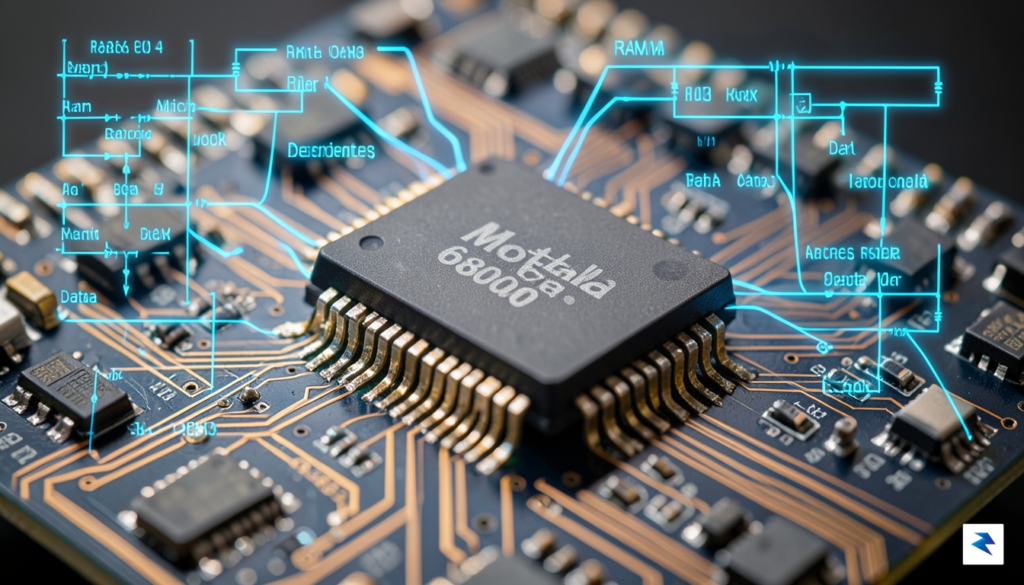
The endeavor to shoehorn a contemporary operating system like Linux onto the Sega MegaDrive immediately runs into a formidable wall: memory. The console was designed with a lean 64KB of main RAM, a figure that, while respectable for its era, is laughably insufficient for even the most minimalist modern Linux kernel. To put this into perspective, even a highly optimized, stripped-down Linux kernel compiled for embedded systems typically requires several megabytes just to load and initialize, let alone execute any userland applications or provide space for data. This vast disparity means that the very first hurdle isn’t just optimization, but a fundamental re-imagining of what constitutes a “kernel” in this severely constrained environment.
Furthermore, the modest 64KB RAM isn’t merely a storage problem; it dictates every aspect of system design. The kernel doesn’t just need to *load* into memory; it needs working space for its own operations, stack, heap, and any running processes. With virtually no headroom, developers are forced to perform extreme surgery on the kernel, stripping away almost all standard features, drivers, and even core functionalities considered indispensable in a typical Linux setup. This often results in a kernel that can barely perform basic tasks, highlighting the monumental challenge of making a system designed for a different paradigm adapt to such an anachronistic architecture. It’s a testament to the ingenuity of engineers that even a glimmer of Linux functionality has been achieved under such dire constraints.
Another significant architectural barrier lies in the MegaDrive’s central processing unit, the Motorola 68000. While powerful for its time, the 68000 notably lacks a Memory Management Unit (MMU). An MMU is a critical component in modern operating systems, responsible for translating virtual memory addresses to physical memory addresses, enforcing memory protection between processes, and enabling features like demand paging and memory swapping. Without an MMU, the kernel cannot effectively isolate processes from each other, nor can it implement virtual memory, which is a cornerstone of how Linux manages memory and allows multiple programs to run concurrently without stepping on each other’s toes.
The absence of an MMU means that all memory access is direct and physical, presenting a substantial security and stability challenge for a multi-tasking OS like Linux. Every program, including the kernel itself, operates directly on physical memory addresses. This design choice, common in 16-bit consoles, simplifies hardware but fundamentally complicates the sophisticated memory management schemes Linux relies upon. Consequently, any attempt to port Linux must either forgo these essential MMU-dependent features entirely, accepting a severely limited and less robust system, or implement a software-based approximation, which would introduce considerable performance overhead on an already underpowered CPU.
Beyond memory and CPU architecture, the MegaDrive’s custom hardware bus further complicates matters, particularly concerning I/O operations. Unlike modern PCs that adhere to standardized bus architectures like PCI Express, the MegaDrive utilized a proprietary bus for connecting its CPU to various peripherals, including the Video Display Processor (VDP), the sound chips (Yamaha YM2612 and Zilog Z80), and controller ports. This bespoke design means there are no generic drivers available; every interaction with the console’s hardware must be meticulously crafted at a very low level, directly manipulating specific memory-mapped registers.
This deep reliance on custom hardware interfaces necessitates an entirely new set of drivers written from scratch, often requiring an intimate understanding of the obscure timing and command sequences for each individual component. For instance, displaying graphics on the screen isn’t a simple matter of calling a standard graphics API; it involves direct manipulation of the VDP’s registers to load tiles, set palettes, and manage sprites. This level of hardware-specific programming, while fascinating from an engineering perspective, adds immense complexity and development time to an already Herculean task, making a “true” Linux experience, complete with standard device drivers, practically unattainable without fundamental compromises.
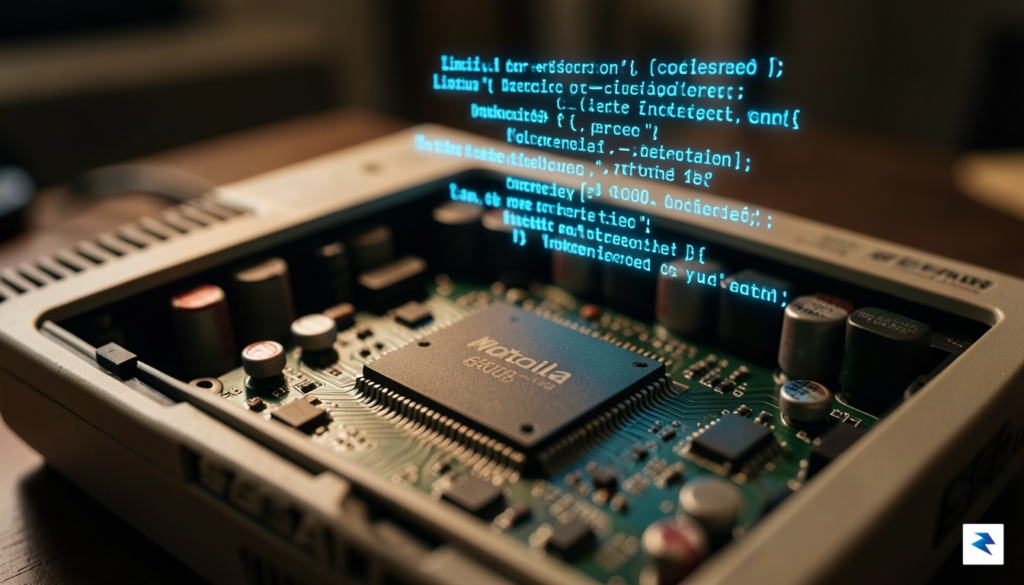
[IMAGE: A close-up, high-detail shot of a Sega MegaDrive motherboard, with emphasis on the Motorola 68000 CPU chip and the various custom ASIC chips and RAM modules, highlighting the intricate and proprietary nature of its internal hardware.]
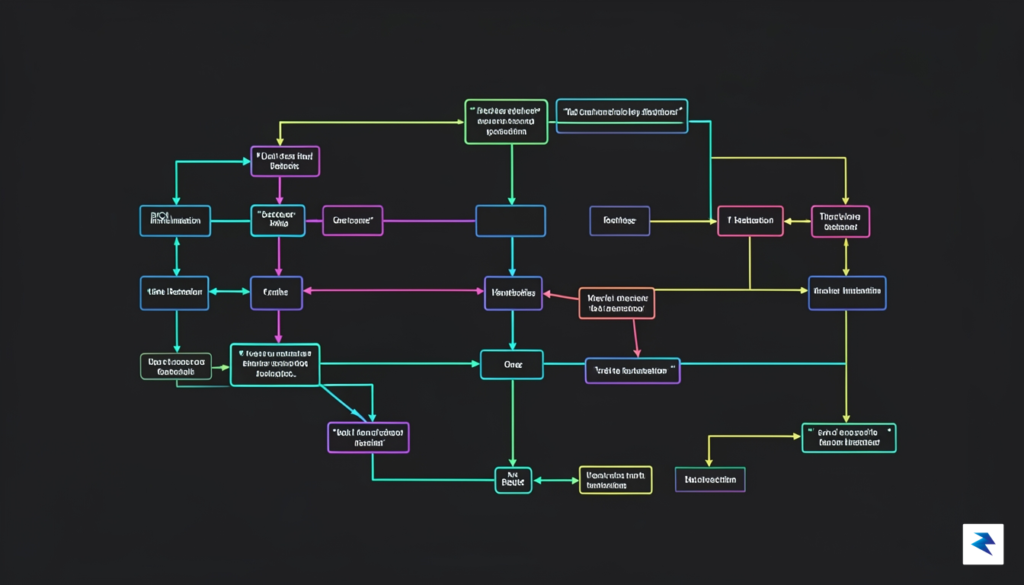
Running a modern kernel on the Motorola 68000 processor found in the Sega MegaDrive requires a fundamental reimagining of what an operating system actually needs to survive. The primary hurdle is that the original Linux kernel assumes the existence of a Memory Management Unit (MMU) to handle virtual memory, demand paging, and process isolation. Because the MegaDrive lacks this hardware entirely, the LinuxMD project relies on a radical “kernel slimming” process. Developers must strip away the entire virtual memory subsystem, replacing complex memory allocation routines with flat, physical memory mapping that the 68000 can interpret directly. By excising these heavy-duty abstractions, the kernel is reduced to its most essential functions, allowing it to fit within the console’s extremely constrained 64KB of work RAM and limited cartridge space.
To bridge the gap between the console’s primitive hardware and the sophisticated expectations of a Linux kernel, the project employs a highly specialized custom bootloader. This bootloader acts as an initial environment that initializes the MegaDrive’s hardware registers, sets up the stack pointer, and prepares the 68000 interrupt vectors before the kernel even begins its execution sequence. Because the Sega hardware expects to load ROM-based games rather than a multi-stage operating system, the bootloader must perform an intricate “handshake” with the console’s startup routine to ensure that the kernel is correctly mapped into the system’s memory address space. This creates a functional entry point that tricks the kernel into believing it is operating in a standard environment, even as it runs on top of hardware designed for 16-bit arcade gaming.
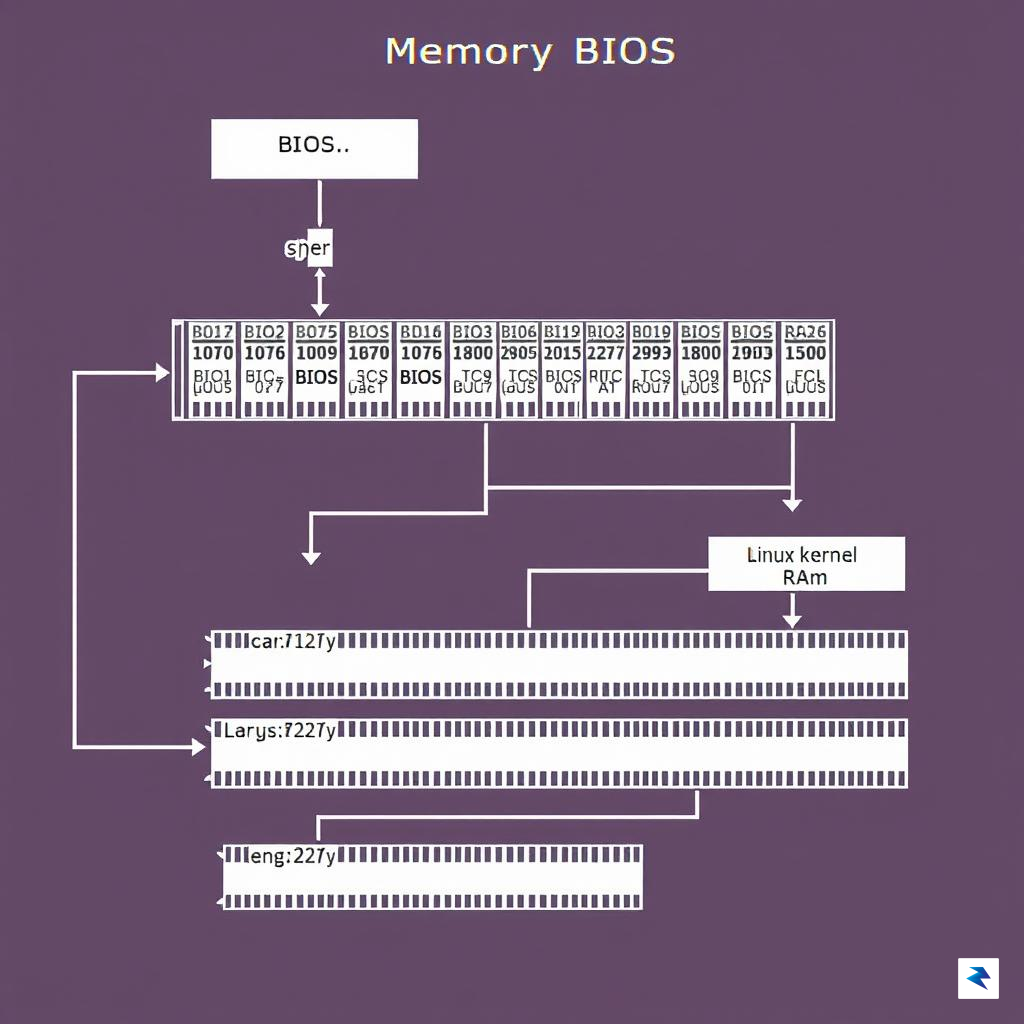
The development workflow for such a niche target is powered by sophisticated cross-compilation toolchains. Developers utilize modified versions of the GCC compiler, configured specifically for the m68k architecture, to translate modern C source code into machine instructions that the Sega’s CPU can execute. This process is not merely a matter of clicking “compile”; it involves patching the toolchain to handle the MegaDrive’s unique memory constraints and ensuring that the output binary adheres to the strict ROM format required by the console. Every instruction must be optimized to minimize cycle counts, as the 68000 runs at a modest 7.67 MHz, making efficiency the difference between a responsive command-line interface and a system that freezes under the weight of its own overhead.
The success of LinuxMD is less about raw power and more about the precision of software surgery; by carving away the unnecessary layers of the kernel, the project proves that even 16-bit hardware can host a Unix-like environment when guided by clever engineering.
Ultimately, the LinuxMD project stands as a testament to the power of community-driven open-source development. By sharing patches, documentation, and hardware schematics, contributors from around the globe have collectively solved problems that would be insurmountable for a single programmer. This collaborative effort ensures that the project remains alive, constantly evolving as new methods are discovered to squeeze more performance out of the aging hardware. Through this collective wisdom, the project transforms a vintage gaming console into a surprisingly capable platform for experimentation and learning, proving that the spirit of Linux—portability, modularity, and transparency—can thrive in even the most unlikely of environments.
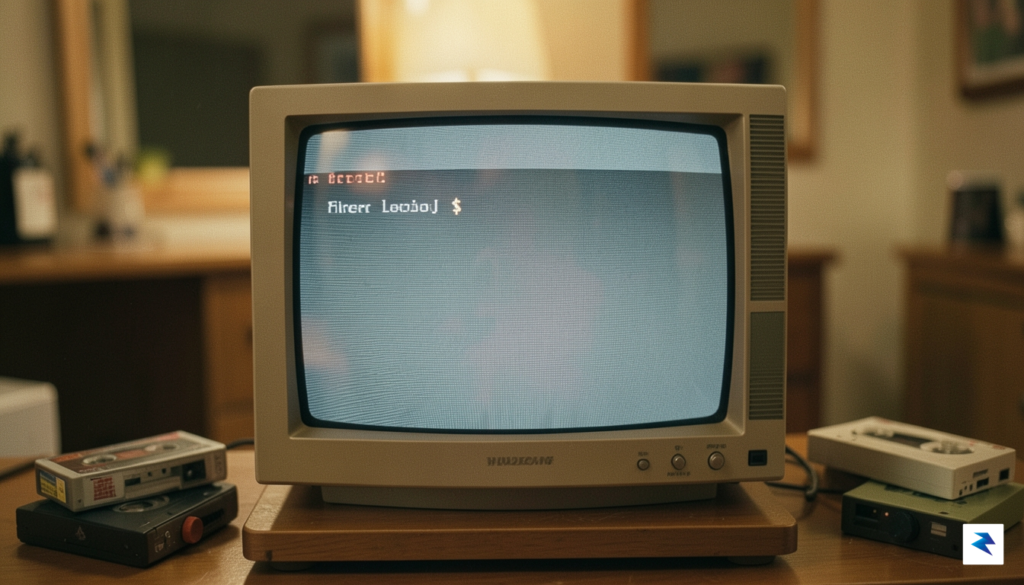
Achieving the feat of booting Linux on the Sega MegaDrive is undeniably a landmark moment for retro-computing, but it is essential to approach this project with tempered expectations. While the 16-bit Motorola 68000 processor is a legendary piece of silicon, it was never designed to handle the overhead of a modern kernel, let alone the complexities of multitasking or memory management. Consequently, the performance reality is defined by extreme latency; simple command executions can take several seconds to process, and the system operates at a glacial pace compared to even the most modest modern microcontroller. This is not a platform for general-purpose computing, nor is it a viable replacement for any contemporary desktop environment.
The current implementation is strictly a terminal-based experience, which imposes significant limitations on interaction and output. Because the MegaDrive’s video display processor (VDP) must be manually interfaced to render text, the system lacks the fluid responsiveness one would expect from a standard Linux terminal. Users will find that the output is confined to a low-resolution tile-based display, making it difficult to read long strings of data or complex logs. Furthermore, since the console lacks a traditional file system in the standard sense and relies heavily on custom memory mapping, the environment is prone to instability if pushed beyond its very narrow functional parameters.
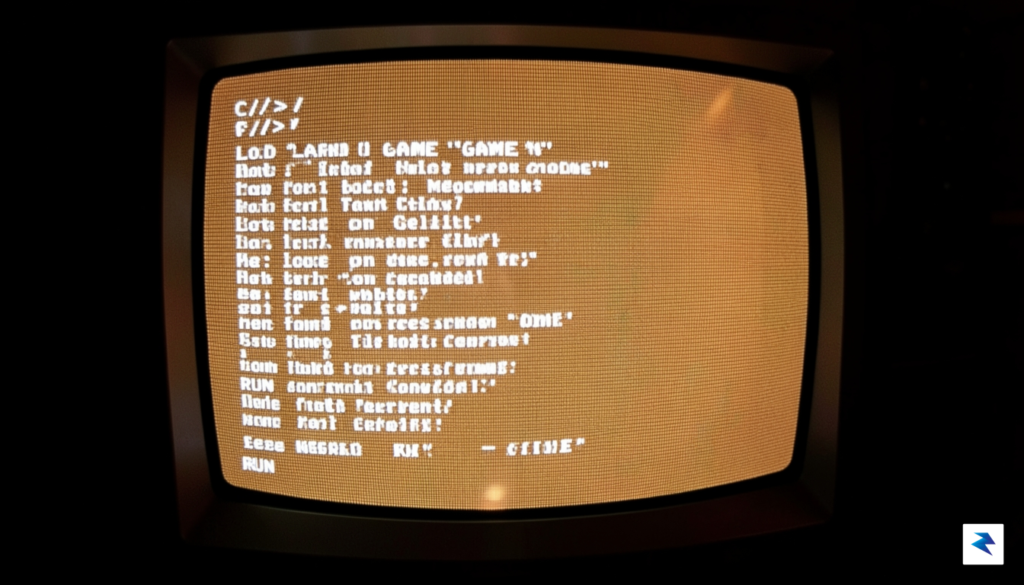
In terms of practical utility, the project is currently restricted to a handful of basic functional commands that demonstrate the kernel is alive and responding to input. Most of these commands are limited to basic system diagnostics, such as checking the uptime, listing minimal process information, or echoing text back to the display. You will not be browsing the web, editing documents, or running complex scripts; instead, the system serves as a highly specialized proof-of-concept that tests the limits of what the Motorola 68000 architecture can handle when forced into an environment it was never meant to inhabit. The primary utility here is educational, offering enthusiasts a unique window into how low-level kernels interact with constrained legacy hardware.
The value of this endeavor lies not in its speed, but in the sheer technical audacity of making an 8MHz processor run a kernel designed for the world of modern computing.
Ultimately, this project should be viewed as a curiosity for hardware hackers and retro-computing historians rather than a production-ready operating system. While it is possible to boot the system and issue a few rudimentary commands, the overhead involved in maintaining kernel stability on such limited hardware creates a fragile ecosystem. For those who enjoy the challenge of optimization and low-level assembly, there is immense satisfaction to be found in navigating this 16-bit Linux environment. However, for the average user hoping for a functional “MegaDrive PC,” the reality is that the machine is far better suited to its original purpose: delivering the iconic, high-performance arcade gaming experiences that defined a generation.
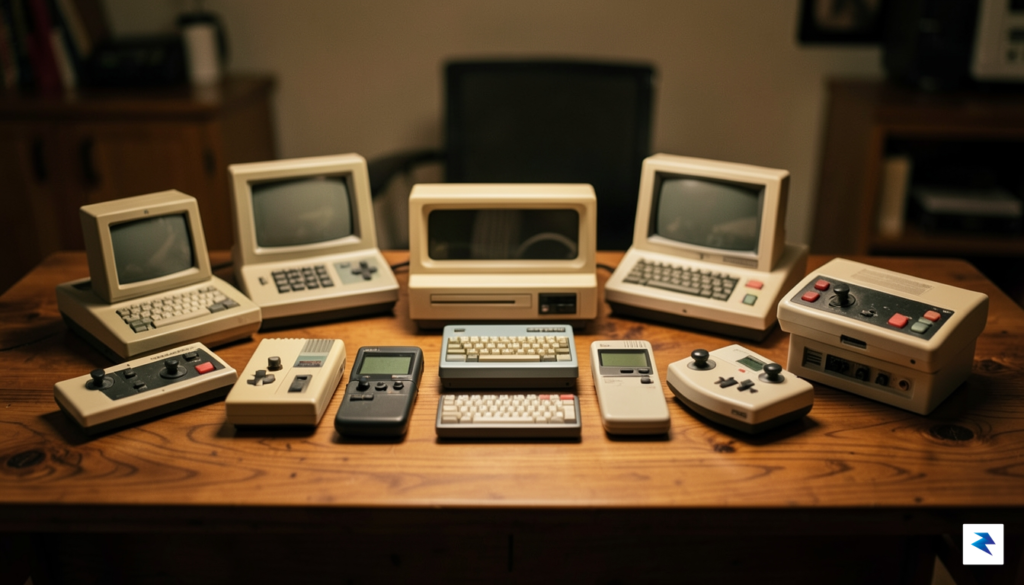
At first glance, attempting to run a modern, multi-user kernel on a processor designed in the late 1980s seems like an exercise in futility. Critics often label such endeavors as “useless engineering,” questioning why a developer would pour hundreds of hours into a project that offers no commercial viability or practical modern utility. However, this perspective fundamentally misses the point of the retro-computing movement. These projects serve as a digital archeology of sorts, stripping away the layers of abstraction inherent in modern computing to reveal the raw, unvarnished relationship between software and silicon. By pushing a 16-bit machine to its absolute physical limits, engineers are not just playing with toys; they are mastering the fundamental constraints of architecture, memory management, and instruction cycles in a way that modern high-level programming rarely demands.
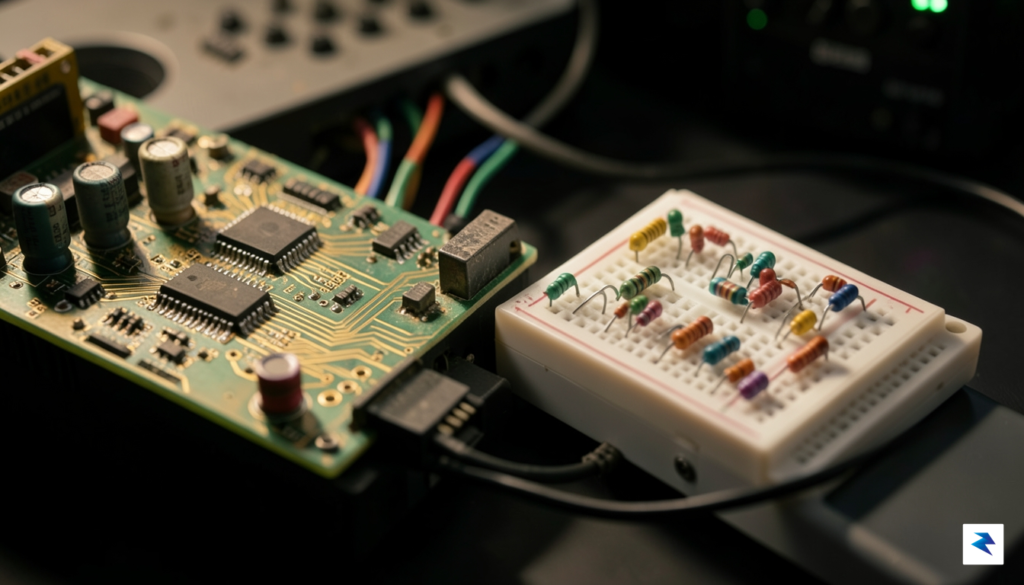
The modern maker community has evolved into a highly collaborative ecosystem, primarily powered by open-source platforms like GitHub. When a developer tackles a challenge as complex as porting a Unix-like environment to the Motorola 68000, they are rarely working in a vacuum. Instead, they are standing on the shoulders of decades of collective knowledge, sharing documentation, assembly code snippets, and custom-built hardware interfaces that allow these retro consoles to communicate with modern peripherals. This collaborative spirit ensures that no hurdle is insurmountable; as one contributor optimizes a kernel routine, another might be writing a driver to make a modern SD card reader compatible with the console’s expansion port. This communal effort transforms a solitary hobby into a significant contribution to the historical preservation of computing technology.
The true value of retro-engineering lies not in the functional output, but in the profound understanding of how our digital world was built and the creative audacity to redefine what is possible on hardware we have long since discarded.
Ultimately, these projects act as an essential training ground for the next generation of systems engineers. By forcing themselves to work within the incredibly tight constraints of 16-bit architecture—where every byte of RAM is a precious resource and every clock cycle must be accounted for—developers sharpen their problem-solving skills in ways that translate directly to professional software development. When a student or junior engineer learns to optimize a kernel for a console that has less processing power than a modern digital thermostat, they gain a deep, intuitive grasp of performance engineering. These feats of technical endurance serve as a reminder that the spirit of innovation is not solely found in the latest silicon, but in the relentless curiosity to see just how much life can be squeezed out of the machines of the past.
You must be logged in to post a comment.