
The Rise of Vibe-Coding: Redefining Software Development

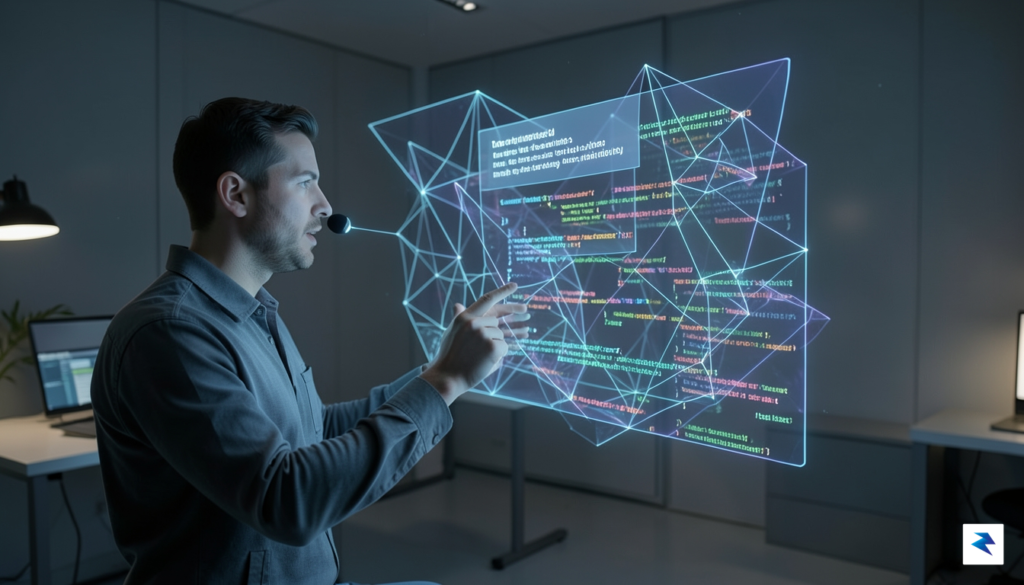
A transformative shift is underway in the realm of software development, heralded by what experts are increasingly calling “vibe-coding.” At its core, vibe-coding represents a sophisticated abstraction layer, bridging the gap between raw human intent and the meticulous execution required by machines. Unlike traditional programming, which demands adherence to rigid syntax and intricate logical structures, vibe-coding prioritizes natural language and conceptual understanding. This paradigm shift means that creators no longer need to translate their ideas into a specific programming language; instead, they can articulate their vision in plain English, allowing advanced AI to interpret and manifest the desired software.
This evolution is a natural progression from the low-code and no-code movements that have steadily gained traction over the past decade. While low-code platforms simplified development by providing visual interfaces and pre-built components, and no-code tools empowered non-technical users to build basic applications, vibe-coding takes this democratization to an unprecedented level. It moves beyond drag-and-drop interfaces or template customization, delving into truly intent-based generation. Here, the AI doesn’t just assemble pre-existing parts; it understands the underlying ‘vibe’ or purpose of a request, then synthesizes novel code and application logic to fulfill that intent, significantly reducing the cognitive load and technical expertise previously required.
Platforms like Base44 stand at the forefront of this revolution, demonstrating the immense potential of vibe-coding in action. Base44, with its proprietary AI model, enables users to manifest complex applications through simple, conversational prompts. Imagine describing a desired feature or an entire application in everyday language – such as “I need an e-commerce platform that sells custom t-shirts, allows users to upload designs, and integrates with Stripe for payments” – and having the AI interpret this request, generate the necessary codebase, and even deploy a functional prototype. This capability drastically lowers the barrier to entry for building sophisticated software, empowering a broader spectrum of innovators, from entrepreneurs to domain experts, to bring their digital visions to life without needing to hire an extensive development team or acquire deep coding skills.
The implications of vibe-coding are profound, extending beyond mere convenience. It accelerates the pace of innovation, allowing for rapid prototyping and iteration based on user feedback. Furthermore, it fosters a new era of creativity, where the focus shifts from the mechanics of coding to the conceptual design and problem-solving aspects of software development. By allowing developers and non-developers alike to communicate directly with the machine’s capabilities through natural language, vibe-coding is not just changing how we build software; it’s fundamentally redefining who can build it, promising a future where technological creation is more intuitive, accessible, and aligned with human thought processes.
Beyond the Wrapper: Why Base44 Built a Proprietary Model

For most AI startups, the initial path to market involves building a “wrapper”—a sleek interface that routes user prompts to established frontier models like GPT-4 or Claude. While this approach allows for rapid prototyping and quick time-to-market, it inherently ties a company’s success to the pricing, policies, and black-box nature of third-party API providers. As the “vibe-coding” landscape matures, Base44 has recognized that relying on general-purpose models creates a glass ceiling for product differentiation. By transitioning to a proprietary model, the platform is moving away from a commoditized experience toward a vertical integration strategy that prioritizes the specific, nuanced requirements of software development workflows.
The primary limitation of general-purpose models in the coding domain is their lack of contextual awareness regarding a project’s specific architectural patterns, legacy dependencies, or team-defined coding standards. Frontier models are trained on the entirety of the open web, which, while impressive, often leads to “average” output that requires significant human intervention to debug or refactor. Base44’s custom architecture allows for fine-tuning that aligns the model’s reasoning directly with the platform’s unique interface and user feedback loops. This shift is not merely about vanity or technical prestige; it is a pragmatic decision to regain control over latency and cost, which are often the hidden killers of AI-powered developer tools.
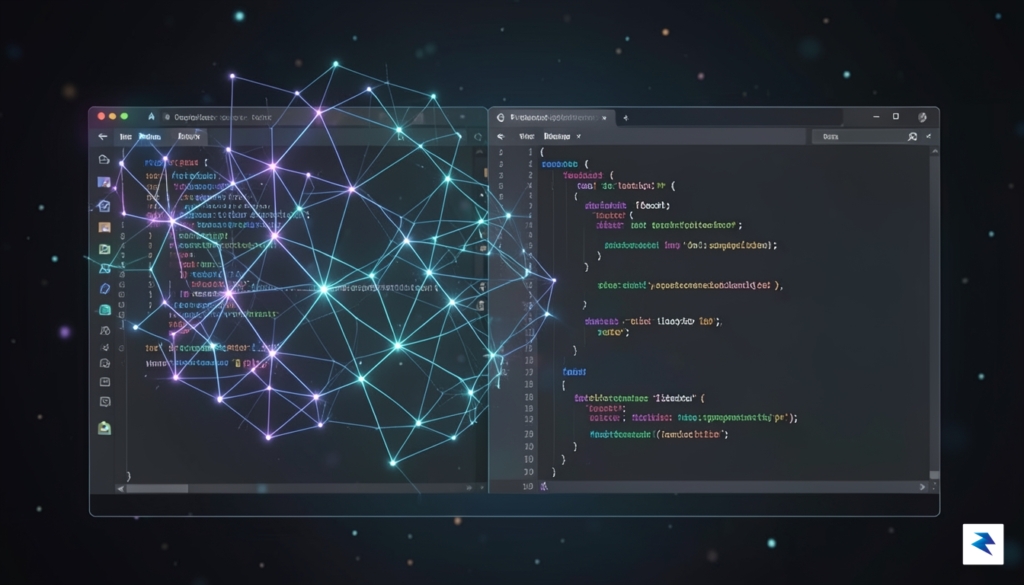
Transitioning from an API-based model to in-house infrastructure is a formidable technical challenge, requiring a delicate balance between performance and overhead. When a startup relies on external providers, they outsource the heavy lifting of maintenance, but they also relinquish the ability to optimize the inference path. By building its own model, Base44 can prune, distill, and calibrate its neural networks to prioritize the specific token sequences most relevant to code generation and bug fixing. This creates a feedback cycle where the platform becomes smarter with every interaction, effectively building a “moat” that is difficult for competitors relying on generic, off-the-shelf APIs to replicate.
True defensibility in the AI era is no longer found in the interface, but in the proprietary data loops and specialized model architectures that become more effective the more they are used.
Ultimately, this move towards vertical integration signals a broader trend in the software industry: the end of the “thin wrapper” era. As developers demand faster, more accurate, and more reliable coding assistants, platforms that control their own “brain” will have a distinct advantage. By investing in a proprietary model, Base44 is betting that the future of coding is not just about leveraging generic intelligence, but about cultivating a specialized, domain-aware environment that understands the unique pulse of a software project better than any general-purpose model ever could.
Navigating the Defensibility Crisis in AI Startups

For the past few years, the AI ecosystem has been dominated by the so-called “thin wrapper” era, where startups built flashy user interfaces on top of powerful, third-party foundation models. While this approach allowed for rapid prototyping and quick market entry, it created a structural vulnerability that many founders are now struggling to overcome. As major providers continue to release updates that integrate these once-unique features directly into their core offerings, the startups that relied solely on those external APIs find their competitive advantages evaporating overnight. This commoditization has forced a reckoning: if your entire value proposition is a thin layer over someone else’s engine, you are not building a business—you are merely waiting for the inevitable moment your landlord decides to evict you.
The pursuit of a sustainable “moat” has consequently become the central obsession of the venture capital and startup worlds. Historically, a moat was defined by proprietary algorithms, but in the current landscape, the focus has shifted toward data and vertical integration. Building a proprietary model, as seen with the recent trajectory of platforms like Base44, represents a move away from fragile dependency and toward true intellectual property. By training or fine-tuning bespoke models, companies can capture domain-specific nuances that generalized foundation models often miss, effectively embedding their expertise into the weights of the software itself rather than just the application layer.

Dependency on third-party frontier models introduces an existential business risk that goes beyond simple feature parity. When a startup builds on an external API, they are subject to the pricing, usage policies, and performance fluctuations of an entity whose goals may not align with their own. Furthermore, if a startup’s core logic is entirely dependent on an external black box, they lack the ability to optimize for latency, privacy, or specialized hardware requirements. This lack of control ultimately stifles long-term valuation; investors are increasingly wary of companies that cannot prove they own the underlying technology that powers their unique user experience.
True defensibility in the AI age is found not in the speed of your release, but in the proprietary nature of your intelligence.
Ultimately, the transition toward bespoke models is a maturation of the industry. It signals that the novelty of “vibe-coding”—building software through intuition and high-level prompts—is evolving into a more rigorous engineering discipline where infrastructure matters as much as the interface. By investing in their own models, startups are effectively moving their value from the volatile surface layer to the bedrock of their operations. This shift is not just a technical pivot; it is a strategic necessity for any company that intends to remain relevant in a market that is rapidly moving past the era of easy, wrapper-based shortcuts.
Performance vs. Utility: Can Base44 Compete with Frontier Giants?
In an AI landscape increasingly dominated by a handful of frontier models from tech giants like OpenAI, Anthropic, and Google, the audacious move by Base44 to launch its own proprietary model raises a critical question: can a niche platform truly compete with these multi-billion dollar behemoths? On the surface, the challenge appears insurmountable. Frontier models are built on colossal datasets, trained with unimaginable computational power, and excel in a breathtaking array of general intelligence tasks, from complex reasoning and creative writing to broad-spectrum coding assistance. Their sheer scale allows them to understand and generate human-like text across virtually any domain, making them the default choice for general-purpose applications.
However, the definition of “performance” itself shifts dramatically when moving from general artificial intelligence to highly specialized tasks like ‘vibe-coding’. While frontier models can certainly generate functional code, their generalist nature means they often lack the nuanced understanding of specific stylistic preferences, architectural patterns, framework conventions, or even the subjective “feel” that defines a project’s “vibe.” For a general chatbot, metrics like accuracy in factual recall, coherence in long-form generation, or broad problem-solving capabilities are paramount. For ‘vibe-coding’, performance isn’t just about correctness; it’s about adherence to an implicit aesthetic, maintaining consistency across a codebase, and anticipating developer intent beyond explicit instructions – areas where a purpose-built model can theoretically gain an edge.
This is where the concept of a “good enough” threshold, coupled with specialized utility, becomes a powerful differentiator. A massive frontier model might possess superior general intelligence, but if it takes longer to process requests, struggles to grasp subtle domain-specific context, or consistently misses the mark on stylistic nuances, its overall utility for a specific ‘vibe-coding’ task diminishes. Base44’s strategy hinges on the belief that a smaller, specialized model, trained meticulously on a curated dataset of ‘vibe-coded’ projects and developer interactions, can deliver a significantly better user experience. This focused training can lead to reduced latency, more accurate context comprehension within the specific coding environment, and code suggestions that resonate deeply with the project’s established “vibe,” ultimately feeling more intuitive and helpful to the developer.

The strategic play here is to abandon the race to “do everything well” and instead commit to “doing one thing exceptionally better.” By focusing exclusively on the unique demands of ‘vibe-coding’, Base44 can optimize its model for precision, speed, and contextual understanding within that narrow vertical. This hyper-specialization creates a strong defensibility moat. Developers deeply embedded in the Base44 ecosystem, who rely on its model to maintain their project’s unique aesthetic and workflow, might find it incredibly difficult to switch to a generalist AI that, despite its raw power, simply doesn’t “get” their specific needs. This targeted approach aims to cultivate a loyal user base by providing an indispensable tool that feels tailor-made, rather than a generic solution.
The Future of Specialized AI Models

The emergence of purpose-built architectures like those introduced by Base44 signals a fundamental shift in the software development lifecycle. For years, the industry relied on monolithic, general-purpose large language models that attempted to be everything to everyone. However, as developers move toward specialized environments, we are entering an era where model selection is becoming as critical as choosing the right programming language or framework. Just as an engineer might select Rust for high-performance systems or Python for data science, future development teams will curate a model stack tailored to the specific nuances of their codebase and operational requirements.
This transition toward specialized AI suggests that the barrier to entry for creating high-performance, domain-specific tools is collapsing. We are witnessing the rise of “model-hopping,” a practice where developers dynamically switch between different AI models based on the specific phase of the product lifecycle or the complexity of the task at hand. For instance, a developer might employ a lightweight, high-speed model for rapid prototyping and routine refactoring, while switching to a more robust, specialized model for complex architecture design or security-intensive audits. This modularity prevents vendor lock-in and allows for a more agile development process that optimizes for both cost and performance.

The true competitive advantage for modern AI startups will not stem from having the largest model, but from having the most precise one.
Ultimately, this evolution creates a significantly more robust and competitive ecosystem for the software industry. By fostering a landscape where smaller, highly focused models can outperform generalist competitors, we are incentivizing innovation at the granular level. Developers no longer have to settle for the “good enough” responses of a massive, broad-spectrum model; instead, they can plug in tools that truly understand the intricacies of their specific tech stack. This movement promises to reduce the friction of AI integration, turning coding assistants from passive autocomplete tools into active, context-aware partners that evolve alongside the software they help create.
As this trend accelerates, the long-term result will be a democratization of high-quality development environments. Future projections suggest that the most successful projects will be those that embrace a multi-model approach, treating AI components as interchangeable, specialized assets. By prioritizing efficiency, stack compatibility, and specific intent, the development community is effectively building a future-proof foundation where innovation is limited not by the capabilities of a single monolithic model, but by the creativity of the developers orchestrating their own personalized AI ecosystems.