
The Strategic Rationale Behind the Rocket Lab-Iridium Merger
The acquisition of Iridium by Rocket Lab represents a seismic shift in the aerospace industry, marking a definitive move away from the traditional, fragmented approach of component-focused partnerships toward a unified model of end-to-end space infrastructure. For years, Rocket Lab built its reputation as a premier launch provider, delivering precision access to orbit for a wide array of clients. However, by bringing Iridium—a global leader in satellite communications—directly into its fold, Rocket Lab has effectively transitioned from being a service provider for other operators to becoming a dominant owner-operator of critical space assets. This strategic pivot allows the company to control every stage of the value chain, from the manufacturing of satellite buses and the launch vehicle itself to the ongoing management of a vast, operational constellation in orbit.
This integration is fundamentally about achieving a “turnkey” space architecture that offers unparalleled reliability and efficiency. By marrying Rocket Lab’s agile launch capabilities and in-house satellite hardware manufacturing with Iridium’s established, low-earth orbit communication network, the company can now offer integrated solutions that were previously impossible to coordinate between disparate vendors. This consolidation reduces the complexity and latency inherent in multi-party space missions, enabling Rocket Lab to offer clients a seamless experience that spans from mission design to data delivery. In essence, the company is positioning itself as the primary utility provider for the modern space economy, where infrastructure is no longer a collection of parts, but a cohesive, integrated ecosystem.

The move toward a vertically integrated, end-to-end space model allows Rocket Lab to control the entire lifecycle of a mission, significantly lowering the barrier to entry for global connectivity projects.
For stakeholders and investors, this move signals a transition toward long-term stability and recurring revenue. While launch services are often subject to the volatility of mission manifests and individual contracts, managing a global satellite network provides a steady, high-margin stream of data and connectivity revenue. By controlling the hardware that delivers this data, Rocket Lab can continuously iterate on its technology, ensuring that its infrastructure remains at the cutting edge of performance without needing to negotiate with external partners. This acquisition effectively transforms Rocket Lab from an aerospace manufacturer into a comprehensive space-infrastructure giant, setting a new standard for how companies must compete in an increasingly crowded and competitive orbital environment.
Vertical Integration: Redefining the Space Launch and Satellite Ecosystem

In the rapidly evolving NewSpace era, the concept of vertical integration has shifted from a luxury to a strategic necessity for companies aiming to dominate orbital operations. By bringing the design, manufacturing, and operation of launch vehicles under the same corporate umbrella as satellite constellation management, Rocket Lab is fundamentally re-engineering the traditional space supply chain. This holistic approach eliminates the friction inherent in working with third-party vendors, where communication gaps and logistical delays often result in significant cost overruns. Instead of relying on a fragmented network of suppliers, Rocket Lab can now synchronize the development of custom-built satellites with the precise launch cadence of its Electron and Neutron vehicles, effectively turning space deployment into a streamlined, repeatable industrial process.
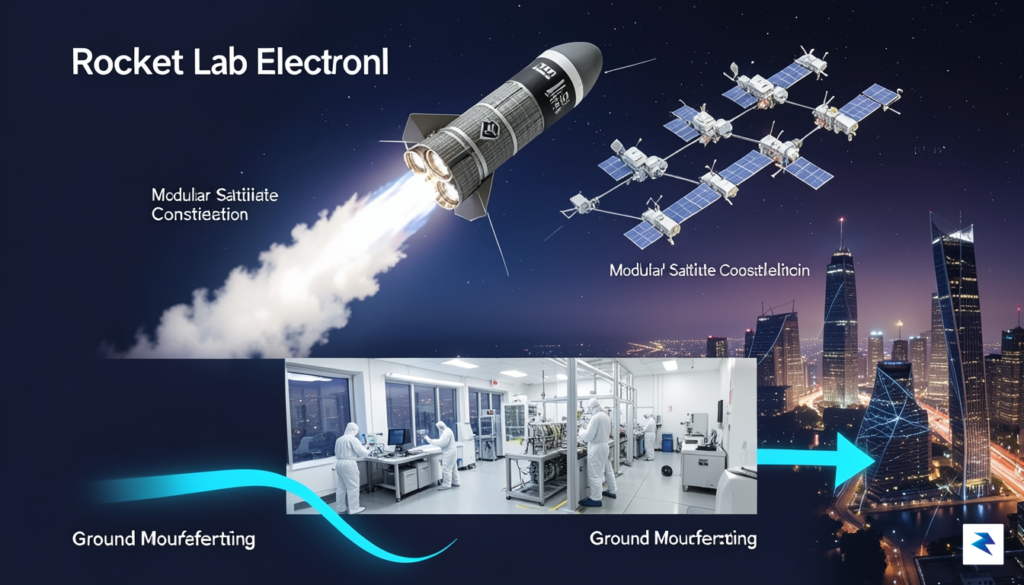
The economic advantages of this unified model are profound, particularly when it comes to long-term operational efficiency. By controlling the entire stack, Rocket Lab minimizes the “middleman tax” that typically inflates the price of mission architecture. When engineering teams building the satellite hardware sit in the same ecosystem as the teams programming the flight software and managing launch telemetry, they can resolve integration issues in hours rather than weeks. This capability allows the company to pivot with unprecedented speed, adapting satellite payloads to meet shifting market demands or responding to hardware malfunctions with rapid, iterative improvements that legacy space companies, hampered by bureaucratic silos, simply cannot match.
True competitive advantage in the modern space economy is no longer just about the ability to reach orbit; it is about the agility to maintain and upgrade orbital assets with zero friction.
This structural shift creates a formidable “moat” that forces industry titans like SpaceX and Blue Origin to re-evaluate their own expansion strategies. While these competitors have long understood the value of internalizing launch capabilities, the addition of a high-capacity satellite constellation arm creates a unique feedback loop. Rocket Lab can now treat its launch vehicles as the primary delivery mechanism for its own high-margin services, effectively subsidizing its own infrastructure costs while simultaneously offering a reliable, cost-effective service to third-party clients. By owning both the “truck” and the “cargo,” they have insulated themselves from the volatility of the launch market, ensuring that their satellite constellations remain operational and profitable regardless of external supply chain disruptions.
Ultimately, this end-to-end control changes the nature of the space industry from a series of disjointed, high-risk endeavors into a coherent, predictable utility. As the company continues to scale, this integration will likely serve as the blueprint for future space infrastructure, where the goal is to make the deployment of complex satellite networks as routine and reliable as ground-based cloud computing. By controlling the physics of the launch and the digital logic of the satellite, Rocket Lab is not just participating in the space race—they are effectively defining the rules of the new orbital ecosystem.
Operational Synergies and Future Satellite Constellation Development
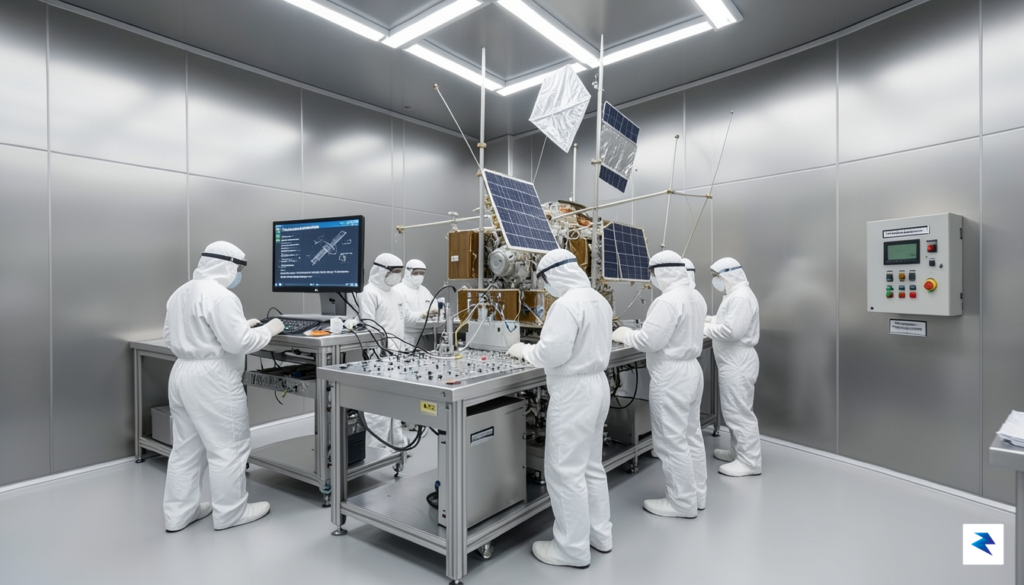
The integration of Iridium’s expansive L-band satellite network with Rocket Lab’s sophisticated Photon satellite bus technology represents a seismic shift in how we conceive of orbital infrastructure. By pairing Iridium’s proven global communications backbone with Rocket Lab’s vertical integration—spanning everything from launch vehicle manufacturing to spacecraft design—the combined entity can now orchestrate an end-to-end service model that was previously impossible for independent firms. This synergy allows for the rapid deployment of specialized satellite constellations that are no longer constrained by the rigid timelines of third-party launch providers, effectively creating a closed-loop system where hardware is built, orbited, and managed under a single, unified operational strategy.

Looking toward the future, this partnership opens the door for a paradigm shift in space-based edge computing. By leveraging the Photon bus’s flexible payload capacity, Rocket Lab can now host advanced processing hardware directly on the Iridium network, allowing data to be filtered, analyzed, and prioritized in orbit before it ever reaches a ground station. This capability is critical for applications requiring near-instantaneous decision-making, such as real-time climate monitoring, where detecting a wildfire or a sudden oceanic shift requires immediate data processing. By moving the “intelligence” of the network into space, the latency inherent in traditional ground-relay systems is drastically reduced, enabling a new class of hyper-responsive global services.
The marriage of rapid, agile launch capabilities with a robust, global communications constellation creates a unique “space-as-a-service” ecosystem that accelerates the pace of orbital innovation.
Beyond commercial applications, the combined engineering talent within this new structure is uniquely positioned to address the growing demand for secure government communication pathways. As geopolitical landscapes evolve, the need for resilient, high-speed, and encrypted data transmission has become a national security priority. Future constellations developed through this union will likely prioritize sovereign, space-based mesh networks that are hardened against interference and optimized for governmental operations. Through the iterative design process that Rocket Lab is famous for, these future satellites can be updated and replaced with unprecedented speed, ensuring that government and defense clients always have access to the latest, most secure technology without the multi-year wait times that have historically plagued the aerospace industry.
Ultimately, this acquisition is not merely about scaling existing services; it is about rewriting the operational lifecycle of satellites. By fostering a culture where launch cadence drives engineering innovation, the combined team is setting the stage for a future where space infrastructure is as dynamic and adaptable as the digital services we use on the ground. As these technologies mature, we can expect to see a more interconnected orbital environment that supports everything from the Internet of Things (IoT) on a global scale to advanced scientific research, all underpinned by a seamless, vertically integrated technological foundation.
Market Implications: Competitive Shifts in the Global Aerospace Sector

The acquisition of Iridium by Rocket Lab marks a definitive departure from the traditional model of fragmented aerospace services, signaling that the industry is rapidly transitioning toward a “Space-as-a-Service” paradigm. For years, the sector operated in silos: launch providers focused solely on reaching orbit, while satellite operators managed data throughput and constellation maintenance. By bringing these two pillars under a single corporate umbrella, Rocket Lab is not merely expanding its portfolio; it is creating an end-to-end infrastructure giant capable of controlling the entire value chain from the launchpad to the end-user’s terminal. This consolidation mirrors recent high-profile mergers across the defense and aerospace sectors, where the premium is increasingly placed on vertical integration and the ability to offer turnkey solutions to government and commercial clients alike.
This structural shift places immense pressure on smaller, niche launch providers who lack the capital or the orbital assets to compete with such a comprehensive offering. Investors have begun to signal a clear preference for companies that can guarantee both reliable access to space and sustained mission utility, effectively squeezing out players that rely on a single service model. As capital markets become more discerning, the “Space-as-a-Service” model serves as a defensive moat, protecting the consolidated entity from the volatility of launch-only contracts. Smaller firms now face a stark reality: they must either find a way to differentiate their specialized technologies or face the looming prospect of being swallowed by these emerging industry behemoths.
The move towards vertical integration is no longer a strategic option; it is becoming the baseline requirement for survival in a maturing space economy.
Legacy aerospace entities are also being forced to recalibrate their long-term strategies in response to this new competitive reality. For decades, traditional contractors relied on vast, multi-year government programs that favored massive scale and bureaucratic stability over agility. However, the Rocket Lab-Iridium deal demonstrates that a nimbler, tech-focused approach can successfully capture the market by streamlining the customer experience. To remain relevant, legacy players must now decide whether to pivot toward rapid acquisition strategies of their own or risk being outpaced by this new generation of vertically integrated competitors. Ultimately, the industry is moving toward a future where the winners are not necessarily those with the largest facilities, but those who can most seamlessly connect the terrestrial internet to the orbital frontier.
Challenges and Regulatory Considerations for the New Aerospace Giant

While the prospect of a vertically integrated space powerhouse is compelling, the transition from two distinct corporate entities into a singular, cohesive aerospace giant is fraught with significant friction. The most immediate hurdle lies in the realm of regulatory scrutiny, where government bodies—including the Federal Communications Commission (FCC) and various antitrust regulators—will undoubtedly examine the deal with a fine-toothed comb. Because the merger combines a major launch provider with a critical satellite communications operator, authorities will be concerned about market dominance and the potential for anticompetitive practices that could lock out smaller startups from fair access to orbital deployment. Navigating these bureaucratic pathways requires immense legal precision, and any failure to satisfy these agencies could lead to protracted delays or the imposition of restrictive conditions that might dilute the strategic value of the acquisition.
Beyond the legal landscape, the cultural integration of these two companies presents a formidable challenge. Rocket Lab has built its reputation on the “agile” ethos of a fast-moving, iterative startup, characterized by rapid hardware prototyping and a high-risk, high-reward engineering mindset. In contrast, Iridium operates as a mature, established service provider that prioritizes the absolute reliability and stability required to maintain a mission-critical global satellite constellation. Merging these conflicting operational philosophies is a delicate balancing act; if the management team fails to foster a unified identity, they risk alienating the very talent that made both organizations successful in the first place.

The success of this merger will not be measured by the initial stock market reaction, but by the ability to harmonize the raw speed of launch innovation with the long-term, high-uptime requirements of global communications infrastructure.
Finally, the technical burden of managing a massive, legacy satellite constellation while simultaneously pushing the boundaries of next-generation hardware cannot be overstated. Iridium’s network is a sophisticated, highly reliable piece of global infrastructure, but it requires constant maintenance and careful orchestration to avoid service interruptions. Simultaneously, Rocket Lab is under pressure to maintain its own cadence of launch vehicle development and satellite manufacturing. Integrating these workflows means that any technical misstep in the launch sector could theoretically threaten the operational integrity of the communications network, and vice versa. Effectively balancing these competing technical priorities requires a robust management strategy that ensures the “new” infrastructure remains resilient while still leaving enough runway for the radical innovation that both companies were originally built to pursue.