The Anatomy of a Massive Passport Leak

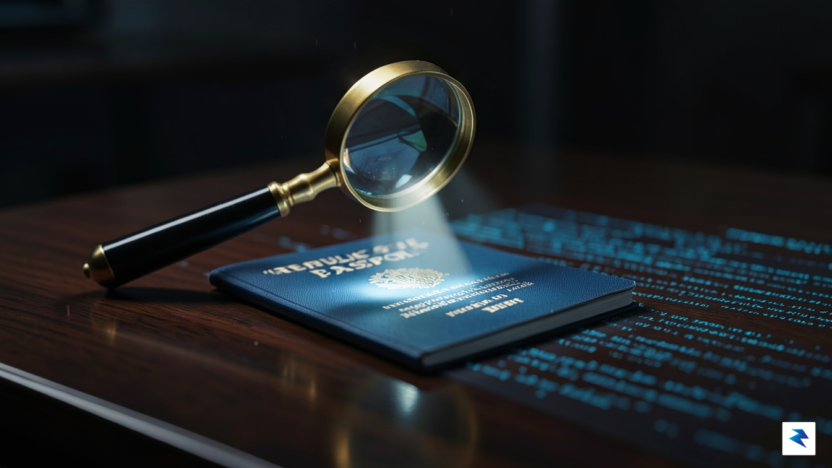
The recent exposure of one million passport records—linked to the Nefos/Puffpal ecosystem—has sent shockwaves through the cybersecurity community, serving as a grim reminder of the inherent fragility within modern digital infrastructure. This massive breach did not merely involve incidental contact information; it compromised the most sensitive form of government-issued identification available. When an attacker gains access to such a vast repository, the consequences extend far beyond a momentary lapse in data privacy. The sheer scale of the incident underscores a systemic failure in how third-party platforms manage, store, and secure high-stakes credentials, often prioritizing rapid user growth over the rigorous encryption protocols required to protect global citizens.
To understand the gravity of this situation, one must distinguish between standard personally identifiable information (PII) and the permanent, immutable nature of passport data. Unlike a credit card number, which can be canceled and reissued within days of a fraudulent transaction, a passport represents a core identity document that follows an individual for a decade or longer. Once a passport number and associated biographical details are leaked, they cannot be “reset.” This creates a permanent vulnerability for the affected victims, as malicious actors can leverage this data for long-term identity theft, sophisticated phishing campaigns, or even illicit travel documentation. The permanence of this exposure transforms a temporary security failure into a lifelong burden for those caught in the fallout.
The danger of this breach lies not just in the volume of data, but in the lifetime utility of the information to cybercriminals; unlike a compromised password, your identity is not something you can simply rotate or update.
The discovery of the leak began when independent security researchers identified an unsecured database that lacked the most basic authentication barriers. Upon investigation, it became clear that the data was not just sitting in a silo but was actively accessible to anyone with basic network scanning tools. The immediate aftermath was chaotic, as individuals whose information appeared in the dump were suddenly susceptible to targeted social engineering attacks. As these records circulate on dark web forums, the fallout is expected to grow, forcing affected individuals to navigate the complex, often arduous process of notifying government agencies, monitoring credit bureaus, and potentially applying for entirely new travel documents—a process that is both costly and time-consuming for the average user.
Why Passport Data is the Ultimate Target
Malicious actors view passport data as the “gold standard” of identity theft because it bridges the gap between digital and physical security. With a valid passport record, a criminal can bypass rigorous Know Your Customer (KYC) verification processes used by banks, cryptocurrency exchanges, and government portals. Because these records contain high-resolution biographical data, they are frequently sold in bulk to facilitate synthetic identity fraud, where scammers create “Frankenstein” identities by blending stolen, real-world data with fabricated information. Consequently, this incident serves as a critical warning: as our digital and physical identities continue to merge, the security of the platforms holding our most sensitive credentials must become a top-tier priority for regulators and corporations alike.
How Vulnerable Systems Exposed Personal Data
The catastrophic exposure of one million passports highlights a disturbing trend where the digitization of sensitive identity documentation far outpaces the implementation of robust security frameworks. At the core of this failure was a fundamental breakdown in cloud hygiene, specifically concerning misconfigured storage buckets. By leaving these repositories accessible to the public internet without authentication, the service provider essentially turned a digital vault into an open file cabinet. When storage containers are improperly permissioned, they bypass traditional firewalls and security perimeters, allowing any individual with a basic understanding of network scanning tools to access files that should have remained strictly private.
Beyond simple configuration errors, the incident exposes a systemic failure regarding the encryption of sensitive data at rest. While many businesses operate under the misconception that their data is safe once it is uploaded to a server, the reality is that without end-to-end encryption, the files remain vulnerable if the storage medium itself is breached. In this case, the lack of robust encryption meant that once unauthorized access was achieved, the sensitive government-issued IDs were immediately readable, offering no secondary layer of protection to mitigate the impact of the initial configuration oversight. This serves as a stark reminder that encryption is not a luxury feature, but a mandatory safeguard for any entity handling personally identifiable information.

The Risks of Data Hoarding and Third-Party Dependencies
A significant contributing factor to the scale of this leak is the practice of ‘data hoarding’ by small to mid-sized businesses that lack the resources to secure the information they collect. Many cannabis club management systems prioritize user convenience and data retention for marketing or analytics purposes, often holding onto high-resolution copies of passports and identification cards long after their initial verification use has expired. By aggregating such immense quantities of sensitive documents without a clear data lifecycle policy—or a mechanism to securely delete or anonymize that data—these organizations create massive, high-value targets for cybercriminals. The more data a business accumulates, the greater the catastrophic potential of a single breach.
The true danger lies not just in the breach itself, but in the normalization of storing high-stakes identification documents within third-party SaaS platforms that may prioritize rapid growth over rigorous security audits.
Furthermore, the reliance on third-party Software-as-a-Service (SaaS) providers introduces a complex layer of risk known as third-party exposure. When a business outsources its identity verification to a specialized platform, it transfers the responsibility of security to that vendor. However, many of these niche providers do not undergo the same level of independent security scrutiny as large-scale financial or government institutions. Users often unknowingly place their trust in these systems, assuming that their passports are being handled with military-grade precision. When these providers fail to implement stringent access controls or conduct regular penetration testing, the resulting vulnerability is effectively outsourced to every client business using their software, creating a domino effect of exposure that spans thousands of individual users.
The Ripple Effect: Identity Theft and Long-Term Risks

When a password is compromised, the solution is relatively straightforward: you reset your credentials, enable multi-factor authentication, and move forward. However, a passport leak represents a fundamentally different class of security failure because a passport number is a static, immutable identifier linked to your government identity. Unlike a digital key that can be discarded, your passport is a foundational document used to verify your existence across global financial, legal, and travel systems. Once this information is exposed on the dark web, it does not simply expire; it remains a permanent asset for malicious actors who can leverage it to impersonate you for years, or even decades, to come.
The most immediate and dangerous consequence of such a breach is the facilitation of synthetic identity fraud. Criminals often combine stolen passport data with other bits of personal information—such as dates of birth and residential addresses—to create a “Frankenstein” identity. By blending real data with fabricated details, they can open fraudulent bank accounts, secure high-interest loans, or even establish utilities in your name. Because the passport number belongs to a legitimate, verifiable document, these fraudulent applications are far more likely to bypass the automated security filters used by financial institutions, leaving you to deal with the complex, time-consuming process of clearing your credit report long after the initial leak occurred.
Unlike a password, you cannot simply update your passport number. It is a foundational identity marker that, once compromised, remains a target for the duration of the document’s life—and often well beyond it.
Beyond financial theft, these leaks provide bad actors with the raw materials for highly sophisticated social engineering and spear-phishing campaigns. Possession of your actual passport image allows scammers to craft extremely convincing communications. They might contact you pretending to be government officials or financial institutions, using the stolen document details to build instant rapport and establish a false sense of legitimacy. By citing your real passport number during a phone call or in an email, they exploit your trust, making it significantly easier to manipulate you into revealing further sensitive data or authorizing fraudulent transactions.
For victims, the reality is that the threat landscape has shifted from a temporary inconvenience to a long-term burden of vigilance. You must now adopt a mindset of perpetual monitoring, regularly reviewing your credit reports, checking for unexplained activity on financial accounts, and remaining hyper-aware of suspicious communications. It is not enough to check your status once; you must be prepared to maintain this heightened level of scrutiny indefinitely. Ultimately, the fallout from this breach serves as a stark reminder that in our increasingly digitized world, our official government identities have become the most valuable currency on the black market, requiring us to treat our personal documentation with the same level of protection we afford our most sensitive financial assets.
Digital Accountability in Third-Party Systems
The recent exposure of one million passports highlights a disturbing trend: the normalization of data negligence within the third-party software ecosystem. When private companies collect sensitive government-issued identification, they assume a profound duty of care that, far too often, is treated as an afterthought rather than a core functional requirement. The prevailing “move fast and break things” culture in tech has frequently ignored the principle of security-by-design, leaving sensitive user data vulnerable behind poorly configured cloud databases and inadequate encryption protocols. Developers and architects must move beyond mere compliance checklists and integrate rigorous security testing, data minimization, and automated breach detection into the very foundation of their software development lifecycle.
Current regulatory frameworks, such as the GDPR and CCPA, were intended to be powerful safeguards for consumer privacy, yet they are increasingly viewed as the “cost of doing business” rather than a true deterrent. While these laws provide a necessary structure for accountability, the fines imposed on massive corporations often fail to reflect the lifetime of risk inflicted upon victims of identity theft. When a database containing passport numbers is left exposed, the damage is irreversible; unlike a credit card number, a passport cannot be simply “cancelled” and reissued without significant bureaucratic burden and personal cost. This creates an urgent need for lawmakers to reconsider the severity of penalties, perhaps shifting toward a model that holds executives personally liable for systemic failures in data governance.
Data stewardship is not merely a legal hurdle; it is the bedrock of digital trust. If a private entity cannot guarantee the safety of the most sensitive government credentials, they forfeit the right to handle that data entirely.
Furthermore, we must critically evaluate why private entities are permitted to retain government-issued ID data in perpetuity. There is a glaring lack of industry-wide standards regarding the lifecycle management of such sensitive information. Systems should be designed to automatically purge identity documents the moment their verification purpose has been served, rather than hoarding them in long-term cold storage where they become attractive targets for malicious actors. By enforcing stricter data retention policies and establishing mandatory security audits for any organization handling identity verification, we can force a necessary evolution in digital accountability. Until the consequences of a breach are as painful for the company as they are for the individual, the cycle of leaks will continue unabated.
Protecting Your Digital Identity After a Breach
When sensitive documentation like passports enters the public domain, the threat is no longer theoretical; it is an immediate risk to your long-term financial and personal autonomy. Unlike a compromised email address that can be swapped out, your passport number is a static identifier that sticks with you for years. To mitigate this, you must move beyond basic password hygiene and adopt a posture of active surveillance. Start by requesting free credit reports from the major bureaus to identify any unauthorized accounts opened in your name. More importantly, take the step of freezing your credit files with the three primary credit reporting agencies. A security freeze is one of the most effective tools available, as it prevents lenders from accessing your report, thereby stopping identity thieves from opening new lines of credit in your name.

It is a common misconception that using a password manager will shield you from the fallout of a massive data leak. While password managers are essential for preventing credential stuffing attacks by ensuring you never reuse a password, they are powerless against the exposure of government-issued identity documents. A password manager protects your accounts, but it does nothing to prevent a malicious actor from utilizing your passport data to impersonate you for fraudulent loans, travel, or legal documentation. Because this breach involves immutable personal identifiers, your primary defense must shift from reactive account management to constant, hyper-vigilant monitoring of your personal data footprint.
A Roadmap for Long-Term Data Integrity
Beyond freezing your credit, you must prepare for the inevitability of highly targeted communication. Because attackers now possess your passport details, they can craft incredibly convincing spear-phishing attempts. They might contact you claiming to be from a government agency, a bank, or a travel authority, using your actual passport number to establish false legitimacy. To defend against this, adopt a policy of skepticism: never click on links or provide further information based on unsolicited emails or phone calls, even if the sender appears to have inside knowledge of your personal records. Always verify such requests by navigating independently to the official website of the institution or calling them through a verified, publicly listed phone number.
The most effective defense against modern data breaches is not a piece of software, but a change in personal behavior. Vigilance is the only tool that can bridge the gap between a compromised data set and a secure future.
Finally, consider the long-term implications of this exposure by keeping a digital trail of your own identity activity. If you suspect your passport information has been used maliciously, report it immediately to your country’s passport issuing authority and local law enforcement. While the process of re-issuing a passport and flagging a compromised number is cumbersome, it is a necessary barrier against identity theft that could otherwise haunt your credit score and legal standing for decades. By maintaining a proactive stance rather than waiting for a sign of fraud, you exert control over a situation where your initial privacy has already been stripped away.