
The Shift: A New Era for Stablecoin Infrastructure

For years, Circle’s USDC has functioned as the bedrock of the regulated stablecoin ecosystem, enjoying a near-monopolistic grip on institutional capital looking for a “safe” bridge between fiat and blockchain. By positioning itself as the gold standard for compliance and transparency, Circle successfully courted major players, creating a gravitational pull that seemed almost impossible to escape. However, the market is currently witnessing a tectonic realignment. A recent 17% decline in market interest and valuation relative to emerging alternatives signals that institutional patience for the status quo is wearing thin. This contraction isn’t merely a temporary fluctuation; it represents a deliberate migration of liquidity toward a more flexible, open-standard architecture that promises to dismantle the legacy barriers Circle helped erect.
The catalyst for this disruption is the rise of Open USD (OUSD), a protocol-agnostic framework that is rapidly gaining favor among financial heavyweights. Companies like Stripe, Coinbase, and BlackRock—titans that previously relied heavily on Circle’s infrastructure—are now signaling that the future of digital finance requires a neutral, multi-issuer foundation rather than a proprietary silo. By backing this rival network, these industry leaders are essentially voting for a future where stablecoin issuance is democratized, effectively removing the friction of concentrated control. This shift suggests that the primary value proposition of a stablecoin is no longer just its peg to the dollar, but the efficiency and interoperability of the network that houses it.

At the heart of this transition lies a fundamental reassessment of reserve management and minting economics. Institutional players are increasingly wary of the opaque cost structures and restrictive governance models associated with traditional stablecoin providers. The move toward Open USD is driven by a desire for transparent reserve backing and lower overhead costs, which have long been hidden under the guise of “enterprise service fees.” Consequently, we are seeing a move away from the “walled garden” approach toward an ecosystem where competition drives down fees and drives up security standards.
The pivot toward an open-standard infrastructure marks the end of the “first-mover advantage” era, signaling that institutional stability will now be defined by network neutrality rather than brand consolidation.
Ultimately, this isn’t just about choosing one token over another; it is about the fundamental evolution of global payment rails. As Stripe and BlackRock integrate more deeply with this open-standard alternative, they are paving the way for a more resilient financial infrastructure that can withstand the vulnerabilities of centralized gatekeepers. By favoring decentralization and open access, these corporations are not just shifting their assets—they are actively rewriting the rules of the game to ensure that the next generation of digital finance is built on a foundation of open, verifiable, and competitive standards.
Understanding the Open USD Model
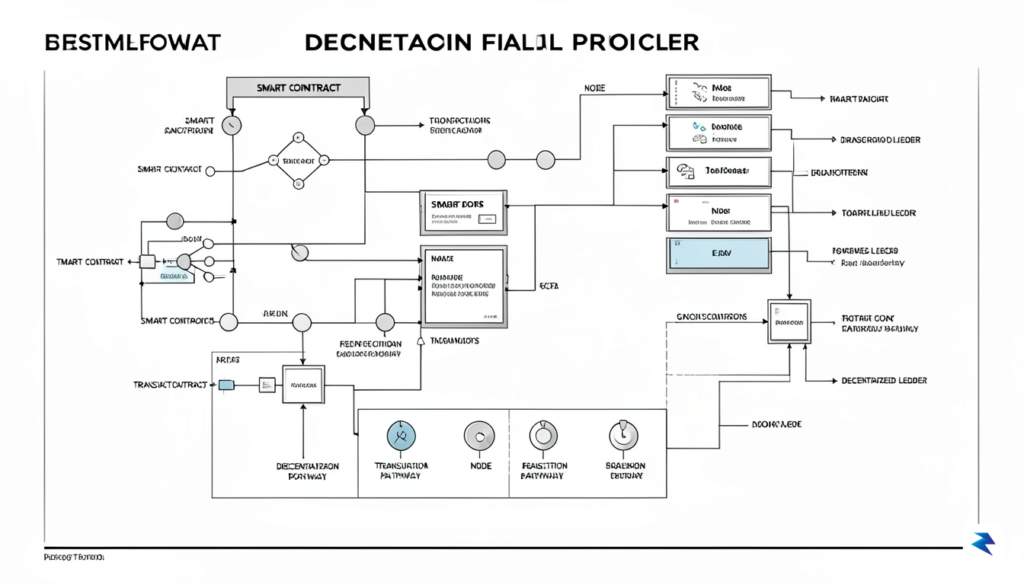
At the heart of the emerging Open USD standard lies a fundamental shift in how stablecoin infrastructure is architected, moving away from the restrictive, centralized silos that have dominated the digital asset landscape for the past decade. Unlike legacy models where the issuer retains complete control—and the entirety of the financial yield—the Open USD framework functions more like a decentralized protocol. This architecture is specifically designed to allow partner ecosystems to retain their own reserve income, effectively transforming stablecoins from a proprietary product into a shared, institutional-grade utility. By decentralizing the capture of interest-bearing collateral, the network aligns the incentives of financial institutions, developers, and liquidity providers in a way that traditional models simply cannot match.

One of the most compelling economic advantages of this model is the total elimination of minting fees, a barrier that has long hampered the scalability of cross-border institutional payments. In the traditional USDC model, the friction associated with issuing and redeeming assets creates a cost-prohibitive environment for high-frequency institutional participants. Under the Open USD standard, however, the process is streamlined to remove these legacy toll-booths, allowing capital to move with near-zero friction. This shift is not merely a technical optimization; it is a strategic maneuver to lower the barrier to entry for global corporations, enabling them to integrate stablecoin rails directly into their enterprise resource planning systems without incurring recurring transaction overheads.
The transition from a ‘walled garden’ stablecoin to an open standard represents a shift from rent-seeking infrastructure to collaborative financial plumbing, where the value of the network grows through participation rather than extraction.
The contrast between these two philosophies is stark. Legacy stablecoins operate as ‘walled gardens,’ where the issuer maintains a tight grip on the flow of capital, often dictating terms that favor their internal balance sheet over the broader developer community. Conversely, the Open USD philosophy embraces an ‘open standard’ approach, where the underlying protocol is designed to be interoperable across different chains and financial networks. By decoupling the issuance mechanism from a single corporate entity, the network fosters a competitive ecosystem where innovation is driven by utility rather than exclusivity. This approach is particularly attractive to heavyweights like BlackRock and Stripe, who are increasingly prioritizing infrastructure that offers long-term stability and neutral governance over the proprietary, high-fee models of the past.
Ultimately, by democratizing access to the economic benefits of reserve management, the Open USD model empowers participants to capture the yield generated by their own liquidity. This effectively turns every partner in the ecosystem into a stakeholder rather than just a customer. When minting is free and reserve income is distributed transparently, the network gains a powerful flywheel effect: as more institutional players join the ecosystem, the underlying infrastructure becomes more robust, liquid, and indispensable. This structural evolution is likely to set a new benchmark for how digital dollars are issued and circulated, signaling a maturation of the market that prioritizes sustainable, decentralized growth over centralized dominance.
Why Financial Giants are Backing an Alternative

The sudden influx of institutional capital behind Open USD signals a fundamental shift in how global financial titans perceive the future of digital assets. For companies like Stripe, Coinbase, and BlackRock, the objective is no longer merely to participate in the existing crypto-economy but to actively engineer a more resilient, sovereign financial infrastructure. By diversifying away from a singular reliance on Circle’s USDC, these giants are hedging against the risks of centralized liquidity policies and the potential for a single-point-of-failure in the stablecoin market. This strategic alignment suggests that the industry is graduating from its experimental phase, moving toward a standardized, institutional-grade framework where control and efficiency are paramount.

For Coinbase, the move is deeply rooted in infrastructure integration. As the premier gateway for retail and institutional crypto adoption, Coinbase requires a stablecoin ecosystem that is not only robust but also highly programmable. Supporting a rival network allows them to embed payment rails directly into their platform without being beholden to the specific governance and reserve management of a single issuer. Meanwhile, Stripe is driven by the relentless pursuit of payment processing efficiency. By championing an alternative, they aim to lower the friction and transaction costs associated with cross-border settlements, providing their massive merchant base with a faster, cheaper, and more reliable way to move value globally without the legacy banking bottlenecks.
The pivot toward Open USD represents a transition from “crypto-native” experimentation to “institutionally-validated” infrastructure, where the priorities shift from pure decentralization to systemic reliability and sovereign oversight.
BlackRock’s involvement adds a layer of weight that cannot be overstated. As the world’s largest asset manager, their mandate is the long-term security and liquidity of global financial markets. Their backing of a challenger network indicates a desire for institutional-grade stability that can mirror the predictability of traditional financial instruments. These players understand that the current fragmentation of stablecoin networks carries inherent risks, yet they are willing to accept this volatility in the short term to avoid being trapped in a “walled garden” controlled by one entity. Ultimately, this coalition is betting that a more competitive, decentralized, and diverse stablecoin landscape will create a more stable foundation for the next generation of global finance, ensuring that the infrastructure of the future remains modular and under the collective influence of those who use it most.
The Economic Impact on Circle and USDC

The recent 17% decline in Circle’s market standing represents more than just a temporary fluctuation in asset valuation; it signals a fundamental shift in the stablecoin landscape. For years, Circle’s USDC held a formidable “moat,” protected by its reputation for regulatory compliance, transparency, and deep integration within the decentralized finance (DeFi) ecosystem. However, the emergence of a rival consortium—backed by the immense institutional reach of BlackRock, the payment processing ubiquity of Stripe, and the crypto-native infrastructure of Coinbase—threatens to erode that defensive perimeter. By pooling their collective influence, these industry heavyweights are effectively commoditizing the stablecoin layer, forcing Circle to confront the reality that its historical dominance is no longer guaranteed by brand equity alone.

This mounting pressure creates a precarious situation for Circle’s current revenue model, which has historically relied on the interest earned from its reserve assets. As the market pivots toward networks that prioritize lower transaction costs and higher integration efficiency, Circle faces an urgent mandate to innovate. The rise of this new rival stablecoin network is not merely about technological superiority; it is about challenging the high-fee structures that have defined the status quo. If Circle continues to maintain its existing cost parameters while competitors offer more streamlined, lower-cost alternatives, they risk alienating the very developers and enterprise partners who provide the liquidity necessary for a stablecoin to thrive.
The competition for stablecoin dominance is no longer just a battle of reserves; it is a battle for the underlying plumbing of the global financial internet.
The potential for a “stablecoin war” could have profound implications for market liquidity and user experience. On one hand, intense competition often drives down costs for the end consumer and forces firms to adopt more robust reserve management strategies. Conversely, a fractured liquidity pool can lead to increased fragmentation, making it more difficult for assets to move seamlessly across different blockchains. For Circle, the strategic path forward likely involves a delicate balancing act: they must defend their market share through potential fee restructuring while simultaneously proving that their reserve management strategies offer superior stability compared to the newer, consortium-backed models. Whether they choose to pivot toward a more aggressive, low-fee growth strategy or double down on their existing institutional-grade security, the next few quarters will serve as a definitive test of Circle’s long-term resilience in an increasingly hostile, high-stakes environment.
Market Implications: Regulatory Hurdles and Future Outlook

The emergence of a new stablecoin network, backed by financial giants like Stripe, BlackRock, and Coinbase, signals a pivotal moment for the crypto market, moving beyond mere speculative volatility to underscore a deeper maturation within the stablecoin sector itself. This shift, however, brings with it a complex tapestry of regulatory questions and potential systemic risks that demand careful consideration. While the promise of greater interoperability and decentralization is compelling, the path forward will undoubtedly be shaped by how these novel models interact with established financial guardrails and user expectations.
A primary concern revolves around the regulatory landscape, particularly how a more open, multi-issuer stablecoin model will align with existing Anti-Money Laundering (AML) and Know Your Customer (KYC) standards. Current regulations largely focus on single, identifiable issuers responsible for user onboarding and transaction monitoring. A network that allows various entities to issue and manage stablecoins, even if pegged to a common standard, introduces challenges in establishing clear lines of accountability. Regulators will need to determine whether the underlying technology can adequately track the origin and destination of funds across multiple platforms and participants, ensuring transparency and preventing illicit activities without stifling innovation. The success of such an open standard hinges significantly on its ability to demonstrate robust compliance mechanisms that satisfy global financial watchdogs.
Furthermore, the potential for a fragmented stablecoin ecosystem presents tangible risks for the end-user. Imagine a scenario where different applications or protocols preferentially support distinct stablecoin standards, creating silos that hinder seamless transactions and potentially increase conversion costs. Users might find themselves navigating a labyrinth of differing stablecoin versions, leading to confusion, reduced liquidity for specific tokens, and increased friction in daily crypto usage. This fragmentation could also introduce new vectors for systemic risk; if one component or issuer within a loosely coupled, open standard experiences a significant disruption or failure, the cascading effects across the entire network could be difficult to contain, potentially impacting user confidence and broader market stability.
Looking ahead, the market faces a critical juncture: will it consolidate around a truly open, interoperable standard, or will dominant players like Circle’s USDC successfully pivot to maintain their top-tier status? An open standard, by nature, invites greater competition and could foster innovation by lowering barriers to entry for new stablecoin issuers and services. However, established stablecoins benefit from significant network effects, deep integration across countless platforms, and a proven track record of liquidity and reliability. USDC, for instance, could adapt by embracing aspects of interoperability while leveraging its strong brand and regulatory relationships. Ultimately, the victor in this evolving landscape will likely be the one that best balances regulatory compliance with technological innovation, offering both security and seamless utility to a global user base. The outcome will profoundly influence the future architecture of digital finance.