
The Bending Spoons Strategy: Engineering Success

Emerging from the vibrant tech landscape of Milan, Bending Spoons has spent the better part of a decade challenging the conventional wisdom that defines Silicon Valley success. While many organizations scramble to chase fleeting market trends or hinge their survival on the whims of venture capital, this Italian powerhouse has cultivated a methodology rooted in the precision of the laboratory. By treating software development not as a speculative gamble, but as a rigorous, iterative scientific experiment, the company has managed to transform from a niche startup into an $18 billion valuation titan. This ascent serves as a powerful testament to the idea that sustainable growth is rarely an accident; rather, it is the result of disciplined, repeatable systems that remove the ambiguity of luck from the product lifecycle.

The core of the Bending Spoons philosophy lies in a relentless commitment to data-driven decision-making. Every feature release, user interface adjustment, and marketing campaign is subjected to strict empirical testing, ensuring that the company’s portfolio is shaped by objective performance metrics rather than executive intuition or gut feelings. This culture of experimentation creates a feedback loop where failure is not viewed as a setback, but as a vital data point that informs the next iteration. By systematically stripping away the variables that lead to unpredictable outcomes, the leadership team has effectively turned the process of scaling a tech enterprise into a repeatable, high-fidelity engineering discipline.
Success is not a roll of the dice when you have the courage to treat every business decision as a hypothesis requiring empirical verification.
This transition from a small team of developers to an IPO-level powerhouse highlights a profound shift in how modern tech companies build long-term value. Instead of relying on hype, Bending Spoons focuses on the “engineering of success,” which requires a deep investment in talent, proprietary infrastructure, and a culture that prioritizes intellectual honesty over ego. By fostering an environment where ideas are rigorously challenged and validated through real-world usage, they have insulated themselves from the volatility that plagues less disciplined competitors. Their trajectory demonstrates that when a company replaces the hope for a “lucky break” with a robust framework for continuous optimization, it can achieve a level of stability and scale that is increasingly rare in today’s hyper-competitive digital economy.
Learning from Failure: The Foundation of Growth

The path to an $18 billion valuation was not paved with a singular, lucky streak of genius, but rather built upon the remnants of early, hard-learned lessons. In the company’s formative years, the team launched several products that failed to gain market traction, leaving the founders with little more than depleted resources and a humbling reality check. Instead of viewing these outcomes as unfortunate accidents or simple bad luck, the leadership team chose to treat every failed launch as a critical data point. They realized that if they wanted to build a repeatable, scalable engine for success, they could not rely on the mercurial nature of founder intuition, which had proven to be an unreliable compass in the face of complex consumer behavior.
To institutionalize this philosophy, Bending Spoons developed a rigorous process of post-mortems that stripped away ego and focused entirely on objective evidence. By analyzing exactly where the user funnel broke down or why a specific value proposition failed to resonate, the team began to identify patterns in their decision-making process. These sessions were designed to be forensic rather than punitive, ensuring that everyone involved could look at the data without defensiveness. This shift transformed their internal culture, moving the organization away from a “top-down” visionary model and toward a structure where the best ideas are those that can be validated by empirical evidence. Consequently, the team began to prioritize speed and experimentation, knowing that smaller, faster failures provide more usable information than long, drawn-out projects that lack a clear feedback loop.

The goal of a post-mortem is not to assign blame for a mistake, but to extract the maximum amount of utility from the experience so that the same error never manifests twice.
This commitment to data over ego has become the bedrock of the company’s risk-mitigation strategy. By requiring that every significant project be vetted through a lens of objective metrics, the founders effectively removed the “luck factor” from their product development lifecycle. If a project does not meet strict performance thresholds, it is either pivoted or abandoned, regardless of how much passion the team initially felt for the concept. This disciplined approach ensures that capital and human talent are always allocated to initiatives with the highest probability of success. It is a philosophy that turns failure into a tool for sharpening strategy, proving that the most sustainable competitive advantage is not a brilliant idea, but a superior system for learning from the ones that didn’t work.
The Art of Minimizing Luck in Business

At the very heart of Bending Spoons’ meteoric rise lies a philosophy that many in the startup world might consider counterintuitive, if not outright radical: the explicit goal to minimize luck. Instead of chasing speculative breakthroughs or relying on serendipitous market shifts, the company has meticulously engineered its operations to systematically reduce its dependence on chance. This isn’t about denying the existence of luck, but rather about creating processes and a culture where success is predominantly driven by controllable, data-backed decisions, transforming volatile market conditions into remarkably predictable growth trajectories.
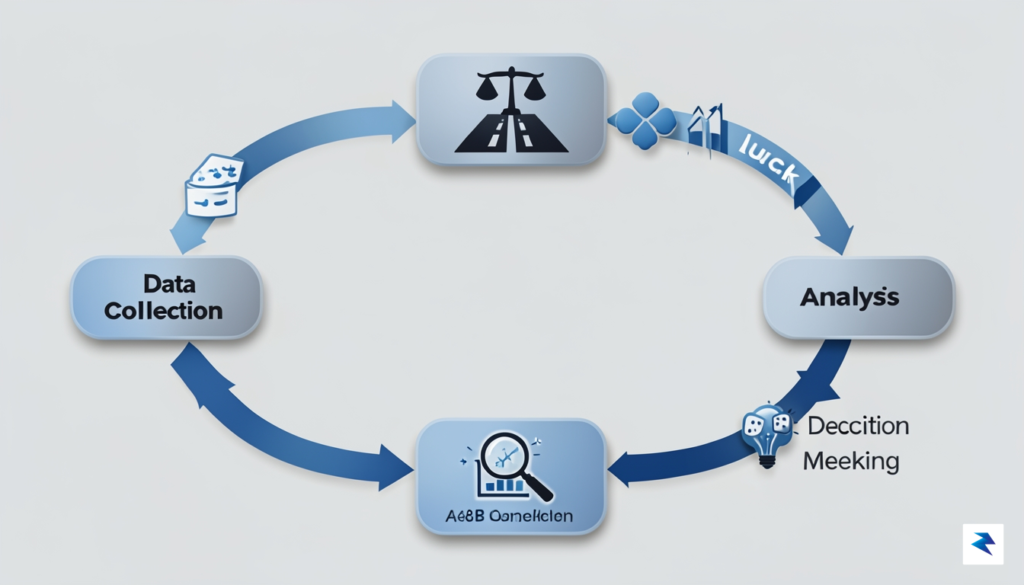
This systematic approach involves replacing speculative bets with an unrelenting volume of data-driven experiments. Every new feature, every design tweak, and even subtle changes in user interface are treated as hypotheses to be rigorously tested. Through continuous A/B testing across its portfolio of apps, Bending Spoons gathers empirical evidence on what genuinely resonates with users and what does not. This high-frequency, iterative testing cycle ensures that product development isn’t guided by intuition or industry trends alone, but by a constant stream of real-world user behavior, allowing for rapid course correction and optimization based on tangible results.
Crucially, underpinning this relentless experimentation is an equally rigorous dedication to data analysis and the deliberate removal of ego from the decision-making process. Data isn’t merely collected; it’s meticulously dissected and interpreted to unearth actionable insights. When the data speaks, the company listens, even if the findings contradict a founder’s strong personal conviction or a senior manager’s pet project. This commitment to objective truth fosters a culture of intellectual humility, where the best idea, supported by compelling evidence, consistently prevails over personal bias or hierarchical seniority, ensuring that every strategic move is grounded in verifiable facts.
This meticulous, scientific approach stands in stark contrast to the often celebrated “move fast and break things” mentality that has long dominated Silicon Valley. While many tech giants advocate for rapid deployment and learning from widespread failures, Bending Spoons opts for a more controlled, almost clinical methodology. Rather than releasing untested features into the wild and hoping for the best, they validate concepts through extensive testing before broad implementation, thereby minimizing the potential for costly errors and user dissatisfaction. This methodical, evidence-based strategy doesn’t just enable rapid growth; it ensures that this growth is stable, sustainable, and built upon a solid foundation of proven effectiveness, allowing the company to navigate and even capitalize on market uncertainties with an unparalleled degree of precision.
Scaling Through Acquisition: A New Tech Paradigm
Bending Spoons has carved out a unique position in the digital economy by viewing ailing internet brands not as failures, but as untapped reservoirs of potential. While many tech conglomerates focus on high-stakes innovation from the ground up, this firm specializes in identifying well-known applications that have stagnated due to operational inefficiencies or outdated technical architecture. Their acquisition criteria are remarkably disciplined; they look for products with high brand recognition and a loyal user base that has simply been neglected by previous management. By targeting these specific assets, the company bypasses the immense cost and uncertainty of customer acquisition, effectively purchasing a ready-made audience that is waiting for a superior experience.

Once an acquisition is finalized, the transformation process begins with the rigorous application of their proprietary engineering “playbook.” This is not a matter of simply rebranding or basic maintenance; instead, the team systematically deconstructs the application to identify technical debt, bloated codebases, and bottlenecks that hinder user retention. They replace inefficient legacy systems with optimized, high-performance infrastructure designed to scale effortlessly. By streamlining the user journey and introducing data-driven feature updates, they breathe new life into platforms that were previously losing market share. This technical intervention acts as a catalyst, converting stagnant traffic into active, engaged subscribers who suddenly find the utility they were originally looking for.
Success is rarely a gamble; it is the result of applying repeatable, rigorous engineering standards to environments that others have deemed hopeless.
The long-term strategy behind this model is to build an expansive, diversified portfolio that captures value across a wide spectrum of digital behaviors. By operating across multiple categories—from photo editing and wellness to productivity tools—Bending Spoons creates a cross-pollination of data and best practices that benefits the entire ecosystem. This diversification provides a hedge against the volatility inherent in specific market niches. Ultimately, the goal is to create a self-sustaining machine where the success of one platform informs the optimization of the next, proving that the most valuable assets in the modern internet era are not just new ideas, but the ability to refine and polish the digital tools people already rely on every day.
This approach highlights a significant shift in the tech paradigm: the transition from “move fast and break things” to “move smart and fix things.” By prioritizing technical rigor over the sheer luck of hitting a viral trend, the organization demonstrates that there is immense wealth to be generated in the unglamorous, high-precision work of platform renewal. As they continue to scale, their influence serves as a blueprint for how technical discipline can turn the digital scrap heap into an $18 billion empire.
The Cultural Impact of Building Tech Giants

The ascendancy of companies like Bending Spoons from outside Silicon Valley’s traditional orbit is more than just an interesting anecdote; it signals a profound shift in how tech giants are built and operate globally. Their journey from Milan, Italy, to a multi-billion dollar valuation underscores the diminishing relevance of geographical proximity to venture capital and established networks. This pioneering spirit demonstrates that a truly global-first and remote-flexible mindset can tap into a much wider, more diverse talent pool, transcending local hiring constraints and fostering a rich tapestry of perspectives that are crucial for developing products with universal appeal. Indeed, their success proves that the future of tech leadership is not bound by postcodes but by a deliberate cultivation of culture and strategic foresight.
Central to Bending Spoons’ model is an unwavering commitment to engineering rigor and a sustainable internal culture, a deliberate counterpoint to the “move fast and break things” ethos that once characterized much of the tech industry. As companies scale, the challenge of maintaining product quality, technical excellence, and operational efficiency often becomes daunting. Yet, Bending Spoons has seemingly mastered this by embedding a culture of relentless iteration, data-driven decision-making, and a meticulous approach to product development from its earliest days. This commitment ensures that growth doesn’t come at the expense of stability or user experience, fostering a resilient foundation capable of supporting an ever-expanding suite of applications and a growing global user base.
For aspiring entrepreneurs and established tech leaders alike, the Bending Spoons story offers invaluable lessons, particularly concerning a disciplined approach to growth that minimizes reliance on mere chance. Their emphasis on strategy, execution, and an almost scientific methodology to problem-solving suggests that success is less about a lucky break and more about methodical, sustained effort. By prioritizing long-term sustainability over fleeting trends, fostering a robust internal culture, and demonstrating that innovative tech leadership can emerge from anywhere, they are effectively setting a new benchmark. This paradigm shift encourages a global perspective on talent, product development, and market engagement, fundamentally reshaping expectations for what it means to lead a dominant tech company in the 21st century.