Chanel Acquires Charvet: A New Era for French Sartorial Heritage
The Strategic Significance of the Chanel-Charvet Acquisition The announcement that Chanel has acquired Charvet, the world’s oldest shirtmaker,…

In the early days of generative AI, evaluating a model’s coding capabilities was a relatively straightforward affair. Benchmarks like HumanEval and MBPP set the initial gold standard by tasking models with solving isolated, logic-heavy puzzles—essentially self-contained functions that could be verified through unit tests. While these challenges were instrumental in proving that LLMs could write syntactically correct code, they offered a narrow window into a model’s true utility. They measured algorithmic proficiency in a vacuum, ignoring the messy, sprawling reality of modern software development where code is rarely written from scratch and almost always relies on complex, pre-existing dependency chains.
As the industry transitioned from simple snippet generation toward the development of autonomous AI coding agents, the limitations of these early benchmarks became glaringly apparent. A model that can write a perfect sorting algorithm is not necessarily a model that can navigate a repository with thousands of files, manage conflicting imports, or adhere to a specific team’s architectural style. Consequently, the focus has shifted toward repository-level evaluations that simulate the actual constraints of a professional development environment. These new metrics force models to demonstrate proficiency in multi-file reasoning, context management, and the ability to interpret documentation that spans vast, interconnected codebases.
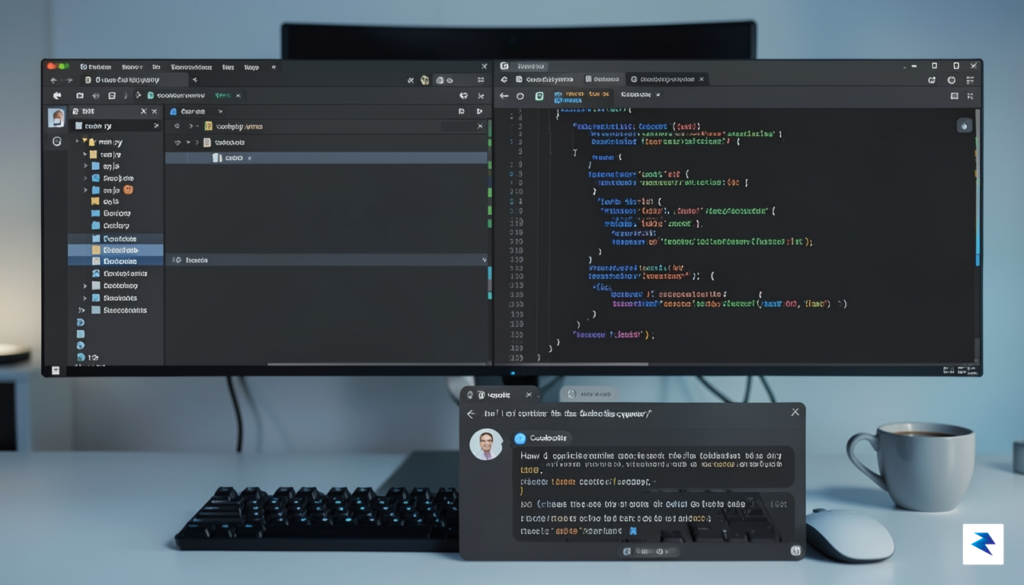
This evolution represents a fundamental change in how we perceive the role of artificial intelligence in the software development lifecycle. We are no longer merely looking for “code completion” tools; we are actively seeking agents capable of acting as junior developers who can interpret a broad project scope and execute changes without breaking legacy functionality. Rigorous, standardized testing is now the only way to distinguish between models that have simply memorized training data and those that possess genuine, emergent reasoning capabilities.
The true test of an AI coding agent is no longer its ability to solve a riddle, but its ability to survive the chaotic, context-dependent nature of a real-world software repository.
By moving beyond isolated puzzles, the industry is forcing a transition toward benchmarks that mirror the daily workflows of engineers. This includes evaluating how models handle IDE integration, how they process feedback from compiler errors, and how effectively they utilize documentation to resolve ambiguities. Ultimately, this pursuit of high-fidelity benchmarking is what bridges the gap between impressive research demos and production-ready tools that developers can actually trust with their day-to-day work.
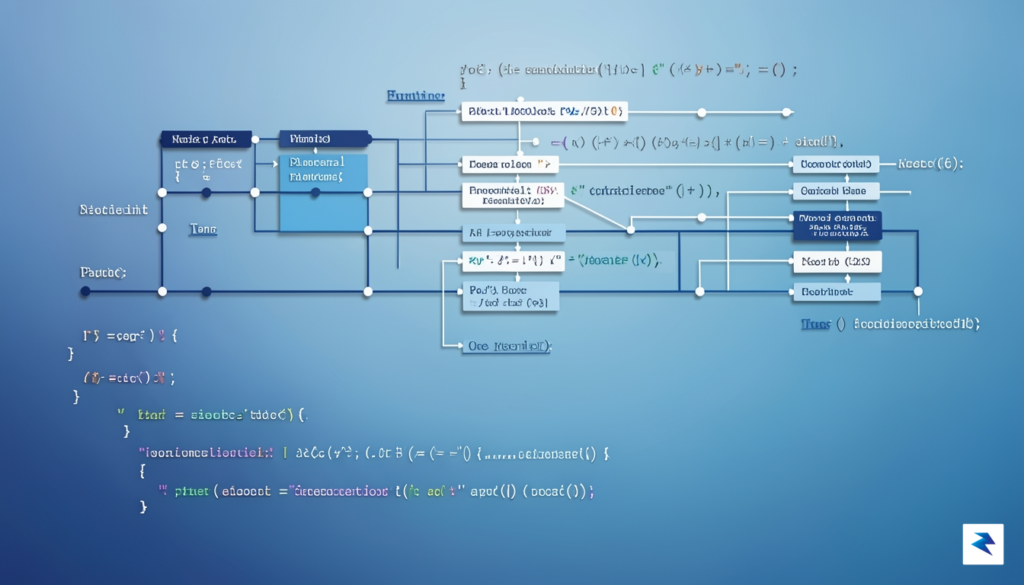
CursorBench 3.1 represents a significant leap forward in how we quantify the effectiveness of AI-driven coding agents. By shifting the focus from simple code generation to complex problem-solving, this iteration introduces a multi-dimensional evaluation framework designed to mimic the reality of modern software engineering. Unlike earlier benchmarks that relied heavily on static snippet completion, version 3.1 prioritizes agentic workflows, where a model must navigate a codebase, understand inter-file dependencies, and execute multi-step logic to reach a functional state. This transition ensures that the metrics reflect not just a model’s linguistic aptitude, but its actual utility in a professional development environment.
The core of the 3.1 update lies in its sophisticated weighting system for multi-file edits. In real-world projects, developers rarely work within a vacuum; a single feature request often requires coordinated changes across configuration files, API controllers, and frontend components. CursorBench 3.1 penalizes models that fail to maintain cross-file consistency, effectively measuring the agent’s ability to hold a global mental model of the repository. By tracking how effectively an AI agent preserves the integrity of existing code while introducing new functionality, we can move beyond superficial accuracy scores and get closer to measuring true developer velocity.
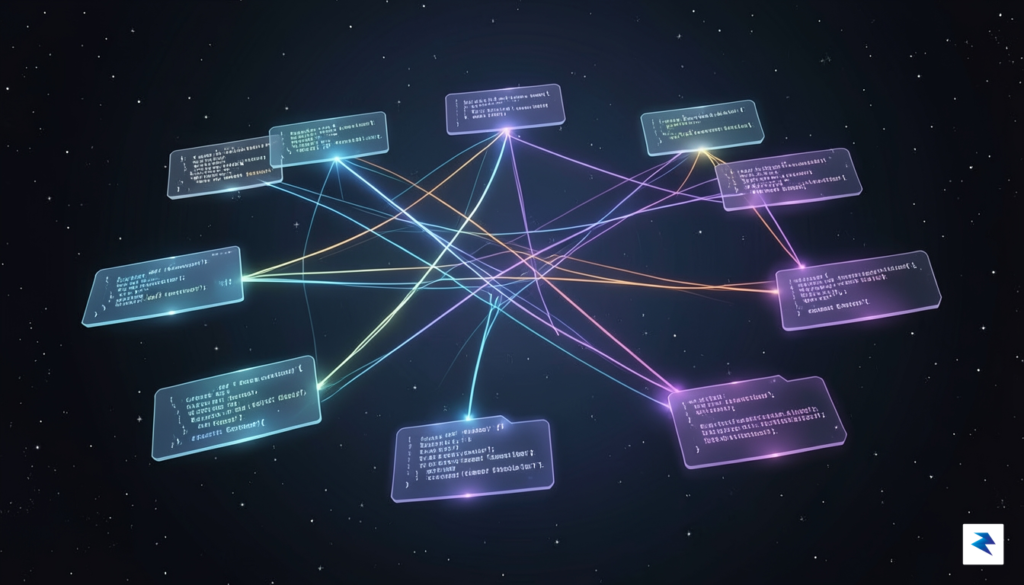
The true test of an AI coding agent is not its ability to write a function, but its capacity to safely modify a complex system without introducing regression errors.
To ensure that these results remain reproducible and actionable, the 3.1 update places a heavy emphasis on reducing environmental noise during testing. Previous benchmarks were often hampered by inconsistent test harnesses, where non-deterministic build environments led to “flaky” results that made it difficult to compare model performance accurately. CursorBench 3.1 mitigates this by implementing a highly standardized, containerized sandbox that enforces strict isolation. By controlling for external variables—such as network latency or fluctuating package installation times—the benchmark ensures that the performance delta between models is strictly a result of their reasoning capabilities rather than the volatility of the test environment itself.
Ultimately, these refinements transform CursorBench 3.1 from a simple testing tool into a comprehensive diagnostic suite. By isolating the variables that contribute to successful code manipulation, the framework provides developers and researchers alike with a clearer roadmap for what constitutes a “high-performing” agent. As we continue to push the boundaries of automation, this rigorous methodology will serve as the baseline for assessing whether new model architectures are truly ready for the demands of production-grade software development.

For years, the industry has relied on isolated function testing to measure the prowess of AI coding models. While benchmarks involving single-file algorithms or snippet generation provide a clean, controlled environment, they are increasingly disconnected from the reality of professional software development. In the real world, a model is rarely tasked with writing a standalone function from scratch; instead, it is expected to navigate sprawling, multi-layered repositories filled with legacy debt, obscure dependencies, and implicit architectural patterns. This is where CursorBench 3.1 shifts the paradigm. By prioritizing repository-level awareness, it treats the entire codebase as the primary unit of evaluation rather than treating a handful of lines as a vacuum-sealed puzzle.
The true challenge of modern software engineering lies in navigating context, not just generating syntax. When an agent is forced to operate within a real-world repository, it must demonstrate an understanding of how a specific change propagates through disparate modules, how to respect existing design patterns, and how to work around the limitations of undocumented legacy code. Traditional benchmarks often suffer from data leakage or oversimplification, where models essentially “memorize” the solutions to common algorithm prompts. CursorBench 3.1 eliminates this shortcut by demanding that the AI act as a true project collaborator, requiring it to parse the intricate web of relationships that define a functioning application.

Moving beyond simple code completion requires a model to master three critical dimensions of development:
Repo-level awareness is the threshold between a glorified autocomplete tool and a genuine AI software engineer.
Ultimately, CursorBench 3.1 forces models to transcend the role of a passive code-generator and assume the role of an active partner. This evaluation framework doesn’t just ask, “Can you write this function?” but rather, “Can you understand this system well enough to improve it?” By measuring performance across these high-stakes, real-world scenarios, we gain a much more accurate picture of which models are ready for professional deployment. As the complexity of our software grows, the ability to maintain a holistic view of a repository will become the definitive metric for distinguishing superior AI coding agents from their less capable counterparts.

At its core, CursorBench 3.1 is not merely a leaderboard of arbitrary numbers; it serves as a functional barometer for the maturity of AI-assisted software engineering. For the working developer, these scores correlate directly to the reduction of cognitive load during the implementation of complex features. When a model achieves a high score on this benchmark, it signifies a proven capability to navigate large codebases, maintain logical consistency across multiple files, and adhere to strict architectural patterns. However, developers should view these metrics as a baseline for reliability rather than a guarantee of autonomous completion. A high score suggests that an agent is likely to minimize the “hallucination frequency” that often plagues junior-level AI tools, allowing you to spend less time debugging the generated output and more time focusing on high-level system design.
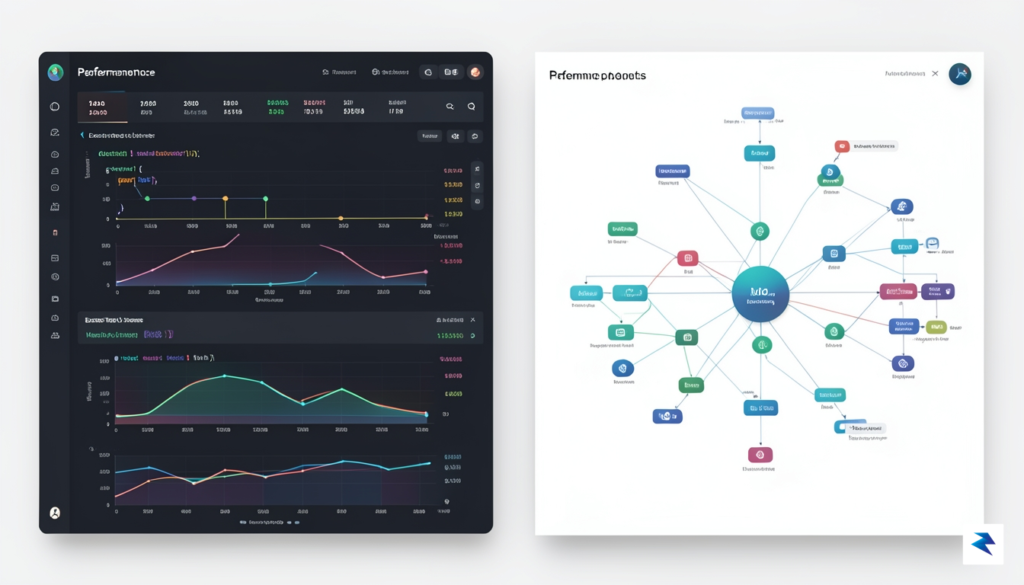
Despite these advancements, it is crucial to recognize the inherent limitations revealed by the latest performance data. While AI agents are becoming exceptionally proficient in boilerplate generation and common utility functions, their effectiveness often drops when dealing with highly niche frameworks, legacy spaghetti code, or proprietary internal libraries. The data within CursorBench 3.1 highlights that while general-purpose logic is now a solved problem for top-tier models, domain-specific deep dives still require human oversight. If your stack relies heavily on rapidly evolving or obscure technologies, the benchmark score should be weighed against the model’s ability to ingest and utilize local documentation. Relying solely on the aggregate performance score can be misleading if the specific language or framework you utilize daily is underrepresented in the model’s training corpus.
The true value of CursorBench 3.1 lies in its ability to highlight the trade-off between speed and architectural integrity; choose your tools based on the complexity of your technical debt, not just the raw speed of code generation.
When evaluating which AI assistant to integrate into your production environment, consider the following hierarchy of needs based on these metrics:
Ultimately, the goal is to shift your perspective from viewing AI as an “oracle” to viewing it as a highly capable, albeit occasionally fallible, pair programmer. By analyzing the breakdown of the CursorBench 3.1 results, you can align the strengths of specific models with the unique bottlenecks in your development lifecycle. Do not let the pursuit of the highest benchmark score distract you from the practical reality of your specific project requirements. Instead, use these findings as a filtering tool to narrow down which assistants are robust enough to handle your codebase’s unique constraints and which are better suited for lighter, standalone tasks.

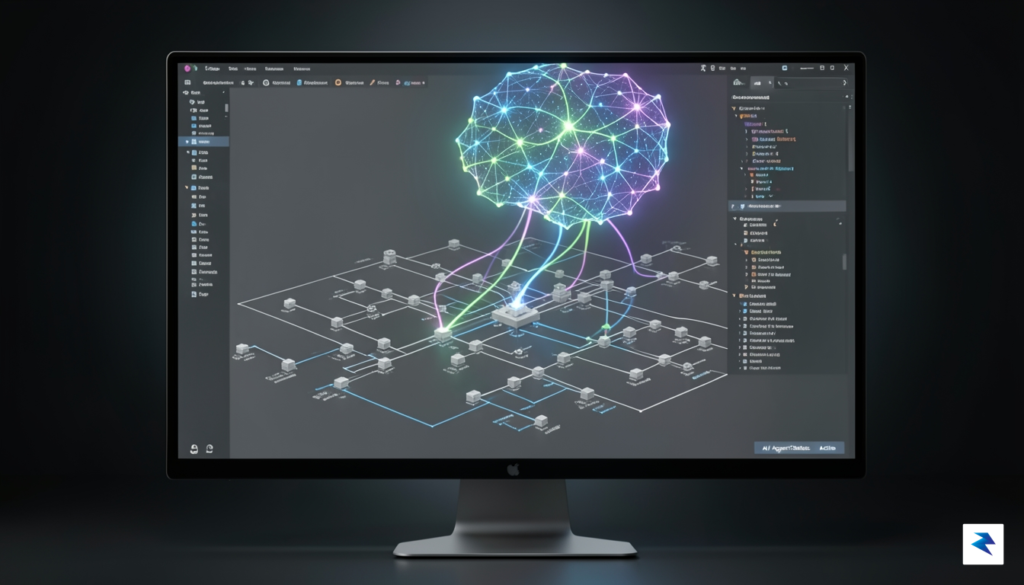
As we look toward the horizon of software development, it is clear that the industry is shifting away from static code completion toward fully autonomous, agentic workflows. CursorBench 3.1 serves as a vital bridge in this transition, moving beyond simple snippet generation to evaluate how effectively an AI can navigate complex, multi-file codebases. The next generation of evaluation frameworks will inevitably move toward “live” environments where models are tasked with the full lifecycle of an application—from initial architecture and debugging to iterative redeployment. This means that future benchmarks must be capable of stress-testing how an agent handles evolving requirements, unforeseen API regressions, and the nuanced constraints of production-grade infrastructure.
Security testing will become a cornerstone of this evolution, as agents granted the autonomy to write and deploy code introduce significant potential for vulnerabilities. Future iterations of benchmarking tools will need to integrate automated red-teaming, where models are assessed not just on their ability to build features, but on their proficiency in identifying security flaws, patching CVEs, and adhering to strict memory-safe coding standards. Furthermore, performance optimization—ensuring that an agent’s code is not only functional but also resource-efficient—will become a metric of equal importance to correctness. As models take on the burden of long-term project maintenance, the benchmarks must evolve to measure the “technical debt” an agent accumulates over time, rewarding systems that produce maintainable, readable, and scalable solutions rather than mere “quick fixes.”
The true measure of an autonomous coding agent is not how fast it can write a function, but how reliably it can sustain a codebase through a thousand lines of change without compromising security or architectural integrity.
Ultimately, the trajectory of AI benchmarking must remain firmly rooted in the principles of open-source transparency. As these evaluation suites become the gatekeepers of model capability, the underlying logic, test cases, and scoring methodologies must be accessible to the broader engineering community. This transparency ensures that we are not simply optimizing for “vanity metrics” or overfitting models to specific test sets, but rather fostering a standard of excellence that benefits all developers. By fostering a collaborative ecosystem for benchmark development, we can ensure that as AI agents grow in power, they do so with a foundation of reliability, security, and accountability that aligns with the best practices of modern software engineering.
You must be logged in to post a comment.