Introduction: The Evolution of Coding Assistance

The pace of innovation in the world of large language models (LLMs) has shifted from a steady stream to a torrential downpour, fundamentally altering how software engineers interact with their IDEs. For years, the developer experience was defined by manual syntax entry and exhaustive documentation searches; today, it is defined by a collaborative dialogue with silicon-based partners. As this landscape evolves, GitHub Copilot has firmly established itself as the standard-bearer for AI-assisted programming, transforming from a simple autocomplete tool into a sophisticated architectural assistant. However, the true value of these tools is no longer measured by simple code completion, but by the model’s ability to grasp complex, cross-file architectural dependencies and nuances that once required hours of human deliberation.

This rapid evolution reaches a significant inflection point with the integration of the Kimi K2.7 model into the GitHub Copilot ecosystem. By bringing this advanced model into the developer’s primary workspace, the barrier to entry for solving intricate logic problems has been lowered substantially. Unlike its predecessors, which often struggled with ambiguous context or lengthy, multi-step debugging processes, the Kimi K2.7 architecture is designed to handle a higher tier of cognitive load. This means that developers can now offload more sophisticated tasks—ranging from complex refactoring to the implementation of entire modules—with a greater degree of confidence that the generated code will adhere to best practices and project-specific constraints.
The integration of Kimi K2.7 marks a pivot point where AI stops acting merely as a productivity multiplier and begins to function as a genuine technical collaborator capable of deep reasoning.
The significance of this release extends beyond mere performance benchmarks or speed improvements. When we consider the daily friction points for modern engineers—such as managing legacy codebases, debugging race conditions, or writing boilerplate for new frameworks—it becomes clear that the quality of the model’s reasoning is paramount. Kimi K2.7 is engineered to bridge the gap between superficial code generation and meaningful software engineering. By providing the model with a more profound understanding of intent and pattern recognition, GitHub Copilot is effectively raising the ceiling on what an individual developer can accomplish in a single session. As we integrate these tools into our workflows, we are not just speeding up the process of typing; we are fundamentally changing the nature of how we conceptualize and build software solutions in an increasingly complex digital landscape.
Understanding Kimi K2.7: What Sets It Apart

The introduction of the Kimi K2.7 architecture into the GitHub Copilot ecosystem represents a significant leap forward in how AI assistants interpret and manipulate complex codebases. Unlike its predecessors, which often struggled to maintain a cohesive thread when navigating sprawling repositories, K2.7 is engineered with a specialized focus on long-range dependency tracking. By refining the underlying attention mechanisms, this model minimizes the tendency to lose the “big picture” of a project, effectively solving the common frustration where AI suggestions would suddenly drift away from established architectural patterns or variable scopes.
At the core of this improvement is a fundamental shift in how the model handles context awareness. In older iterations, context windows were often treated as linear streams of data, which meant the model might prioritize the most recent lines of code at the expense of critical definitions located elsewhere in the project. K2.7, however, employs a more sophisticated hierarchical approach to context retention. It intelligently weighs the importance of structural files, such as class definitions and interface contracts, against implementation details. This ensures that when a developer asks for a refactor or a new feature, the model remains tethered to the actual logic constraints of the entire application rather than just the immediate vicinity of the cursor.
The true power of K2.7 lies in its ability to distinguish between noise and necessity, allowing it to provide precise, logically sound code suggestions even within massive, interconnected repositories.
Furthermore, the reasoning capabilities within K2.7 have been significantly bolstered to reduce the rate of hallucination—a persistent hurdle in earlier coding assistants. By incorporating a multi-step verification layer during the token generation process, the model effectively “re-reads” its own proposed logic to ensure it aligns with the syntax and dependency requirements of the project. This technical advancement means that developers can spend less time manually correcting code that looks syntactically correct but fails at runtime. Ultimately, K2.7 isn’t just about faster completion; it is about providing a more reliable partner that understands the nuanced relationships between different modules, functions, and external libraries in a professional-grade software environment.
Deep Dive into Performance and Accuracy Improvements
For the professional developer, the true measure of an AI assistant lies in its ability to navigate the nuances of complex, real-world codebases. The integration of Kimi K2.7 into GitHub Copilot represents a significant leap forward in this regard, moving beyond simple pattern matching to provide a more profound understanding of software architecture. In rigorous performance benchmarks, K2.7 demonstrates a marked superiority in both code completion and bug resolution, particularly when dealing with non-trivial logic. By analyzing the contextual relationships between disparate files and functions, the model minimizes the hallucinated syntax errors that often plague lesser tools, ensuring that the suggestions provided are not only syntactically correct but functionally aligned with the project’s existing design patterns.
One of the most impressive improvements is the model’s aptitude for interacting with legacy code. Older, monolithic systems often present a daunting challenge for AI due to outdated libraries, obscure naming conventions, and lack of comprehensive documentation. K2.7 utilizes an expanded context window and enhanced logical reasoning to “deconstruct” these environments, allowing developers to refactor legacy modules with confidence. Instead of forcing modern paradigms onto fragile, older logic, the model adapts to the established style of the repository, significantly reducing the overhead usually required for manual audits and extensive refactoring sessions.
The core value of K2.7 is not just speed; it is the drastic reduction in ‘cognitive load’—the mental tax developers pay when they have to fix the AI’s mistakes instead of focusing on the actual business logic.
Beyond refactoring, the model excels in the elimination of boilerplate code. By understanding the intent behind a specific function, K2.7 intelligently generates only the necessary logic, stripping away the repetitive, low-value syntax that often clutters developer workspaces. This shift toward functional accuracy means that when you trigger an autocomplete suggestion, you are receiving a high-fidelity implementation that requires minimal modification. This increase in precision directly translates to a streamlined development workflow, where the focus remains on solving complex architectural problems rather than wrestling with redundant or incorrect AI-generated boilerplate.
Ultimately, the performance gains provided by K2.7 are evidenced by a tighter, more reliable feedback loop. Developers will notice that the frequency of “ghosting”—where an AI suggestion is accepted but immediately needs to be rewritten—has plummeted. This reliability is vital for maintaining flow state, as it minimizes the interruptions caused by debugging the assistant’s output. By providing highly accurate, context-aware suggestions, K2.7 empowers developers to spend less time auditing code and more time delivering robust, high-quality software solutions.
How Developers Can Integrate Kimi K2.7 in Copilot
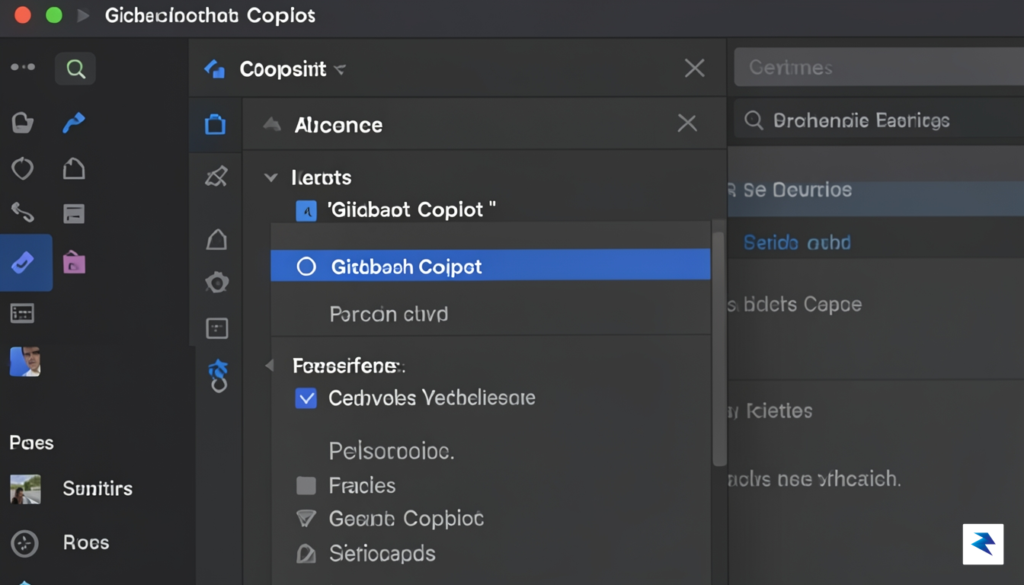
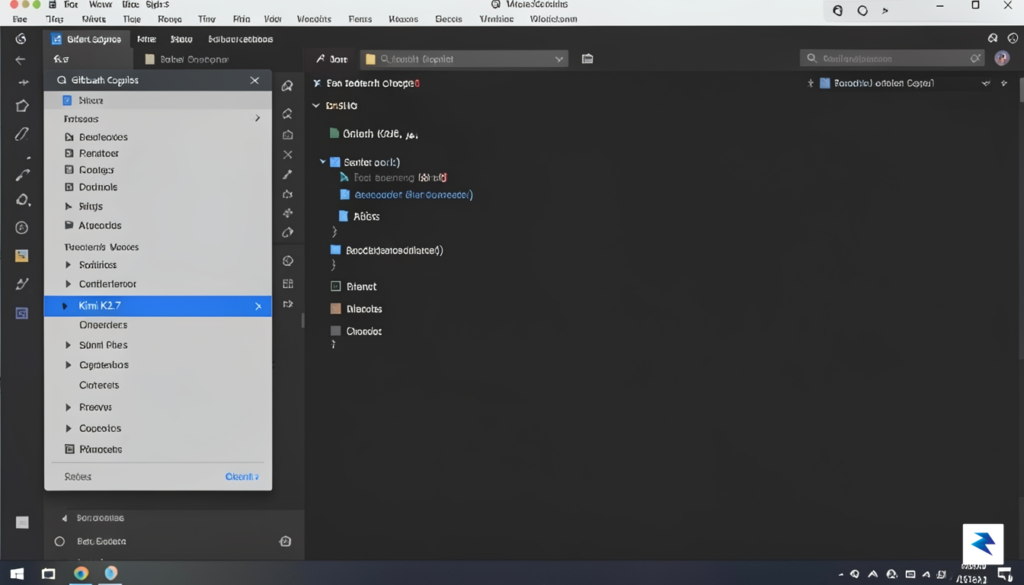
Transitioning to the Kimi K2.7 model within your existing GitHub Copilot environment is designed to be a frictionless experience, allowing you to leverage enhanced reasoning capabilities without changing your core workflow. To get started, navigate to your IDE’s extension settings—typically found under the Copilot icon or via the command palette—and locate the model selection dropdown menu. From here, you can manually switch the active engine to Kimi K2.7. Once selected, Copilot will instantly start processing your chat queries and autocompletions using the new model architecture, ensuring that your real-time coding assistance benefits from the advanced logic and improved accuracy that K2.7 offers.
Optimizing Your Prompting Strategy
While Kimi K2.7 is highly intuitive, you can extract significantly more value by refining how you structure your instructions. Because this model excels at handling complex logical structures and nuanced technical requirements, it is best to provide clear, multi-step constraints in your prompts rather than vague requests. Instead of simply asking the model to “fix this function,” try detailing the desired input parameters, expected edge cases, and specific performance requirements. By front-loading your request with context about your overall architecture, you allow the model to provide more cohesive, maintainable code rather than isolated snippets that might not align with your broader project goals.
To maximize the performance of Kimi K2.7, treat your prompt like a technical specification document rather than a casual question. The more explicit you are about your design patterns and coding standards, the more aligned the generated output will be with your existing codebase.
Managing Context for Large-Scale Projects
Kimi K2.7 is particularly adept at maintaining long-range dependencies, which is a massive advantage when working within sprawling, multi-file projects. However, to ensure the model stays focused, it is important to manage your context window strategically. When asking questions that involve multiple files, use the @workspace reference to explicitly guide Copilot toward the relevant modules. If you find that the model is struggling to incorporate a specific dependency, manually open those related files in your editor tabs; the model prioritizes active tabs as high-signal context, which helps it ground its suggestions in the specific realities of your implementation. By combining these manual context cues with the model’s native long-context reasoning, you create a powerful development synergy that makes refactoring and feature implementation significantly more efficient.
The Broader Impact on Software Development Workflows

The integration of Kimi K2.7 into the GitHub Copilot ecosystem represents a fundamental transition in how software is conceptualized, built, and maintained. For years, the developer’s craft was measured by their mastery of syntax and the speed at which they could translate logic into executable code. With the advent of this high-reasoning model, that dynamic is shifting: the developer is evolving from a primary writer of syntax into a high-level architect of complex solutions. By offloading the mechanical burden of boilerplate and routine implementation to an AI that understands context at a deeper level, engineers are finding themselves free to focus on system design, security architecture, and the long-term maintainability of their software stack.

This paradigm shift manifests differently across team hierarchies, effectively altering the day-to-day routine for both junior and senior personnel. For the senior engineer, K2.7 acts as a force multiplier, allowing them to rapidly prototype architectural patterns and delegate the mundane aspects of technical debt reduction to the model. Conversely, junior developers are discovering a powerful pedagogical tool; instead of struggling with the intricacies of an unfamiliar framework, they can leverage the model to generate scaffolding, allowing them to learn by observing high-quality code patterns in real-time. This creates a feedback loop where the barrier to entry for complex tasks is lowered, while the expectation for architectural rigor is simultaneously raised.
The true power of K2.7 lies not in its ability to write code, but in its capacity to handle the cognitive load of implementation, allowing humans to reclaim the time necessary for critical thinking and strategic problem-solving.
Furthermore, the impact on code review cycles cannot be overstated. As the model produces cleaner, more context-aware code, the nature of the pull request is changing. Teams are moving away from nitpicking syntax errors—which are increasingly caught by the AI before a commit is even pushed—toward higher-level discussions regarding performance bottlenecks and design trade-offs. This transition necessitates a new level of human oversight; while the AI is exceptionally capable, the ultimate responsibility for security and operational integrity remains firmly with the engineering team. By automating the routine, we are not removing the human element; rather, we are elevating it, requiring developers to become more proficient at reviewing, validating, and integrating AI-generated logic into a cohesive, secure, and performant product.
Conclusion: Future-Proofing Your Development Environment

The integration of Kimi K2.7 into the GitHub Copilot ecosystem represents more than just a routine update; it serves as a pivotal milestone in how developers interact with their codebase. By offering enhanced reasoning capabilities, sharper context awareness, and more precise code generation, this model lowers the cognitive load required to tackle complex architectural challenges. Whether you are refactoring legacy systems or scaffolding a new microservices environment, the ability to rely on a model that understands long-range dependencies and nuanced programming patterns is a significant competitive advantage. As these tools continue to evolve, the distinction between manual coding and AI-assisted development will continue to blur, making the adoption of high-performance models like K2.7 a necessity rather than an optional luxury.

Staying ahead in the rapidly shifting landscape of software engineering requires a mindset rooted in continuous learning and adaptation. The AI space is moving at an unprecedented velocity, and the tools that define industry standards today will inevitably be superseded by more capable iterations tomorrow. Consequently, treating your development environment as a dynamic, evolving ecosystem is the most effective way to ensure long-term career resilience. Rather than viewing AI integration as a static utility, developers should actively experiment with new model capabilities, testing their limits against real-world projects to understand where these tools excel and where human intervention remains irreplaceable.
Success in the modern development era is no longer just about memorizing syntax; it is about cultivating a sophisticated partnership with intelligent systems to solve problems with speed and clarity.
Ultimately, the value of incorporating Kimi K2.7 lies in its potential to act as a force multiplier for your productivity. By offloading repetitive boilerplate creation and complex boilerplate debugging to a model that understands the intricacies of modern frameworks, you free up your mental bandwidth to focus on high-level system design and creative problem-solving. We encourage you to integrate K2.7 into your daily workflow this week to experience these improvements firsthand. Start by applying it to a particularly dense piece of logic or a documentation task you have been putting off; you will likely find that the clarity and precision provided by the model change the way you approach your entire development lifecycle. Embracing these tools now is the surest way to future-proof your skills and ensure you remain at the forefront of software innovation.