Getty Scraps $3.7B Shutterstock Merger: Why Regulators Stepped In
The Collapse of the Getty-Shutterstock Merger The landscape of digital media licensing witnessed a seismic shift this week as the proposed…
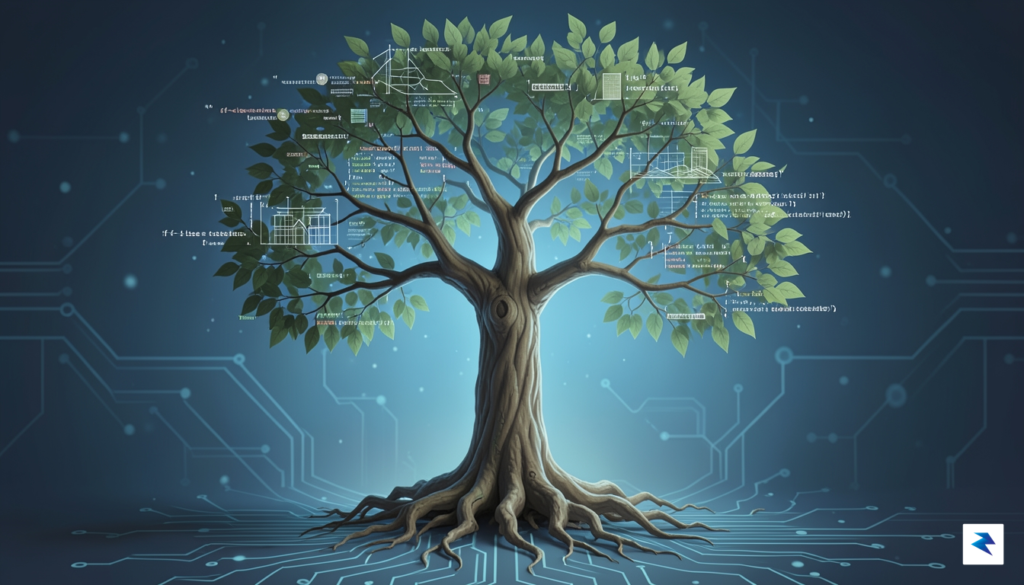
For the better part of the last decade, our primary methods for evaluating AI coding capabilities have relied on isolated, algorithmic puzzles. Benchmarks like HumanEval and MBPP transformed the field by testing models on their ability to solve discrete functions, such as sorting a list or calculating prime numbers. While these metrics were instrumental in the early days of Large Language Models, they essentially functioned as digital “leetcoding” interviews. They measured a model’s grasp of syntax and basic logic, but they failed to account for the messy, interconnected reality of professional software development. Solving a single function in a vacuum is a far cry from debugging a race condition in a distributed system or refactoring a legacy codebase to support a new API.
As AI assistants have migrated from simple autocomplete tools to proactive coding agents, the limitations of these synthetic benchmarks have become glaringly apparent. We have hit a plateau where models can achieve near-perfect scores on traditional tests while still struggling to perform the actual work of a junior developer. The core issue lies in the lack of context; real-world engineering is not about writing clever one-liners, but about navigating complex dependency graphs, understanding system architecture, and interpreting documentation across hundreds of disparate files. Current benchmarks often treat a codebase as a flat list of files rather than a living, breathing ecosystem where every change has cascading ripple effects.
The emergence of SWE-Bench marked a significant leap forward by requiring models to resolve actual GitHub issues, but even this standard is beginning to feel like a baseline rather than a ceiling. To distinguish between a tool that can “write code” and an agent that can function as a “senior engineer,” we must demand more than just successful unit tests. A senior engineer is defined by their capacity for high-level reasoning, their ability to conduct thorough impact analyses, and their intuition for system maintenance. True professional capability requires an agent to weigh trade-offs between performance and technical debt, a nuance that simple pass-fail metrics on isolated snippets simply cannot capture.
The leap from “coding assistant” to “autonomous engineer” hinges on an AI’s ability to maintain state across massive repositories, synthesize disparate documentation, and prioritize long-term system health over immediate, localized fixes.
This evolution in benchmarking is essentially a shift from measuring “syntax fluency” to measuring “architectural competence.” By moving toward frameworks that emphasize long-context reasoning and multi-file navigation, we are finally aligning our evaluation methods with the actual responsibilities of the professional software engineer. Without this shift, we risk being blinded by high scores on trivial tasks while ignoring the deeper, structural intelligence required to build reliable, scalable software in the real world.
While large language models (LLMs) have demonstrated impressive capabilities in generating code, debugging simple functions, and even writing boilerplate, their true prowess as comprehensive software engineering agents remains largely untested. The existing landscape of benchmarks, while valuable, often confines these advanced AI systems to tasks that, frankly, fall within the realm of a junior developer: isolated bug fixes, well-defined feature additions, or generating code snippets for specific, contained problems. This approach, while proving a foundational understanding of syntax and basic logic, inadvertently creates a comfort zone for LLMs, failing to challenge them with the true complexities of real-world software development.
This is precisely where Senior SWE-Bench emerges as a critical new standard. It’s an open-source benchmark meticulously designed to push AI agents beyond these junior-level confines, directly addressing the significant gap between mere ‘coding’ and genuine ‘engineering’. Unlike its predecessors, Senior SWE-Bench doesn’t present agents with neatly packaged, self-contained problems. Instead, it immerses them in the messy reality of large, evolving codebases, presenting repository-level issues that demand a far deeper understanding of system architecture, interconnected components, and the historical context of a project.
The methodology underpinning Senior SWE-Bench is rigorous and refreshingly realistic. Agents are confronted with complex problems within real-world open-source repositories, often requiring them to navigate unfamiliar legacy code, decipher intricate dependencies, and understand how changes in one module might ripple through an entire system. This isn’t about writing a new function from scratch; it’s about diagnosing a subtle performance bottleneck across multiple services, refactoring a core component without introducing regressions, or implementing a new feature that integrates seamlessly into an existing, often sprawling, architecture. Such tasks necessitate an agent to build a comprehensive mental model of the entire project, something that current benchmarks rarely, if ever, demand.
Furthermore, Senior SWE-Bench deliberately incorporates challenges that compel agents to make nuanced architectural trade-offs. A senior engineer doesn’t just fix a bug; they consider the long-term maintainability of the solution, its impact on scalability, security implications, and potential future extensibility. The benchmark evaluates an agent’s ability not only to propose a technical solution but also to justify its design choices, weigh the pros and cons of different approaches, and demonstrate an understanding of the broader implications of their decisions. This moves the assessment firmly from mere execution to strategic problem-solving, a hallmark of experienced human engineers who can balance immediate needs with future resilience.
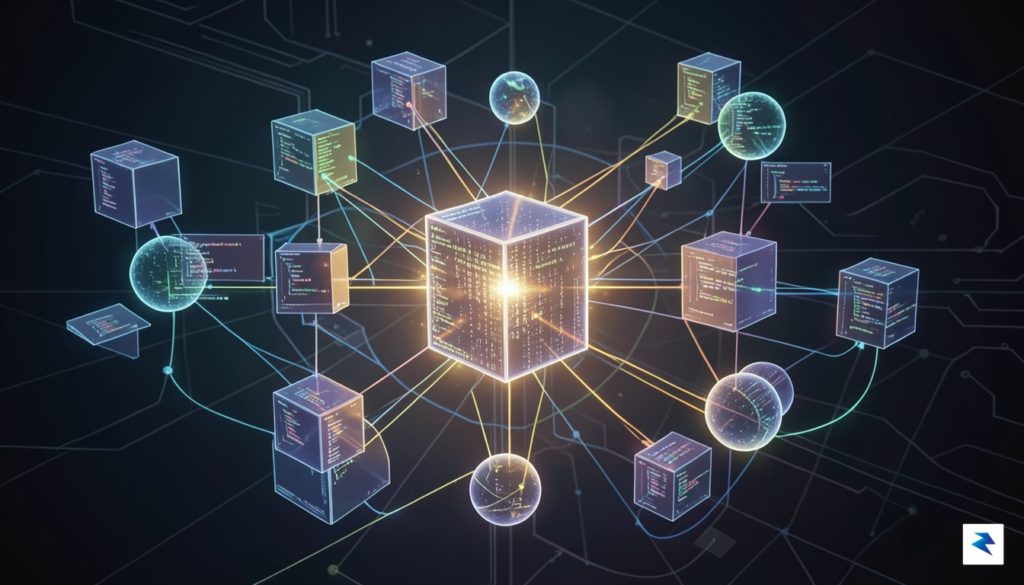
Ultimately, Senior SWE-Bench represents a pivotal shift in how we evaluate AI’s capabilities in software engineering. By forcing agents out of their comfortable, isolated sandboxes and into the demanding, multi-faceted environment of senior-level development, it provides an unprecedented lens into their true potential. This benchmark is not just about measuring an agent’s ability to write code; it’s about gauging its capacity for critical thinking, architectural foresight, and the kind of holistic problem-solving that defines a truly exceptional engineer. It sets a new, higher bar, propelling the development of AI systems that can genuinely contribute at the most strategic levels of software construction.
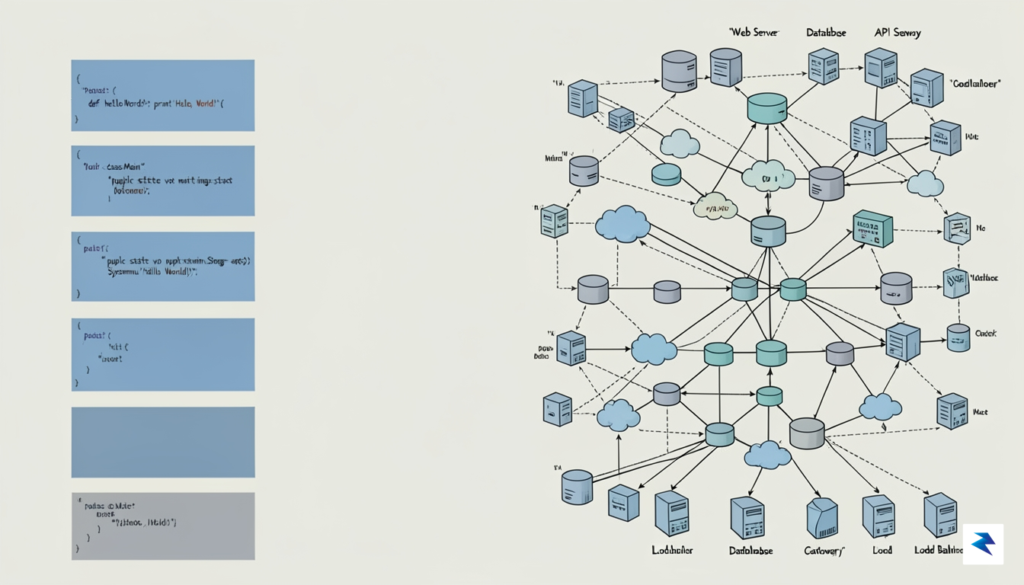
In the professional world of software development, the distinction between a junior contributor and a senior engineer rarely boils down to the mastery of syntax or the speed at which one can type out an algorithm. Instead, seniority is defined by a sophisticated capacity for foresight and a deep-seated understanding of the system’s lifecycle. A senior engineer operates with the knowledge that code is a living, breathing entity; they anticipate how a minor change in a utility function might ripple across a massive, legacy codebase, potentially causing unexpected failures in downstream services. They are the architects who weigh the immediate necessity of a feature against the creeping burden of technical debt, making deliberate trade-offs that favor long-term maintainability over quick-fix solutions.
Mapping these human-centric qualities to artificial intelligence is the fundamental challenge of modern benchmarks. Most existing evaluation tools test an agent’s ability to solve isolated problems or complete algorithmic puzzles, which often amounts to little more than high-speed coding. However, Senior SWE-Bench shifts the paradigm by presenting agents with authentic, real-world engineering hurdles. These tasks require the AI to navigate sprawling repositories where the documentation is outdated, dependencies are tangled, and requirements are intentionally ambiguous. To succeed, an agent must demonstrate the same critical thinking skills a human developer uses during a complex refactor or a multi-day bug investigation.

The benchmark achieves this by curating tasks that demand more than just pattern matching; they demand strategic, multi-step reasoning. An agent tasked with a “senior-level” objective on this platform must first perform a comprehensive impact analysis, exploring how different modules interact before committing to a single line of code. This mimics the professional software development workflow, where the primary risk is rarely the implementation itself, but rather the unforeseen side effects introduced into the existing infrastructure. By forcing agents to manage dependencies, adhere to project-specific coding standards, and verify their solutions against complex test suites, the benchmark effectively measures whether an AI can act as a reliable partner in a professional environment.
True seniority in software engineering is not found in the code that is written, but in the potential disasters that are prevented through rigorous planning and a holistic view of the system’s architecture.
Ultimately, by raising the bar beyond simple functional correctness, Senior SWE-Bench forces us to confront the true definition of agentic capability. It pushes developers to build models that don’t just “write code,” but that understand the broader context of the business logic and the fragility of the systems they touch. Whether it is navigating a circular dependency or deciding when to refactor rather than patch, the benchmark ensures that the AI’s success is measured by its ability to emulate the judgment, caution, and technical wisdom expected of a seasoned professional.
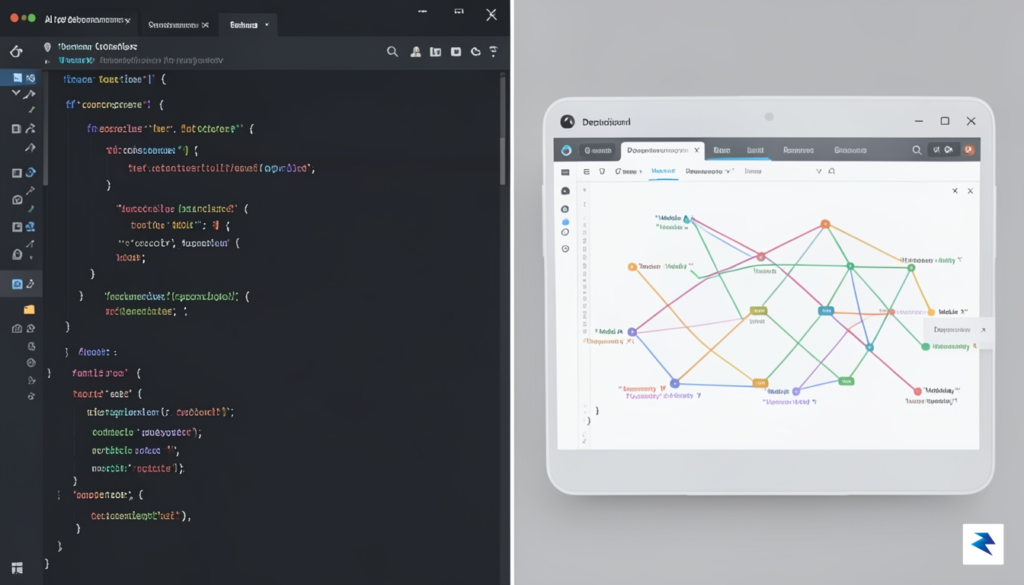
Engineering in a professional setting rarely involves pristine, modular codebases designed for easy manipulation. Instead, software developers frequently find themselves navigating “spaghetti code,” legacy systems that lack updated documentation, and circular dependencies that can baffle even the most experienced human engineers. Senior SWE-Bench acknowledges this reality by moving away from the sanitized, toy-problem environments common in early AI research. By pulling from authentic, large-scale repositories, the benchmark forces agents to grapple with the friction inherent in production software, where a simple fix often requires understanding how a minor change might ripple across hundreds of interconnected files.
The technical architecture of the benchmark is specifically designed to test an agent’s ability to perform deep, contextual reasoning rather than simple pattern matching. When an agent is tasked with solving an issue, it must navigate massive dependency trees and build configurations that are often brittle or poorly maintained. This process simulates the iterative debugging cycle that consumes the majority of a senior engineer’s time. Instead of receiving a clean specification, the agent is dropped into a workspace that reflects the entropy of real-world development, where it must interpret logs, parse obscure error messages, and verify its own work through a series of increasingly complex test suites.
Furthermore, the evaluation criteria for Senior SWE-Bench are uniquely calibrated to penalize agents that fail to account for long-term system stability. In a production environment, an agent cannot simply patch a bug; it must ensure that the fix does not introduce regressions or violate existing architectural constraints. To succeed, the agent must exhibit a sophisticated understanding of:
True mastery in AI engineering is not defined by the ability to write new code, but by the capacity to surgically modify existing systems without causing cascading failures.
By requiring agents to operate within these constrained and often chaotic environments, the benchmark identifies those capable of “senior-level” behavior. A successful agent is one that can handle the ambiguity of sparse information and the technical debt of a decades-old project. This shift from testing code generation to testing code maintenance and debugging represents a critical maturation in the field of AI, moving us closer to agents that can serve as reliable, autonomous partners in a professional engineering workflow.
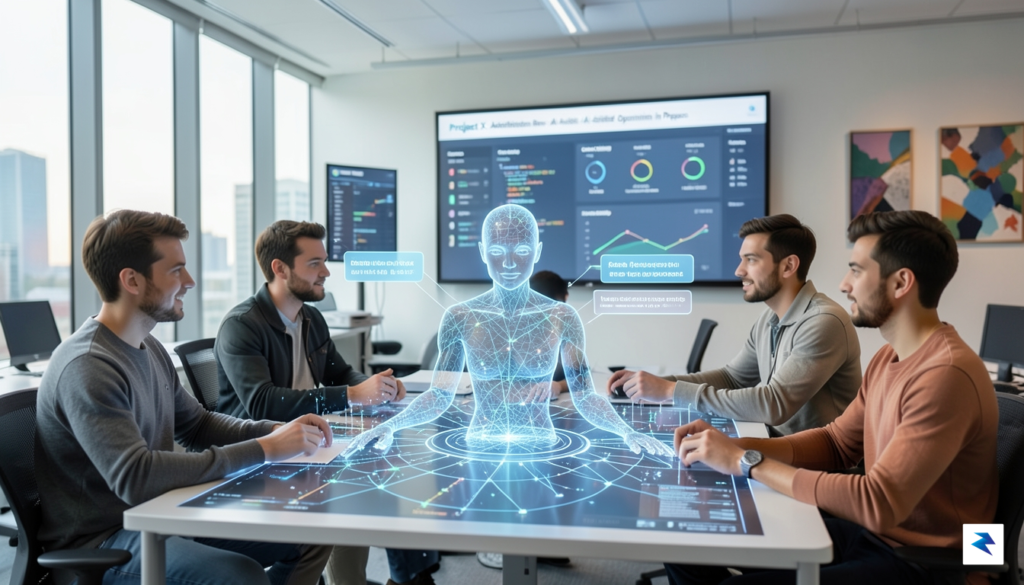
The emergence of rigorous evaluation frameworks like Senior SWE-Bench marks a decisive shift in how we measure artificial intelligence capabilities. For years, the industry relied on general-purpose benchmarks that struggled to distinguish between a model that could solve a simple logic puzzle and one that could navigate a sprawling, undocumented codebase. By forcing agents to grapple with the complexities of real-world software engineering—such as managing dependencies, interpreting legacy code, and adhering to strict testing protocols—this benchmark effectively raises the floor for what constitutes a viable agent. This transition suggests that we are moving away from the era of “chat-based” assistance and into an era of “autonomous execution,” where the ability to plan, iterate, and verify output becomes the primary metric of success.
This new standard is already catalyzing a rapid evolution in how developers build agentic frameworks. Rather than prioritizing raw parameter counts or generic conversational fluency, research teams are now incentivized to focus on long-horizon reasoning and error correction loops. When an agent is measured against the high bar of a senior engineer, the data reveals specific “intelligence gaps” that have long remained hidden, such as the inability to maintain context across multiple files or the failure to anticipate the side effects of a code change. By identifying these recurring failure points, researchers can now pivot toward more specialized architectures that emphasize systemic awareness and defensive programming, ultimately leading to more reliable, production-ready AI agents.
The true impact of this benchmark lies not just in the score an agent achieves, but in the diagnostic clarity it provides, exposing the exact cognitive thresholds that separate a helpful assistant from a truly autonomous collaborator.
Looking ahead, the influence of these benchmarks will likely reshape the enterprise landscape by establishing a clear ROI for AI integration. As businesses become more comfortable adopting agents that have been “stress-tested” against professional engineering standards, we expect to see a surge in autonomous workflows that handle complex maintenance tasks, infrastructure management, and debugging. This maturation process will force a fundamental change in the developer’s role: the human engineer will transition from a manual code-writer to an orchestrator of intelligent systems. By setting a high bar for agentic performance today, we are paving the way for a future where AI does not just support the development lifecycle but actively drives it, ensuring that software becomes more scalable, secure, and robust than ever before.

For researchers and AI practitioners, viewing Senior SWE-Bench merely as a leaderboard is a missed opportunity; it should be treated as a sophisticated diagnostic instrument for debugging the reasoning capabilities of large language models. The first step toward leveraging this benchmark is a rigorous analysis of failure modes. By decomposing the tasks where an agent fails—whether it is a hallucinated function call, a missed dependency, or an inability to navigate deep directory structures—teams can pinpoint exactly which cognitive “muscle” is underdeveloped. Instead of broad retraining, this granular data allows for targeted interventions, such as focused fine-tuning on repository navigation tasks or architectural decision-making processes.
Once specific failure patterns are identified, the Snorkel-provided data becomes an invaluable asset for fine-tuning. Rather than feeding raw, unorganized code into a model, researchers can utilize this curated dataset to teach agents the nuances of senior-level software engineering—such as how to weigh trade-offs between performance and maintainability, or how to write tests that actually validate edge cases. This process transforms the agent from a simple code generator into a system that understands context, ownership, and the long-term impact of its changes. By systematically incorporating these examples into the training loop, you can bridge the gap between “script-kiddie” coding ability and true, production-grade engineering competence.
Beyond model weights, the architecture surrounding the agent plays a pivotal role in performance on large-scale repositories. Many agents stumble because their retrieval-augmented generation (RAG) strategies are too shallow, pulling in irrelevant snippets while missing crucial definitions buried in configuration files or secondary modules. To improve performance, developers should implement context-aware retrieval mechanisms that prioritize semantic relationships across the codebase. Instead of relying on simple keyword matching, utilize graph-based representations of the repository to ensure that the agent understands the inheritance chains and call stacks relevant to the issue at hand.
Success in Senior SWE-Bench is rarely about the model size; it is about the agent’s ability to navigate complexity, synthesize massive amounts of documentation, and verify its own work through iterative testing.
Ultimately, the goal is to shift from reactive patching to proactive problem solving. By integrating these strategies—meticulous error analysis, high-quality fine-tuning data, and sophisticated RAG pipelines—teams can move past the current limitations of AI engineering. This benchmark serves as the proving ground for these improvements, allowing you to iterate rapidly while ensuring that every change moves the agent closer to the reliability expected of a seasoned human engineer. When you treat the benchmark as an iterative feedback loop rather than a static test, you unlock a path toward building truly autonomous, high-performing coding assistants.
You must be logged in to post a comment.