The AI-Washing Crisis: Why Even Sandwich Shops Are Claiming Tech Innovation
The Sandwich Shop Paradox: Why AI is Everywhere In an era where technological innovation is lauded above all else, "artificial intelligence"…
The recent debut of IQM on the Nasdaq stock exchange represents far more than a routine financial transaction; it serves as a watershed moment for the European deep-tech landscape. As the continent’s first pure-play quantum computing firm to go public, IQM has effectively broken the glass ceiling for a sector that has long been dominated by massive US conglomerates and heavily guarded venture capital rounds. With a valuation reaching $1.9 billion, the company has signaled to global investors that Europe is not merely a bystander in the quantum race, but a serious contender capable of building scalable, commercially oriented infrastructure. This move shifts the narrative from theoretical research to market-ready hardware, positioning the company as a flagship entity for European technological sovereignty in an era where computational power is increasingly synonymous with national security and economic independence.

Central to this achievement is the role of Finland, which has quietly solidified its reputation as a global hub for quantum research and development. By leveraging a unique ecosystem that bridges academia, government support, and private enterprise, IQM has managed to cultivate a talent pool and a specialized supply chain that remains the envy of many larger nations. This Finnish success story underscores the importance of regional clustering, where proximity to world-class research institutes like Aalto University provides a fertile ground for the iterative, high-risk work required to stabilize quantum processors. The company’s ability to scale within this specific environment demonstrates that world-changing technology does not always have to emerge from the typical Silicon Valley mold to capture the attention of international equity markets.
The transition from a research-focused startup to a publicly traded corporation acts as a stress test for the entire quantum industry, forcing a reckoning between ambitious long-term roadmaps and the immediate, bottom-line expectations of public shareholders.
However, the fanfare surrounding this IPO is tempered by a broader, industry-wide period of introspection. While the $1.9 billion valuation is undeniably impressive, it arrives during a time when the global investment community is beginning to ask difficult questions about the actual path to commercial viability. For years, the promise of quantum computing was fueled by venture capital willing to wait a decade for a return, but the transition to the public market brings a heightened level of scrutiny regarding revenue models, hardware reliability, and the timeline for practical “quantum advantage.” As IQM steps into this spotlight, it carries the weight of an entire ecosystem on its shoulders; its performance will likely serve as a bellwether for whether the market is truly ready to support the next generation of computing, or if the transition from lab-grown innovation to Wall Street staple is still premature.

For years, the narrative surrounding quantum computing was defined by aggressive promises and a sense of inevitable, immediate disruption. However, as the industry matures, a necessary shift toward cautious optimism has taken hold. Companies like IQM are moving away from the breathless speculation that characterized the early experimental phase, choosing instead to anchor their public communications in the harsh realities of engineering. This transparency is not an admission of failure, but rather a sign of industrial maturity; acknowledging that we are still in the early stages of a marathon—not a sprint—allows stakeholders to better understand the true scale of the technical hurdles ahead.
The primary challenge remains the daunting gap between our current capabilities and the elusive goal of “Quantum Advantage.” We are currently living through the Noisy Intermediate-Scale Quantum (NISQ) era, a period defined by devices that are powerful enough to perform specialized tasks but remain plagued by decoherence and high error rates. These qubits are notoriously fragile, requiring extreme environments and sophisticated error correction that current hardware is only beginning to approximate. Transitioning from these “noisy” machines to fully fault-tolerant quantum computers is perhaps the most significant engineering challenge of the 21st century, requiring not just better hardware, but breakthroughs in materials science, cryogenics, and algorithmic resilience.
True progress in deep tech is rarely linear; it is defined by the steady, iterative resolution of fundamental physics problems that once seemed insurmountable.
By prioritizing transparency, IQM is effectively setting a new standard for how deep-tech companies interact with the public and their investors. Instead of masking the slow, incremental nature of research and development, they are framing it as a disciplined process of discovery. This strategy serves as a buffer against the “quantum winter” skepticism that often follows periods of over-hyped expectations. When a company admits that the timeline for universal quantum supremacy is decades away rather than months, it builds long-term credibility. Investors and the public are no longer being sold a miracle; they are being invited to participate in a complex, multi-stage evolution of computational power that prioritizes robust, scalable infrastructure over short-term PR wins.
Ultimately, the industry’s pivot from hype to utility represents a transition from a speculative bubble to a genuine sector of the global economy. The focus has moved from abstract performance benchmarks to practical applications—such as material science simulations and optimized logistics—that can provide tangible value as the technology scales. By grounding their public narrative in these realities, IQM is ensuring that the quantum ecosystem remains resilient to market volatility, fostering a culture of patience that is essential for technologies of this magnitude to succeed.
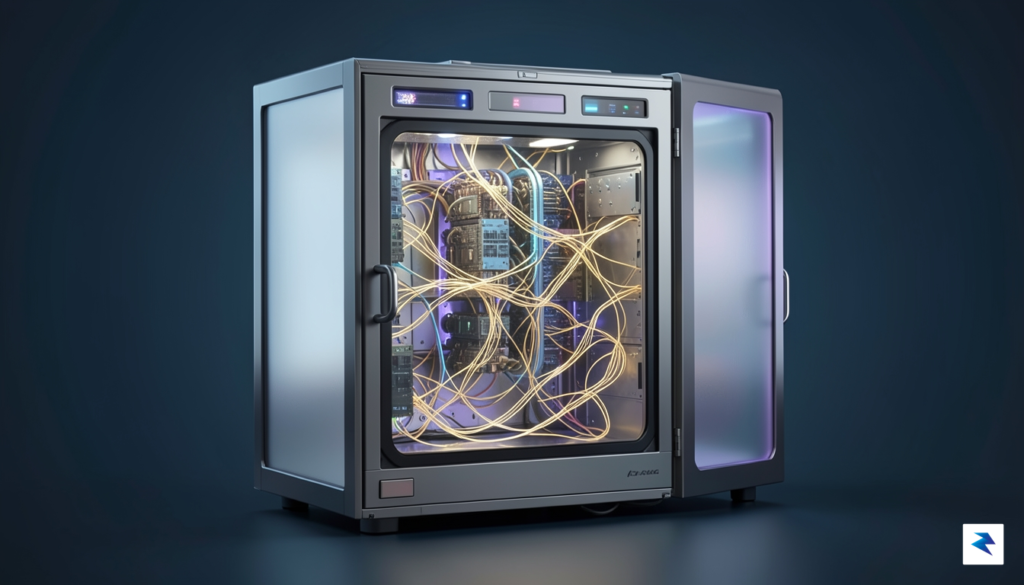
Transitioning from the theoretical elegance of quantum mechanics to a functional, rack-mounted machine is perhaps the most daunting engineering endeavor of our time. While software developers focus on algorithms and quantum-ready code, companies like IQM must grapple with the harsh physical realities of superconducting processors that operate at temperatures colder than deep space. The fundamental issue lies in the fragility of qubits; these quantum states are hyper-sensitive to the slightest environmental “noise,” such as electromagnetic interference or thermal fluctuations. Maintaining this delicate coherence requires sophisticated cryogenic systems that are not only expensive to operate but increasingly difficult to scale as the number of qubits grows.
Furthermore, the industry is currently locked in a race to achieve meaningful error correction. As we push toward larger quantum systems, the cumulative probability of errors occurring across the processor increases exponentially. To solve this, engineers must integrate auxiliary qubits specifically designed to detect and correct errors in real-time, effectively creating a “logical qubit” out of dozens or hundreds of physical ones. This creates a vicious cycle: to make a computer more stable, you need more qubits, but adding more hardware introduces more heat and potential points of failure, necessitating even more advanced thermal management and wiring solutions.
The challenge is no longer just about building a quantum chip; it is about building an entire industrial ecosystem capable of supporting the cooling, control, and stabilization of these processors at scale.
IQM distinguishes itself in this crowded market by taking a full-stack, hardware-centric approach that addresses these bottlenecks from the ground up. Rather than relying on off-the-shelf components, they have pioneered a custom design methodology that optimizes the physical layout of the superconducting circuits to minimize signal crosstalk and maximize gate fidelity. By focusing on the specific geometry of the qubit lattice and the integration of the control electronics, they aim to reduce the physical footprint of the hardware while improving overall system reliability. This vertical integration is crucial because it allows the company to iterate on the physical architecture in direct response to the limitations observed during real-world computational tasks.
Ultimately, the barrier to a truly useful quantum computer is a materials science gauntlet that demands perfection at the atomic level. Whether it is refining the purity of superconducting materials or developing new ways to route delicate signals through cryogenic environments, the work being done in labs today is the bedrock of the entire industry. IQM’s commitment to this hardware-first philosophy underscores a vital truth: until we can effectively master the physical environment of the quantum processor, the theoretical promise of “quantum advantage” will remain just out of reach for the average enterprise.

The burgeoning field of quantum computing is not merely an exciting scientific frontier; it represents a profound geopolitical chessboard, with nations vying for dominance over what promises to be a foundational technology for the 21st century. For Europe, fostering robust domestic quantum infrastructure is inextricably linked to its long-term technological sovereignty and economic resilience. Control over such a critical dual-use technology—one with implications for national security, economic competitiveness, and scientific advancement—is paramount, dictating not only future innovation but also a nation’s ability to act independently on the global stage.
A critical pillar supporting this ambition is the strategic deployment of European Union funding. Initiatives like the Quantum Flagship and various national programs are not simply grants for research; they are deliberate investments designed to cultivate a vibrant, self-sufficient quantum ecosystem within Europe. These public funds play a vital role in de-risking the enormous capital expenditure and long development cycles inherent in quantum research, bridging the often-treacherous “valley of death” between laboratory breakthroughs and commercial viability. By backing innovative companies such as IQM, these investments signal a clear strategic intent: to ensure that Europe is a producer, not just a consumer, of next-generation technologies, thereby safeguarding its economic future and reducing reliance on external powers for critical infrastructure.
Crucially, this public investment also ties directly into the imperative of keeping intellectual property (IP) within European borders. Quantum breakthroughs, whether in hardware designs, algorithms, or software platforms, represent immense future value. If European researchers and companies are the originators of these innovations, yet the associated IP is licensed away, acquired by foreign entities, or exploited elsewhere, Europe risks losing its competitive edge and the long-term economic benefits that accrue from technological leadership. Safeguarding this intellectual capital, through patents, trade secrets, and strategic partnerships within the continent, ensures that the wealth generated by these advancements—from high-tech manufacturing jobs to licensing revenues—remains a cornerstone of the European economy, bolstering its strategic autonomy.
Indeed, this domestic development and IP retention are critical as Europe navigates the intense competitive tension with quantum firms in the United States and China. Both nations are pouring vast resources into quantum research and development, with powerful tech giants and state-backed initiatives pushing the boundaries at an astonishing pace. While European academic excellence is globally recognized, translating this into competitive commercial ventures requires sustained, coordinated effort. Companies like IQM are vital players in establishing a credible European presence in this global race, but they require continuous support to scale, attract talent, and compete against adversaries with deeper pockets and established market access. A strong European quantum industry is essential to prevent a global technological duopoly and ensure a diversified, resilient future for quantum computing worldwide.
Ultimately, the strategic implications of fostering a domestic quantum infrastructure extend far beyond mere technological advancement. They encompass Europe’s ability to maintain its geopolitical influence, secure its economic future, and assert its sovereignty in an increasingly complex and technologically driven world. The commitment to developing and retaining quantum capabilities within Europe is a direct investment in its future autonomy and a declaration that it intends to be a principal architect, not just an observer, of the quantum age.

For both retail and institutional investors, the entry of IQM into the public markets serves as a definitive signal that quantum computing is shifting from academic curiosity to a capital-intensive industrial pursuit. However, it is imperative to distinguish between the current state of commercial prototypes—which are experimental systems designed to prove feasibility—and truly market-ready solutions that can be deployed at scale. While the allure of quantum speed is immense, the timeline for widespread commercialization remains non-linear and subject to significant engineering hurdles, particularly regarding error correction and hardware stability. Investors should view this not as a traditional software play with rapid iteration cycles, but as a deep-tech infrastructure play that mirrors the multi-decade development of the early semiconductor industry.
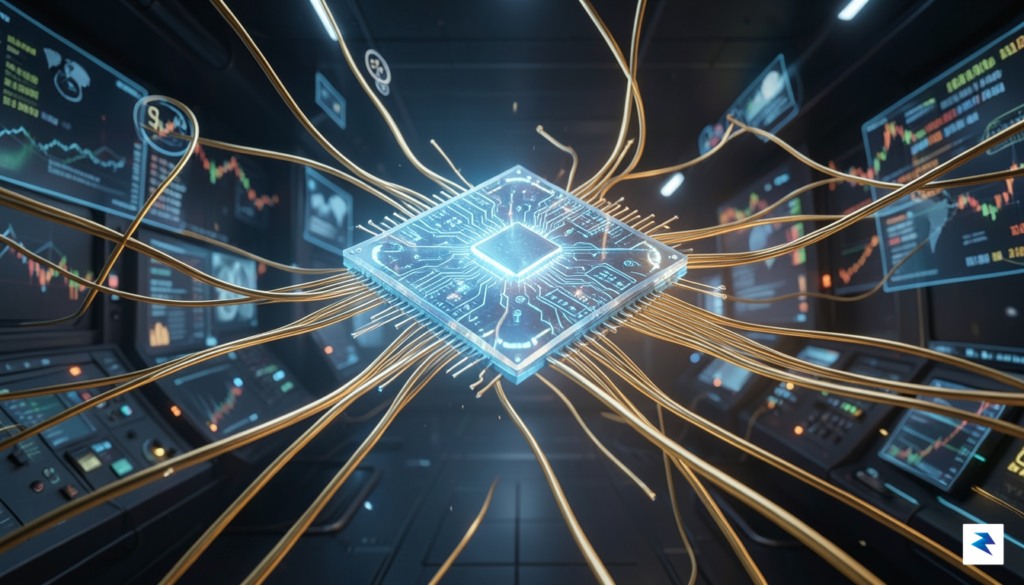
Evaluating success in the quantum space requires a disciplined departure from the vanity metrics that often dominate tech headlines. While raw qubit counts are frequently cited as the primary indicator of progress, they are analogous to measuring a computer’s power solely by the number of transistors without considering clock speed or architecture. For a sophisticated investor, the real story lies in quantum volume, coherence times, and gate fidelity—the metrics that determine whether a machine can actually solve a meaningful problem without being overwhelmed by environmental noise. If a company reports an increase in qubits but fails to demonstrate a corresponding improvement in error rates or task-specific performance, the investment thesis should be viewed with skepticism.
True commercial maturity in the quantum sector will likely be measured by the ability to achieve ‘quantum advantage’ in niche, high-value applications like materials science and pharmaceutical discovery, long before we see general-purpose quantum computers on enterprise networks.
Risk management in this sector necessitates a sober assessment of time horizons. Unlike the standard venture capital lifecycle, quantum computing faces a ‘valley of death’ where the capital expenditure required to keep systems operational far outstrips immediate revenue generation. Investors must be prepared for a long-term holding period, as the industry is currently grappling with the transition from noisy intermediate-scale quantum (NISQ) devices to fault-tolerant systems. When conducting due diligence, look for firms that maintain strong partnerships with end-users in regulated industries, as these collaborations provide the necessary feedback loops to refine hardware for real-world utility. Ultimately, the winners in this space will be the companies that treat quantum computing not as a theoretical novelty, but as a rigorous engineering challenge that prioritizes reliability over speculative speed.
You must be logged in to post a comment.