
Introducing Pocket: Meta’s AI-Powered Game Creation Lab

In a move that caught much of the tech industry by surprise, Meta has quietly rolled out a new experimental application called Pocket, signaling a profound pivot in how we engage with mobile gaming. Rather than presenting users with a static library of finished titles, this platform transforms the mobile interface into a sandbox for creative generation. By shifting the paradigm from passive consumption—where a player simply reacts to pre-programmed mechanics—to an active role as a creator, Meta is effectively democratizing game development. This transition marks a significant milestone in the evolution of social platforms, suggesting that the future of mobile entertainment isn’t just about playing games, but about building them on the fly.
At the heart of this experience is what Meta describes as “vibe-coded” interaction. This terminology refers to a sophisticated layer of generative AI that interprets a user’s natural language prompts and translates them into functional game logic and aesthetic elements. Instead of wrestling with complex lines of syntax or traditional game engines, users can simply describe the “vibe” or desired outcome of a game—such as a platformer set in a neon cityscape or a puzzle game with specific gravitational constraints—and the app handles the heavy lifting. This approach strips away the technical barriers that have historically kept game development confined to professional studios, allowing anyone with a smartphone to prototype their imagination in real-time.
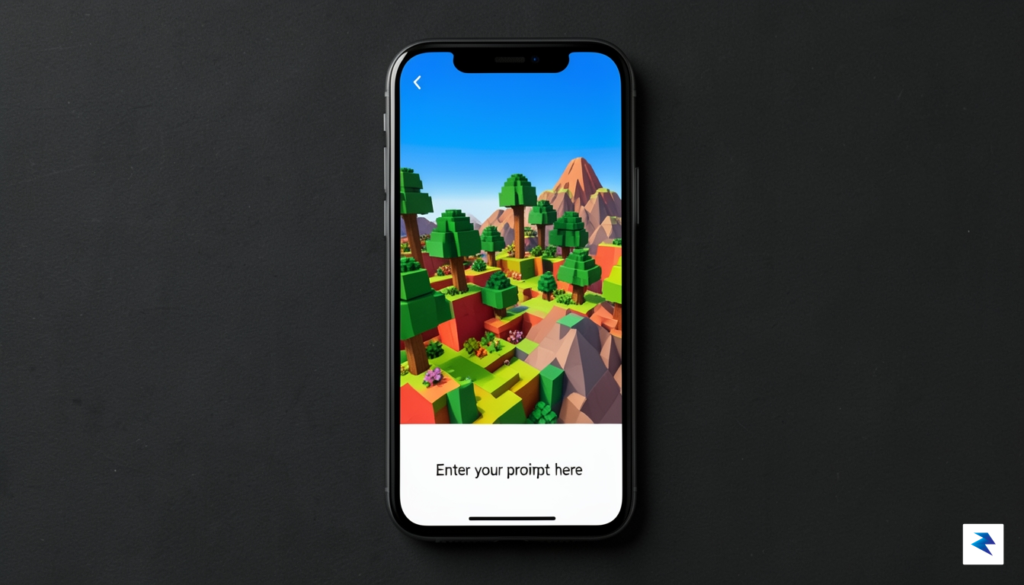
By treating game design as a conversational process rather than a technical one, Pocket positions AI as a creative partner that fills the gap between an abstract idea and a playable reality.
This initiative fits seamlessly into Meta’s broader ecosystem, which has been increasingly focused on integrating generative AI into its family of applications. By placing these powerful creative tools directly into the hands of a mobile-first audience, the company is betting that user-generated content will become the next major frontier for engagement. This shift mirrors the early days of social media, where the transition from curated content to user-created posts fueled massive growth. If Pocket succeeds, it could fundamentally alter the landscape of digital entertainment, establishing a new standard where the most popular games are not those shipped by major corporations, but those “vibe-coded” by the community itself.
Ultimately, the significance of this launch lies in its potential to turn every mobile user into a developer. As the software continues to learn from user interactions, we can expect the boundary between the player and the designer to blur entirely. While the platform is still in its experimental phase, it provides a compelling glimpse into a future where gaming is defined by accessibility, speed, and the limitless potential of AI-assisted creativity. It is no longer enough to just play the game; with Pocket, Meta is inviting us to build the very worlds we inhabit.
How Text-to-Game Technology Changes Developer Accessibility

For decades, the barrier to entry for game development has been guarded by the steep learning curve of complex programming languages like C++ or C#. Aspiring creators were historically forced to master rigid syntactical structures, memory management, and advanced mathematics before they could even render a single sprite on the screen. Pocket represents a radical departure from this status quo by utilizing an AI-driven engine that interprets natural language prompts to construct game logic in real-time. Instead of manually writing thousands of lines of code to define gravity, collision detection, or character movement, users can simply describe the desired behavior in plain English. This shift effectively decouples the creative vision from the technical implementation, allowing the conceptual design process to take center stage.
At its core, Pocket functions by translating human intent into structured machine instructions through a sophisticated Large Language Model (LLM) fine-tuned specifically for game mechanics. While traditional engines like Unity or Godot provide robust, professional-grade frameworks that require a deep understanding of object-oriented programming, this new wave of generative software automates the boilerplate tasks that typically consume a developer’s time. By abstracting away the underlying architecture, the app allows users to iterate on gameplay loops with rapid speed. However, it is important to acknowledge that current generative AI technology still faces limitations; it excels at creating modular, self-contained mechanics but can struggle with the complex, multi-layered dependencies required for massive, triple-A scale titles.
The transition from manual coding to natural language prompting marks the most significant democratization of software development since the invention of high-level programming languages.
The evolution of natural language processing for logic-heavy tasks is perhaps the most impressive technical leap here. Early iterations of AI-assisted coding were prone to hallucinations or syntax errors, but modern systems are becoming increasingly adept at maintaining state and understanding the context of a game world. When a user tells Pocket to “make the platform bouncy,” the underlying engine does not just apply a generic variable; it understands the physics constraints of the existing environment and adjusts the friction and restitution parameters accordingly. This contextual awareness represents a maturation of the technology, moving beyond simple script generation into the realm of intelligent systems design.
Ultimately, while industry-standard tools remain the backbone of the professional gaming sector, platforms like Pocket are carving out a new niche for hobbyists, storytellers, and non-technical designers. By lowering the entry requirement to a simple vocabulary, these tools ensure that the future of digital entertainment is not limited to those with a background in computer science. As these generative engines continue to refine their ability to handle increasingly complex logic chains, we can expect a surge in creative output from a demographic that was previously locked out of the development ecosystem entirely.
The Vibe-Coded Experience: Interactive Mini-Games Made Simple
At its core, the appeal of this new platform lies in its ability to translate abstract, conversational language into functioning game logic, a process the developers refer to as “vibe-coding.” Instead of grappling with complex syntax or traditional game engines, a user simply types a description of their desired experience—such as “a fast-paced platformer where the floor disappears every three seconds”—and the underlying AI interprets that intent to construct the necessary mechanics. This interpretative layer bridges the gap between a vague creative vision and a playable reality, effectively removing the technical barrier that has historically prevented non-programmers from bringing their ideas to life.

The interactive loops supported by the app are surprisingly versatile, catering to a wide array of casual genres. Whether you are aiming to build a top-down obstacle course, a physics-based puzzle game, or a simple rhythm-based reaction test, the engine handles the fundamental physics and rule sets automatically. For example, a user could realistically create a functional “dodge the falling objects” game in under five minutes. By simply typing, “Create a game where I move a square left and right to avoid falling red circles that get faster over time,” the system generates the character controller, the spawning logic for the objects, and the collision detection required to track a score. This rapid iteration cycle encourages experimentation, allowing users to tweak parameters like gravity, speed, or color palettes in real-time until the gameplay feels exactly right.
Social integration is woven into the very fabric of the platform, transforming isolated creation into a communal experience. Once a project is finalized, sharing it is as seamless as posting a status update; the app generates a shareable link that embeds the playable game directly into social feeds. Because these games are lightweight and web-friendly, friends and followers can interact with the content instantly without needing to download additional software or register for new accounts. This infrastructure turns every user into a potential developer, fostering a landscape where viral, micro-sized games can be distributed, played, and remixed at the speed of social media trends.
The true power of this platform is not in creating the next triple-A blockbuster, but in the democratization of digital play, turning fleeting creative sparks into shareable, interactive moments.
Ultimately, the platform excels by focusing on accessibility and immediate gratification. Users are not tasked with building 3D worlds or complex narratives; instead, they are invited to iterate on small, satisfying loops that feel personal and unique. By lowering the stakes of game development, the app encourages a “playful” approach to building, where the process of refining a game’s vibe is just as entertaining as the final output itself. Whether you are a casual tinkerer or a curious creative, the ability to turn a text prompt into a playable experience in mere minutes represents a significant shift in how we conceive of digital content creation.
Meta’s Strategic Pivot: Democratizing Game Design via Social AI

At its core, the introduction of Pocket represents a calculated expansion of Meta’s ecosystem, positioning the company to capture the burgeoning creator economy within the gaming sector. By lowering the barrier to entry, Meta is effectively transforming its massive user base from passive consumers into active developers. This strategic pivot aims to solve a perennial challenge for social platforms: increasing time-on-app metrics by providing high-engagement, interactive experiences that users build for one another. Rather than forcing users to migrate to external gaming engines or complex development environments, Meta is integrating these creative tools directly into the fabric of social interaction, ensuring that the entire lifecycle of a game—from conceptualization to community gameplay—remains within their digital walls.
The role of artificial intelligence in this endeavor cannot be overstated, as it acts as the bridge between creative intent and technical execution. For years, platforms like Roblox and Fortnite have dominated the user-generated content space, but they often require a steep learning curve or knowledge of specialized scripting languages. Meta’s approach leverages generative AI to democratize this process, allowing anyone with a smartphone to build interactive worlds simply by describing them. This shift toward “vibe-coded” gaming is designed to fuel viral social engagement, where the ease of creation encourages users to iterate rapidly and share their projects instantly across Instagram and Facebook. By automating the heavy lifting of backend coding, Meta is betting that the sheer volume of unique, AI-assisted content will create a self-sustaining loop of social discovery and competition.
The true power of AI in social gaming is not just about making development easier; it is about making creativity a fundamental language of social connection.
Looking further ahead, the long-term potential for this technology extends well beyond casual mobile play. By embedding these creative tools into their social infrastructure, Meta is laying the groundwork for a more immersive, AI-driven metaverse that prioritizes accessibility over technical proficiency. This approach directly challenges the dominance of traditional gaming platforms by shifting the value proposition toward immediate, social-first experiences that prioritize speed and accessibility. If Meta succeeds in fostering a robust ecosystem of AI-generated games, they will have successfully secured a new frontier of user attention, effectively turning their platforms into the primary destination for both the creation and consumption of interactive entertainment in the digital age.
Privacy, Safety, and the Future of User-Generated AI Content

The integration of generative AI into game development marks an exciting frontier for creative expression, yet it simultaneously introduces a complex landscape of moderation and safety challenges. When users are empowered to manifest entire interactive worlds through simple text prompts, the barrier to entry for content creation vanishes, but so does the traditional human oversight that usually prevents the proliferation of harmful or copyrighted material. Meta faces the daunting task of implementing automated guardrails that can distinguish between harmless creative experimentation and the generation of prohibited, offensive, or infringing assets in real-time. Ensuring that these AI models do not inadvertently mimic trademarked characters or generate inappropriate, non-consensual imagery is a foundational requirement for the platform’s long-term sustainability.
Beyond the technical hurdles of preventing malicious prompts, there is the ongoing concern of intellectual property rights within the realm of user-generated AI content. If a user prompts the system to build a game that closely mirrors the mechanics or aesthetic of an existing popular title, determining ownership and liability becomes murky. Meta must establish clear policies regarding who holds the rights to the code and assets generated by the app, as well as how they intend to handle disputes involving creators whose work might be “re-imagined” by others using AI. This creates a delicate balance: the company must foster an environment where users feel their creative output is protected, while simultaneously ensuring that the platform does not become a hub for automated plagiarism.
The true success of an AI-powered creative platform hinges not just on the quality of its output, but on its ability to provide a safe, secure, and respectful ecosystem for users of all ages.
Furthermore, maintaining a family-friendly gaming environment requires a multi-layered approach to safety that goes far beyond simple keyword filtering. Because generative AI is inherently unpredictable, Meta’s safety protocols must be robust enough to identify context-aware violations that might bypass basic text-based blocks. This includes monitoring for “jailbreak” attempts, where users try to trick the AI into ignoring its safety guidelines to produce prohibited content. As the community around this new app grows, the responsibility lies with the developers to iterate their moderation systems at the same speed as their generative capabilities. Without a proactive stance on user safety, the platform risks losing the trust of parents and casual gamers alike, potentially undermining the very accessibility that makes the app so revolutionary in the first place.