
The Strategic Implications of the Cursor-SpaceX Deal
The acquisition of Cursor by SpaceX marks a seismic shift in the AI developer tool ecosystem, fundamentally altering the trajectory of one of the most popular integrated development environments (IDEs) in the current market. For developers who have relied on Cursor for its seamless, model-agnostic approach—allowing them to toggle effortlessly between OpenAI’s GPT-4o, Anthropic’s Claude 3.5 Sonnet, and other cutting-edge LLMs—this move introduces a complex layer of corporate friction. By bringing an independent, high-growth startup into the fold of a company as deeply entrenched in the global AI and aerospace arms race as SpaceX, the acquisition challenges the very premise of a neutral, platform-agnostic coding assistant.
At the heart of the industry’s concern is the tension between maintaining a vendor-neutral sandbox and serving the strategic objectives of a new, high-stakes parent company. Cursor’s success was built on the promise of providing the best possible AI-driven coding experience without tying the user to a specific AI provider’s ecosystem. However, when an IDE is owned by an entity that is itself a major consumer and competitor in the AI landscape, the incentive structure inevitably shifts. Developers are now questioning whether SpaceX will prioritize its own internal workflows, potentially creating data silos or biasing the platform toward proprietary integrations that favor specific model architectures over others.
The core value proposition of Cursor has always been its role as a Switzerland-like intermediary; the moment that neutrality is compromised by corporate affiliation, the platform risks losing the very community that propelled its rapid adoption.
Industry reaction has been swift, ranging from cautious optimism regarding the influx of world-class engineering resources to deep skepticism about the long-term roadmap. Some argue that SpaceX’s involvement could provide the financial runway and computational infrastructure necessary to push Cursor’s performance to unprecedented levels. Others, however, fear a slow erosion of the tool’s open-access philosophy. As the development community watches closely, the fundamental question remains: can a tool designed to be a universal gateway for third-party AI models survive the gravitational pull of a corporate titan that has its own distinct, and often insular, technological agenda?
This transition represents more than just a change in ownership; it is a test case for the future of AI-assisted software development. If Cursor remains truly open, it could set a precedent for how specialized tools can thrive within large-scale corporate structures. If, conversely, the IDE begins to favor specific models or restricts access to maintain a competitive advantage, it may trigger a migration toward more transparent, community-governed alternatives. Ultimately, the developer community is waiting for clear signals that the platform will not sacrifice its polyglot, model-agnostic soul for the sake of its new corporate identity.
The Future of Model Agnosticism in AI Development
At the heart of Cursor’s rapid ascent in the developer ecosystem is its commitment to model agnosticism. By positioning itself as a neutral conduit rather than a proprietary walled garden, the IDE allows developers to tap into the unique strengths of frontier models—such as the reasoning depth of OpenAI’s o1 or the nuanced, human-like syntax generation of Anthropic’s Claude 3.5 Sonnet—within a single, unified workflow. This flexibility is not merely a convenience; it is a technical necessity for power users. Different architectural challenges often demand different linguistic approaches, and the ability to toggle between intelligence providers ensures that a developer is never limited by the specific biases or training limitations of a single laboratory.
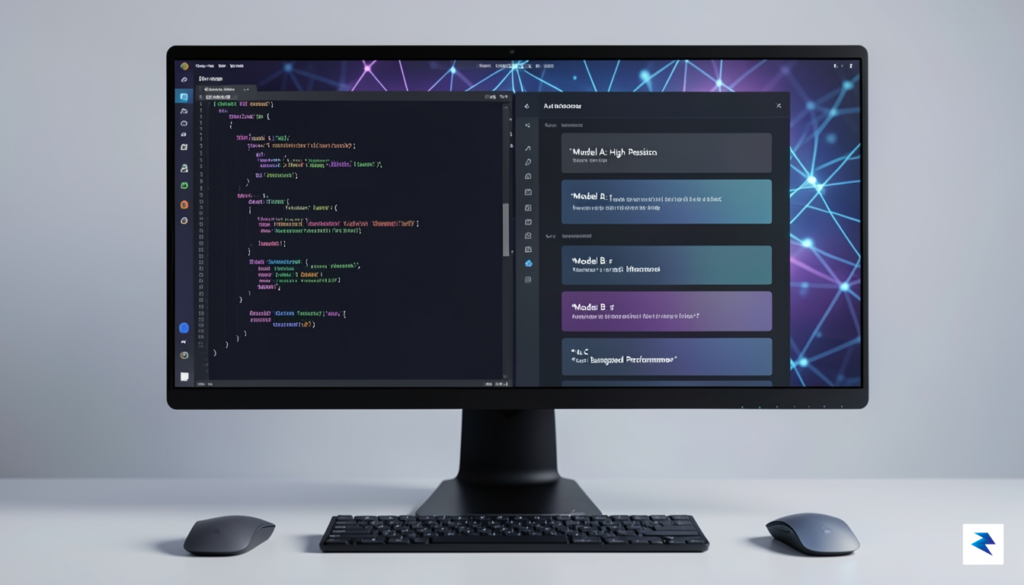
However, maintaining this neutrality becomes significantly more complex when the platform’s ownership interests intersect with the competitive landscape of AI providers. When an IDE acts as a bridge between rival companies, it must navigate delicate API partnerships and data security requirements that are often at odds with the proprietary ambitions of parent firms. If an organization with its own substantial AI-related infrastructure gains control over a tool like Cursor, the pressure to prioritize internal, “in-house” models could grow. This shift risks transforming an open, multi-model tool into a siloed environment, effectively “locking” users into a singular ecosystem that may not always represent the cutting edge of global AI research.
The true value of a developer tool lies in its utility, not its loyalty. When an IDE forces a specific model upon its users, it ceases to be a force multiplier and begins to function as a bottleneck for innovation.
The danger of “model locking” is a significant concern for the developer community, as it threatens to erode the very autonomy that makes AI-assisted coding so powerful. If Cursor were to move toward a model-biased roadmap, the technical consequence would be a reduction in the diversity of logic paths available to developers. This is particularly problematic for high-stakes engineering environments, such as those found at companies like SpaceX, where the precision and reliability of code are paramount. If the underlying intelligence becomes dictated by corporate synergy rather than objective performance metrics, the IDE loses its role as a flexible instrument, potentially forcing power users to migrate to other, more neutral platforms that prioritize developer choice above institutional influence.
Ultimately, the long-term success of any AI-integrated development environment depends on its ability to remain a transparent layer between the user and the best available intelligence. While the temptation to leverage a captive audience to promote specific models is high, doing so risks alienating the very demographic that values Cursor for its versatility. To remain essential, the platform must prove that it can reconcile its ownership structure with its original promise: that it will always provide the best, most capable tools, regardless of which laboratory developed them.
Navigating Competitive Dynamics: OpenAI vs. Anthropic vs. SpaceX

The integration of a neutral AI coding platform into the ecosystem of a massive, privately held aerospace giant like SpaceX introduces a complex web of competitive friction. At the heart of this tension lies the fundamental relationship between platform providers and model developers. OpenAI and Anthropic, both of which operate as the primary intelligence engines powering modern coding assistants, rely on third-party platforms to distribute their capabilities to developers. When that distribution channel becomes tethered to an entity like SpaceX—a company synonymous with proprietary hardware, classified defense contracts, and rapid iterative engineering—the neutral ground upon which these models operate begins to shift.
From the perspective of OpenAI and Anthropic, the primary concern is the sanctity of their proprietary model integrations and the security of the telemetry data generated through user interactions. These labs invest billions into model training, and they depend on strict data privacy agreements to ensure that their models aren’t being “reverse-engineered” or leveraged to benefit the strategic interests of an owner who might be considered a competitor in other technological arenas. If SpaceX were to exert control over the platform, these labs might fear that their models could be “fenced off” or throttled to prioritize internal SpaceX workflows, or worse, that sensitive architectural data from their models could be inadvertently exposed to an organization with its own competitive AI ambitions.

Furthermore, the competitive dynamics extend to the nuances of API usage and feature parity. If SpaceX were to acquire a platform like Cursor, the company would theoretically gain the leverage to dictate which features or model capabilities are highlighted within the development environment. This creates a potential “walled garden” scenario where the platform’s neutrality—the very attribute that made it successful—is compromised by the strategic roadmap of its parent company. For model developers, this represents a significant risk: their products could be relegated to secondary status if the platform owner decides to pivot toward building an in-house model or forming an exclusive, preferential partnership with a specific AI provider.
The core challenge lies in balancing the platform’s utility as a neutral tool for all developers against the inevitable strategic biases introduced by corporate ownership.
Ultimately, the long-term viability of these partnerships depends on a high-stakes game of trust and transparency. To maintain its status as an industry-standard coding environment, any platform under the SpaceX umbrella would likely need to establish rigorous, independent data firewalls that prevent the parent company from accessing or influencing the underlying model interactions. Without such safeguards, OpenAI and Anthropic might find the risk to their intellectual property too great, potentially leading to restricted API access or a total withdrawal from the platform. The tension between the need for industrial-scale engineering efficiency and the requirements of open-market model access will define whether this partnership fosters innovation or triggers a fracture in the AI developer ecosystem.
Can Independent Tools Survive Inside Corporate Giants?

The history of the software industry is a graveyard of innovative tools that lost their identity upon entering the orbit of a massive conglomerate. When independent developer platforms are absorbed by larger entities, they often face an immediate tension between their original, product-led vision and the broader strategic mandates of their new owners. From the acquisition of GitHub by Microsoft to the gradual assimilation of various developer-focused startups into the Google or Amazon ecosystems, the pattern is remarkably consistent: the initial promise of “independence” frequently erodes as the tool is repurposed to serve the parent company’s infrastructure, proprietary cloud stack, or internal mission goals. For a platform like Cursor, which relies on its ability to offer a model-agnostic playground for developers, this history serves as a cautionary tale.

The core of this challenge lies in the trade-off between operational autonomy and corporate assimilation. When a tool is built to be a neutral bridge—allowing users to swap between the best-in-class models from OpenAI, Anthropic, and others—it functions as a Switzerland of the AI development world. However, within a high-stakes, mission-driven environment like SpaceX, the pressure to optimize for internal security, proprietary workflows, and specific hardware-software integration is immense. If Cursor were to become overly tethered to the unique requirements of a single corporate giant, it risks sacrificing the very flexibility that attracted its user base in the first place. The “soul” of a developer tool is often defined by its commitment to the user’s workflow rather than the employer’s bottom line, and maintaining that distinction requires an extraordinary degree of leadership discipline.
The most valuable asset an AI coding platform possesses is not its codebase or its venture backing, but the hard-earned trust of the developer community. Once that trust is compromised by a perceived shift in loyalty, it is nearly impossible to regain.
To preserve its independence, Cursor’s leadership must navigate a narrow path that prioritizes community trust above all else. This means ensuring that the platform remains an open arena where the best models can compete on their merits, rather than becoming an exclusive conduit for the proprietary preferences of its stakeholders. If the community begins to suspect that the tool is being “tuned” to favor specific partnerships or internal company interests, the exodus of developers would likely be swift. Ultimately, the survival of Cursor as a neutral platform depends on its ability to prove that its value proposition to the broader software engineering world is just as important as its utility within any single high-profile organization. Whether the platform can remain a truly model-agnostic tool while operating under the gravity of such a massive corporate influence will be the defining test of its long-term viability.
What This Means for the Future of Coding Environments

The integration of high-level AI coding assistants into mission-critical organizations like SpaceX signals a definitive shift in the software development lifecycle. We are moving away from the era where AI was merely a helpful autocomplete plugin and into a phase where the integrated development environment (IDE) functions as an autonomous, intelligence-driven architecture. This transition forces the industry to confront a fundamental question: do we want our development tools to be owned by the same companies providing the underlying intelligence, or do we require a neutral, competitive layer that remains agnostic to the model provider? As tools like Cursor become embedded in enterprise workflows, the risk of vendor lock-in becomes as significant as the productivity gains they offer.
Over the next 12 to 24 months, we expect to see a bifurcation in the market. On one hand, large-scale cloud providers and model labs will likely continue to acquire or build tight, proprietary ecosystems that offer seamless, albeit restrictive, performance. On the other hand, the demand for interoperability will grow, creating space for platforms that prioritize the developer’s right to choose between competing LLMs. If a platform becomes too closely tethered to a single model provider’s roadmap, it risks alienating developers who rely on the versatility of switching between models like Claude, GPT-4, or even specialized open-weights alternatives depending on the complexity of the task at hand.
The true value of an AI coding environment lies not in the proprietary nature of its algorithms, but in its ability to act as a high-fidelity interface for the entire spectrum of human and machine intelligence.
For the average developer, navigating this landscape will require a more critical eye toward tool selection. It is no longer enough to choose an IDE based solely on aesthetic or speed; one must evaluate the long-term data sovereignty and model-neutrality of the platform. We are effectively entering a period where the “platform” is the most important piece of software in the stack, and its loyalty to the user—rather than the model vendor—will become its primary competitive advantage. Developers should prioritize tools that treat model access as a commodity rather than a privilege, ensuring that their workflows remain portable as the AI landscape inevitably shifts.

Ultimately, the maturation of this market depends on the industry’s ability to maintain a healthy tension between integration and independence. If the tools we use to build the future become monopolized by the very entities that create the intelligence, the risk of stifling innovation is high. By demanding neutral interfaces that can toggle between diverse AI capabilities, the developer community can ensure that the evolution of coding remains a vibrant, competitive marketplace. The tools we choose today will dictate whether our future development environments are open, interoperable platforms or gilded cages that limit our ability to experiment with the best technology available.