
How to Transform Your Child’s iPhone into the Perfect ‘Dumb Phone’
The Growing Need for Digital Minimalism in Childhood In an era where digital devices are ubiquitous, modern smartphones, particularly, are…
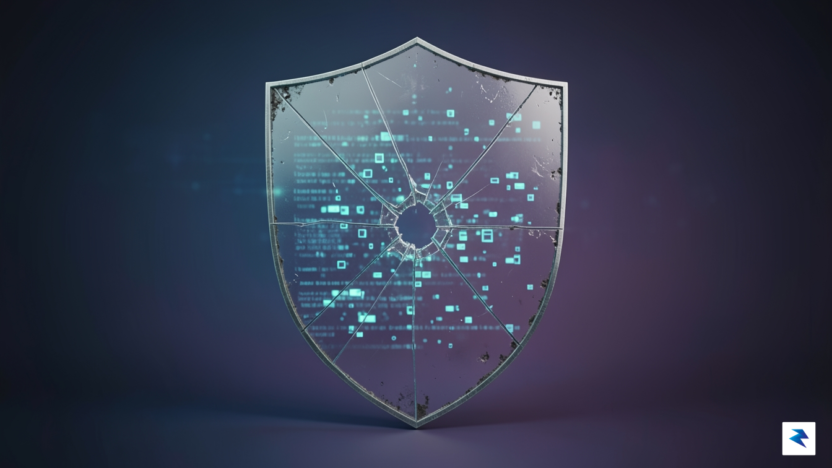

At its core, Apple’s Hide My Email feature was engineered to function as a sophisticated digital shield, employing a system of unique, randomized aliases that forward incoming messages to a user’s primary inbox. By acting as a middleman, the service was intended to obscure a user’s actual identity, ensuring that third-party services, marketers, and potential bad actors could never see the real email address tied to an Apple ID. The mechanism relies on an internal routing table that maps these ephemeral aliases to the authentic destination, theoretically keeping the primary address siloed away from any external communication logs or tracking scripts.

However, recent technical audits have revealed a critical vulnerability that effectively bypassed this protective layer, exposing the very information the feature was designed to mask. The oversight occurred during the message handling process, where a specific implementation error in the email header generation allowed the original, private address to be leaked in the X-Original-To or Delivered-To fields. Instead of scrubbing these metadata headers clean before the mail reached its final destination, Apple’s infrastructure inadvertently included the recipient’s true identity in the routing instructions. For an external recipient or a sophisticated threat actor capable of analyzing raw email headers, this flaw turned a privacy-focused tool into an accidental data-broadcasting service.
The core of the issue lies not in the concept of aliasing itself, but in the failure to sanitize metadata headers, effectively turning a privacy shield into a window into the user’s private account.
The implications for users are significant, particularly for those who leverage these aliases to segment their digital lives and minimize spam exposure. When a user relies on Hide My Email, they operate under the assumption that their primary address is shielded from data brokers and phishing campaigns; if that address is leaked, the “fortress” is fundamentally compromised. Once the real email address is harvested, it becomes trivial for automated systems to correlate that identity across multiple platforms, defeating the entire purpose of the service. This vulnerability highlights the precarious nature of relying on third-party privacy tools, as a single misconfiguration in server-side logic can undo years of branding built on the promise of anonymity.
Ultimately, this appears to be an implementation error rather than a structural flaw in the aliasing architecture, yet it serves as a stark reminder of the complexity inherent in privacy-preserving software. While Apple’s engineers have since moved to address the header sanitization protocols, the incident prompts a broader discussion about the fragility of digital security. Users should view features like Hide My Email as helpful layers of friction against data harvesting, rather than absolute, impenetrable guarantees of privacy. Maintaining a vigilant approach to one’s digital footprint remains the most effective strategy, even when utilizing the most robust tools provided by major tech ecosystems.

For years, the collective known as Scattered Spider has operated as a sophisticated thorn in the side of global enterprise, masterfully blending social engineering with high-stakes extortion. Unlike traditional, technically rigid hacking groups that rely solely on brute-force exploits, this threat actor thrives on human psychology. By deploying highly targeted phishing campaigns, conducting convincing voice-based “vishing” attacks, and successfully infiltrating internal help-desk systems, they have systematically compromised some of the world’s most prominent corporations. Their modus operandi—gaining initial access through trickery and escalating that access to launch devastating ransomware attacks—has turned them into a blueprint for a new, agile generation of digital extortionists.

The recent legal developments involving the extradition of a key member of this group mark a significant turning point in the international pursuit of cybercriminals. For too long, many prolific hackers have operated under the assumption that geographic borders provide a sanctuary from law enforcement. The successful coordination between global agencies to track, identify, and move a suspect across jurisdictions signals that this era of impunity is rapidly drawing to a close. This level of international cooperation is not merely a bureaucratic victory; it is a vital defensive maneuver that forces threat actors to recognize that the digital world is no longer a lawless frontier, but a space where real-world legal consequences are increasingly inevitable.
The successful extradition of a high-profile threat actor serves as a powerful reminder that while cybercrime is global in scale, the enforcement of justice is becoming just as interconnected.
This development carries profound implications for the future of digital defense and the psychological landscape of the cybercriminal underground. By disrupting the leadership and operational capabilities of a group as brazen as Scattered Spider, authorities are injecting a much-needed element of risk into the threat actor’s cost-benefit analysis. When the potential for international prosecution becomes a tangible reality rather than an abstract threat, it creates a deterrence effect that can disrupt the recruitment and operational confidence of similar collectives. However, we must remain cautious; history suggests that such groups are highly adaptive. As legal pressure mounts, Scattered Spider and its peers will likely shift their tactics, perhaps pivoting toward even more clandestine communication methods or evolving their social engineering techniques to exploit new vulnerabilities in emerging workforce structures, such as decentralized remote-work environments.
Ultimately, the impact of these legal proceedings will be measured by how effectively they dismantle the group’s infrastructure and discourage future recruits. While this arrest is a major win for cybersecurity, it is only one battle in a much longer war against organized digital crime. Organizations must continue to bolster their human-centric security defenses—training employees to recognize sophisticated social engineering attempts—while acknowledging that legal authorities are finally catching up to the speed and complexity of these pervasive online threats.

Automated license plate recognition (ALPR) systems were originally marketed to law enforcement agencies as the gold standard for precision—a digital net capable of instantly flagging criminal activity. By utilizing high-speed cameras mounted on patrol vehicles or fixed infrastructure, these systems capture thousands of images per hour, relying on optical character recognition (OCR) software to translate visual data into searchable text. While the promise of automation is efficiency, the technical reality is far more fragile. These systems are constantly fighting against the limitations of hardware and physics, struggling to parse information when faced with high-speed motion, challenging weather conditions, or extreme angle distortions. When a camera captures an image at a sharp angle or during a heavy downpour, the software often makes a “best guess” that deviates significantly from reality, turning a harmless commute into a high-stakes legal nightmare.

The technical failures inherent in this technology are not merely minor glitches; they are systemic vulnerabilities that translate into real-world consequences for innocent civilians. Common errors arise when the software misinterprets a letter for a number—such as confusing an ‘O’ for a ‘0’ or an ‘I’ for a ‘1’—which can result in a vehicle being flagged as stolen or linked to a violent felony. These misidentifications are exacerbated by low lighting, where motion blur renders characters indecipherable, yet the algorithm forces a match against a database of “wanted” plates. Because these systems operate with an aura of technological infallibility, law enforcement officers often act upon these false hits without verifying the underlying data, leading to aggressive traffic stops, drawn weapons, and the traumatic detention of individuals who have done nothing wrong.
The reliance on algorithmic outputs without rigorous verification transforms a tool of public safety into a catalyst for state-sanctioned harassment.
Beyond the technical hurdles, there is a profound ethical failure in how these systems are deployed without adequate human oversight. The push for total automation often bypasses the necessary safeguards that ensure accountability, leaving victims of “false positives” with little recourse to clear their names. When an automated system makes a mistake, the burden of proof is unjustly shifted onto the citizen, who must prove their innocence against an unyielding digital record. To mitigate these risks, it is imperative that we mandate a “human-in-the-loop” requirement for all surveillance outputs. Before any individual is detained or investigated, a trained professional must manually verify the accuracy of the license plate capture against the physical vehicle. Without such a buffer, we risk trading our foundational right to privacy and due process for a faulty, automated efficiency that ultimately compromises the security it claims to protect.
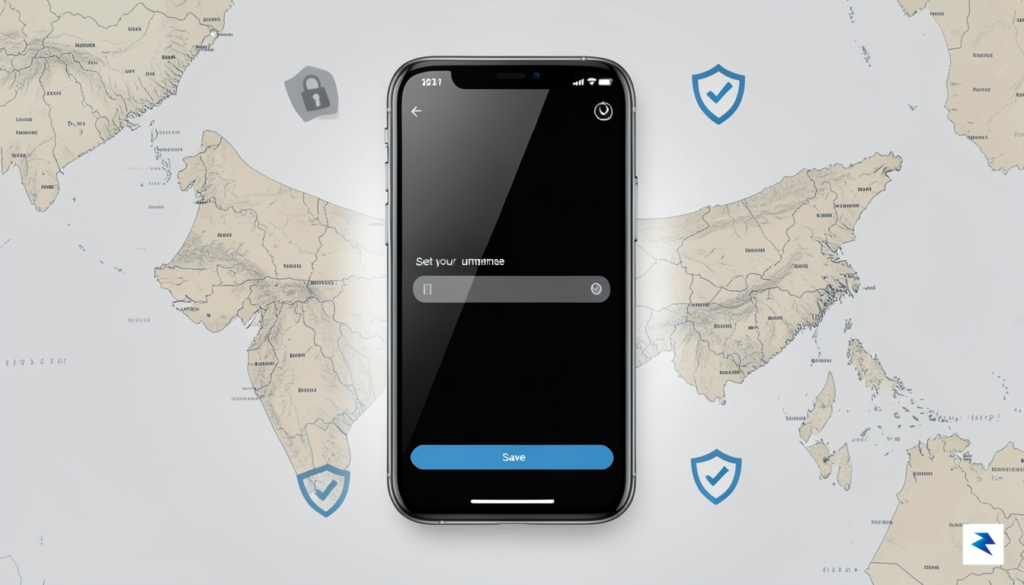
For years, WhatsApp has been synonymous with the phone-number-based account model, a structure that tethered digital identity directly to a physical SIM card. This architecture provided a sense of verifiable accountability, which many governments—most notably in India—have leaned on to track the flow of information. However, the platform’s pivot toward a username-based system signals a fundamental shift in how users interact, effectively decoupling identity from the traditional telecom registry. While this evolution is designed to enhance user convenience and personal privacy, it has ignited a fierce debate regarding the balance between individual anonymity and the state’s desire for digital traceability.
Indian officials and privacy advocates have expressed profound skepticism regarding this transition, fearing that usernames will create a “black box” that complicates law enforcement efforts. The central tension here is that while phone numbers are legally linked to verified identities through mandatory KYC (Know Your Customer) protocols in India, usernames can be ephemeral, easily replaced, and disconnected from any verifiable government identification. Critics argue that this change could hinder the ability of regulators to trace the origins of misinformation or illegal activities that often circulate within encrypted threads. Conversely, privacy advocates contend that this move is a necessary step toward protecting vulnerable users who wish to connect without exposing their private contact information to strangers or potential harassers.
The shift from a phone-number-centric model to a username-based identity is not just a feature update; it is a fundamental challenge to the current regulatory frameworks that rely on mobile numbers as the ultimate identifier for digital citizens.
Comparing WhatsApp to other platforms like Telegram or Discord illustrates just how significant this move is. Those platforms have thrived on username-based connectivity for years, often leading to friction with global regulators who prioritize state-level surveillance requirements. By adopting this model, WhatsApp is moving away from its role as a “digital extension of the phone book” and toward a more fluid, profile-centric social network. This creates a difficult crossroads for the company: it must navigate the pressure to provide a secure, anonymous environment for its massive user base while simultaneously appeasing the stringent, and often conflicting, data access demands of national governments that view total anonymity as a threat to public order and national security.

The recent lapses in privacy-preserving infrastructure serve as a sobering reminder that no single tool, regardless of the brand behind it, acts as a silver bullet for your digital security. While features like Apple’s email masking provide a convenient layer of obfuscation, they are susceptible to technical bugs and logical flaws that can inadvertently expose the very data they were intended to guard. As sophisticated threat actors like Scattered Spider continue to exploit human psychology and technical gaps to bypass traditional defenses, the responsibility for maintaining a secure digital perimeter falls increasingly on the user. True security is found not in a single setting, but in a layered strategy that anticipates the possibility of failure in any individual service.
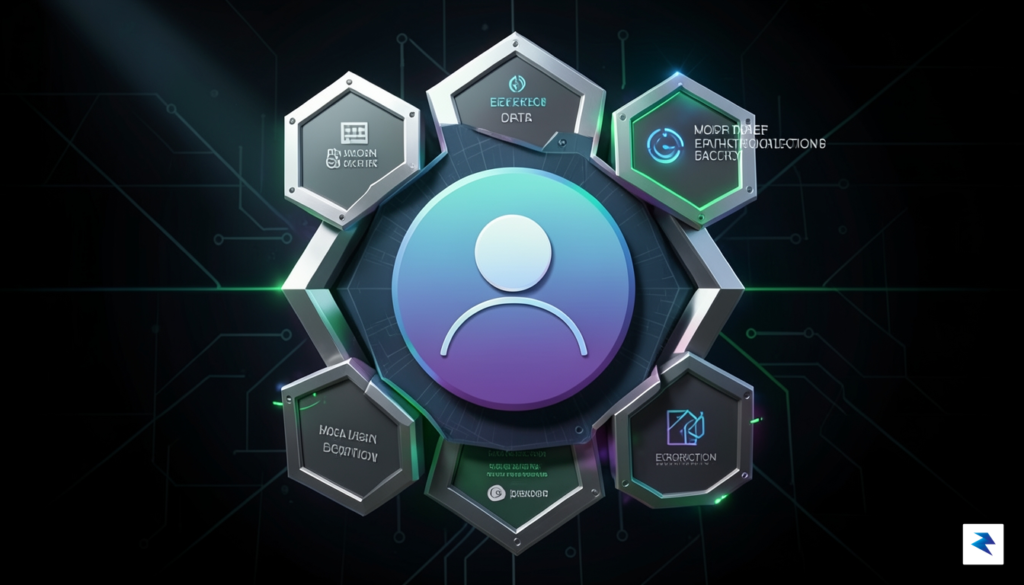
To navigate this complex landscape, you must transition from a passive consumer of privacy tools to an active manager of your digital footprint. This begins with a fundamental shift in how you treat your online accounts and the credentials attached to them. By implementing a proactive security checklist, you can significantly reduce your attack surface and minimize the potential impact of a service-level data breach:
The most effective defense against modern cyber threats is not a single piece of software, but a mindset of persistent vigilance. When one layer of your security architecture fails, your other safeguards must be strong enough to prevent a total compromise of your digital identity.
Staying informed is the final, and perhaps most critical, component of this strategy. The threat landscape is not static; it evolves in real-time, often outpacing the patches released by tech giants. By remaining aware of the latest trends in social engineering and software vulnerabilities, you gain the ability to adjust your habits before a breach occurs. Remember that your digital identity is not a static possession to be protected once; it is a dynamic entity that requires constant attention, refinement, and the willingness to adapt to new realities.
You must be logged in to post a comment.