
The $3.8 Billion Lesson: Why Trump-Themed Memecoins Cost Retail Investors Millions
The Rise and Fall of Trump-Themed Memecoins The recent explosion of Trump-themed memecoins represents a unique, albeit volatile, convergence…


In a move that has drawn significant scrutiny from policy analysts and environmental advocates alike, the Department of Energy (DOE) recently undertook a massive digital restructuring that resulted in the removal of approximately 6,000 pages from its official web domain. This extensive purge was not merely a minor site update; it represented a substantial reduction in the volume of public-facing information available on the agency’s primary digital portal. While federal agencies frequently conduct routine maintenance to prune outdated content, the sheer scale of this particular deletion—covering nearly 6,000 individual URLs—suggests a more deliberate shift in how the government organizes and presents its guidance on national energy consumption.

The timing of these deletions has been particularly contentious, as the removal occurred precisely while large swaths of the United States were grappling with record-breaking heatwaves. During periods of extreme temperature stress, demand on the power grid reaches peak levels, making public access to energy-saving strategies and efficiency guides more critical than ever. Critics of the decision argue that by dismantling these archives, the department effectively silenced a repository of actionable advice that helped homeowners and businesses reduce their electrical load. Whether these tips were outdated or remained relevant is at the heart of the debate, but the loss of accessible, centralized guidance during a climate-sensitive window has certainly complicated the agency’s public communication strategy.
The core of the controversy lies not just in the maintenance of digital infrastructure, but in the accessibility of practical tools that allow citizens to participate in national energy security during peak demand events.
To understand the scope of the change, it is necessary to examine exactly what was removed. The affected content primarily consisted of detailed energy conservation tips, consumer guides on household efficiency, and instructional materials designed to help the public navigate energy usage during extreme weather. While officials have categorized these removals as part of a broader effort to streamline the website and remove redundant or legacy data, observers are left to wonder about the criteria used to determine which information was deemed “essential.” Distinguishing between routine technical housekeeping and a substantive policy shift requires a closer look at whether the information was truly obsolete or if it represented a strategic withdrawal from active public outreach on consumer-driven energy conservation.
Ultimately, the digital scrubbing serves as a reminder of how vulnerable public records are to administrative shifts in priority. When thousands of pages disappear from a government domain, it creates a void in the historical and practical record that private archives may not fully replicate. As the public continues to look for guidance on how to lower both their utility bills and their environmental footprint, the absence of these resources forces a conversation about transparency and the responsibility of federal agencies to maintain a robust, accessible knowledge base for all Americans.

To understand why the disappearance of thousands of Department of Energy web pages sparked such a national outcry, one must recognize that energy policy has long ceased to be a purely technical matter in the United States. While the federal government has historically provided guidance on home efficiency to reduce costs and grid strain, these recommendations are increasingly viewed by critics as thinly veiled attempts at social engineering. When government agencies offer advice on thermostat settings or appliance usage, it often triggers a visceral reaction among those who perceive such guidance not as helpful data, but as a creeping infringement on personal autonomy and the American way of life.
This ideological friction was brought into sharp focus by recent controversies surrounding public figures like New York Assemblymember Zohran Mamdani, whose past comments regarding air conditioning—framed within the context of climate justice and energy consumption—ignited a firestorm on social media. Critics, including high-profile politicians like Senator Ted Cruz, leveraged these sentiments to paint a narrative of a “nanny state” obsessed with controlling the interior temperatures of private homes. For these detractors, every recommendation regarding an optimal thermostat setting becomes a symbolic battleground. They argue that the government’s focus should remain on expanding energy infrastructure rather than asking citizens to sacrifice their comfort during record-breaking heatwaves.
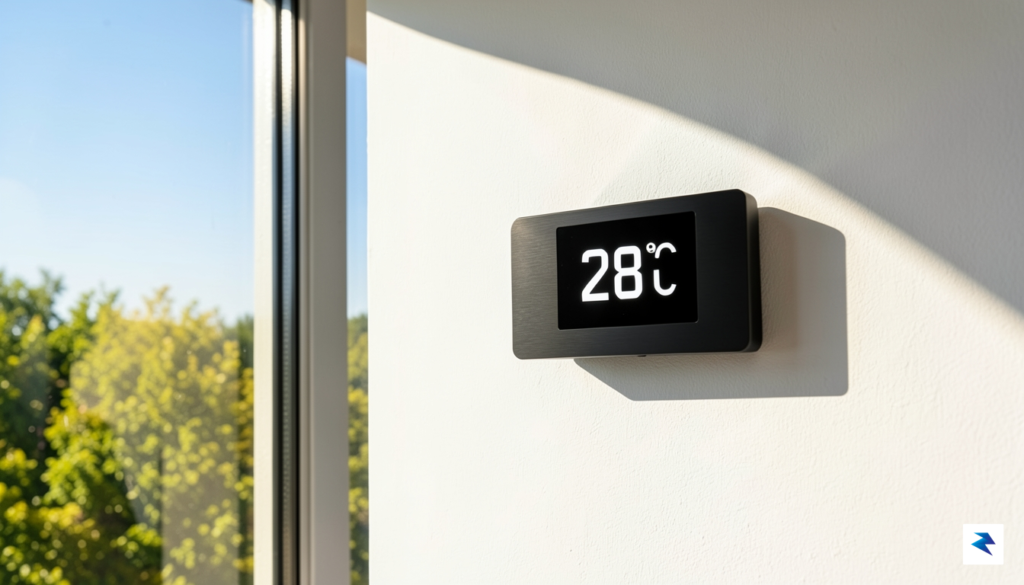
The polarization of these technical guidelines demonstrates how energy conservation has been subsumed by the broader culture wars. When the Department of Energy archives or removes pages that offer suggestions on saving power, it creates a vacuum that is quickly filled by speculation and political posturing. Instead of viewing efficiency as a pragmatic tool to lower utility bills or prevent blackouts, the discourse has shifted toward a binary choice: either one supports “freedom” and unfettered energy use, or one supports “government control” and conservation. This framing makes it exceptionally difficult for agencies to provide objective, non-partisan advice without immediately becoming the targets of significant political blowback.
The debate over energy conservation is rarely about the physics of thermodynamics; it is a profound disagreement over the appropriate role of the state in the private lives of its citizens.
Ultimately, the controversy surrounding these deleted pages highlights a profound disconnect between administrative goals and public perception. While policymakers may view the removal of older or redundant content as a standard housekeeping measure, the timing of the deletions—coinciding with extreme weather events—has rendered the gesture suspicious in the eyes of the public. By failing to account for the highly charged political atmosphere, government bodies often find that even the most mundane administrative updates are interpreted as deliberate policy shifts, further entrenching the divide between those who advocate for conservation and those who view it as an unwelcome intrusion into their homes.

At its core, the American electrical grid is a marvel of precision engineering, yet it remains fundamentally limited by the laws of physics and the current constraints of our existing infrastructure. When heatwaves sweep across the country, the demand for electricity spikes to levels that push power plants and transmission lines toward their maximum capacity. Grid operators, tasked with balancing supply and demand in real-time, often rely on a delicate “load balancing” act to prevent frequency fluctuations that could trigger cascading outages. While political discourse often frames energy conservation as a matter of ideology, grid managers view it through a lens of technical necessity: every kilowatt-hour reduced during peak hours represents vital breathing room for a system struggling to maintain stability under extreme thermal stress.
Conservation programs, which are frequently met with public skepticism or accusations of government overreach, are actually one of the most effective tools in a grid operator’s emergency toolkit. By incentivizing residential and industrial users to shift their consumption—such as pre-cooling homes or delaying the use of heavy appliances—utilities can shave the “peak” off the demand curve. This prevents the need to bring “peaker plants” online, which are often older, less efficient, and significantly more carbon-intensive than base-load generation. Without these voluntary or managed load-reduction strategies, the alternative is often the implementation of rolling blackouts to prevent a total system collapse, a scenario that is far more disruptive than adjusting a thermostat by a few degrees.

The friction arises when the technical reality of load management intersects with the personal autonomy of the American consumer. There is a deeply ingrained cultural resistance to being told how to manage one’s own home, particularly when that guidance is perceived as a top-down mandate from federal agencies. This creates a challenging paradox for policymakers: the more they lean into messaging about energy conservation to bolster grid resilience, the more it may be interpreted as an infringement on individual freedom rather than a pragmatic response to physical infrastructure limits. Consequently, when vital information regarding efficiency and load reduction is removed or scrubbed from official portals, it leaves a vacuum that is often filled by speculation rather than a clear understanding of how our electricity is delivered and protected.
True grid resilience is not merely about generating more power, but about synchronizing demand with a finite and aging supply chain during the most vulnerable moments of a heatwave.
Ultimately, bridging the gap between political rhetoric and engineering reality requires a transparent conversation about what the grid can—and cannot—handle. If the public perceives conservation efforts as mere political virtue signaling, they are less likely to participate in the demand-response programs that keep the lights on during record-breaking temperatures. By clarifying the technical necessity of these efforts, agencies could better frame energy efficiency not as a lifestyle restriction, but as a collective insurance policy against the systemic failures that occur when the grid reaches its breaking point.

The sudden disappearance of thousands of energy conservation pages from federal websites highlights a growing tension between the necessity of modernizing digital interfaces and the imperative of preserving institutional memory. When government agencies purge extensive archives, they do more than just clean up a server; they effectively erase the historical trajectory of public policy. These documents, ranging from decades-old efficiency standards to long-standing consumer guidance, serve as a vital repository of how the United States has approached energy consumption over time. Without these accessible records, researchers, historians, and concerned citizens lose the ability to track the evolution of federal guidance, making it nearly impossible to evaluate the consistency or effectiveness of past energy initiatives.
This trend toward digital pruning underscores the critical role played by independent institutions like the Internet Archive. In an era where government websites are increasingly ephemeral, the Wayback Machine often stands as the only firewall against the total loss of public information. Transparency acts and federal record-keeping requirements were designed to prevent exactly this kind of data erosion, yet digital governance remains a gray area where outdated content is often viewed as a liability rather than an asset. When valuable educational resources are scrubbed from the public domain under the guise of modernization, it creates an information vacuum that hinders public accountability and undermines the democratic principle that government information should remain permanently accessible to the people it serves.

The potential negative consequences of deleting so-called “dated” resources extend far beyond simple inconvenience. Even if specific technical advice regarding older appliances or legacy systems is no longer cutting-edge, it remains essential for those maintaining older infrastructure or studying the history of technological shifts in the domestic energy sector. By removing these resources, the government risks alienating a segment of the population that relies on comprehensive, long-term documentation. Furthermore, such erasures can lead to a fragmented public understanding of policy changes, as the original context and foundational reasoning behind current regulations are stripped away.
True transparency requires not just the disclosure of new initiatives, but the vigilant preservation of the entire policy narrative, ensuring that the public can audit the past as easily as they monitor the present.
Ultimately, a more sustainable model of digital governance must find a way to balance the need for streamlined, user-friendly websites with the non-negotiable requirement for historical transparency. Agencies could adopt “archival-first” strategies, such as moving legacy content to static, searchable, and permanent sub-domains rather than deleting them outright. This approach would allow for the modernization of primary landing pages while ensuring that historical guidance remains part of the public record. By treating digital archives as a public trust rather than administrative clutter, the government can demonstrate that it values continuity and accountability as much as it values technological progress.
You must be logged in to post a comment.