DOE Deletes Thousands of Energy Pages: What You Need to Know
The Digital Scrubbing: Understanding the DOE Web Page Deletion In a move that has drawn significant scrutiny from policy analysts and…

Since its launch in November 2004, the Swift Observatory has been an indispensable eye in the sky for high-energy astrophysics, fundamentally altering our understanding of the most violent and energetic phenomena in the cosmos. Originally named for its remarkable agility and rapid response capability to transient events, Swift was specifically designed to detect and pinpoint gamma-ray bursts (GRBs) with unprecedented speed, allowing ground-based and other space telescopes to quickly follow up on these fleeting cosmic explosions. For nearly two decades, this remarkable instrument has not only fulfilled its primary mission but has vastly expanded its scientific scope, becoming a cornerstone for discovery across a wide spectrum of astrophysics.
In 2018, the observatory was officially renamed the Neil Gehrels Swift Observatory, a poignant tribute to Dr. Neil Gehrels, a visionary astrophysicist who was instrumental in the mission’s conception and development. This renaming underscored the profound impact Gehrels had on the field and highlighted how Swift’s contributions had grown far beyond its initial mandate. Under Gehrels’ leadership and subsequently, the observatory transitioned from solely focusing on GRBs to observing an array of extreme cosmic events, solidifying its place as a versatile and enduring scientific asset for the global astronomical community.
The Neil Gehrels Swift Observatory’s scientific achievements are extensive and profound. It has mapped the earliest universe by using GRBs as cosmic lighthouses, probing the conditions of the nascent universe when the first stars and galaxies were forming. Beyond GRBs, Swift has been critical in identifying and characterizing various other cataclysmic events, including the birth of new black holes, the feeding frenzies of supermassive black holes at the centers of galaxies (active galactic nuclei), and the explosive deaths of massive stars as supernovae. Its multi-wavelength capabilities, spanning gamma-ray, X-ray, and ultraviolet/optical light, allow it to capture a comprehensive view of these dynamic phenomena, providing crucial insights into their underlying physics.
Even with newer, more technologically advanced, and often more expensive observatories now in operation, Swift retains a unique and vital role. Its unparalleled agility to re-point to targets within minutes of an alert makes it an essential first responder for transient astronomical events, a capability that larger, more complex telescopes often lack due to their slower slewing times and more rigid scheduling. Furthermore, its continuous operation for almost two decades has built an invaluable long-term dataset, allowing scientists to study the evolution of cosmic sources over extended periods, an advantage that cannot be replicated by short-term missions. This combination of rapid response and sustained observation ensures Swift remains a critical asset, providing context and initial data that often guide the more detailed observations of its successors.
Ultimately, the Neil Gehrels Swift Observatory represents more than just a piece of hardware; it is a legacy of discovery, a testament to enduring scientific ingenuity, and a continuously productive instrument that still yields groundbreaking data. Its ongoing ability to detect, pinpoint, and characterize the most energetic events in the universe makes its continued operation incredibly valuable. Understanding this deep scientific importance is absolutely crucial to grasping the urgency and significance behind the recent emergency efforts by NASA to prevent this invaluable sentinel from prematurely falling back to Earth.


While space is often perceived as a pristine, empty vacuum, it is actually a dynamic and turbulent environment governed by the whims of our nearest star. The Earth is constantly bathed in a stream of charged particles and radiation from the sun, which fluctuate according to an eleven-year solar cycle. During periods of heightened solar activity, the sun releases more energy and heat into the upper reaches of our atmosphere, causing the gases—primarily oxygen and nitrogen—to absorb this energy and expand outward. This phenomenon is known as atmospheric swelling, and it effectively pushes the edge of our breathable atmosphere much higher into space than it resides during solar minimums.
For satellites like the Swift Observatory, which orbits in Low Earth Orbit (LEO), this atmospheric expansion acts like a slow-moving, invisible wall. As the atmosphere pushes upward, it becomes denser at the altitudes where these spacecraft operate, creating a phenomenon called atmospheric drag. Much like a car experiencing wind resistance on a highway, a satellite traveling at thousands of miles per hour through these gas particles begins to lose kinetic energy. This friction gradually saps the orbital momentum of the spacecraft, causing it to spiral inward toward the planet. If left unchecked, this process of orbital decay inevitably leads to a satellite losing its altitude so rapidly that it begins a terminal descent into the denser layers of the atmosphere, where it would eventually burn up.
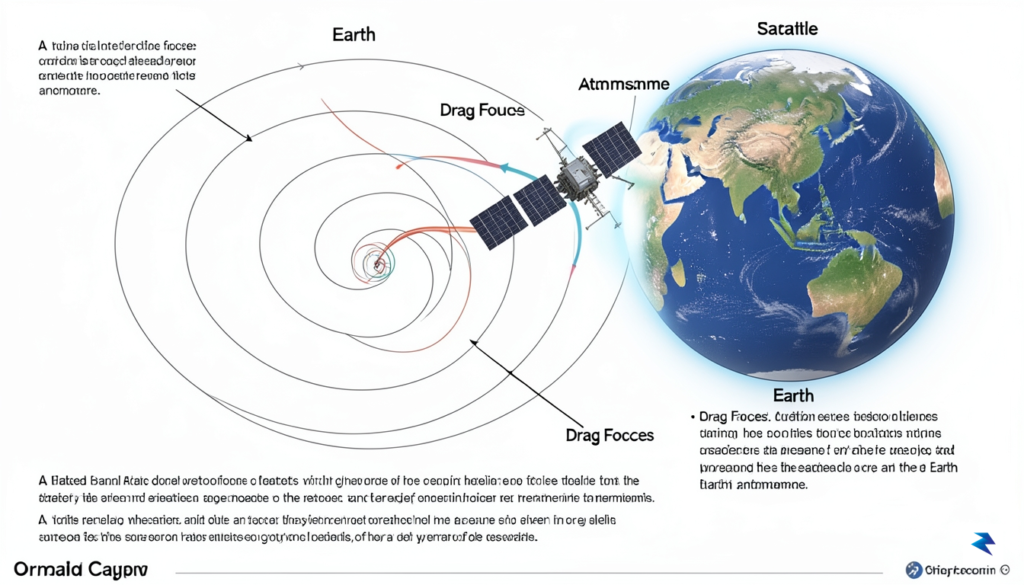
The Swift Observatory, a cornerstone of high-energy astrophysics, has recently found itself at the mercy of this relentless cycle. Having operated for nearly two decades, the mission was designed to withstand the harsh conditions of space, but the intensity of recent solar maximums has significantly exceeded original projections. Unfortunately, the observatory’s onboard systems were not designed for such prolonged exposure to this increased drag. As the spacecraft’s altitude began to drop at an alarming rate, mission controllers attempted to utilize the onboard reaction control system—the traditional thrusters used for station-keeping—to boost the observatory back to a stable orbit.
The physics of space are unforgiving; when atmospheric drag outpaces a satellite’s ability to maintain its velocity, the laws of gravity eventually take over, turning a scientific asset into a falling object.
These attempts, however, were complicated by the fact that the hardware was never meant to combat such a persistent, high-density environment for this length of time. The mission team realized that relying on standard maneuvers was no longer a viable long-term strategy, as the thrusters were rapidly approaching the end of their operational lifespan. This realization transformed a routine maintenance concern into a genuine emergency. Without a creative, non-traditional approach to orbital correction, the multi-billion dollar mission was effectively on a countdown, facing a premature and destructive end in the Earth’s dense upper atmosphere.

In a groundbreaking shift away from traditional, agency-led orbital maneuvers, NASA has sought an unconventional solution to the Swift Observatory’s precarious descent: a strategic partnership with the private aerospace startup Katalyst Space Technologies. This collaboration signifies a major pivot toward a new era of commercially-driven orbital maintenance, where the agility of the private sector is leveraged to solve complex, time-sensitive space crises. Rather than simply allowing a legacy asset to succumb to atmospheric drag, NASA is betting on the innovative capabilities of smaller, specialized firms to perform mid-orbit interventions that were once considered technically prohibitive or cost-ineffective.
Central to this rescue effort is the deployment of the Katalyst Link spacecraft, a vehicle engineered specifically to perform the delicate task of proximity operations and docking with aging hardware. The technical objectives of the mission are twofold: first, the Link must successfully navigate the complex orbital environment to intercept the drifting observatory; second, it must establish a secure connection to stabilize and potentially re-boost the satellite’s trajectory. This operation is not merely a repair mission, but a high-stakes demonstration of the feasibility of “life extension” services for satellites that are otherwise functioning well but have run out of the propellant necessary to maintain their operational altitude.

The strategic importance of this partnership cannot be overstated, as it highlights a shift in how NASA approaches the lifecycle of its spaceborne infrastructure. By contracting with a nimble, agile company like Katalyst, the agency is effectively bypassing the long lead times and bureaucratic hurdles often associated with large-scale, in-house satellite recovery missions. This model of “on-demand” orbital support provides a blueprint for future missions, suggesting that legacy hardware does not necessarily have to be abandoned the moment it reaches the end of its projected fuel life. If successful, this mission will prove that with the right tools and a modular, commercial approach, we can significantly extend the scientific return of missions that have already revolutionized our understanding of the universe.
The collaboration represents a fundamental change in space operations, moving from a culture of disposal to one of sustainability and active orbital stewardship.
Ultimately, the mission serves as a litmus test for the future of the space economy. As the number of objects in orbit continues to climb, the ability to perform maintenance and rescue operations is evolving from a luxury into a necessity. By entrusting this critical recovery to the private sector, NASA is not only saving a vital scientific instrument but is also fostering a robust market for in-space servicing, assembly, and manufacturing. This initiative demonstrates that the next generation of space exploration will be defined not just by what we launch, but by how effectively we can maintain and protect the assets we already have in the stars.
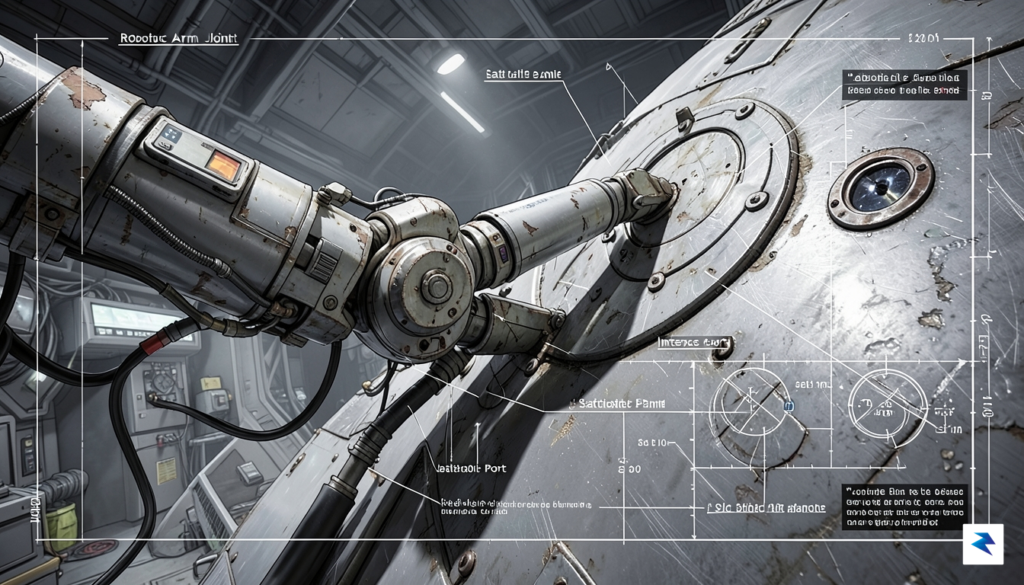
Performing a rescue mission in the unforgiving environment of low Earth orbit is fundamentally different from roadside mechanical repair. While a car can be pulled to the shoulder and accessed via a standardized hood, the Swift Observatory is a drifting, non-cooperative target hurtling through the vacuum of space at thousands of miles per hour. Because Swift was designed and launched in the early 2000s, it lacks the modern, standardized docking interfaces that contemporary spacecraft utilize to link together safely. Consequently, engineers are faced with the daunting task of manipulating a delicate scientific instrument that was never meant to be touched by human hands or robotic grippers once it reached orbit.
The primary technical hurdle lies in the physics of non-cooperative intervention. Approaching an aging satellite requires a level of precision that approaches the limits of modern guidance, navigation, and control systems. The rescue spacecraft must perfectly synchronize its velocity and attitude with Swift, all while navigating the risks of unintended momentum transfer. If the rescue craft were to make contact with a solar panel or an antenna, even a minor kinetic nudge could send the observatory into a lethal tumble, potentially damaging its sensitive instruments or solar arrays beyond repair. Furthermore, the inherent communication latency between ground control and the spacecraft means that the final approach must be largely autonomous, relying on sophisticated computer vision and real-time sensor fusion to interpret the observatory’s orientation in the dark of space.

Beyond the logistical nightmare of matching orbits, there is the persistent danger of structural fatigue. Over two decades of exposure to extreme temperature fluctuations and ionizing radiation have likely made the observatory’s exterior materials brittle. A robotic arm or docking mechanism that might have functioned perfectly on a pristine, brand-new satellite could inadvertently fracture the aging skin of the Swift Observatory. This necessitates a “gentle touch” approach, where the rescue mission must account for the mechanical stresses that could arise during physical engagement. The engineering team has had to develop innovative ways to apply force, ensuring that they stabilize the craft without compromising its structural integrity.
The success of this mission rests on the ability to turn a rigid, fixed-purpose satellite into a flexible target for remote intervention, effectively rewriting the rules of orbital maintenance on the fly.
Ultimately, this operation is a testament to the ingenuity required to extend the life of space-based assets. By overcoming the limitations of 20th-century design through 21st-century robotics and computational modeling, NASA is proving that we are no longer limited to simply abandoning hardware when it begins to fail. Every maneuver is a high-stakes calculation where the margin for error is measured in millimeters and milliseconds. By successfully navigating these complex technical challenges, the mission not only saves a vital piece of astronomical equipment but also establishes a critical framework for future satellite servicing and debris mitigation efforts.

The successful intervention to stabilize the Swift Observatory represents a pivotal shift in how humanity approaches the growing crisis of orbital congestion. For decades, the standard operating procedure for a failing satellite was to let it drift, eventually succumbing to atmospheric drag and burning up—or worse, becoming a permanent, high-velocity piece of space debris. By actively maneuvering a legacy asset to ensure its continued viability, NASA has demonstrated that space is no longer a “use-and-discard” environment. This mission serves as a critical proof-of-concept, proving that we have the technical maturity to transition from passive observation of orbital decay to active, proactive space stewardship.
As we populate low Earth orbit with thousands of new satellites, the ability to extend mission life and perform emergency maintenance will become a mandatory capability for any space-faring nation. The economics of the modern space sector are shifting rapidly; as launch costs decrease, the value of the infrastructure already in orbit increases. Instead of viewing satellites as single-use consumables, operators are beginning to recognize the strategic necessity of modular servicing. If we can successfully refuel, repair, or reorient aging hardware, we can significantly reduce the volume of hazardous junk currently cluttering our most valuable orbital paths. Swift is the first real-world test case for this new era, setting a precedent that maintenance is far more sustainable—and cost-effective—than replacement.

“The future of space exploration depends not just on our ability to launch new technology, but on our capacity to maintain the legacy assets that currently underpin our global communications, climate monitoring, and scientific research.”
Furthermore, this mission reshapes our long-term strategy for space exploration by establishing a framework for orbital accountability. As regulations tighten regarding the mitigation of space debris, the techniques refined during the Swift rescue will likely become industry standards. Companies and government agencies that master the art of life-extension missions will gain a significant competitive advantage, effectively creating an “orbital economy” where satellite longevity is prioritized over rapid obsolescence. By treating the space environment as a finite, shared resource, we are moving toward a more responsible model of exploration. This proactive approach ensures that the lanes of low Earth orbit remain clear for future generations, transforming how we view the lifecycle of every object we send into the stars.
You must be logged in to post a comment.