NASA’s Emergency Mission to Save the Swift Observatory from Orbital Decay
The Swift Observatory: A Legacy of Discovery Since its launch in November 2004, the Swift Observatory has been an indispensable eye in the sky…
The rapidly evolving landscape of generative artificial intelligence has moved beyond the realm of speculative technology and into the high-stakes arena of federal litigation. For months, major entertainment conglomerates have waged a legal war against AI developers, alleging that models like Midjourney were built upon the unauthorized ingestion of copyrighted creative works. However, the narrative has shifted dramatically as Midjourney has pivoted from a purely defensive posture to an aggressive counter-offensive. By demanding that Hollywood studios disclose the specifics of their own internal AI integration, Midjourney is effectively challenging the industry’s moral high ground and forcing a transparent examination of how modern cinema is actually being made.
This legal standoff represents a fundamental tension between Silicon Valley’s ethos of “move fast and break things” and the established intellectual property frameworks that have long governed the entertainment sector. Hollywood studios have positioned themselves as the primary defenders of human creativity, arguing that AI-generated imagery threatens to devalue the work of artists, writers, and animators. Yet, the irony of this conflict lies in the widespread, often quiet, adoption of AI tools within the very studios that are filing these lawsuits. Midjourney’s discovery request serves as a strategic maneuver to prove that these entities are not merely victims of technological disruption, but active participants in the integration of synthetic media into their production pipelines.
At the heart of this confrontation is the question of whether the studios’ own use of generative tools mirrors the very practices they are currently seeking to outlaw in court. If evidence emerges that major production houses are utilizing AI to streamline concept art, storyboarding, or even visual effects, the legal foundations of their lawsuits could be severely undermined. This discovery process is therefore a pivotal turning point in the broader history of AI litigation. It transforms the courtroom into a venue where the definition of “original creation” is being rewritten in real-time, effectively compelling legacy media giants to reveal the proprietary secrets that sustain their current competitive advantage.
The outcome of this legal battle will likely set a precedent that defines the boundaries of fair use for a generation, potentially determining whether AI tools are viewed as collaborative instruments for human artists or as systemic infringements on intellectual property.
Ultimately, this collision is about more than just copyright law; it is about the future of labor and artistic integrity in a digital-first world. By forcing the studios to peel back the curtain, Midjourney is inviting a public conversation about whether the industry’s resistance to AI is rooted in a genuine desire to protect creative workers or merely a strategy to maintain control over the technological tools that will dominate the next century of storytelling. As the litigation proceeds, the entertainment industry faces a precarious reality where its own internal practices may soon be exposed as inextricably linked to the very technologies it seeks to dismantle.
Midjourney’s recent legal maneuver marks a significant pivot in the ongoing battle over generative AI, effectively shifting the battlefield from the theoretical training phase to the practical domain of commercial deployment. By compelling major Hollywood studios to disclose the specifics of their internal AI workflows, Midjourney is attempting to dismantle the narrative that independent AI developers are the sole bad actors in the creative ecosystem. This discovery request serves as a tactical counter-offensive, forcing the entertainment industry to open its own “black box” of proprietary automation tools. If studios are leveraging similar generative technologies to optimize production, cut costs, or synthesize digital assets, they face a difficult contradiction in attempting to penalize companies like Midjourney for the very techniques they quietly employ behind closed doors.
The strategic advantage of this move lies in the principle of transparency. For months, media conglomerates have positioned themselves as the guardians of intellectual property, arguing that AI models are built upon the unauthorized exploitation of their creative catalogs. However, by demanding internal documentation on how these studios integrate AI into their own pipelines, Midjourney is essentially asking: “Are the rules you want to impose on us the same rules you follow internally?” This shift forces the studios into a defensive posture where they must justify their own AI initiatives under intense public and legal scrutiny. If it emerges that studios are training private models on their own vast libraries—or even on the work of the very artists they represent—the moral high ground they currently occupy begins to crumble.
The discovery process forces a mirror upon the accuser, potentially revealing that the industry’s resistance to AI is less about protecting art and more about controlling the means of production for themselves.
Furthermore, this legal pressure creates a broader industry conversation about the normalization of AI in film and television. It is highly likely that many studios are already using generative tools to assist in storyboarding, visual effects, and even rapid content prototyping. By demanding discovery, Midjourney is compelling these corporations to acknowledge the nuanced reality of modern production. This forces a public debate that moves beyond binary arguments of “theft versus innovation” and toward a more complex discussion regarding equitable standards for AI usage. Ultimately, Midjourney’s goal is to demonstrate that if AI is to be regulated, the regulations must be applied universally, rather than serving as a convenient tool for incumbent players to stifle competition from smaller, more agile AI platforms.
At the center of this burgeoning legal conflict lies a fundamental clash over the definition of intellectual property in the age of generative models. For decades, copyright law has operated under the assumption that human authorship is the prerequisite for legal protection. However, as tools like Midjourney ingest massive datasets of visual media to “learn” artistic patterns, Hollywood studios are increasingly alarmed by the potential for their proprietary creative assets to be swallowed and repurposed without compensation or consent. The studios argue that this ingestion process constitutes a systematic infringement of their hard-won copyrights, suggesting that these models are effectively built on the backs of artists whose labor is being commodified by tech firms.
Conversely, companies like Midjourney lean heavily on the legal doctrine of “fair use,” which allows for the limited, transformative use of copyrighted material without permission. Their defense rests on the premise that AI models are not merely duplicating images; rather, they are analyzing the statistical relationships between pixels and concepts to create something entirely new. From their perspective, the AI is a sophisticated tool for human creativity, not a replacement for it. They argue that if the law were to strictly prohibit the training of models on existing copyrighted works, the rapid innovation currently defining the AI sector would grind to a halt, essentially creating an intellectual monopoly for established media conglomerates.
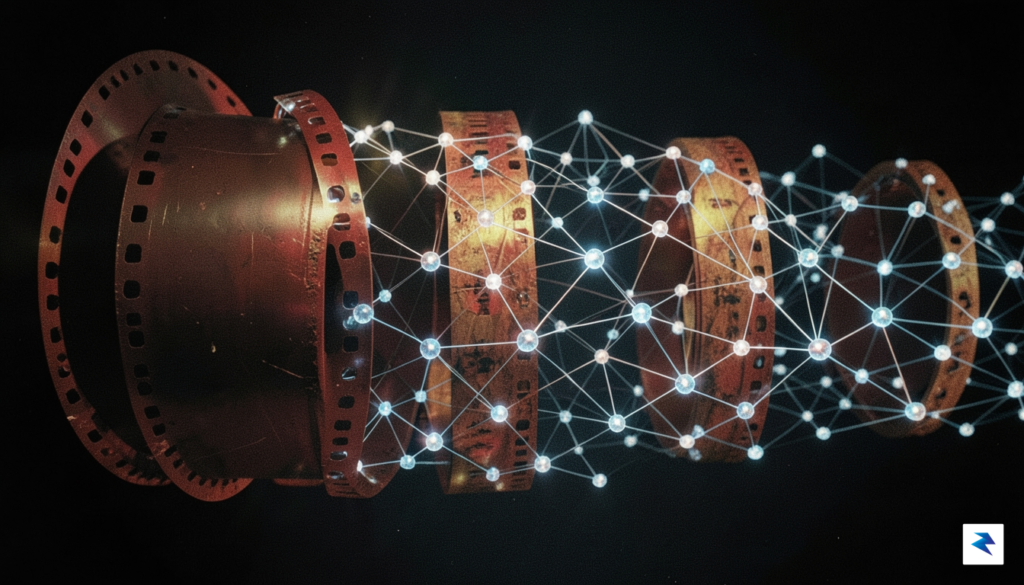
The tension becomes even more pronounced when distinguishing between direct replication and the more nebulous concept of style emulation. Studios are particularly concerned about the model’s ability to mimic the “look and feel” of a specific franchise or a legendary cinematographer’s unique visual signature. While copyright law generally does not protect an abstract “style,” the cumulative effect of these models is that they can generate content that feels indistinguishable from high-budget studio productions. This creates a gray area where the line between inspiration and appropriation blurs, forcing courts to grapple with whether an AI output that mimics the essence of a studio’s brand is a derivative work or a novel creation.
The core of the litigation hinges on whether the act of machine learning represents a transformative secondary use of data or a sophisticated mechanism for mass-scale copyright dilution.
Ultimately, this tug-of-war is not just about technical definitions; it is about the future of creative labor. If studios are forced to disclose the specifics of how their libraries are utilized by AI developers, it may provide the transparency needed to establish new licensing models. On the other hand, a strict ruling against these tech platforms could lead to a restrictive environment where AI development is relegated only to those who can afford massive, pre-licensed datasets. As this legal battle unfolds, the industry is waiting to see if existing intellectual property frameworks can stretch to accommodate the autonomous nature of artificial intelligence, or if a radical legislative overhaul will be required to protect the value of human-led creative endeavors.
For decades, the inner workings of Hollywood production have been treated as closely guarded trade secrets, shielded by non-disclosure agreements and a culture that prioritizes the “magic” of filmmaking over the mechanics behind it. Studios have long relied on proprietary pipelines—ranging from specialized CGI software to unique post-production workflows—to maintain a competitive edge. However, the rapid integration of generative AI into these creative processes has fundamentally disrupted this status quo. By demanding greater clarity on how these systems are deployed, companies like Midjourney are not merely asking about software preferences; they are challenging the very foundations of how the entertainment industry protects its intellectual capital and operational methodologies.
The reluctance of major studios to pull back the curtain is rooted in a valid, albeit increasingly contentious, business concern. If a studio were to publicly disclose exactly how it utilizes AI to generate storyboards, synthesize background assets, or automate editing tasks, it would effectively be providing a blueprint for its competitors to replicate its efficiency. Beyond the risk of mimicry, there is a significant fear regarding public perception. In an era where AI is frequently criticized for displacing human labor and devaluing traditional craftsmanship, studios are understandably hesitant to reveal the extent to which algorithms have replaced human artists. For a conglomerate, transparency is often viewed as a liability that could lead to labor union pushback, consumer boycotts, or legal scrutiny regarding the copyright status of AI-assisted content.
Conversely, the societal demand for transparency has reached a fever pitch. Audiences and creators alike are no longer satisfied with the “black box” approach to technology; they want to know whether the films and television shows they consume are the products of human ingenuity or machine-generated iteration. As AI becomes an invisible architect in the filmmaking process, the public interest lies in ensuring that these tools are used ethically—specifically regarding the fair compensation of the artists whose data trained these models. This tension creates a difficult balancing act: while studios strive to protect their proprietary edge, they are simultaneously facing an environment where the lack of disclosure is increasingly interpreted as a lack of accountability.
The core of the conflict lies in a simple question: does the public have a “right to know” how a piece of art is made, or does the studio’s right to protect its internal workflow outweigh the consumer’s desire for radical transparency?
Ultimately, the industry may be forced toward a middle ground that prioritizes disclosure without surrendering a studio’s entire competitive advantage. Whether through new industry standards or regulatory mandates, the pressure to reveal the “AI footprint” in modern media will only grow stronger. If studios continue to treat their AI integration as a state secret, they risk alienating an audience that is increasingly wary of the dehumanization of entertainment. Moving forward, the most successful studios will likely be those that navigate this transition by embracing a level of openness that acknowledges the role of technology while simultaneously championing the indispensable value of human creative direction.
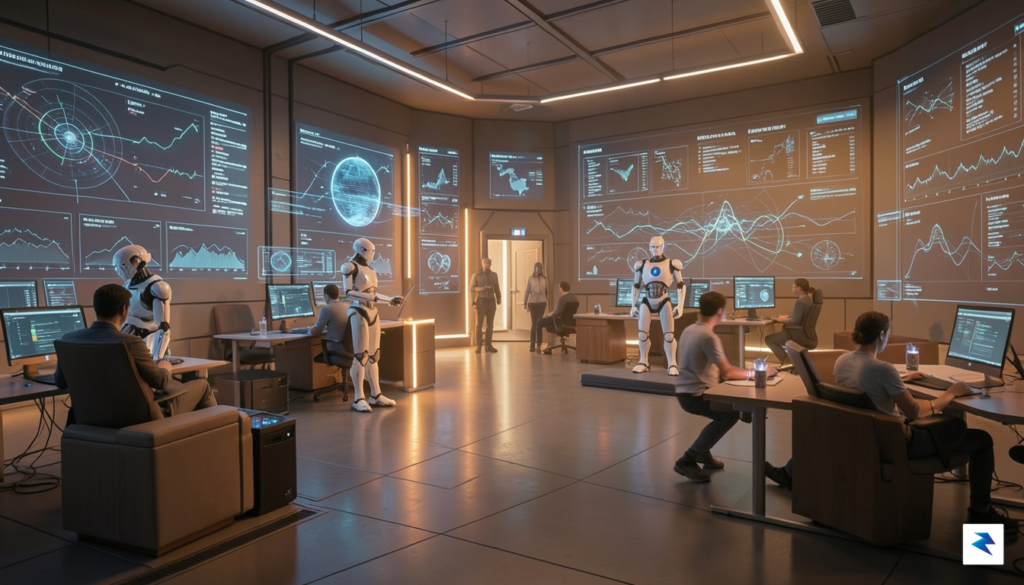
The legal challenges emerging from the intersection of artificial intelligence and creative industries, particularly the case involving Midjourney and Hollywood studios, mark a truly pivotal moment. Regardless of how the courts ultimately rule, this dispute has irrevocably shifted the conversation around AI’s role in creative labor, pushing long-simmering questions about transparency and ethical usage to the forefront. It compels both cutting-edge tech developers and established entertainment giants to meticulously re-evaluate their approaches to integrating AI tools, setting a precedent that will undoubtedly shape future industry standards for documentation, consent, and fair compensation.
One of the most profound long-term impacts will undoubtedly be felt within the realm of copyright law. Current legal frameworks, largely conceived in an era where human authorship was unequivocally clear, are struggling to adapt to the nuances of AI-generated content or content heavily augmented by AI. Questions surrounding who owns the copyright to a piece of art generated by an AI model trained on millions of existing images, or what constitutes a “derivative work” in this new paradigm, are becoming increasingly complex. This case, therefore, serves as a crucial catalyst, forcing legal scholars and lawmakers to either reinterpret existing statutes or, more likely, develop entirely new legislation designed to address the unique challenges of AI authorship, attribution, and the fair use of source material that trains these powerful models.
The necessity of a balanced and comprehensive regulatory framework cannot be overstated. As AI tools become more sophisticated and ubiquitous, a clear set of guidelines is essential to foster innovation without undermining the livelihoods and rights of human creators. This framework will need to navigate the delicate balance between promoting technological advancement and ensuring ethical deployment. It will likely encompass mandatory disclosures about AI usage in productions, robust mechanisms for obtaining consent from artists whose work is used in training datasets, and perhaps even new models for compensating creators whose styles or works are implicitly referenced or mimicked by AI. Such regulations would aim to create a level playing field, ensuring that the transformative power of AI enhances, rather than diminishes, the human element of creativity.
Consequently, this watershed moment will likely usher in a new era of industry standards. Studios and production houses might soon be expected to maintain detailed logs of every AI tool utilized in their projects, from initial concept art generation to final post-production effects. This level of documentation would provide unprecedented transparency, allowing for clear accountability and potentially influencing how projects are credited and licensed. Furthermore, the concept of consent will expand beyond traditional intellectual property agreements; artists may soon have explicit rights regarding whether their work can be used to train AI models, and under what conditions. Compensation models could also evolve, moving towards micro-payment systems or collective licensing structures that ensure contributors to AI training data receive ongoing, equitable remuneration for the value their work continues to generate.
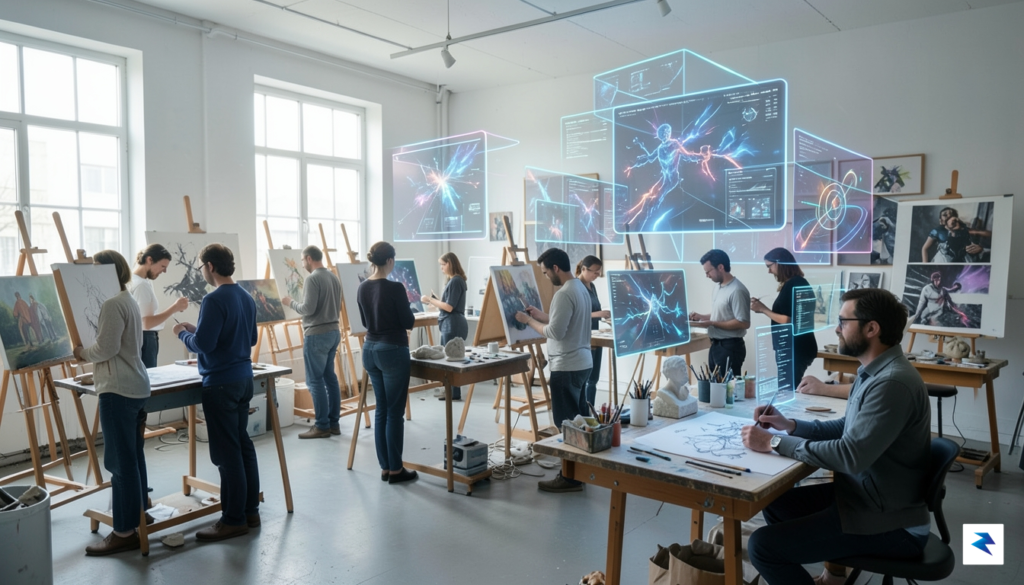
Ultimately, the future of creative work in entertainment is not about AI replacing human artists, but rather about a profound redefinition of human-AI collaboration. This legal challenge, regardless of its specific outcome, underscores the critical need for thoughtful integration. Human creativity, with its unique capacity for empathy, original storytelling, critical thinking, and emotional depth, remains irreplaceable. AI will undoubtedly become an indispensable tool, accelerating workflows, exploring new aesthetic possibilities, and handling repetitive tasks. However, it will be the vision, direction, and ethical guidance of human artists that continue to drive compelling narratives and truly innovative art, shaping how these powerful tools are wielded to push the boundaries of imagination.
You must be logged in to post a comment.