
Uber’s European Expansion: Why the Ride Has Hit a Speed Bump
The Ambition: Uber’s Vision for European Dominance For years, Uber has strategically identified Europe as an indispensable frontier for its…
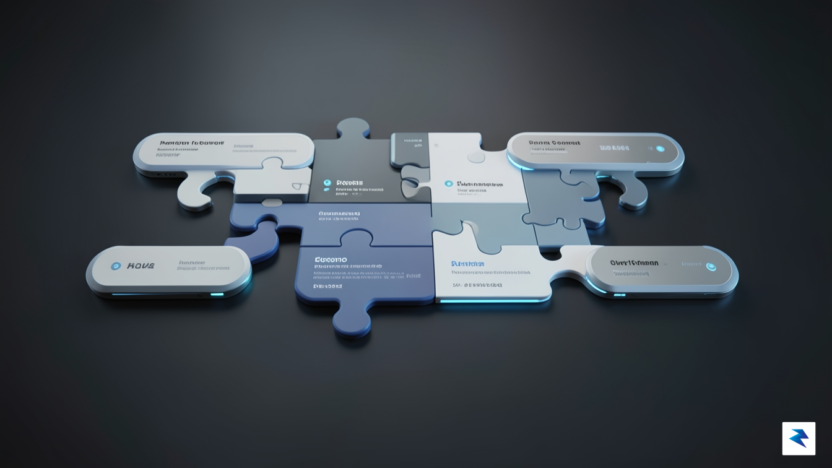
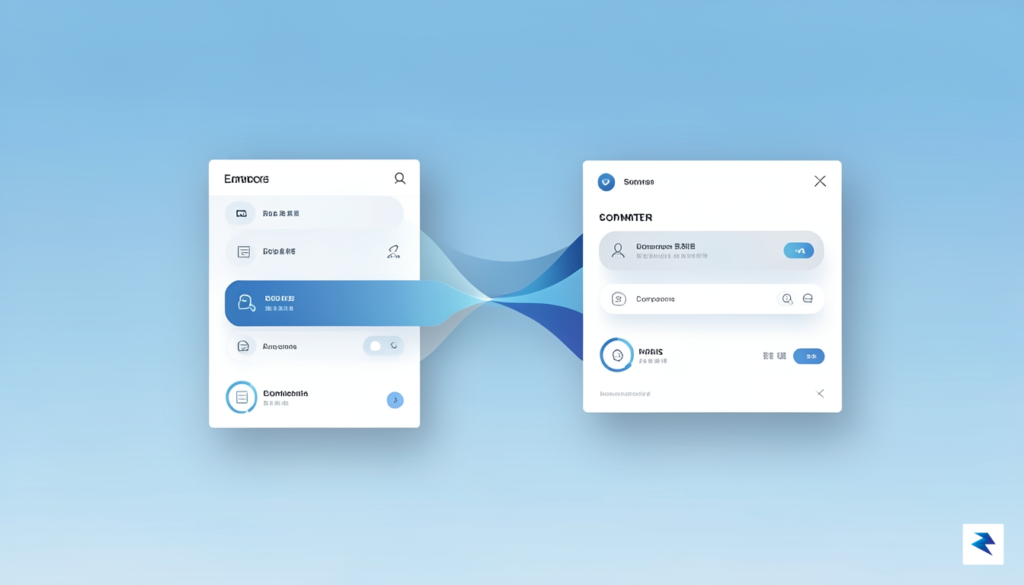
For years, the success of Shadcn/UI has been inextricably linked to its reliance on Radix UI as the underlying primitive layer. Radix provided a robust, battle-tested foundation for accessibility and complex component behavior, allowing developers to build sophisticated interfaces without reinventing the wheel. This synergy established the library as a go-to tool for modern React development, offering a perfect balance between unstyled, headless logic and highly customizable visual layers. However, as the ecosystem matured, the limitations of relying on a single third-party provider became apparent, prompting a strategic reevaluation of the library’s architectural backbone.
The decision to transition toward Base UI—an initiative deeply rooted in the Open UI standards—marks a significant departure from the library’s original dependency model. Unlike the previous reliance on a closed-source primitive library, this shift signals a commitment to broader industry standards and interoperability. By integrating with Base UI, the library gains access to a more versatile set of primitives that are designed to evolve in lockstep with the native web platform itself. This is not merely a technical swap of one dependency for another; it is a fundamental shift in how the library ensures long-term accessibility. By aligning with Open UI, the project is positioning itself to be more resilient, modular, and responsive to the needs of the wider web development community.

This transition represents a move toward a more sustainable and community-driven architecture, ensuring that the library remains adaptable as web standards continue to mature.
This collaborative pivot highlights a growing trend in the frontend landscape: the prioritization of shared, standardized primitive logic over isolated, vendor-specific implementations. The move to Base UI provides developers with a more consistent API surface, reducing the friction often associated with deep component customization. Furthermore, this change signals a major milestone in the project’s sustainability strategy. By moving away from a single-vendor dependency, the library reduces its technical debt and gains the flexibility to adopt future-proof features as they are standardized in browser engines. For developers who rely on the library for large-scale applications, this evolution ensures that the underlying logic remains stable, accessible, and fully aligned with the future of the open web.
Ultimately, the transition serves as a testament to the project’s growth and its willingness to embrace change in the pursuit of architectural excellence. By shifting to Base UI, the library is not only future-proofing its codebase but also inviting a broader range of contributions from the community. As the ecosystem moves toward these open, standardized primitives, the end result for the developer is a more reliable, performant, and maintainable toolkit that can scale alongside the most demanding UI requirements.
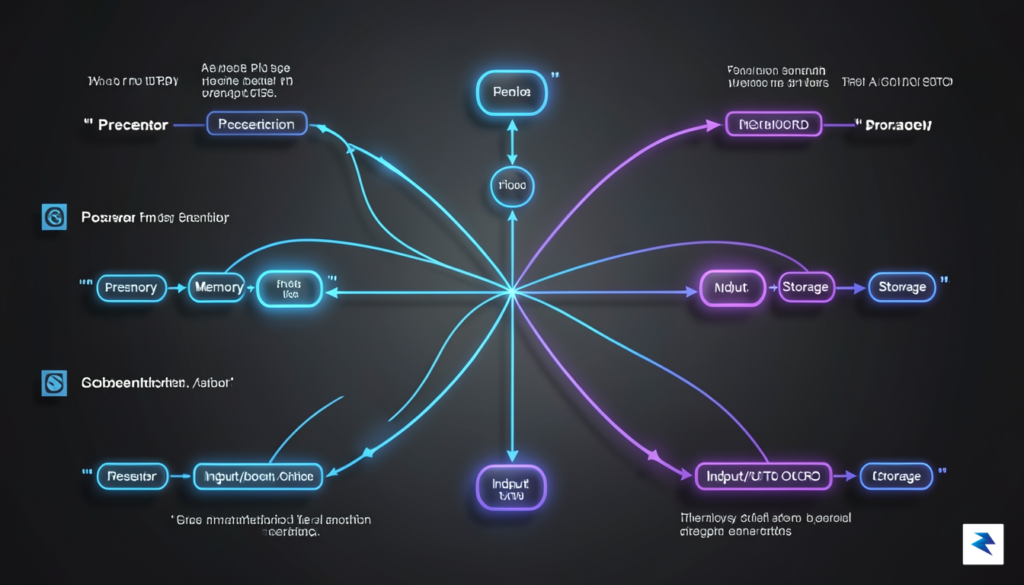
At the heart of this transition lies the shared philosophy of “headless” component design. Both Radix UI and Base UI prioritize providing the functional logic, accessibility standards, and state management required for complex UI elements, while leaving the visual styling entirely in the hands of the developer. By stripping away the prescriptive CSS, both libraries ensure that developers are not fighting against pre-existing styles when building bespoke interfaces. However, the divergence appears in how these two libraries handle the internal wiring of their components. Radix UI has long been celebrated for its robust, highly opinionated approach to composition, utilizing a strict slot-based architecture that creates highly predictable component trees.
In contrast, Base UI—the library maintained by the MUI team—leans into a more flexible, hook-centric architecture. While Radix relies heavily on a complex web of React Context providers to pass state down to nested sub-components, Base UI often employs a more modular strategy that can lead to smaller bundle sizes in specific tree-shaking scenarios. For the average developer, this shift means that the underlying React Context providers used to manage state—such as open/close toggles or selection indices—will behave differently. Migrating to Base UI essentially swaps out the engine under the hood, requiring a shift in how one approaches component composition and ref-forwarding patterns.
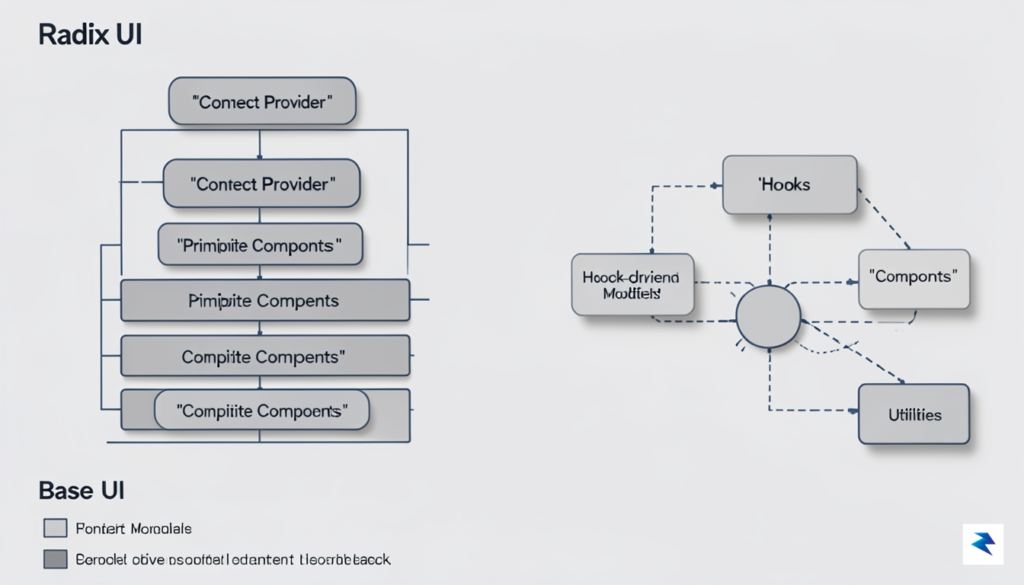
The transition to Base UI is not merely a library swap; it represents an evolution in how Shadcn/UI manages the lifecycle and accessibility state of its atomic components.
From an API design perspective, the differences are subtle but significant for long-term maintenance. Radix UI components often enforce specific structural requirements, where parent and child components must be strictly nested to function correctly. Base UI, conversely, tends to offer more granular control over these relationships, providing developers with the ability to hook into internal states without necessarily adhering to a rigid DOM structure. This flexibility is a double-edged sword: it allows for more creative implementations, but it also increases the surface area for potential configuration errors if the developer is not careful with prop drilling or state synchronization.
Ultimately, this change is designed to improve the long-term sustainability of the library. By leveraging the patterns found in Base UI, the maintainers can take advantage of the active development and rigorous testing cycles provided by the MUI ecosystem. For developers already familiar with the Shadcn/UI ecosystem, the external API will remain largely consistent, masking the heavy lifting occurring behind the scenes. However, understanding these structural nuances is vital for debugging complex interactions, as the way you interface with component refs and internal state objects will now align with Base UI’s specific patterns rather than the legacy Radix implementations.

For developers currently leveraging Shadcn/UI in production, the transition to Base UI is engineered to be remarkably smooth, largely due to Shadcn’s robust abstraction layer which has always aimed to shield users from underlying library specifics. While the foundational primitives underpinning your beloved components are indeed shifting from Radix to Base UI, the immediate visual and functional impact on your existing applications is anticipated to be minimal for typical implementations. This means that, in most scenarios, your deployed components will continue to function and render as expected without requiring an urgent rewrite of your application logic or styling. However, understanding this internal architectural evolution is key to maintaining, upgrading, and further customizing your projects effectively.
When it comes to updating existing projects, the process is designed to be straightforward. For the majority of developers, updating to the latest Shadcn/UI version and then running `shadcn-ui add` or `shadcn-ui update` for individual components will automatically fetch the new Base UI-powered versions. This operation will typically involve an update to your `components.json` file, reflecting the new primitive source, and a refresh of the component files in your `components` directory. While breaking changes for default component usage are generally not expected, it’s always prudent to consult the official Shadcn/UI changelogs for specific component updates, especially if you have heavily customized components or are relying on deeply nested internal structures that might have been more exposed in previous Radix-based iterations. Thorough testing after an update, particularly for critical user flows, remains an essential best practice.

Beyond immediate updates, the shift to Base UI unlocks significant enhancements in how developers can customize and style their components, simplifying future development efforts. Base UI adopts an even more “headless” philosophy than Radix, providing highly unopinionated, accessible building blocks that empower developers with unparalleled control over presentation. This means that overriding styles, injecting custom props, or swapping out internal elements becomes more intuitive and less prone to fighting against the component’s default styling or structure. Developers will find it easier to achieve unique brand identities and complex design systems, as Base UI inherently offers a cleaner slate for styling, reducing the need for deep `css` overrides or `!important` declarations. Consequently, future component customization will feel less like an uphill battle against a predefined structure and more like a fluid extension of your design vision.
Key Takeaway: For most Shadcn/UI users, the transition to Base UI is designed for minimal disruption to existing codebases, primarily affecting the underlying component primitives. The real benefit lies in simplified future customization and more granular styling control.
Furthermore, this pivot streamlines the management of component primitives. With Base UI, the focus is squarely on providing robust, accessible functionality while leaving the styling entirely to the developer. This clear separation of concerns means that the primitives are less likely to introduce unexpected style conflicts, making it simpler to integrate Shadcn/UI components seamlessly into any existing CSS framework or custom styling solution. The long-term implication is a more stable and flexible foundation for building sophisticated UIs, reducing maintenance overhead and accelerating the pace of feature development, as developers can confidently customize components knowing they are built on a highly adaptable and accessible base.
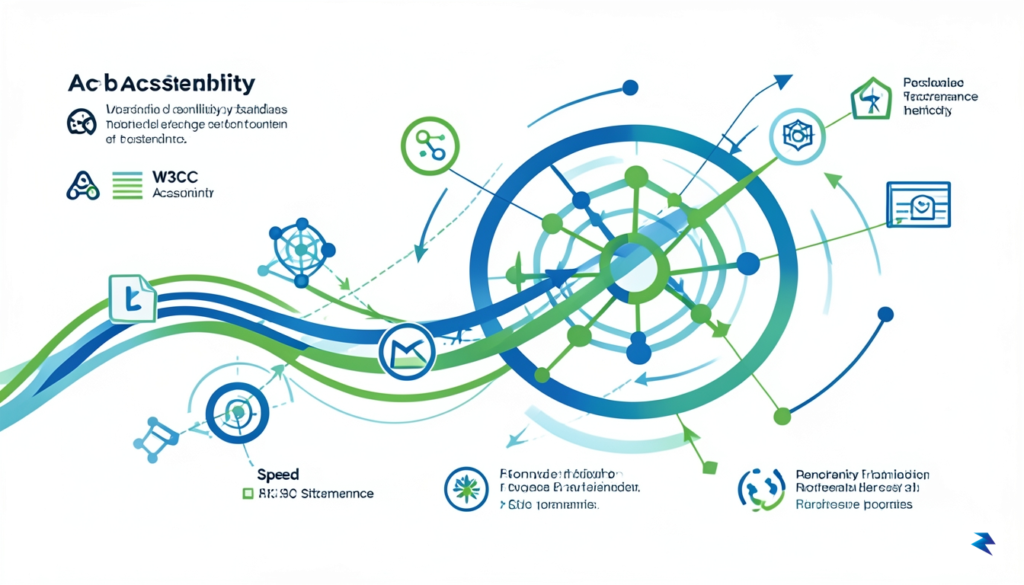
The strategic pivot toward Base UI represents a significant evolution in how Shadcn/UI manages the delicate balance between high-performance execution and rigorous accessibility compliance. By decoupling the library from its previous dependencies, developers can now leverage a more modular architecture that prioritizes efficient tree-shaking. This shift effectively minimizes the final bundle size, ensuring that end-users do not pay the “performance tax” of unused code. As web applications grow in complexity, the ability to import only the specific logic required for a single component becomes paramount, and this transition empowers developers to build leaner, faster interfaces that remain snappy even on low-end devices.
Beyond the technical metrics of speed and size, this move is fundamentally about institutionalizing accessibility. Base UI is engineered with a deep-seated commitment to strict ARIA standards and W3C guidelines, providing a robust foundation that handles complex keyboard interactions and screen reader announcements out of the box. Because these primitives are built with a “standards-first” mentality, they offer a level of reliability that is difficult to replicate with custom-built solutions. This ensures that every component—from a dropdown menu to a complex modal—functions predictably for users relying on assistive technologies, thereby reducing the burden on developers to manually patch accessibility gaps.
The true power of this migration lies in its alignment with the broader Open UI vision, where the focus shifts from reinventing the wheel to contributing to a unified, platform-agnostic ecosystem of accessible primitives.
Looking toward the future, Shadcn/UI is positioning itself to be a leader in the next generation of web development by embracing the Open UI philosophy. This vision advocates for a more standardized approach to component behavior, where the underlying logic is shared across frameworks, making the web a more cohesive environment. By aligning with Base UI, the library benefits from a wider array of community contributions and continuous testing cycles that go far beyond what a single maintainer could achieve alone. This collaborative model creates a “future-proof” architecture; as browser standards evolve and new accessibility requirements emerge, the library can adapt more rapidly, ensuring that your projects remain compliant and modern without requiring massive refactoring cycles.
Ultimately, this architectural shift is not merely a change in internal dependencies, but a commitment to long-term sustainability for the entire developer community. By prioritizing a foundation that is both lightweight and inherently accessible, the project invites developers to build interfaces that are inclusive by design rather than as an afterthought. This ensures that as the web continues to evolve, Shadcn/UI remains a reliable, high-performance choice for complex applications that require both aesthetic precision and absolute functional integrity.
You must be logged in to post a comment.