The AI Education Gap: Why the Wealthy Are Replacing Schools with Algorithms
The Rise of AI-Driven Education in Elite Circles For decades, the hallmark of elite education was the prestige of the physical campus—the…

The intersection of cryptocurrency and high-stakes politics has birthed a volatile sub-sector often dubbed “Polifi,” or political finance. Unlike traditional decentralized finance tokens that promise utility or governance, these assets derive their value almost exclusively from the headlines, social media trends, and the polarizing nature of modern political discourse. What began as a niche corner of the crypto market quickly exploded into a global phenomenon, where the names and likenesses of public figures became ticker symbols. Investors, driven by a blend of ideological fervor and the promise of “moonshot” returns, poured billions of dollars into these tokens, treating political loyalty as a speculative asset class.
Social media has acted as the primary engine for this speculative fire. Platforms like X (formerly Twitter) and Telegram have enabled viral marketing campaigns that leverage memes, short-form video, and inflammatory rhetoric to maintain constant visibility for these assets. When a politician makes a viral remark or experiences a significant moment in the polls, the associated memecoins often see instantaneous, albeit fleeting, spikes in liquidity. This hyper-connectivity creates a feedback loop where the price of a token becomes a real-time scoreboard for political sentiment, blurring the lines between genuine civic engagement and blind gambling. Consequently, the market has become increasingly detached from fundamental value, operating instead on the pure momentum of internet culture.
Within this ecosystem, the $TRUMP token emerged as the undisputed titan of the political memecoin market, capturing a level of speculative interest that dwarfed its competitors. Its rise was fueled not just by the former president’s existing base of supporters, but by a wider wave of traders looking to capitalize on the sheer chaos of an election year. At its peak, the token served as a proxy for the entire Polifi movement, attracting massive influxes of capital from retail investors who were convinced that the asset’s growth was inextricably linked to the political trajectory of its namesake. This massive accumulation of wealth created a false sense of security, as the market’s sheer size led many to believe that these assets had attained a level of permanence in the broader crypto landscape.
The core conflict at the heart of the Polifi movement is the tension between political expression and the cold, hard mechanics of financial speculation. While proponents argue that these tokens allow for a new form of decentralized political participation, the reality often proves to be a zero-sum game where late-stage entrants bear the burden of the market’s inevitable correction.
Ultimately, the collapse of these assets reveals the inherent fragility of value built on nothing more than digital symbolism. As the hype cycles inevitably cooled, the transition from euphoria to panic occurred with devastating speed, leaving millions of dollars in unrealized losses. This shift highlights a sobering truth: when political engagement is gamified through speculative tokens, the loudest voices on social media often dictate the financial outcomes for unsuspecting participants. The rise and subsequent decline of these tokens serve as a stark reminder that the digital theater of politics is rarely a sustainable foundation for long-term wealth, regardless of how loud the cheering gets in the digital arena.

The speculative frenzy surrounding political memecoins like the $TRUMP token has often been framed as a grassroots movement, yet the cold, hard numbers tell a dramatically different story of wealth concentration and widespread loss. Analysis reveals that investors in $TRUMP alone have collectively seen an astonishing $3.8 billion evaporate from their portfolios. This staggering figure underscores the inherent volatility and high-risk nature of these digital assets, where the promise of quick riches often gives way to significant financial setbacks for the majority. It’s a sobering reminder that behind the viral memes and fervent online communities, a profound redistribution of capital is occurring.
This immense sum, nearly $4 billion, did not simply vanish into thin air; it largely flowed from the wallets of millions of retail investors into the hands of a select few. While countless individuals chased the dream of astronomical gains, the primary beneficiary, former President Donald Trump, is reported to have netted an estimated $636 million from his holdings. This stark disparity highlights a crucial aspect of memecoin markets: they are often designed in a way that disproportionately rewards early entrants, creators, and those with significant insider knowledge or influence. The mathematical reality is that for every dollar gained by a few, many more dollars are lost by the broader base of participants, illustrating a highly imbalanced financial ecosystem.
Central to understanding these mechanics is the “greater fool” theory, a speculative concept where investors profit not from inherent value or fundamental growth, but from selling an overpriced asset to an even “greater fool” who is willing to pay more. Memecoins, by their very nature, possess no underlying utility, revenue streams, or tangible assets, making them pure vehicles for this phenomenon. Their value is entirely predicated on hype, community enthusiasm, and the continuous influx of new money, creating a precarious house of cards that can collapse without warning once the supply of ‘greater fools’ diminishes. This perpetual need for new buyers to sustain price momentum is precisely what makes them so attractive during rallies and so devastating during downturns.
Adding another layer to this complex financial landscape is the critical, often opaque, role played by market makers and early liquidity providers. These entities are frequently among the first to acquire vast quantities of a new memecoin at minuscule prices, sometimes even before public launch. By providing initial liquidity to decentralized exchanges, they establish the foundational trading pairs and can significantly influence early price discovery. As hype builds and retail investors flock in, these early holders can systematically offload their tokens into the rising demand, securing massive profits while later buyers are left holding increasingly devalued assets. This strategic positioning allows them to capitalize on the market’s volatility, effectively extracting value from the broader investor base.


The architecture of memecoin markets is fundamentally designed to foster a lopsided distribution of wealth, effectively creating a tiered system where early adopters and insiders hold an insurmountable advantage over the average retail participant. While retail investors are often lured in by viral marketing campaigns and the promise of astronomical returns, the underlying tokenomics frequently concentrate the vast majority of the supply in the hands of a few “whales.” These early participants—often comprising developers, private seed investors, and sophisticated bot operators—leverage their position to influence price movements long before the general public catches wind of a project. Consequently, the market becomes a game of musical chairs where the retail investor is not an equal participant, but rather the essential fuel required to inflate the asset’s value before the inevitable sell-off.
Liquidity pools serve as the primary mechanism for this wealth transfer, yet they are rarely as balanced as they appear on the surface. When a project launches, insiders often seed these pools with a disproportionate amount of tokens relative to their initial financial commitment. By controlling the majority of the available liquidity, these entities can dictate the price trajectory, triggering algorithmic bots to buy in and create a “fear of missing out” (FOMO) narrative. As the price climbs, retail investors rush to purchase the token, unknowingly serving as the “exit liquidity” that allows early backers to offload their holdings at inflated valuations. This process systematically strips capital from smaller, individual accounts and funnels it toward the wallets of the project’s architects and early-stage insiders.

Retail investors often view memecoins as a level playing field for democratization, but on-chain data consistently reveals a reality where the house almost always wins at the expense of the latecomers.
A stark contrast emerges when one compares the polished marketing narratives of these projects with the cold, hard reality of on-chain data. Public-facing communications emphasize community-driven growth and decentralized power, yet blockchain explorers tell a different story of concentrated ownership and suspicious wallet interactions. Many of these tokens exhibit a pattern where the top ten or twenty wallets control a significant percentage of the circulating supply, ensuring that any major sell order from these entities can instantly crash the market. By the time retail traders realize that the momentum has shifted, the insiders have already secured their profits, leaving the broader community to bear the burden of the massive price correction. This inherent structural inequality remains the most significant, yet often overlooked, factor in why billions of dollars in potential value evaporate from the pockets of everyday investors every year.

The allure of political memecoins often defies traditional financial logic, functioning less like an investment portfolio and more like a high-stakes cultural performance. At the heart of this phenomenon is a potent cocktail of tribalism and identity politics, where purchasing a digital token becomes a proxy for supporting a candidate or ideology. When an investor buys into a coin branded with a political figure, they are not merely seeking a return on capital; they are signaling their membership in a specific, often fervent community. This emotional entanglement effectively clouds financial judgment, as the asset’s price movement becomes inextricably linked to the investor’s sense of personal and political validation. Consequently, the standard warnings about volatility and lack of intrinsic value are dismissed as “FUD”—fear, uncertainty, and doubt—peddled by those outside the tribe.
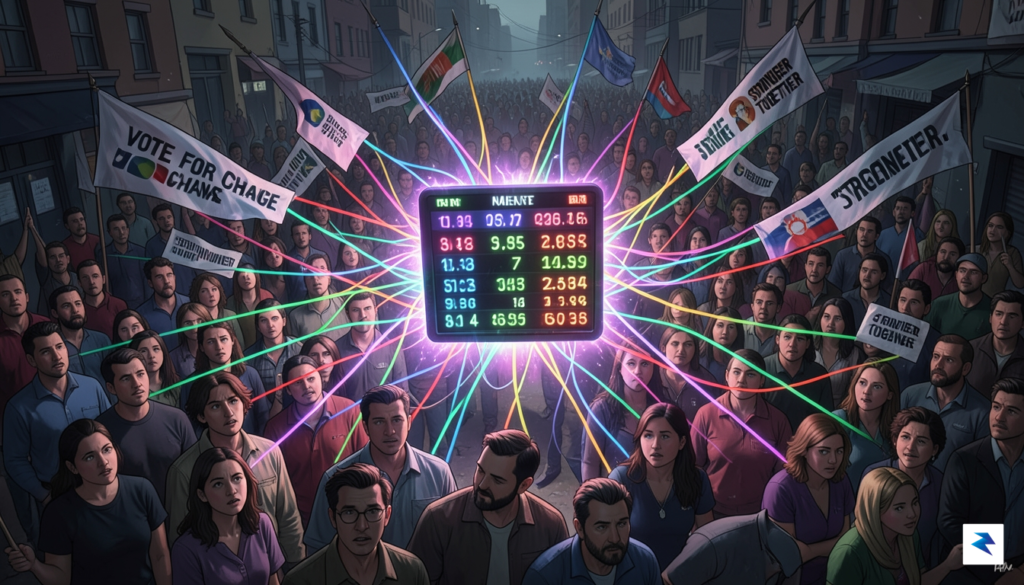
Social media echo chambers play a critical role in normalizing this extreme risk-taking by creating a self-reinforcing loop of optimism. Influencers and community leaders within these spaces often curate an environment where “diamond hands”—the commitment to hold an asset regardless of market conditions—is treated as a badge of honor and a form of loyalty. By framing the purchase as a movement rather than a speculation, these groups minimize the reality of financial loss, reframing a plummeting chart as a “dip” to be bought or a test of conviction. This creates a powerful form of FOMO (Fear of Missing Out), where investors feel that selling their stake is synonymous with abandoning their political allies, leading many to hold onto worthless tokens long after the rational point of exit has passed.
The financial destruction of $3.8 billion is not merely a failure of market analysis; it is a testament to how effectively narrative-driven assets can bypass the brain’s logical centers and tap directly into our deepest needs for belonging and partisan triumph.
Ultimately, the siren song of “get-rich-quick” narratives provides the final push for those who might otherwise be more cautious. Many investors are seduced by the prospect of turning a small, speculative wager into life-changing wealth, a dream frequently amplified by viral stories of early adopters who made fortunes on similar, albeit riskier, ventures. When these dreams are fueled by the high-octane energy of political fervor, the line between a calculated investment and a blind gamble vanishes. The psychological cost is significant, as investors find themselves not only drained of their savings but also forced to reconcile with the reality that their emotional investment was exploited by a market that cares nothing for their political vision.

The staggering $3.8 billion valuation wipeout associated with political memecoins has served as a loud wake-up call for global financial watchdogs. For years, the memecoin sector largely operated in a regulatory gray area, often dismissed as harmless retail speculation. However, the sheer scale of losses linked to assets tethered to political figures has shifted the narrative from benign internet culture to a matter of systemic market integrity. Regulators are now increasingly viewing these tokens not as digital collectibles, but as unregistered securities that lack the fundamental disclosures required to protect everyday participants from predatory market manipulation.
In the United States, the Securities and Exchange Commission (SEC) has maintained a long-standing posture that most tokens fall under the classification of investment contracts, particularly when they are marketed with promises of profit based on the efforts of others. As these political tokens continue to exhibit extreme volatility and suspicious trading patterns, it is highly probable that we will see an uptick in enforcement actions targeting the anonymous developers and influencers behind these projects. International regulators, including those in the European Union under the MiCA (Markets in Crypto-Assets) framework, are likely to follow suit, tightening the noose on assets that provide zero utility and operate primarily on the engine of speculative frenzy.
For the average investor, this environment necessitates a higher level of scrutiny. Identifying a potential “pump and dump” scheme requires looking beyond the hype of social media buzzwords. Investors should be wary of projects that:
“The transition of political memecoins from niche speculative assets to high-risk financial instruments marks a pivotal moment for crypto regulation. When billions in value evaporate overnight, the call for consumer protection measures becomes impossible for policymakers to ignore.”
As we look toward the future, the industry stands at a crossroads. While some proponents argue that memecoins are a permanent feature of decentralized finance, serving as a unique barometer for cultural sentiment, the recent carnage suggests that the current model is unsustainable. If these tokens continue to be used as vehicles for mass wealth extraction, they will likely face stifling oversight that could hinder legitimate innovation in the broader blockchain space. Ultimately, whether political memecoins persist as a long-term phenomenon or fade into obscurity will depend on the market’s ability to self-regulate and the inevitable arrival of a more rigorous, globally harmonized legal framework.
You must be logged in to post a comment.