How to Preorder Grand Theft Auto VI: Your Essential Launch Guide
Understanding the GTA VI Launch Landscape The Grand Theft Auto franchise stands as an unparalleled titan in the gaming industry, consistently…

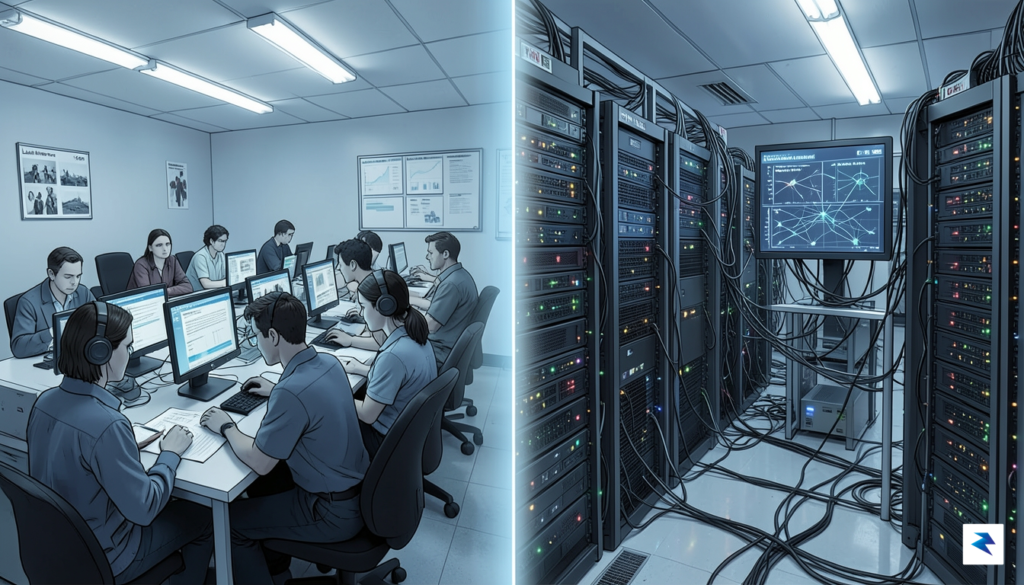
When Amazon launched Mechanical Turk (MTurk) in 2005, it wasn’t merely introducing another online service; it was inadvertently laying the groundwork for much of the artificial intelligence revolution that would follow. The platform was conceived as a way for humans to perform tasks that computers, at the time, found impossible or inefficient to do, such as identifying objects in images or transcribing audio clips. This innovative approach quickly earned it the moniker ‘artificial artificial intelligence,’ a concept where human cognition was harnessed at scale to mimic intelligent behavior, bridging the critical gap between machine capabilities and nuanced human perception.
The genius of MTurk lay in its ability to micro-task complex problems, breaking them down into tiny, digestible pieces that could be distributed to a global workforce of ‘Turkers.’ This distributed human intelligence became the very essence of the ‘human-in-the-loop’ paradigm, a critical concept in early machine learning development that persists to this day. By involving humans directly in the data processing and refinement cycle, MTurk allowed machines to learn from real-world examples, providing the necessary ground truth, labeling, and validation that purely algorithmic approaches simply couldn’t achieve on their own.
Researchers and burgeoning tech companies quickly recognized MTurk’s immense potential, transforming it into an indispensable tool for a wide array of data-intensive projects. For instance, it powered early sentiment analysis models by having Turkers label vast quantities of text as positive, negative, or neutral, helping algorithms understand human emotion in language. Similarly, it was crucial for image tagging, where humans identified objects, faces, and scenes, meticulously preparing the massive datasets that would train the first generation of computer vision systems. Data cleaning, transcription of audio, and categorization of information were other common applications, ensuring that the raw, often messy, data fed into nascent machine learning models was accurate, well-structured, and reliable.
While these early tasks were foundational, they were often relatively straightforward, focusing primarily on classification, identification, and transcription. The demands of today’s sophisticated generative AI models, however, are vastly more complex and nuanced. Training a large language model (LLM), for example, requires not just simple labeling but detailed human feedback on coherence, creativity, factual accuracy, and even the ethical alignment of generated content. This significant shift highlights the evolution from basic ‘human-in-the-loop’ tasks to more intricate ‘human-in-the-training-loop’ and ‘human-for-alignment’ roles, underscoring how the nature of human input has deepened alongside AI’s accelerating capabilities.
Ultimately, Amazon Mechanical Turk’s pioneering role in the AI ecosystem cannot be overstated. It democratized access to human intelligence at scale, making it possible for countless startups, academic projects, and established companies to bootstrap their machine learning efforts. The platform not only proved the commercial viability and technical necessity of crowdsourcing for AI development but also cemented the ‘human-in-the-loop’ concept as a fundamental pillar. It demonstrated conclusively that even as machines grow exponentially smarter, human oversight, iterative feedback, and subtle refinement remain indispensable for true intelligence to emerge, flourish, and stay relevant in an ever-evolving technological landscape.

The strategic pivot by Amazon to cease onboarding new customers for its Mechanical Turk platform represents far more than a mere operational adjustment; it signals a fundamental re-evaluation of its role in the evolving AI ecosystem. For years, MTurk served as a pioneering crowdsourcing marketplace, connecting businesses with a global workforce for micro-tasks crucial to early AI development, from image tagging to transcription. However, as artificial intelligence models have grown increasingly sophisticated and autonomous, the very nature of data acquisition and annotation has undergone a dramatic transformation, prompting Amazon to reassess the long-term viability and strategic fit of its traditional micro-tasking service within its broader AI ambitions. This move reflects a broader industry trend where the demand for raw, undifferentiated human labor is giving way to more specialized, efficient, and often automated solutions for data preparation.
Indeed, the market for AI training data has matured significantly, witnessing the rise of highly specialized data labeling platforms that offer far more than just access to human workers. Companies like Scale AI, Labelbox, and Appen have carved out niches by providing comprehensive, end-to-end managed services that integrate advanced tooling, quality assurance frameworks, and even AI-assisted annotation. These platforms often leverage proprietary algorithms to pre-label data, reducing human effort, and employ sophisticated workflows to ensure high-quality outputs tailored for specific AI applications, such as autonomous driving or medical imaging. This integrated approach stands in stark contrast to MTurk’s more hands-off marketplace model, where requesters bear the full responsibility for designing tasks, managing workers, and overseeing quality control, a burden that has become increasingly unwieldy for complex AI projects.

Furthermore, the economic calculus of data labeling has shifted dramatically, undermining the traditional cost-effectiveness of manual micro-tasking for many applications. While MTurk offered access to a vast, often low-cost labor pool, the overhead associated with managing thousands of individual tasks, ensuring consistency, and correcting errors could often negate initial savings. Crucially, the advent of synthetic data generation has introduced a powerful alternative, allowing AI developers to create vast datasets programmatically, often at a fraction of the cost and with perfect labels from the outset. For scenarios where real-world data is scarce,

For thousands of individuals across the globe, Amazon Mechanical Turk (MTurk) represented more than just a digital platform; it was a critical lifeline, providing a flexible source of income in an increasingly uncertain economic landscape. These workers, often residing in developing nations, stay-at-home parents, students, or those seeking to supplement primary incomes, relied on the platform to complete a myriad of small, repetitive tasks. From data validation and image tagging to transcription and survey participation, these “Human Intelligence Tasks” (HITs) offered a low barrier to entry and the promise of earning, however modest, that could cover daily expenses or contribute to larger financial goals. The platform’s decision to cease accepting new customers therefore casts a long shadow over the existing workforce, highlighting the profound human impact of such corporate shifts.
The inherent fragility of the micro-tasking economy becomes glaringly apparent with developments like MTurk’s pivot. Unlike traditional employment, gig workers on platforms like MTurk operate without the safety nets of minimum wage guarantees, health benefits, or unemployment insurance. Their income is directly tied to the availability and payment of tasks, which can fluctuate wildly based on client demand and algorithmic distribution. This precarity means that entire livelihoods can be disrupted overnight, not by personal performance but by broader platform changes or market forces. The current situation forces a critical examination of the responsibility platforms hold towards their distributed workforce and the fundamental lack of stability embedded within this model of labor.

Moreover, the history of MTurk is inextricably linked to the rapid advancement of artificial intelligence. Many of the tasks performed by these workers—labeling data, categorizing images, transcribing audio—were, and still are, essential for training and refining AI algorithms. This “ghost work,” as it’s often called, involves humans performing the laborious, often invisible, tasks that make sophisticated AI systems appear intelligent. The ethical considerations here are profound: a global workforce, often paid pennies per task, contributing to the development of technologies that promise immense profits and reshape industries, yet receiving little to no share in that success or even basic labor protections. It raises fundamental questions about fair compensation and the exploitation of human labor in the service of technological progress.
However, this shift also signals an evolution within the broader data annotation and micro-tasking landscape. While MTurk traditionally offered a vast pool for generalized, low-cost tasks, the increasing complexity of AI models now demands more specialized, nuanced data annotation. This trend is leading to the emergence of platforms and roles that require specific domain expertise, higher cognitive skills, and often offer better compensation. The future of human-in-the-loop AI training might not be in generalized micro-tasking but in more professionalized, higher-value annotation roles, where workers are recognized for their specialized contributions rather than just their raw labor. This transition, while potentially offering better opportunities for some, also risks creating a wider divide, leaving behind those who once relied on the simpler, accessible tasks offered by platforms like MTurk.

As the sun sets on Amazon Mechanical Turk’s era of open-marketplace micro-tasking, the landscape of AI training data is undergoing a profound transformation. The industry is rapidly pivoting away from generic, low-skill crowd work towards a future defined by high-fidelity data labeling. This shift isn’t merely about finding new platforms; it represents a fundamental re-evaluation of what constitutes quality training data, driven by the escalating complexity and real-world impact of modern artificial intelligence systems. Companies are no longer content with merely “getting the job done”; they require precision, domain expertise, and robust quality control to power the next generation of AI.
The traditional Mechanical Turk model, with its vast, anonymous pool of workers performing small, discrete tasks, was revolutionary for its time, democratizing access to human intelligence at scale. However, its inherent limitations—variable quality, lack of specialized knowledge, and minimal project oversight—have become increasingly apparent as AI models tackle more nuanced and critical applications. In its place, a new ecosystem of managed data labeling services has emerged. These services offer curated workforces, often comprising pre-vetted annotators with specific skill sets, robust quality assurance frameworks, and dedicated project managers. This transition signifies a move from an “open marketplace” to a “managed service” paradigm, where the emphasis is on reliability, accuracy, and adherence to stringent service level agreements rather than just raw task completion volume.
A cornerstone of this evolution is the pronounced shift towards

The winding down of new customer sign-ups for Amazon Mechanical Turk (MTurk) marks a significant inflection point for the artificial intelligence industry. For nearly two decades, MTurk stood as a foundational pillar, enabling countless AI projects to scale their data annotation and human-in-the-loop processes by tapping into a vast global workforce. Its decline isn’t merely a business decision but rather a potent symbol of the maturation of AI, signaling a profound shift away from undifferentiated, high-volume human input towards more nuanced, quality-driven interactions. This transition compels us to reflect on the lessons learned from the era of crowd-sourced labor and to consider what these insights mean for the burgeoning next generation of AI development.
The early days of AI development, particularly in machine learning, were characterized by an insatiable demand for large datasets. MTurk filled this void by providing a readily available pool of “Turkers” to perform repetitive tasks like image labeling, transcription, and sentiment analysis at scale and often at minimal cost. However, as AI models grew more sophisticated, the focus began to shift from the sheer quantity of data to its precision, contextual relevance, and ethical provenance. The challenge became not just collecting data, but collecting *good* data, meticulously curated and often requiring specialized domain knowledge rather than simple, generic human intelligence. This evolution has fostered a move towards bespoke annotation platforms, expert networks, and in-house teams where quality control, domain expertise, and a deeper understanding of AI’s needs take precedence over brute-force labor.
With this maturation also comes an increased scrutiny on the origins and ethics of training data, a critical lesson amplified by MTurk’s legacy. The anonymity and often low pay associated with many crowd-sourcing tasks raised legitimate questions about fair labor practices and potential worker exploitation. Today, AI companies are under immense pressure to demonstrate transparency in their data pipelines, from how data is collected to how human contributors are compensated and treated. Ethical sourcing is no longer a niche concern but a mainstream imperative, driven by regulatory demands like GDPR and a growing public awareness of AI’s societal impact. This means moving beyond transactional relationships with workers to fostering more equitable partnerships, ensuring fair wages, respectful working conditions, and clear communication about the purpose and impact of their contributions.
The winding down of MTurk’s open model forces a fundamental re-evaluation of the relationship between AI companies and human workers. Instead of humans merely serving as cheap, disposable cogs in a data machine, their role is evolving to become more integral and collaborative. The future of AI development increasingly relies on human expertise for tasks that require creativity, critical thinking, cultural nuance, and ethical judgment – areas where even the most advanced AI still falls short. This includes tasks like complex model validation, adversarial testing, bias detection, and fine-tuning AI outputs for human-like conversational fluency or nuanced understanding. Ultimately, this marks a pivot from humans as simple data generators to humans as indispensable partners, guiding, refining, and overseeing AI systems to ensure they are robust, fair, and aligned with human values. The era of bulk, faceless labor is giving way to one of skilled, valued collaboration.

You must be logged in to post a comment.