Why Your Low View Counts Are Your Best Creative Asset
The Psychology of the 'Unseen' Creator There's a unique sting that accompanies the creation of something you pour your heart into,…

For millennia, the relentless march of human progress has been intrinsically linked to the open, unfettered exchange of ideas. From the clay tablets of ancient libraries to the scientific journals of the Enlightenment, and later, the collaborative spirit of open-source software development, humanity’s greatest leaps forward were rarely the product of isolated genius. Instead, they emerged from a vibrant ecosystem of shared knowledge, where discoveries built upon prior insights, theories were debated openly, and innovations were freely disseminated for the collective good. This collaborative spirit fostered an environment where the cumulative intellectual output of society – what we might call ‘public genius’ – was seen as a common inheritance, a shared wellspring from which all could draw and to which all could contribute.
Indeed, ‘public genius’ encompasses not just groundbreaking scientific theories or artistic movements, but also the countless incremental advancements, cultural narratives, historical records, and shared societal wisdom accumulated over generations. It’s the sum of human creativity, ingenuity, and understanding, made accessible and expandable through public institutions, educational systems, and informal networks. Whether it was astronomers sharing star charts, physicians documenting remedies, or philosophers debating ethics, the foundational principle was that knowledge, once discovered or created, generally entered the public domain, becoming a building block for future generations to refine, challenge, and expand upon, ensuring a continuous, accelerated evolution of understanding.
However, we are currently witnessing a profound and concerning departure from this historical paradigm. The digital age, while promising unprecedented access to information, has simultaneously ushered in an era where the fruits of public genius are increasingly being harvested and hoarded by private interests. Vast repositories of human-generated knowledge – from every book ever written and every piece of art ever created to public conversations, scientific papers, and everyday data points – are being aggregated, processed, and often commercialized by a select few powerful entities. This shift transforms a formerly shared resource into proprietary assets, fundamentally altering the landscape of intellectual access and creation.
This enclosure is most starkly evident in the realm of artificial intelligence and advanced algorithms. Companies are training sophisticated AI models on immense datasets comprising virtually the entirety of human collective output – without direct consent, attribution, or compensation to the original creators of that knowledge. These models then generate new content, insights, and tools, which are subsequently owned and monetized by the private entities that developed the AI. The very knowledge that formed the bedrock of humanity’s progress is being re-packaged, re-synthesized, and then gated behind subscription walls or proprietary systems, creating a new form of digital feudalism where access to human-derived intelligence is no longer a public right but a privately controlled commodity.
Consequently, this trend of ‘data hoarding’ and proprietary algorithm development poses a significant threat to our collective future. When the fundamental building blocks of knowledge become privately owned, the pace of innovation for the wider public can slow, access to crucial information becomes uneven, and the very definition of what constitutes “public” knowledge begins to erode. We risk a future where only a privileged few have comprehensive access to the synthesized insights of human civilization, potentially concentrating power, stifling creativity, and limiting humanity’s ability to collaboratively address the complex challenges that lie ahead. The historical open stream of collective intelligence is being diverted into private reservoirs, altering the course of our shared intellectual destiny.


The contemporary digital landscape operates on a sophisticated cycle of extraction that transforms the collective intelligence of humanity into a private asset. This process begins with the subtle, pervasive incentivization of user participation; platforms invite individuals to contribute their insights, creative works, and personal data to public forums under the guise of community building. However, this “digital commons”—once a decentralized space for open discourse—is increasingly being enclosed by corporate entities. By leveraging terms of service that are rarely scrutinized by the average user, these platforms gain the legal latitude to aggregate vast swaths of human knowledge, effectively harvesting the public genius that was never intended to serve as raw material for proprietary systems.
Once this data is collected, it undergoes a transformation into the training sets that fuel modern artificial intelligence models. This assimilation represents a fundamental shift in how knowledge is utilized: the individual contributions that were once visible and searchable by the public are now buried within the “black box” of foundation models. These systems ingest the nuance, creativity, and expertise of millions of users, synthesizing them into outputs that are then sold back to the public or integrated into subscription-based enterprise tools. In this cycle, the original creators are systematically excluded from the value chain, as their collective contributions are privatized and rebranded as the exclusive intellectual property of the corporations that own the underlying infrastructure.

The legal and ethical loopholes facilitating this enclosure are both complex and deeply problematic. Corporations often rely on the argument that public availability equates to a waiver of control, treating the entire internet as a “commons” that is free for the taking. By interpreting fair use in a manner that favors large-scale data harvesting, these entities bypass the need for consent or compensation for the original authors. This creates a structural imbalance where the entity that provides the computational power claims total ownership over the insights derived from human wisdom. As a result, we are witnessing a transition from an open, collaborative internet to a tiered system where public knowledge is essentially mined, refined, and then restricted behind proprietary paywalls.
The enclosure of the digital commons is not merely a technical evolution; it is a profound shift in power that converts our shared intellectual heritage into a closed commodity, stripping the individual contributor of their agency in the process.
Ultimately, this mechanism of capture risks stifling the very curiosity and innovation it claims to facilitate. If the incentive structure for creating and sharing knowledge is dismantled—because the creators see their work exploited rather than celebrated—the quality of the public record will inevitably degrade. When the collective genius of society is locked away within corporate silos, the democratic potential of the internet is fundamentally compromised. We must therefore question whether the current trajectory of AI development necessitates this enclosure, or if we can conceive of a future where collective intelligence remains a shared resource rather than a private windfall for the few.

When the lifeblood of human progress—our collective knowledge—is cordoned off behind paywalls and proprietary algorithms, the societal cost is far greater than mere lost revenue. By privatizing the fruits of public genius, we are effectively constructing a “knowledge divide” that restricts the capacity for breakthrough discovery to a handful of well-capitalized institutions. In this environment, innovation ceases to be a collaborative, iterative process and instead becomes a guarded asset. This enclosure stunts the growth of independent thinkers, researchers, and creators who lack the institutional keys to access the data, tools, and technical infrastructure required to push the boundaries of what is possible. When the engine of progress is monopolized, the diversity of thought—the very catalyst for creative problem-solving—is systematically flattened.

The economic implications of these knowledge monopolies are profound, as they create a compounding feedback loop of advantage. Large entities that control the flow of information can dictate the terms of discovery, effectively setting the agenda for research and development while sidelines alternative, grassroots approaches. This centralization introduces a dangerous level of systemic fragility; if our entire approach to solving global challenges—from climate change to medicine—is filtered through the narrow strategic interests of a few corporations, we lose the resilience that comes from a decentralized, diverse ecosystem of inquiry. When only those with corporate access can influence the trajectory of technology, we risk a future where innovation is optimized for profit margins rather than the public good.
The true measure of a society’s progress is not how well it protects its intellectual assets, but how effectively it democratizes the tools of discovery.
Furthermore, there is a pervasive “chilling effect” settling over the creative community. Independent creators, artists, and researchers are increasingly wary of sharing their work, fearing that their unique contributions will be harvested and absorbed into proprietary AI models without attribution or compensation. This hesitation acts as a tax on creativity, discouraging the open exchange of ideas that historically fueled scientific and cultural revolutions. When the risk of “intellectual theft” outweighs the reward of public sharing, the flow of innovation slows to a trickle. Ultimately, we must ask whether the short-term gains of enclosing public genius are worth the long-term erosion of our collective intellectual potential. If we continue to prioritize the private capture of knowledge, we may soon find ourselves living in a world where the next great leap forward is not merely inaccessible, but impossible to conceive.
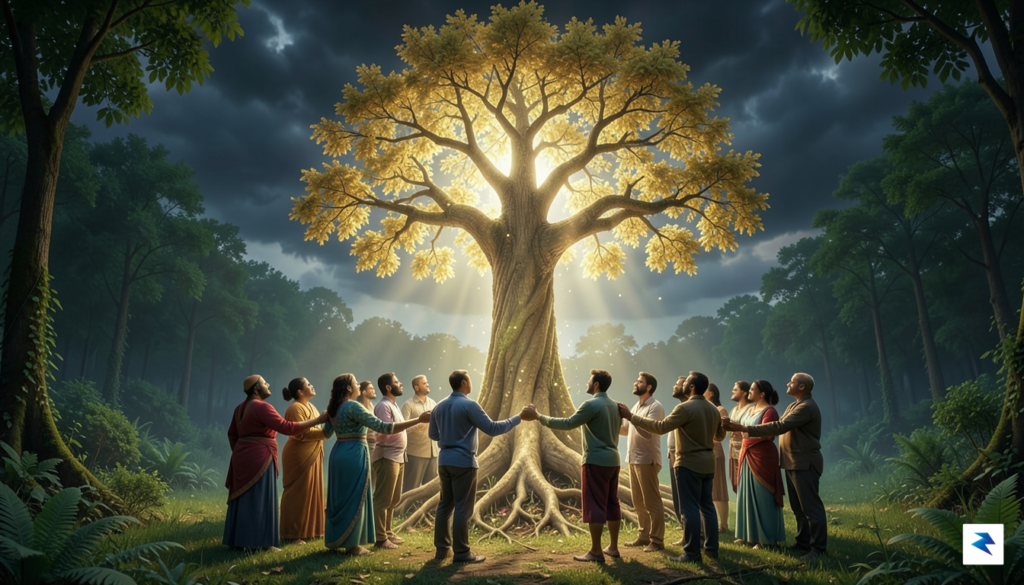
The tide of enclosure currently threatening our shared intellectual landscape is not an unstoppable force of nature, but a series of policy and technical choices that can be reversed. To secure a future where human innovation serves the public good rather than private silos, we must implement a multi-layered defense strategy that blends ethical governance with decentralized innovation. Reclaiming the commons requires us to view knowledge not as a raw material for extraction, but as a public infrastructure that demands maintenance, protection, and universal accessibility.
One of the most immediate priorities is the establishment of rigorous, ethical AI scraping policies that move beyond the “anything goes” ethos of current web crawling. We need to normalize the use of machine-readable protocols that allow creators to opt-in or opt-out of data training sets, effectively creating a digital “no-trespassing” sign for those who refuse to share their contributions with opaque, for-profit models. By integrating these standards into the very architecture of the web, we can force a paradigm shift where developers must negotiate for the use of public intellect rather than simply harvesting it without consent or compensation.
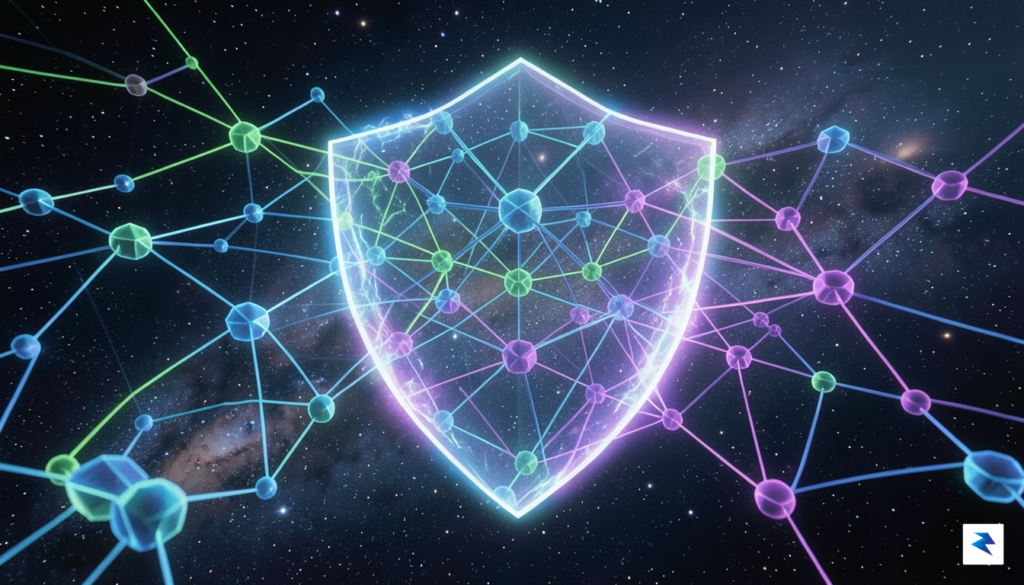
Beyond defensive measures, we must foster the growth of decentralized data collectives, often referred to as Data Unions. These organizations empower individuals to pool their digital footprints—or the specialized outputs of their professional lives—into collective assets that they govern democratically. By shifting ownership away from centralized platforms and into the hands of the people who actually generate the data, we create a counter-weight to the tech giants. These unions can negotiate collective licensing agreements, ensuring that if our shared knowledge is used to train the next generation of AI, the resulting value is returned to the community rather than hoarded by a handful of shareholders.
The goal of reclaiming the commons is to ensure that the fruits of human intellect remain a shared resource, preventing the erosion of cultural memory by privatized algorithms.
Finally, we must advocate for a robust strengthening of public-interest research funding and the mandate of open-access publication. When research is subsidized by taxpayers, the findings should be treated as a public utility, free from the paywalls that currently restrict access to life-saving scientific breakthroughs and historical insights. By prioritizing these open-access standards in the next generation of digital infrastructure, we build a foundation that favors collaboration over enclosure. This transition requires a concerted effort to shift our cultural expectations, demanding that our digital tools be built with interoperability and transparency as their primary design requirements, thereby ensuring that the collective genius of humanity remains a light available to all.
You must be logged in to post a comment.