
Tobacco Control Stalls: Why Smoking Cessation Efforts Are Facing New Hurdles
The Current State of Public Health Initiatives For decades, the United States maintained a robust, multi-faceted approach to curbing tobacco…


The traditional purview of Immigration and Customs Enforcement (ICE) has long been defined by physical field operations, border interdictions, and detention management. However, the agency is currently undergoing a significant operational pivot, extending its reach into the nebulous and often volatile realm of digital discourse. This transition marks a departure from purely tactical enforcement, as the agency now increasingly focuses on the online interactions between the public and its workforce. By leveraging the Office of Professional Responsibility (OPR)—the agency’s internal watchdog—ICE is formalizing a surveillance apparatus designed to catalog, evaluate, and potentially prosecute those who engage in critical online speech regarding its employees.
The scale of this digital monitoring project is substantial, with internal records indicating that over 100 investigative files have already been opened. These inquiries are not merely passive observations; they represent a targeted effort by the OPR to bridge the gap between anonymous online commentary and real-world consequences. By shifting resources toward the digital sphere, ICE is positioning its internal oversight body as a frontline defense against what it terms “harassment” or “threats” directed at its staff. Consequently, the boundary between protected public criticism of a federal agency and actionable misconduct is becoming increasingly blurred for activists and private citizens alike.
The agency’s stated justification for this expansion centers on the safety and well-being of its personnel in an era of heightened political polarization. ICE maintains that the proliferation of social media platforms has made it easier for critics to doxx employees, disseminate personal information, or incite targeted harassment that spills over into the physical world. From the agency’s perspective, the OPR’s mandate is to ensure that the digital environment does not become a staging ground for violence or intimidation. They argue that when online rhetoric crosses the line into specific threats, the government has an inherent duty to investigate the source of that communication to protect its officers from potential harm.
The integration of digital surveillance into internal affairs signifies a paradigm shift in how federal law enforcement perceives its relationship with the public, transforming the internet from a space for civic discourse into a potential zone of active investigation.
Despite these justifications, the threshold for triggering an official OPR investigation remains a subject of intense scrutiny from civil liberties advocates. While the agency claims to focus on credible threats, the sheer volume of cases opened suggests a broad interpretation of what constitutes a “safety risk.” Because the agency operates with a high degree of internal discretion, there is little transparency regarding the specific criteria used to flag online content. As a result, individuals who engage in vocal, persistent, or even hyperbolic criticism of ICE policies may inadvertently find themselves the subject of a federal inquiry, effectively chilling the broader discourse surrounding immigration enforcement.
At the center of the current controversy surrounding ICE’s investigative reach is a fundamental ambiguity regarding where the boundaries of digital conduct lie. In the eyes of federal law enforcement, the line between protected political dissent and criminal intimidation is often razor-thin. Doxing, which involves the gathering and publicizing of private information—such as home addresses, personal phone numbers, or family details—is frequently framed by activists as a tool for transparency and public accountability. Conversely, federal agencies increasingly categorize these same actions as targeted harassment, arguing that the intent behind releasing this data is to incite violence or create a climate of fear that disrupts government operations.
The legal framework governing “true threats” remains notoriously difficult to apply to the fast-paced, often hyper-aggressive nature of social media discourse. Under established Supreme Court precedents, speech is generally considered a “true threat” only when the speaker intends to communicate a serious expression of an intent to commit an act of unlawful violence against a particular individual or group. However, in the context of agency investigations, this definition is frequently stretched to include any online rhetoric that creates a “reasonable fear” of safety for employees. This creates a significant gray area: does a blog post naming an ICE official, accompanied by harsh criticism of their professional conduct, constitute a legitimate critique of public policy, or is it a veiled invitation for others to escalate the situation into a physical confrontation?

The challenge for both legal scholars and civil liberties advocates is determining whether an agency’s pursuit of online critics is a measured response to genuine security concerns or a strategic attempt to chill legitimate political speech through the threat of investigation.
Furthermore, the ambiguity of these definitions is exacerbated by the subjective nature of threat assessment protocols. When an internal watchdog monitors social media, they are often applying a wide lens that captures everything from hyperbolic venting to actionable planning. For the average user, the distinction between a passionate political statement and a potential legal violation is not always clear. When activists share the professional biographies of government employees, they argue they are exercising their right to hold officials accountable for their actions. Yet, for an agency under intense scrutiny, the aggregation of this information can be interpreted as a malicious roadmap for harassment. This ongoing friction highlights a broader, unresolved struggle: how a democratic society should regulate digital speech when the tools of advocacy—data collection and public exposure—begin to mirror the tactics of intimidation.
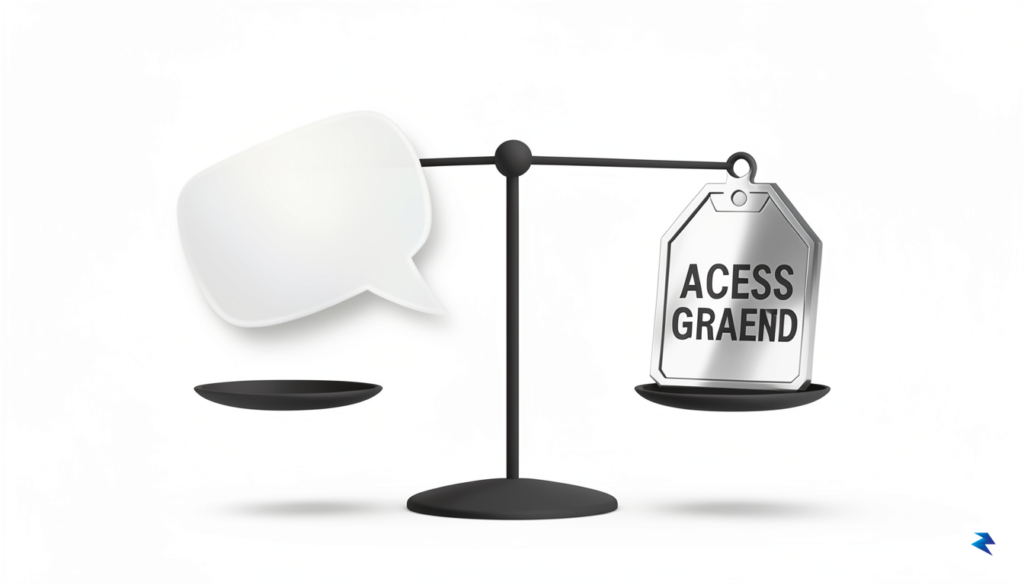
The recent revelation that ICE’s internal watchdog is scrutinizing online critics has ignited a crucial debate about the delicate balance between citizens’ constitutional right to free speech and the legitimate security concerns of government agencies and their employees. At its core, this situation forces us to confront where the line should be drawn when public criticism, however fervent, interacts with an agency’s mandate to protect its personnel from harassment or threats. A vibrant democracy hinges on the ability of its citizens to openly critique government actions, holding powerful institutions accountable for their conduct without fear of reprisal.
The First Amendment to the U.S. Constitution robustly protects the right to express opinions, including those critical of federal agencies and their policies. This protection extends broadly to speech, the press, and the right to assemble, forming the bedrock of American public discourse. While this right is expansive, it is not without limits; it does not shield speech that constitutes a true threat of violence, incitement to illegal action, or targeted harassment designed to intimidate rather than inform. However, the vast majority of online criticism, even when sharp or emotionally charged, falls well within these protected boundaries, serving as a vital mechanism for public oversight and an informed citizenry.
Conversely, government agencies, particularly those involved in law enforcement and national security, face genuine security challenges. Employees of organizations like ICE perform demanding and often dangerous work, and they, like any other individuals, have a right to carry out their duties without facing credible threats to their safety or sustained harassment that impedes their ability to work. Agencies must therefore implement protocols to protect their personnel, infrastructure, and operations from genuine security risks. The tension arises when the definition of “security risk” potentially expands to encompass legitimate public criticism, blurring the lines between protected speech and actionable threats.
When examining ICE’s internal security protocols, it’s natural to compare them with those of other law enforcement and intelligence agencies. Agencies such as the FBI, Secret Service, or CIA certainly monitor potential threats to their personnel and operations, often employing sophisticated methods to assess risks. However, the focus of ICE’s internal watchdog on broadly defined “online critics” raises specific questions about the scope and intent of these investigations. While it is standard for agencies to monitor for direct threats of violence or incitement, extending this surveillance to general online criticism, activism, or journalism could potentially stray into territory that chills legitimate First Amendment activities, rather than solely addressing clear and present dangers.
The potential “chilling effect” of such high-level investigations cannot be overstated. When activists, journalists, and everyday citizens learn that their online expressions of criticism might lead to scrutiny by an internal government watchdog, it can create an environment of fear and self-censorship. This effect undermines the very mechanisms of democratic accountability that the First Amendment is designed to uphold. Investigative journalists might hesitate to publish sensitive stories, advocacy groups might temper their critiques, and whistleblowers might be deterred from coming forward, all out of concern that their digital footprint could lead to an investigation. This reluctance to speak freely ultimately diminishes transparency and hinders the public’s ability to hold government power in check.
Ultimately, navigating this complex landscape requires a careful and transparent approach. It necessitates clear distinctions between legitimate security concerns – such as direct threats of violence – and protected forms of dissent and criticism. For democratic accountability to thrive, government agencies must be able to secure their operations and protect their employees, but they must do so in a manner that respects and upholds the fundamental constitutional rights of the public they serve. The ongoing discussion surrounding ICE’s actions provides a critical opportunity to re-evaluate these boundaries and reinforce the principles that safeguard both agency security and the indispensable freedom of speech.

Historically, the Office of Professional Responsibility (OPR) was established to serve as the internal conscience of Immigration and Customs Enforcement, primarily focused on policing misconduct, corruption, and the abuse of authority among the agency’s own personnel. Its mandate has long been rooted in the necessity of maintaining institutional integrity and public trust by ensuring that employees adhere to strict codes of conduct. However, as the digital landscape has shifted, the OPR has evolved from a traditional internal affairs bureau into a more expansive investigative body. By folding the surveillance of external digital discourse into its purview, the agency is signaling a fundamental shift in how it defines threats to its operations, effectively treating online criticism as a potential vector for security concerns.
The mechanics of this monitoring process are as complex as they are controversial. The agency utilizes a combination of sophisticated open-source intelligence (OSINT) tools and manual monitoring to harvest data from public-facing social media platforms, forums, and activist hubs. Investigators track keywords, hashtags, and patterns of engagement to map out networks of dissent that target the agency. While these digital footprints are technically public, the systematic aggregation of this data by a federal law enforcement entity creates a chilling effect on speech. The OPR essentially functions as a digital dragnet, where the boundary between monitoring for legitimate security threats and tracking political advocacy becomes increasingly porous.
The transformation of a casual online comment into a formal investigative file typically begins with an internal flagging process. Once a specific post or social media user is identified as a potential risk, analysts conduct a deep dive into the individual’s digital history to assess the severity of the perceived threat. If the OPR determines that the content warrants further scrutiny, it initiates a case file, which can lead to a variety of outcomes. Depending on the nature of the findings, the agency may escalate the matter by forwarding information to other federal law enforcement partners or, in more extreme instances, initiating direct inquiries into the subject’s background and associations.
The expansion of OPR authority into the sphere of public commentary suggests a move toward preemptive intelligence gathering, where the agency seeks to identify and neutralize reputational or operational risks before they manifest in the physical world.
For those identified as subjects, the consequences can be significant. Even if a formal criminal charge is never filed, the mere existence of a federal dossier can have long-term implications for individuals who interact with government agencies or hold professional clearances. The OPR’s current trajectory suggests that the agency is no longer content to merely oversee its own workforce; instead, it is actively building an infrastructure capable of cataloging its critics. This evolution raises profound questions about the limits of government oversight and the constitutional protections afforded to citizens who voice dissent against federal authorities in the digital age.

The transition of federal oversight into the digital realm marks a precarious turning point for civil society. As advocacy groups and independent researchers increasingly rely on social media and open-source intelligence to hold agencies like Immigration and Customs Enforcement (ICE) accountable, the threat of investigation risks fostering a culture of self-censorship. When activists fear that highlighting agency misconduct or documenting operational failures could trigger a federal inquiry, the fundamental mechanisms of public oversight begin to erode. This chilling effect does not merely silence individual critics; it deprives the public of the essential information needed to evaluate the efficacy and ethics of government operations.
Transparency is the bedrock of a functioning democracy, yet the internal adjudication of cases involving online speech remains notoriously opaque. Without clear, public-facing guidelines on what constitutes a “threat” versus protected political commentary, there is significant room for administrative overreach. It is imperative that federal agencies provide concrete justifications for how and why they monitor private citizens. If the criteria for these investigations remain shrouded in administrative secrecy, the public loses its ability to distinguish between legitimate national security concerns and the weaponization of bureaucratic power to suppress dissent. Transparency must be more than a buzzword; it must be an enforceable standard that prevents the chilling of constitutionally protected speech.
The health of a democratic agency is measured not by its ability to silence its critics, but by its willingness to engage with the public discourse surrounding its actions.
Looking toward the future, the integration of digital safety and government-public engagement will inevitably become more complex. As agencies continue to adopt sophisticated social media monitoring tools, the boundary between legitimate security screening and the chilling of political activism will continue to blur. For digital advocacy to remain a viable tool for reform, activists must now navigate a landscape where their online footprint carries potential legal and investigative weight. This new reality necessitates a higher degree of digital literacy and strategic caution, yet it also underscores the urgent need for legislative safeguards. Unless there is a concerted effort to define the limits of agency reach into the digital sphere, we risk a future where public discourse is permanently inhibited by the shadow of institutional surveillance, ultimately undermining the very transparency that federal agencies are mandated to uphold.
You must be logged in to post a comment.