
Inside ICE’s Growing Investigation Into Online Critics and Activists
The Scope of ICE’s New Online Investigations The traditional purview of Immigration and Customs Enforcement (ICE) has long been defined by…
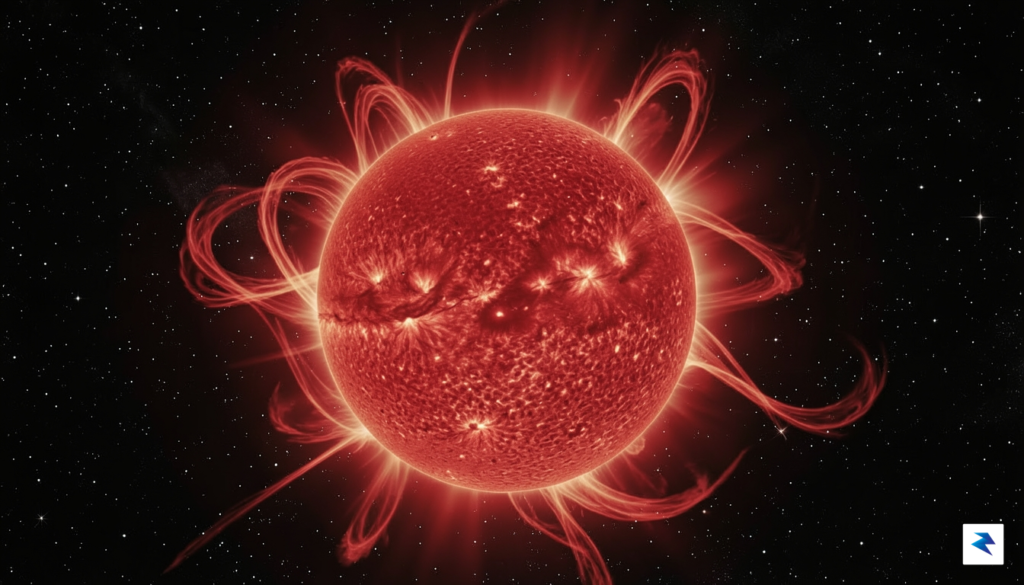
At the heart of our solar system, the Sun functions as a massive, self-regulating fusion reactor, currently in the stable prime of its life known as the main sequence. For the past 4.6 billion years, it has sustained itself by crushing hydrogen atoms into helium within its incredibly dense core. This delicate balancing act, known as hydrostatic equilibrium, pits the inward crush of gravity against the explosive outward pressure generated by nuclear fusion. As long as this hydrogen fuel remains plentiful, the Sun maintains a consistent size and luminosity, providing the stable environment necessary for life to thrive on Earth.
However, this cosmic stability is finite. Eventually, the hydrogen supply in the core will diminish, forcing the Sun to undergo a profound structural transformation. As the hydrogen is exhausted, the core will contract under its own weight, causing the temperature to spike and igniting fusion in the shell surrounding the core. This shift triggers the “Red Giant” phase, a dramatic period where the outer layers of the star expand significantly, cooling as they stretch further from the heat source. In standard astrophysical models, this expansion was predicted to be so violent and wide-reaching that the Sun would swell to engulf the orbits of Mercury, Venus, and eventually, our own planet.
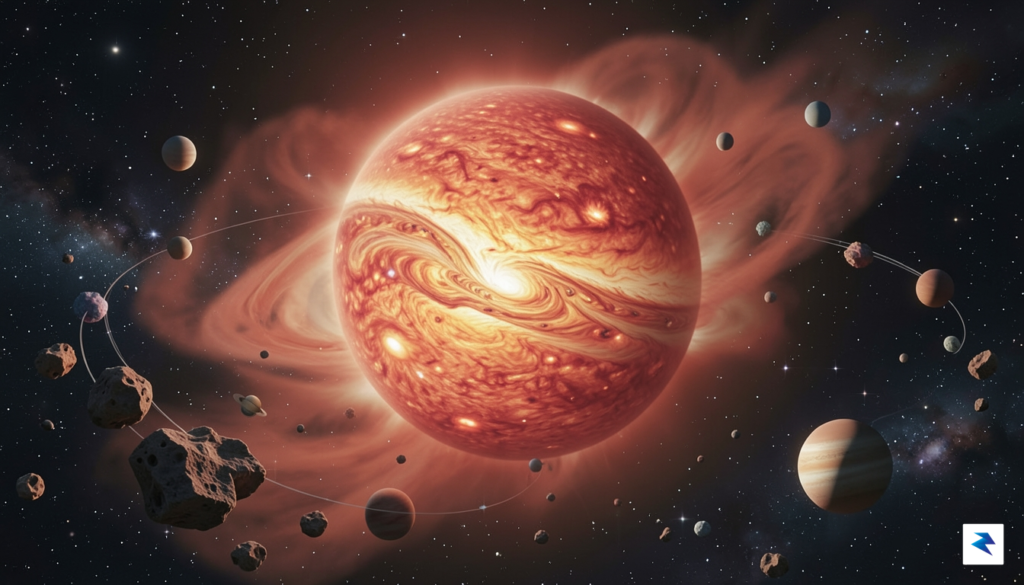
The life of a star is fundamentally a struggle against the inevitable collapse of gravity, a process that dictates the spatial limits of its influence as it ages and shifts its fuel source.
For decades, the scientific community accepted the doom of Earth as a mathematical certainty based on these stellar evolution models. Beyond the sheer physical expansion of the Sun’s surface, researchers pointed to the process of tidal drag. As the Sun expands, its outer atmosphere becomes diffuse but still exerts a gravitational tug on orbiting bodies. This drag was expected to pull the Earth inward, effectively dragging our planet into the Sun’s incinerating depths before it could escape. Furthermore, the intense solar winds and radiation stripping associated with this bloated stage were thought to be sufficient to erode the Earth’s atmosphere entirely, leaving behind nothing more than a scorched, desolate rock drifting within the Sun’s outer envelope.
This traditional narrative has served as the bedrock of our understanding of stellar death for generations. By mapping the transition from the main sequence to the Red Giant Branch, astronomers have provided a clear timeline for the end of the solar system as we know it. Yet, the nuance of how a star loses mass as it expands remains one of the most complex variables in these predictions. While the core-helium burning phase signifies the twilight of a star, the specific interplay between mass loss, orbital migration, and stellar radius has recently become a subject of intense, renewed scrutiny.
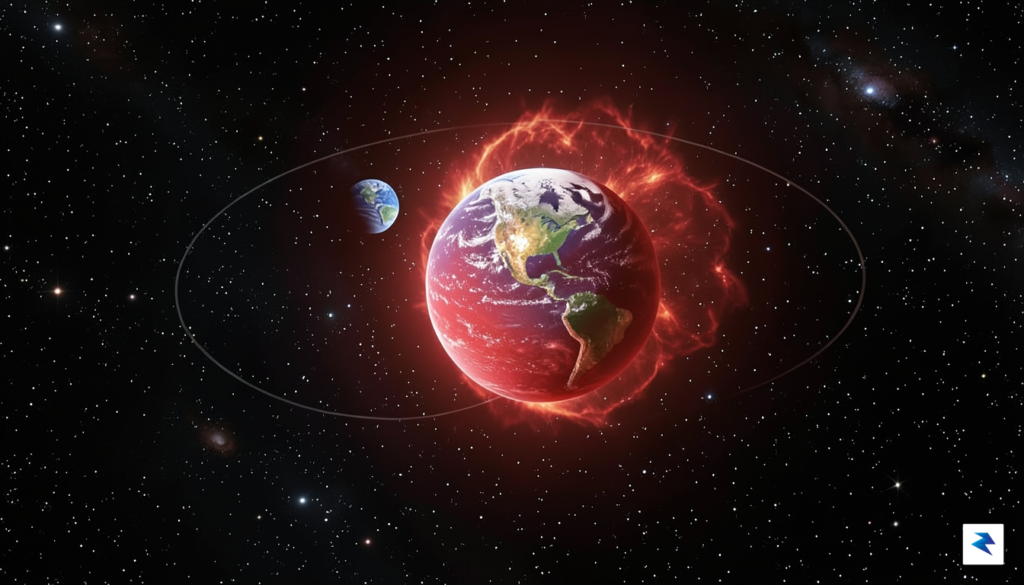
For decades, the prevailing consensus among astronomers was that the Earth faced a grim, fiery demise as the Sun neared the end of its life cycle. The traditional narrative suggested that as our star exhausted its hydrogen fuel, it would balloon into a red giant, expanding so significantly that it would inevitably consume the inner planets, including our own. However, groundbreaking new research is challenging this deterministic view, offering a far more hopeful perspective based on the complex, shifting dynamics of orbital mechanics. Instead of simply being swallowed, the Earth may benefit from a subtle gravitational dance that allows it to maintain a safe distance, effectively moving out of the way as the Sun evolves.
The core of this discovery lies in the relationship between solar mass loss and orbital expansion. As the Sun ages, it will inevitably shed a significant portion of its mass through intense solar winds. Because gravity is directly tied to mass, this reduction in the Sun’s total bulk weakens its gravitational grip on the orbiting planets. Consequently, as the Sun loses mass, the gravitational tether holding Earth in place loosens, allowing our planet to drift into a wider, more distant orbit. This natural migration acts as a cosmic safety mechanism, pushing the Earth away from the encroaching reach of the solar surface.
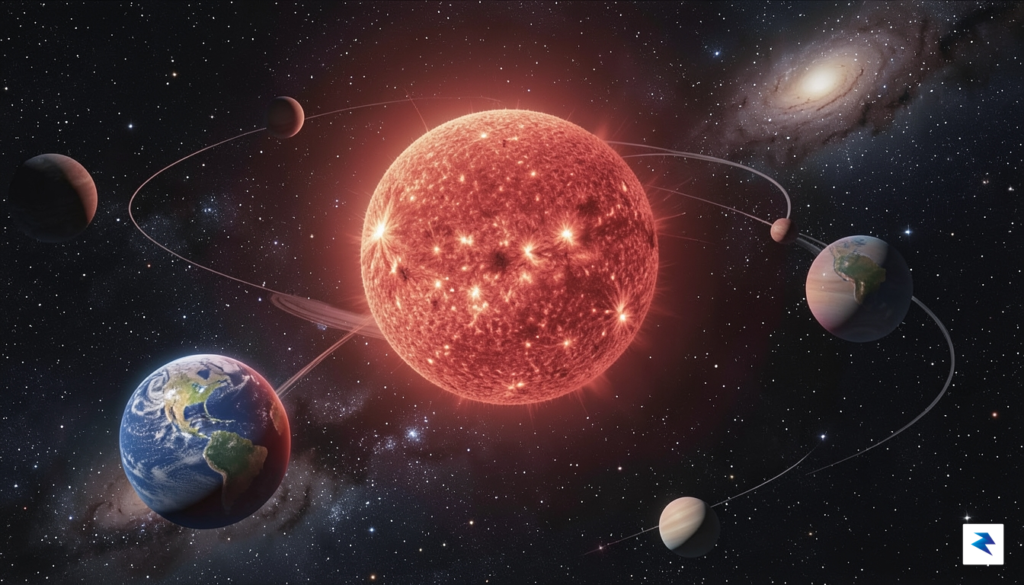
This creates a fascinating gravitational “tug-of-war” that determines our ultimate fate. On one side, the Sun is physically growing in radius, threatening to engulf everything in its immediate vicinity. On the other side, the Earth is physically moving further away, constantly increasing the gap between its surface and the Sun’s outer atmosphere. Older, simpler models often failed to fully account for the precise timing and scale of this orbital drift, leading to the widely accepted belief that Earth was doomed. By contrast, modern, high-fidelity simulations incorporate more nuanced data regarding the rate of stellar mass loss and the resulting planetary migration, revealing a much narrower margin of survival than previously estimated.
The survival of our planet may not be a matter of luck, but a predictable outcome of the shifting gravitational equilibrium between a dying star and its orbiting worlds.
These sophisticated models indicate that while the Sun will indeed expand to a massive size, the Earth’s outward migration is sufficiently robust to keep us just beyond the reach of the solar envelope. This does not mean that the surface of the Earth will remain a paradise; the increased solar luminosity will undoubtedly transform our climate in drastic ways. However, the distinction between being completely vaporized and merely enduring a solar transformation is profound. By re-evaluating the long-term interplay between celestial bodies, scientists are painting a more complex, nuanced portrait of our solar system’s evolution—one where Earth’s persistence is far more plausible than the apocalyptic scenarios of the past.
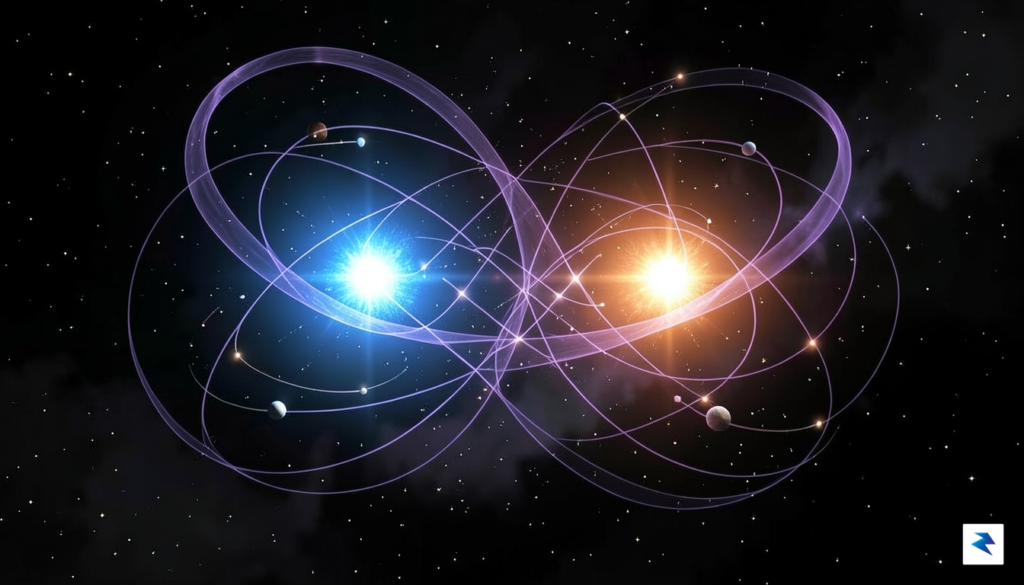
To understand the long-term fate of our planet, we must first recognize that the Sun is far from a static, unchanging anchor in the solar system. Over the course of billions of years, our star is constantly shedding its own substance, losing significant amounts of mass through a relentless stream of charged particles known as the solar wind, as well as through the emission of intense electromagnetic radiation. As the Sun burns through its hydrogen fuel and approaches the end of its life cycle, this mass loss accelerates. Because gravity is strictly proportional to mass, a lighter Sun exerts a weaker gravitational pull on the surrounding planets, effectively loosening the tether that holds Earth in its current orbital path.
When a star loses mass, the orbital mechanics of its planets undergo a predictable shift. According to the laws of celestial mechanics, as the central gravitational mass decreases, the planets are no longer held quite as tightly, allowing them to migrate outward toward wider, more distant orbits. This phenomenon is similar to a tetherball slowing down and drifting further from the pole as the tension on the rope decreases. For Earth, this means that as the Sun expands and loses mass, our planet will naturally begin to drift away from the stellar surface. This outward migration is a critical factor in the survival equation, as it provides a potential escape route from the encroaching reach of the Sun’s outer atmosphere during its Red Giant phase.
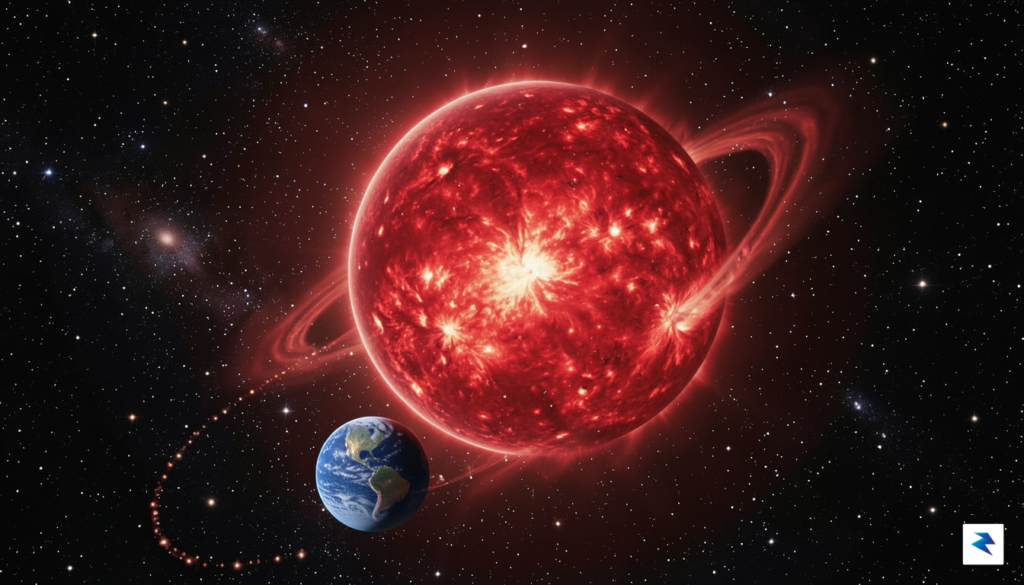
However, this outward migration is not an unopposed process. The physics of orbital evolution is complicated by tidal forces, which act as a powerful counter-effect. As the Sun expands, it creates significant tidal bulges on its surface, and these bulges exert a gravitational drag on the orbiting planets. These tidal interactions can transfer angular momentum between the star and the planet; in many cases, this process pulls the planet inward, potentially counteracting the beneficial effects of mass loss. The ultimate survival of the Earth depends on this delicate, high-stakes tug-of-war between the expansion caused by mass loss and the inward decay caused by tidal friction.
The survival of our planet is not guaranteed by a single process, but by a complex balance where the rate of solar mass loss must outpace the rate of tidal orbital decay.
Ultimately, this “survival zone” is determined by whether the rate of outward drift is fast enough to keep pace with the Sun’s physical expansion. If the Earth can successfully navigate this gravitational interplay, it may find itself settling into a new, distant orbit, far enough away to avoid being swallowed by the bloated, dying star. While the environment on Earth would certainly be unrecognizable—and likely uninhabitable due to the change in solar energy—the physical existence of the planet itself may endure far longer than we previously dared to hope.
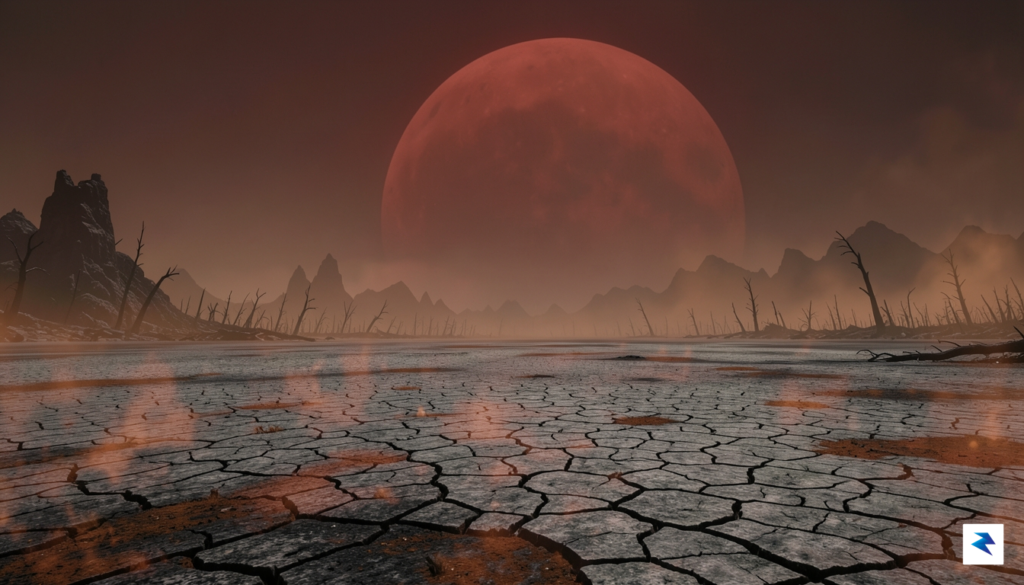
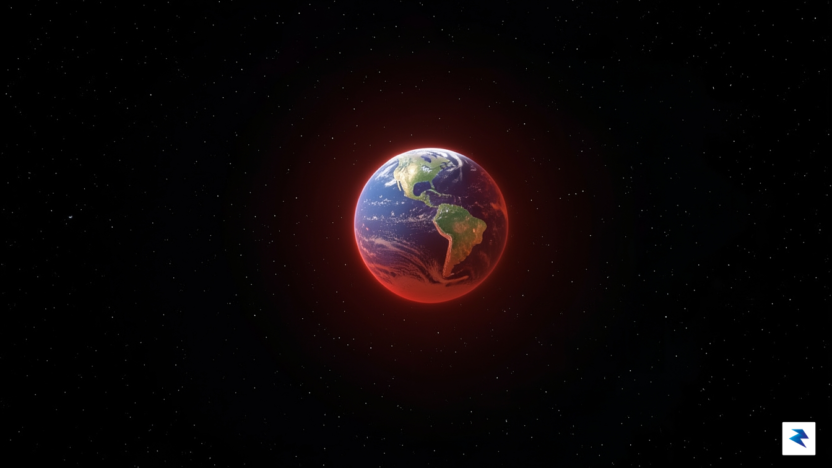
While the revelation that our planet may escape the literal consumption of the Sun’s outer layers is a fascinating triumph of orbital mechanics, it is vital to distinguish between a rock that continues to orbit a star and a world that sustains a complex biosphere. The survival of Earth as a physical mass does not equate to the persistence of life as we recognize it today. Long before the Sun expands into its bloated red giant phase, the gradual increase in solar luminosity will trigger a runaway greenhouse effect, effectively stripping our world of its most precious resources. The very processes that currently nurture our lush ecosystems will, in time, become the catalysts for their total annihilation.
As the Sun continues to brighten over the next billion years, the resulting rise in global temperatures will cause the Earth’s oceans to evaporate, turning our vibrant blue marble into a sterile, steam-filled oven. This transition marks the end of liquid water on the surface, which is the foundational requirement for biological existence. As the atmosphere thins and the oceans vanish, the planet will lose its ability to regulate temperature, leading to a surface environment that is essentially a scorched, airless wasteland. Even if the planet remains in its original orbit, it will bear no resemblance to the cradle of life that we currently inhabit.
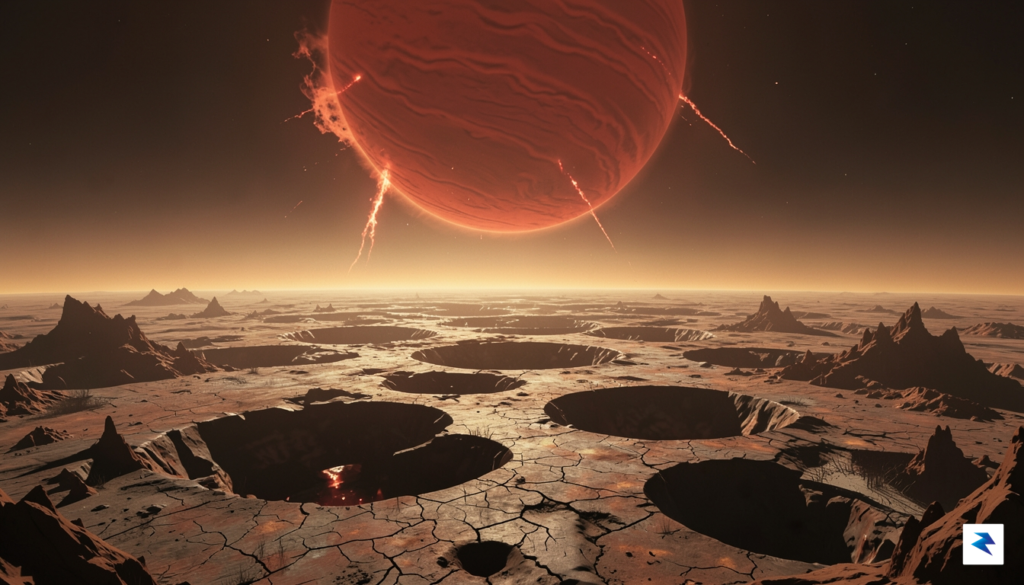
“Survival is a matter of gravity and orbit, but habitability is a delicate balance of atmospheric chemistry and liquid water—a balance that will inevitably break long before the Sun reaches its final death throes.”
It is essential to shift our perspective from seeing Earth as a permanent home to viewing it as a transient, albeit incredibly successful, biological experiment. By the time the Sun approaches its final stages, the Earth will have transitioned into a silent, geologic relic. There will be no atmosphere to shield the surface from harsh solar radiation, and the tectonic activity that currently recycles our planet’s crust will likely have ground to a halt. Consequently, the “Earth” that survives the Sun’s expansion will be nothing more than a scorched, desolate husk—a monument to a history of life that will have long since faded into the cosmic background.
Ultimately, while we can take a small measure of comfort in knowing our planet will not be vaporized, we must be realistic about what remains. The distinction between orbital survival and planetary habitability is profound. We are not just looking at the survival of a globe, but the inevitable transformation of a living world into a dead, orbiting rock. Understanding this timeline helps us appreciate the fleeting nature of our current habitable epoch and underscores the necessity of viewing Earth not as an eternal sanctuary, but as a fragile, finite window of opportunity in the vast lifespan of our solar system.
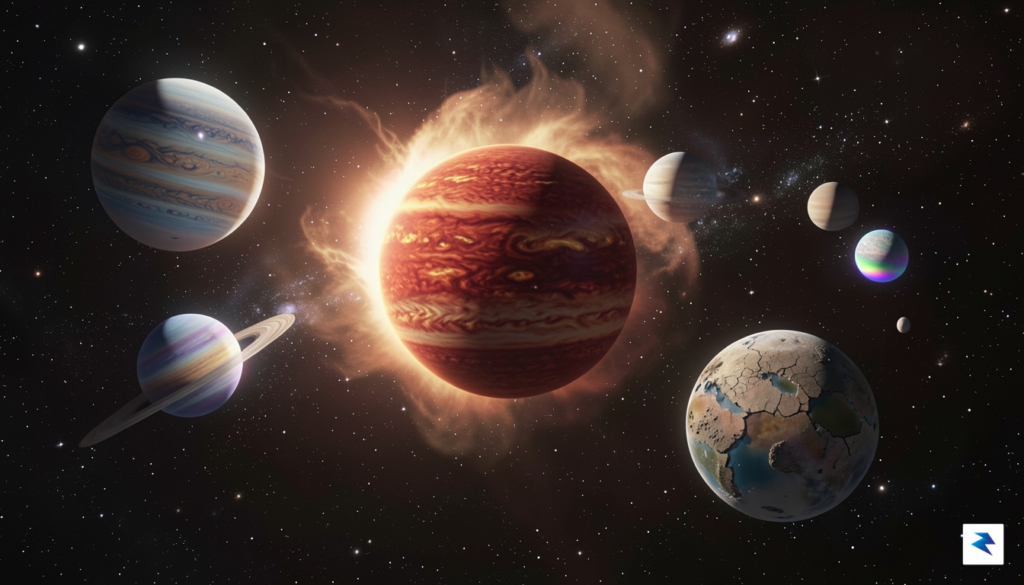
The fate of our home planet serves as a vital touchstone for understanding the vast, unfolding drama of stellar evolution across the Milky Way. By moving beyond the binary narrative of total destruction, researchers are now mapping a more nuanced future for planetary systems orbiting stars similar to our Sun. This recalibration is not merely an academic exercise; it provides a foundational framework for astrobiologists who are tasked with estimating the longevity of habitable zones in distant star systems. When we observe the transition of a sun-like star into a white dwarf, we are essentially watching a cosmic stress test that reveals which planets are resilient enough to maintain their orbits and which are destined to be lost to the void.
Refining these models allows astronomers to better predict the survival rates of exoplanetary systems, offering a clearer picture of how often life might have the stability required to flourish over eons. Long-term orbital stability is the silent guardian of biological evolution; without a steady gravitational environment, the chaotic shifts in a planet’s distance from its host star would render the development of complex life impossible. By studying the intricate gravitational dance between our Sun and the outer planets, scientists can create more accurate simulations for systems light-years away, helping to identify which exoplanets are most likely to remain in a “Goldilocks” state even as their parent stars reach the twilight of their existence.
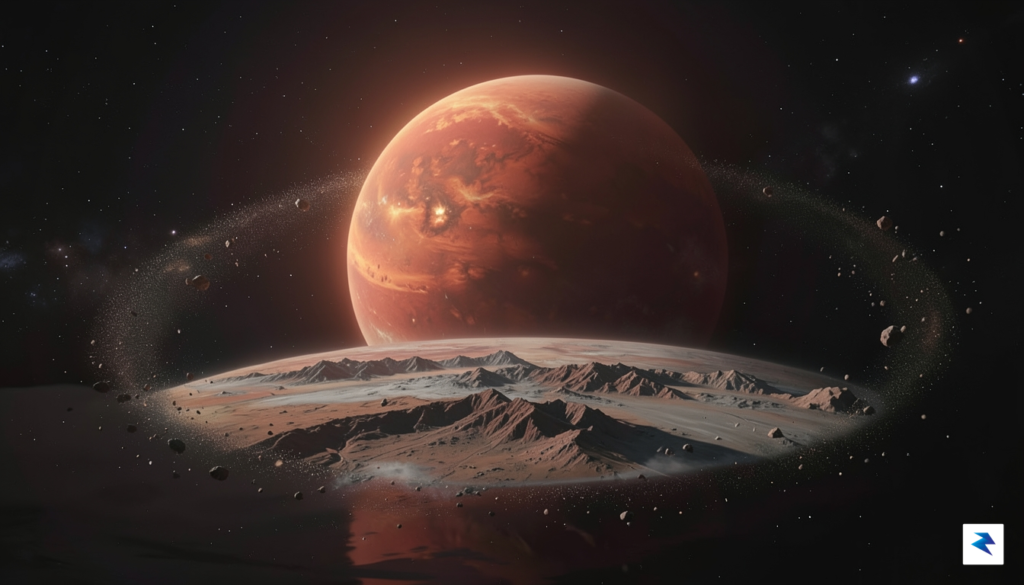
The discovery that Earth might escape total engulfment shifts our cosmic perspective: the death of a star is not an abrupt terminal event, but a complex, multi-stage transformation that can allow for planetary survival.
This shift in perspective represents a profound philosophical evolution in how we view the lifecycle of the universe. We are moving away from the fatalistic “end-all” scenarios that once dominated popular science, embracing instead a view of the cosmos that is defined by metamorphosis and endurance. This transition acknowledges that planetary systems are dynamic, evolving entities capable of persisting through radical stellar changes. As we continue to refine these models, we gain more than just data; we gain a deeper appreciation for the resilience of planetary architectures and the persistent, quiet tenacity of worlds that continue to circle their stars long after the fires of youth have faded.
You must be logged in to post a comment.