
Will Earth Survive the Sun’s Death? New Research Challenges the End-of-World Scenario
The Lifecycle of Our Sun: From Main Sequence to Red Giant At the heart of our solar system, the Sun functions as a massive, self-regulating…

Microsoft’s recent announcement regarding the elimination of approximately 4,800 roles—a move affecting roughly 2.1% of its global workforce—serves as a stark reminder of the volatile climate currently defining the technology sector. These reductions are not isolated incidents but rather part of a broader, sustained realignment within Big Tech that has persisted since early 2023. By targeting specific divisions, most notably within the Xbox gaming wing and the company’s expansive commercial sales organization, Microsoft is signaling a pivot in its operational priorities. This shift is fundamentally driven by the need to balance the immense capital expenditures required to lead the artificial intelligence revolution with a rigorous commitment to maintaining lean, long-term efficiency in an increasingly unpredictable global economy.

The strategic logic behind these cuts suggests that leadership is moving to prune legacy operations to ensure that resources are more effectively funneled into high-growth areas like cloud infrastructure and generative AI. While the financial markets often reward these lean-operating maneuvers as necessary for maintaining healthy profit margins, the human cost remains significant. For the employees impacted, the sudden nature of these departures disrupts team dynamics and places immense pressure on those who remain to absorb the workload of missing colleagues. This cycle of “efficiency-led” restructuring has become a hallmark of the post-pandemic era, where companies are forced to prove their agility to shareholders while simultaneously attempting to integrate transformative technologies that may not yet be yielding massive, immediate returns.
The current wave of workforce reductions highlights a broader corporate paradox: as firms invest billions of dollars into the promise of autonomous, AI-driven productivity, they simultaneously find themselves needing to shed human labor to offset the high costs of that very transition.
Beyond the immediate numbers, the messaging from Microsoft’s leadership underscores a narrative of “targeted realignment” rather than general decline. By focusing on commercial sales and the gaming sector, the company is attempting to streamline its go-to-market strategies and consolidate its gaming portfolio following previous major acquisitions. However, such messaging does little to alleviate the pervasive sense of uncertainty that now ripples through the industry. As Big Tech continues to prioritize automation and AI integration, the corporate landscape appears to be entering a permanent state of flux, where job security is increasingly decoupled from the overall financial success of the enterprise. For the broader labor market, this latest development serves as a definitive signal that the era of unfettered headcount growth in Silicon Valley has fully transitioned into an era of calculated, cold-eyed efficiency.

The recent workforce reductions within Microsoft are far from a random act of cost-cutting; instead, they represent a deliberate recalibration of the company’s structural priorities. By scrutinizing the specific domains of Xbox and commercial sales, it becomes clear that Microsoft is aggressively pivoting toward a future defined by high-margin, automated services rather than traditional, labor-intensive operations. This shift marks a departure from legacy business models, favoring a lean, tech-forward infrastructure that prioritizes scalability over headcount-heavy expansion.

For the Xbox division, this transition is rooted in a fundamental evolution of the product roadmap: moving away from a hardware-centric identity toward a platform-agnostic service model. While consoles have historically been the flagship of the brand, the long-term objective now centers on the proliferation of Xbox Game Pass and cloud-based gaming services. Because these services rely on robust server infrastructure rather than the physical assembly and retail logistics associated with consoles, the company requires a different workforce profile. By streamlining operations in this sector, Microsoft is effectively trimming the legacy overhead of hardware distribution and traditional retail support, redirecting those resources toward the development of seamless, cross-platform streaming technologies that reach a global audience regardless of their specific device.
The pivot toward a services-first model suggests that Microsoft is betting on recurring revenue streams over the cyclical, volatile nature of hardware manufacturing.
Parallel to the changes in gaming, the commercial sales department is undergoing a transformation driven by the rapid integration of artificial intelligence. Microsoft is currently moving toward a model where administrative and analytical tasks—previously handled by entry-level sales staff—are increasingly managed by AI-driven tools. These sophisticated systems can analyze client data, predict purchasing behaviors, and automate outreach with a level of precision that traditional manual reporting simply cannot match. Consequently, the roles being phased out are those that involve repetitive data processing and manual administrative follow-ups. By automating the front-end of the sales cycle, the company aims to empower a smaller, more specialized team of human experts to focus exclusively on high-level strategic partnerships and complex enterprise negotiations, thereby maximizing efficiency without sacrificing personal touch where it truly matters.

The prevailing narrative surrounding the recent wave of layoffs at Microsoft often points to a singular culprit: the rapid, unchecked integration of generative artificial intelligence into the corporate workflow. While it is easy to assume that these thousands of departures are the direct result of automated systems stepping in to perform human tasks, the reality is significantly more nuanced. In truth, these workforce reductions represent a strategic pivot rather than a simple exchange of human labor for algorithmic efficiency. Microsoft is not merely swapping employees for software; it is undergoing a profound structural transformation aimed at reallocating massive amounts of capital toward the heavy infrastructure requirements of the AI era, such as data center expansion, specialized hardware procurement, and deep-learning research.

To understand this shift, we must differentiate between automation—the act of replacing routine manual tasks with software—and reallocation, which involves moving funds from legacy business models to high-growth sectors. Many of the positions affected in the commercial sales and support divisions were tied to older software paradigms that are becoming increasingly automated by default, not just by AI, but by the natural evolution of cloud-based subscription models. By streamlining these legacy operations, Microsoft is effectively pruning its organizational tree to provide the financial resources necessary to compete in the hyper-competitive generative AI market. The company is betting that its long-term survival depends on owning the foundational layers of AI, a move that requires a massive, sustained capital expenditure that legacy sales teams simply cannot support.
The tension between human expertise and machine efficiency is not a zero-sum game, but rather a fundamental restructuring of what value looks like in a modern enterprise.
This does not mean that the transition is seamless or devoid of human cost. There is a palpable tension between the reliance on human intuition—which remains critical for high-level enterprise negotiations and complex client relationships—and the pressure to achieve the margins demanded by AI-driven scalability. While algorithms can optimize lead generation or provide data-driven market insights at lightning speed, they cannot replicate the empathetic, strategic decision-making that drives long-term partnership success. Consequently, the current strategy risks creating a “knowledge gap” where the institutional memory held by veteran employees is discarded in favor of leaner, more automated workflows. Moving forward, the true test for Microsoft will be whether its remaining human capital can effectively harness these powerful new tools without losing the nuanced expertise that established the company’s market dominance in the first place.
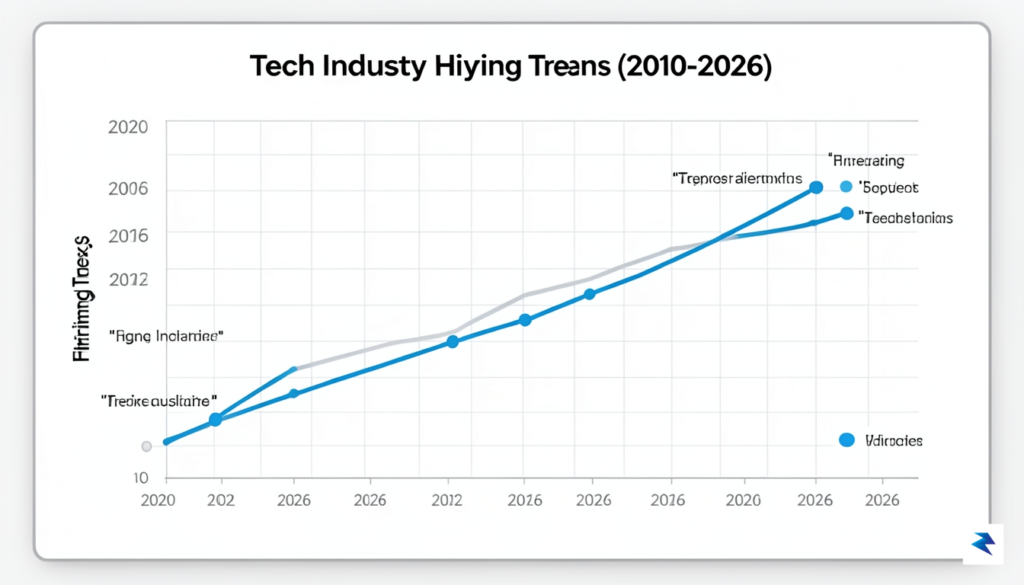
Microsoft’s decision to reduce its workforce by nearly 5,000 employees serves as a sobering reminder that the tech sector is still working through a profound, multi-year period of adjustment. Far from being an isolated incident, these cuts align with a widespread industry trend that has seen giants like Google, Meta, and Amazon similarly trim their ranks in pursuit of leaner operations. This phenomenon is frequently referred to by industry analysts as the “year of efficiency,” a direct reaction to the unsustainable, hyper-growth hiring spree that defined the pandemic era. During the height of global lockdowns, digital adoption accelerated at an unprecedented pace, leading tech companies to expand their headcount aggressively under the assumption that this elevated demand would be permanent.

The current phase represents a necessary normalization rather than an existential crisis for these organizations. When the expected long-term demand failed to materialize in the anticipated scale, companies were forced to reconcile their bloated payrolls with the harsh realities of a cooling economy and fluctuating capital costs. By shedding redundant roles and consolidating departments, firms like Microsoft are attempting to align their operational structures with a more cautious macroeconomic environment. For both employees and stakeholders, discerning the difference between this temporary turbulence and a permanent shift in business strategy is critical; the industry is moving away from the era of “growth at all costs” and toward a model that prioritizes sustainable profitability and long-term shareholder value.
A significant driver behind these layoffs is the aggressive reallocation of resources toward high-margin, generative AI initiatives. Companies are increasingly viewing traditional business units—which often require massive, expensive human headcount to maintain—as potential targets for automation or consolidation. The strategic logic is clear: by shifting capital and human talent into AI-centric projects, organizations aim to build leaner, more scalable platforms that can generate exponential returns without the linear increase in operating expenses that defined older business models.
The structural transformation of the tech sector is not merely about cost-cutting; it is a fundamental pivot toward an AI-first operational architecture that requires fewer people to manage larger, more complex data ecosystems.
Consequently, the roles most vulnerable to these layoffs often exist in departments that have not yet integrated these new, automated efficiencies. As companies continue to refine their internal workflows, the workforce of the future will likely look smaller but significantly more specialized. Understanding this cycle of consolidation is essential for anyone navigating the current landscape, as it highlights that the tech industry is not just shrinking—it is transforming into a different, more automated version of itself that favors high-impact, high-leverage technical roles over traditional, expansive support structures.

The recent waves of downsizing across major tech giants serve as a definitive wake-up call for the modern workforce, signaling that the era of “institutional security” is rapidly giving way to a new paradigm of agility. In a market increasingly shaped by aggressive AI integration and automation, the traditional model of climbing a singular corporate ladder is being disrupted by the need for continuous, rapid transformation. For employees, this shift means that professional longevity is no longer tied to tenure or departmental loyalty, but rather to the ability to pivot alongside the technology itself. As routine operational tasks—ranging from data entry to basic quality assurance and standardized sales outreach—are absorbed by large language models and autonomous systems, the value proposition for human workers must evolve toward higher-order creative, strategic, and high-empathy tasks.
To navigate this volatile landscape, tech professionals must prioritize AI literacy as a foundational skill rather than a peripheral interest. It is no longer sufficient to be a specialist in a legacy stack or a manual process; instead, workers must demonstrate how they can leverage AI tools to multiply their output and redefine their own roles. By actively integrating AI into their daily workflows, employees transform themselves from potential liabilities into essential architects of the new digital infrastructure. Furthermore, diversifying one’s skill set beyond a single technical niche creates a vital buffer against sudden sectoral shifts, allowing professionals to migrate across functions—such as moving from pure software development into AI ethics, prompt engineering, or human-centric product design—when market demands inevitably fluctuate.
The most resilient workers in the coming decade will be those who view their career not as a static destination, but as an iterative product that requires constant updates and strategic pivoting.

Despite the current climate of uncertainty, it is crucial to maintain a balanced perspective on the industry’s trajectory. While consolidation and automation are creating significant friction in the short term, they are simultaneously laying the groundwork for a new wave of innovation that will eventually demand a different, more sophisticated class of labor. History has shown that technological revolutions often destroy redundant roles only to create entirely new categories of employment that were previously unimaginable. By focusing on adaptability, embracing lifelong learning, and positioning themselves at the intersection of human insight and machine efficiency, tech workers can shift from a defensive posture to one of proactive growth. The future of tech work will not be defined by the elimination of roles, but by the relentless elevation of what it means to contribute value in a digital-first economy.
You must be logged in to post a comment.