iOS 27 Public Beta: Everything You Need to Know About the New Siri and Speed Updates
What You Need to Know Before Installing iOS 27 Public Beta The arrival of the iOS 27 Public Beta, specifically the highly anticipated "Golden…
The rollout of the latest public beta marks a definitive turning point for the Apple Watch ecosystem, moving beyond incremental health tracking and notification management into a sophisticated, AI-driven experience. By providing early access to this software, Apple is inviting its most dedicated power users to stress-test an architecture that fundamentally redefines the relationship between the hardware on your wrist and the generative intelligence powering it. This release is not merely a collection of minor bug fixes or aesthetic tweaks; it represents the first major bridge toward integrating advanced machine learning directly into the watchOS environment, allowing for more contextual awareness and predictive capabilities than ever before. For those who rely on their wearable as a primary productivity tool, this beta provides a crucial opportunity to experience how artificial intelligence can streamline daily workflows, from managing complex schedules to providing proactive assistance that anticipates user needs before they are even articulated.
While early adopters often prioritize being the first to test new features, the true significance of this beta period lies in the strategic shift toward on-device intelligence. As Apple leans further into its proprietary AI frameworks, the Apple Watch is evolving into a more autonomous companion capable of handling sophisticated processing tasks without constant reliance on a paired iPhone. This transition requires significant optimization, and public testers play a vital role in refining these interactions to ensure that battery life, system responsiveness, and privacy remain at the core of the user experience. By participating in this rollout, users gain direct insight into how the next generation of Siri—enhanced by deeper integration with native apps—will transform the device from a passive screen into an active, intelligent assistant.
The move to integrate advanced machine learning into watchOS 27 signals that Apple views the wrist-worn device as the ultimate frontier for highly personalized, contextual artificial intelligence.
Ultimately, this phase of the public beta is about establishing a foundation for a more intuitive and responsive wearable experience. As developers and power users navigate the new interface, they will notice that Siri is becoming more adept at understanding natural language nuances and executing complex, multi-step requests that were previously restricted to the phone. This shift underscores a broader industry move toward “invisible computing,” where the technology fades into the background, providing support only when necessary. For the general user base, this means that the coming months will be defined by a series of refinements that make the Apple Watch feel less like a gadget and more like a seamless extension of the user’s intent and environment.
The introduction of advanced AI capabilities within watchOS 27 marks a definitive shift in how we interact with our wrists, moving the device far beyond its traditional role as a mere notification mirror. By leveraging powerful on-device processing, Apple has effectively untethered Siri from the latency issues that previously plagued voice-driven tasks. Because the heavy lifting of language interpretation now occurs locally on the watch’s neural engine, users experience near-instantaneous responses even when cellular or Wi-Fi connectivity is spotty. This architectural change ensures that your personal data remains private and secure, as complex queries are computed directly on the hardware rather than being sent to a remote server for analysis.
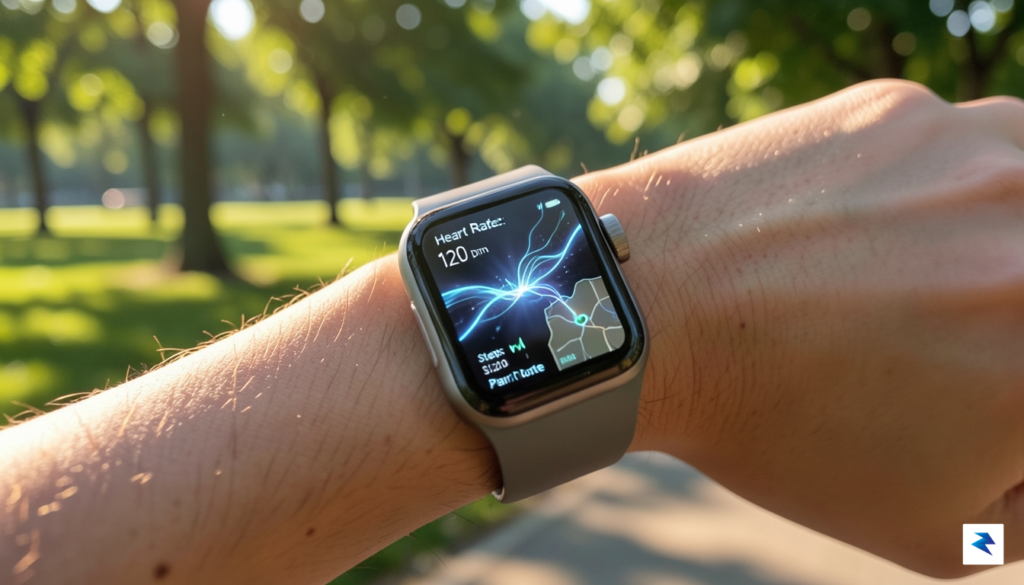
Beyond the speed improvements, this evolution in intelligence allows Siri to act as a truly proactive assistant that understands nuanced user intent. Previous iterations of the voice assistant often struggled with conversational context, frequently requiring rigid syntax or specific trigger phrases to execute commands. In contrast, the new Siri utilizes a sophisticated natural language model that excels at interpreting intent, allowing you to speak naturally—just as you would to a human. Whether you are asking to “summarize my health trends for the week” or requesting a “quick workout recovery plan based on my heart rate variability,” the system now possesses the contextual awareness to synthesize disparate data points into a coherent, actionable answer.
The true power of this upgrade lies in its ability to synthesize health metrics and daily schedules into a proactive narrative, effectively turning the watch into a consultant rather than just a tracker.
The integration of health data into this AI framework represents perhaps the most significant benefit for long-term users. By analyzing trends in your resting heart rate, sleep architecture, and activity levels over time, the watch can now offer predictive insights that were previously hidden in buried menus. For instance, if the system detects a decline in your sleep quality alongside a spike in your activity intensity, Siri may suggest a rest day or guide you through a brief breathing exercise before you even think to ask. This proactive layer of intelligence transforms the Apple Watch from a reactive tool into a vigilant health companion, fundamentally changing the relationship between the wearer and their wearable technology by turning raw biometric data into meaningful, human-centric advice.
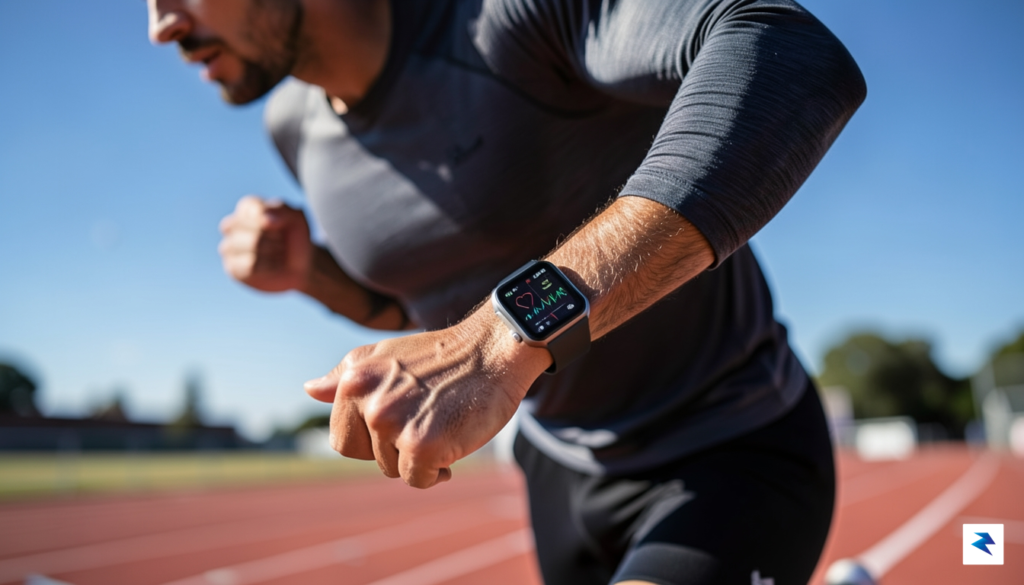
The latest iteration of the operating system moves well beyond simple step counting and basic calorie tracking, ushering in a new era of physiological awareness. For athletes and casual fitness enthusiasts alike, watchOS 27 introduces a sophisticated suite of algorithms designed to interpret the nuances of your daily movement. By analyzing the consistency and intensity of your motion, the watch can now differentiate between various training modalities with greater precision, ensuring that your exertion levels are captured accurately regardless of whether you are participating in a high-intensity interval session or a gentle recovery walk.
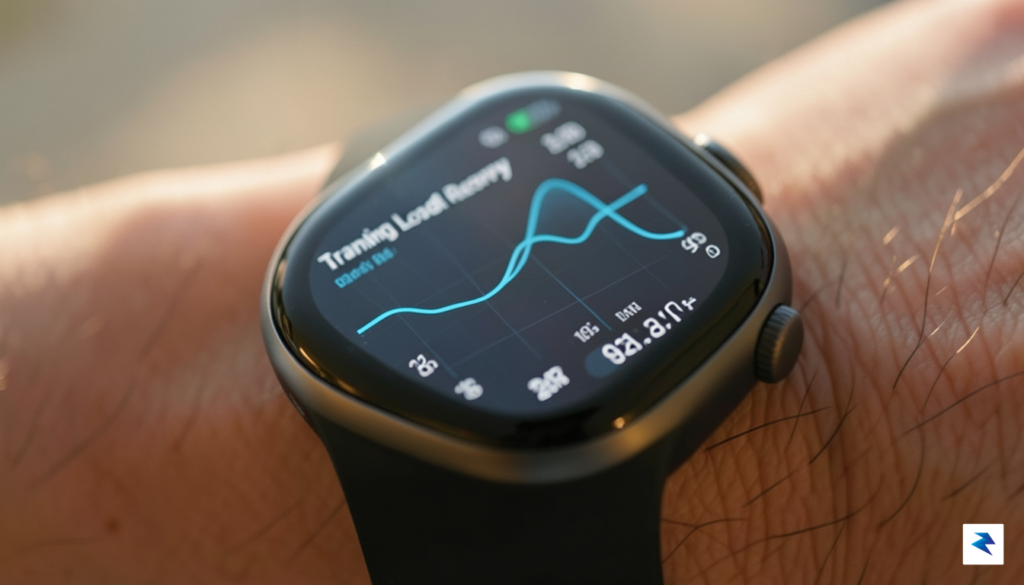
Central to these updates is a significantly revamped approach to heart rate variability (HRV) monitoring. While previous versions provided static snapshots of your heart’s rhythm, the new system offers continuous background analysis that contextualizes your recovery status. This data is synthesized into a personalized Recovery Score, which takes into account your sleep quality, resting heart rate, and previous day’s activity levels. By providing this holistic snapshot each morning, the watch helps you determine whether your body is primed for a challenging workout or if it is signaling that a rest day is medically advisable to prevent overtraining syndrome.
To help users better manage their physical output, watchOS 27 introduces a refined Training Load metric. This feature compares your recent activity against your long-term average, allowing you to visualize your progress through a clear, intuitive dashboard. If your training intensity spikes too rapidly, the system will offer proactive prompts to adjust your schedule, effectively acting as a digital coach that prioritizes long-term consistency over short-term gains. This shift toward sustainable fitness is bolstered by improved sensor fusion, which integrates data from the accelerometer and gyroscope more effectively than ever before.
The core philosophy behind these updates is to transform the Apple Watch from a passive tracker into an active partner in your health journey, emphasizing the importance of recovery as much as the exertion itself.
Furthermore, the integration of these advanced metrics allows for a more tailored user experience. You can now customize your workout views to display real-time recovery data, such as your current heart rate recovery status immediately following a set. By synthesizing this deep physiological data into actionable insights, watchOS 27 ensures that you are no longer just guessing your way through your fitness routine. Instead, you are armed with the information necessary to balance your training loads, optimize your performance, and ultimately achieve a more nuanced understanding of your body’s unique physiological needs.
In the latest iteration of watchOS, Apple has fundamentally reimagined the relationship between the wearer and their device by prioritizing seamless, one-handed interaction. Recognizing that users are frequently multitasking—carrying groceries, holding a child, or gripping a transit handle—the refined gesture control system ensures that the Apple Watch remains fully operational even when your primary hand is occupied. By utilizing the built-in accelerometer, gyroscope, and optical heart rate sensor, the watch can now detect subtle muscle movements and tendon activity in your wrist, translating them into precise navigational commands without the need to physically touch the screen.
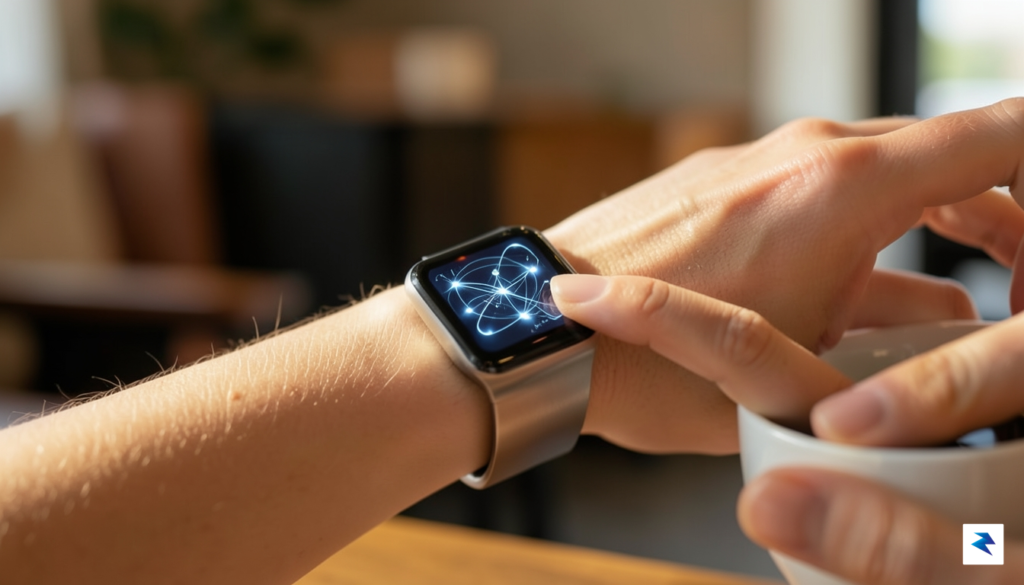
The mechanics behind this innovation rely on what Apple terms “Quick Actions.” Through a simple double-tap of the index finger and thumb, users can answer incoming calls, stop timers, or dismiss notifications instantly. This isn’t merely a convenience; it represents a significant leap forward for accessibility. For users with limited mobility or those who struggle with fine motor precision on a small touch interface, these gesture-based shortcuts eliminate the friction of navigating traditional menus. Because the system is highly sensitive to the unique physiological profile of the wearer, it provides a tactile, reliable way to interface with the watch software, ensuring that high-priority functions are never more than a flick of the fingers away.
To ensure that these controls serve the user rather than the other way around, Apple has introduced a robust customization suite within the watchOS settings. Users are no longer limited to a set of pre-defined actions; instead, they can map specific gestures to their most frequently used apps or shortcuts. Whether you want a double-pinch to trigger a Siri AI command or a specific wrist flick to launch your favorite workout tracking app, the platform allows for a personalized experience that adapts to your daily routine.
The true power of gesture-based navigation lies in its ability to fade into the background, allowing the technology to respond to the user’s natural movements rather than requiring the user to learn a complex new language of inputs.
Furthermore, the integration of the upcoming Siri AI enhancements means that these one-handed gestures will soon work in tandem with voice-activated contextual awareness. By combining a gesture—to capture the watch’s attention—with a natural language request, users can execute complex, multi-step tasks while remaining completely hands-free. This synergy between physical movement and intelligent digital assistance marks a pivotal shift in wearable computing, moving us closer to a future where the device becomes a transparent extension of the user’s intent rather than a piece of hardware that demands constant manual attention.
While the excitement surrounding the latest software update is palpable, it is essential for users to temper their expectations regarding hardware support. Not every device currently running the software will be capable of handling the sophisticated neural processing required for the next generation of Siri. The upcoming AI-driven features rely heavily on the advanced Neural Engine found exclusively in the newest silicon architectures, meaning that legacy models will inevitably lack the raw computational overhead necessary to run these complex models on-device. Consequently, while older watches may receive the core watchOS 27 updates, they will likely be restricted to a “lite” version of the assistant rather than the full, generative AI experience.
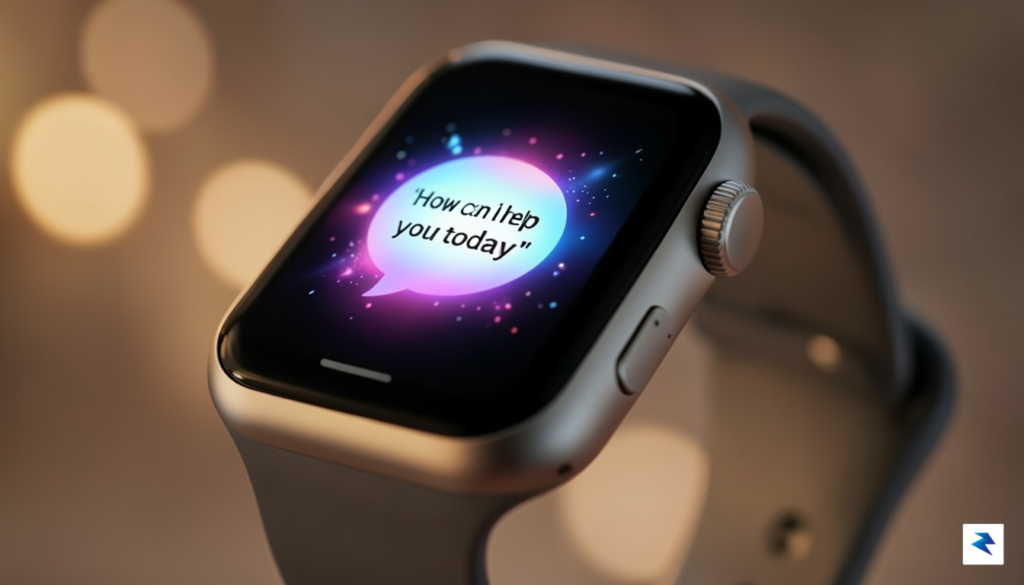
To determine if your wearable is ready for the transition, you must first verify your specific model and generation. Generally, Apple’s most demanding AI features are restricted to the Apple Watch Series 9 and the Ultra 2, as these devices contain the S9 SiP (System in Package) that provides the necessary 4-core Neural Engine. If you are using an Series 8 or older, you will still benefit from general system stability and interface improvements, but you should anticipate missing out on the deeper, context-aware intelligence that defines this release. This hardware segmentation is a standard practice for Apple, as they prioritize performance efficiency and battery longevity, both of which would be severely compromised if the company attempted to force high-level AI tasks onto aging processors.
For users currently tethered to older hardware, the decision to upgrade hinges on whether the new Siri integration is a daily necessity for your workflow or simply a novelty you are curious to explore.
If you find that your current device is incompatible with these advanced features, you have a few options to consider before the official public release. First, check your “About” settings in the Watch app on your iPhone to confirm your exact model number. If you are utilizing a device that predates the S9 chip, it is worth evaluating whether the performance gap justifies an upgrade to the latest hardware. For many, the current watchOS 27 beta serves as a clear indicator of a shifting ecosystem where AI capabilities are becoming the new baseline for performance. Ultimately, understanding these hardware boundaries now will prevent frustration later and ensure you have the correct device in place to fully leverage the next evolution of wearable intelligence.
You must be logged in to post a comment.