Neko Health Secures $700M: The Future of Preventative Medicine
The Rise of Proactive Health Monitoring For decades, the global healthcare landscape has been defined by a reactive model—a "sick-care" system…
When Jack Dorsey, Biz Stone, and Evan Williams first conceptualized what would become the digital town square, they were operating within the confines of Odeo, a struggling podcasting company searching for a pivot. The internal brainstorming sessions that birthed the platform were rooted in a simple, almost whimsical desire: to share one’s current status with a small group of friends in real-time. On July 15, 2006, the public finally gained access to a service that felt less like a traditional social network and more like a continuous, collective pulse. It was a radical departure from the long-form blogging culture of the mid-2000s, stripping away the friction of writing paragraphs in favor of the immediate, ephemeral nature of the “status update.”
The decision to impose a 140-character limit was not merely a technical choice based on the constraints of SMS messaging protocols; it was a deliberate sociological experiment. By forcing users to distill their thoughts into such a tight window, the platform inadvertently invented a new form of digital brevity. This limitation compelled users to value wit, clarity, and urgency over elaborate prose, effectively gamifying the act of communication. Within this constrained environment, users learned to communicate through nuance, subtext, and the clever deployment of punctuation. It transformed the internet from a static library of information into a dynamic, cascading stream of human consciousness that demanded immediate engagement.
The genius of the 140-character constraint was that it turned the entire world into a rapid-fire headlines machine, making brevity the ultimate form of digital currency.
This shift fundamentally altered the speed of digital discourse. Before the platform’s emergence, the web was largely composed of asynchronous content—forums and blogs that required significant time to consume and even more time to update. Suddenly, news was no longer something that arrived in a morning newspaper; it was something that erupted in real-time, reported by the very people witnessing it. This accelerated feedback loop created a global hive mind where cultural moments, breaking news, and personal observations could travel across the globe in seconds. It was the birth of the “now,” a persistent, ever-scrolling reality that defined the social internet for the next two decades and permanently changed how we perceive the flow of human events.
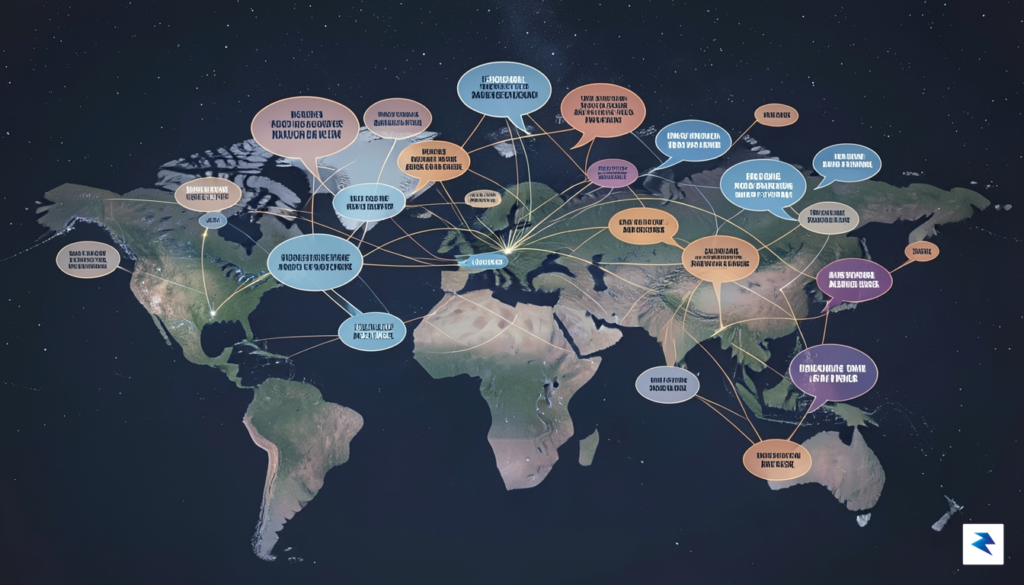
In its infancy, the platform was little more than a digital novelty, a place for status updates that felt inconsequential to the broader world. However, it quickly transcended its origins as a micro-blogging side-project to become the definitive digital town square of the 21st century. By collapsing the distance between eyewitnesses and the global public, it fundamentally altered the landscape of journalism. Traditional media outlets, once the sole gatekeepers of information, found themselves racing to keep pace with the immediacy of user-generated updates, turning the platform into a primary source for breaking news long before cameras arrived on the scene.

This democratization of news paved the way for unprecedented mass mobilization, proving that a single hashtag could ignite global awareness. Perhaps no moment illustrated this shift more starkly than the Arab Spring, where the platform served as a crucial nerve center for activists, organizers, and citizens to document their struggle against entrenched powers. By bypassing state-controlled media, protesters were able to coordinate efforts in real-time, effectively turning their smartphones into tools for revolutionary change. This era solidified the platform’s reputation as a catalyst for political movements, shifting the power dynamic from centralized institutions to the decentralized collective.
The platform’s greatest legacy is its ability to shrink the world, transforming individual voices into a global chorus that institutions can no longer ignore.
As the site matured, it became the undisputed preferred channel for world leaders, politicians, and activists alike. The nature of diplomatic discourse underwent a radical transformation; policy announcements, international tensions, and grassroots campaigns began to play out in 280-character bursts. While this accessibility fostered a new level of accountability and transparency, it also introduced a volatile layer of immediacy to governance. Today, whether through the declaration of policies or the rapid-fire response to social crises, the infrastructure of the platform has become inseparable from the mechanisms of political power, permanently embedding itself into the fabric of global history.
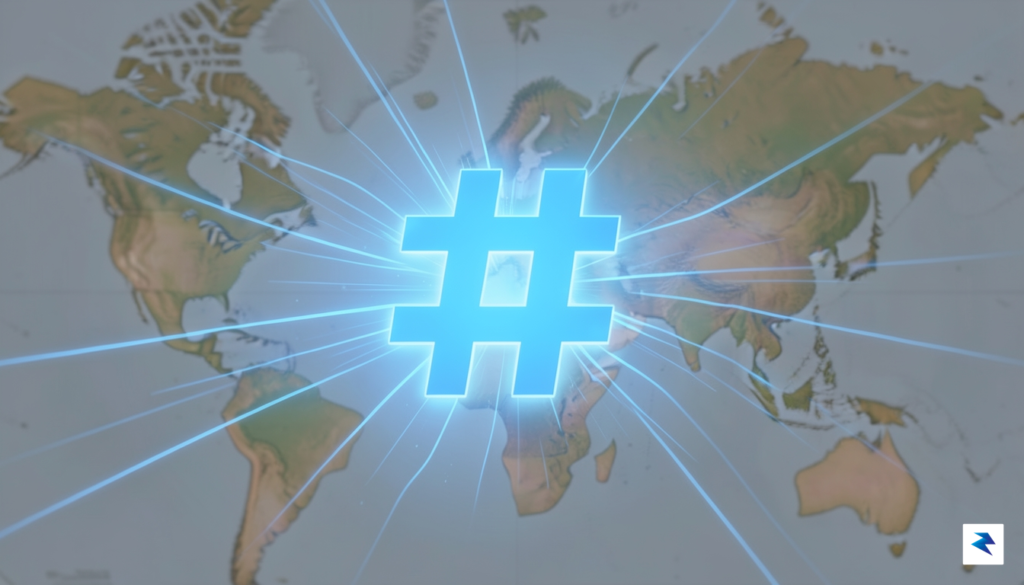
The platform’s transformation from a simple status-update service into the global town square was fundamentally driven by the invention of the hashtag. What began in 2007 as a grassroots suggestion by user Chris Messina to organize groups and topics has since evolved into the primary architecture of modern digital discourse. By turning the pound sign into a tool for categorization, the platform democratized information, allowing localized conversations to balloon into worldwide phenomena in a matter of minutes. This shift fundamentally altered how we track events, from breaking news and political uprisings to niche fandom discussions, effectively creating a real-time index of human thought that no other medium could replicate.
Beyond the technical innovation of the hashtag, the platform became the primary engine for the modern meme economy. Because of its character limit, the site forced a culture of extreme conciseness, rewarding wit, irony, and visual punchlines that could be easily shared and remixed. Memes born here—from surrealist humor to biting political commentary—served as a new linguistic shorthand, allowing users to express complex emotions or cultural frustrations with a single image or phrase. This environment nurtured a unique brand of “platform-native” humor, where the speed of cultural consumption meant that a joke made in the morning could become a household name by dinner, permanently embedding itself in the collective consciousness.
The evolution of the “thread” format further reshaped our relationship with complex narratives. Originally designed for micro-updates, users hacked the system by replying to their own posts, creating a new storytelling medium that allowed for long-form analysis, investigative journalism, and deeply personal storytelling. This format broke the barrier of the short-form constraint, providing a space for nuanced discourse that felt both urgent and accessible. It allowed threads to function as modern-day op-eds, where creators could layer information, imagery, and links to build a comprehensive argument or chronicle a life-altering experience in real-time.
The platform did not just host conversations; it standardized the way we categorize our interests and share our experiences, creating a universal language of digital engagement that persists today.
Ultimately, these developments coalesced into a new form of human connection that transcends geography and social strata. By providing a stage where a viral moment could be as impactful as a traditional news cycle, the platform reshaped popular culture into a collaborative, decentralized project. Whether through the rise of social justice movements organized under a single tag or the birth of internet-wide inside jokes, the platform taught us that our individual voices, when linked through the right metadata, possess the power to shift the global conversation.
The acquisition of Twitter by Elon Musk in October 2022 marked the most consequential turning point in the platform’s two-decade history. Almost overnight, a digital town square defined by its chronological flow and character-limited brevity was thrust into a period of radical experimentation and structural upheaval. Musk’s stated ambition was to transform the company into an “everything app” modeled after multi-functional platforms like WeChat, aiming to integrate long-form content, financial transactions, and video streaming into a single, cohesive ecosystem. This vision, however, necessitated a complete dismantling of the established identity that users had grown accustomed to since the mid-2000s.
Central to this transformation was the controversial rebranding from the iconic blue bird to the stark, minimalist “X.” This aesthetic shift was more than just a surface-level change; it signaled a departure from the platform’s focus on real-time news and public conversation toward a more opaque, algorithm-driven experience. The introduction of paid subscriptions—specifically the reimagining of the verification badge as a purchasable asset—fundamentally altered the site’s social hierarchy. What was once a mark of authenticity for journalists, activists, and public figures became a commodified status symbol, creating a chaotic environment where the line between verified entities and anonymous actors became increasingly blurred.
These changes have sparked a persistent, global debate regarding the delicate balance between unfettered free speech and responsible content moderation. By rolling back many of the platform’s previous safety protocols and relying more heavily on community-driven fact-checking tools like Community Notes, the leadership has prioritized a “town square” philosophy that encourages unfiltered discourse. Critics argue that this approach has emboldened misinformation and diluted the platform’s reliability as a source of breaking news, while supporters maintain that these changes are essential to protecting open debate from corporate censorship. Consequently, the user experience has become deeply polarized, with the algorithm now prioritizing engagement—often driven by controversy—over the chronological updates that originally defined the user journey.
The shift to X represents a fundamental gamble: can a platform built on the ethos of bite-sized, public updates evolve into a broad, decentralized financial and social hub without losing the very user base that made it culturally relevant in the first place?
Ultimately, the current iteration of the platform remains a work in progress, characterized by frequent technical pivots and shifting policy mandates. As the infrastructure continues to move toward a more proprietary, subscription-heavy model, the community finds itself at a crossroads. The transition from the familiar, bird-branded era to the experimental frontier of X serves as a case study in how technology companies can pivot their core mission, leaving users to decide whether they are witnessing the birth of a revolutionary new digital infrastructure or the slow erosion of a once-unparalleled global communication network.

Over the past two decades, the platform that began as a simple experiment in status updates has fundamentally rewired the architecture of human connection. What started as a niche utility for sharing mundane thoughts has evolved into the central nervous system of global discourse, dictating the pace of news cycles and providing a megaphone for marginalized voices. As we look back at the trajectory from those early, tentative tweets to the current, turbulent era of X, it becomes clear that we have moved past the age of digital novelty and into a period of profound sociological consequence. The platform’s legacy is defined by its ability to collapse distance, allowing a student in a remote village to engage directly with a world leader or a grassroots movement to bypass traditional media gatekeepers entirely.
However, the transition to this new iteration represents a pivotal juncture for the future of the digital public square. We are currently grappling with the inherent friction of a globalized, hyper-connected society that often feels more fragmented than ever. Maintaining a space that invites open expression while simultaneously mitigating the toxicity of polarization remains the greatest challenge of our time. As the platform pivots toward new monetization models and technological underpinnings, the question is no longer just about who owns the data, but rather who owns the truth in an age of algorithmic curation. The promise of a decentralized or more autonomous digital interaction model suggests that we are moving away from the era of top-down moderation and toward a future where user agency and decentralized verification become the new pillars of credibility.
The evolution of digital interaction is not merely a change in branding; it is a fundamental shift in how we value the collective intelligence of the crowd versus the efficiency of the machine.
Looking ahead, the trajectory of public discourse will likely be defined by the tension between the desire for unbridled freedom and the necessity of communal safety. If the past twenty years have taught us anything, it is that digital spaces are rarely neutral; they are active participants in shaping our reality. As the platform matures into its next phase, its role will shift from being a simple conduit for information to becoming a complex laboratory for governance, identity, and consensus-building. Whether this evolution leads to a more robust, resilient democratic space or further retreats into insulated echo chambers depends entirely on our ability to prioritize human connection over the addictive mechanics of the attention economy.
You must be logged in to post a comment.