
Cracking the Shield: How the US Took Down a $62M Cybercrime Network
The Rise of Bulletproof Hosting Services In the vast, interconnected expanse of the internet, most hosting providers operate under strict…
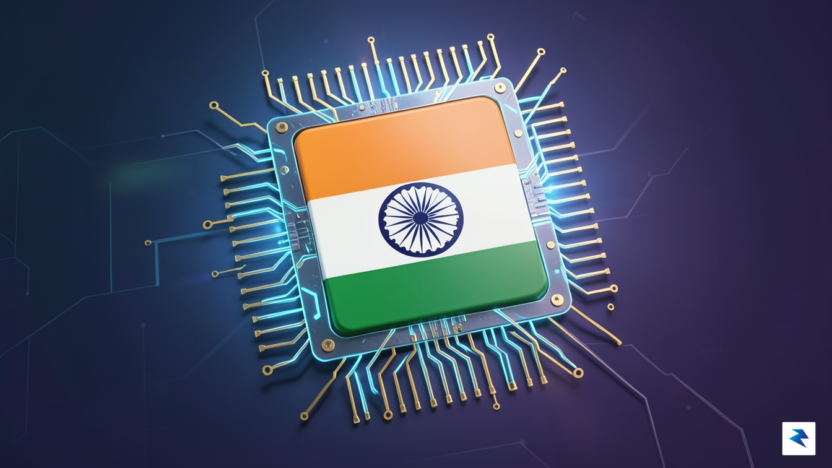

For decades, the global electronics industry has operated under the gravitational pull of China’s massive manufacturing ecosystem. By building an unparalleled network of specialized factories, logistics hubs, and component suppliers, China effectively became the world’s hardware workbench. However, the fragility of this concentrated supply chain—exposed starkly by geopolitical tensions, trade wars, and the disruptions of a global pandemic—has forced multinational corporations to reevaluate their reliance on a single geographic source. This realization has birthed the “China Plus One” strategy, a corporate imperative aimed at diversifying production footprints to mitigate risk while ensuring long-term operational stability.
India has emerged as the frontrunner in this global realignment, moving beyond its historical role as a back-office for IT services to become a formidable force in tangible hardware production. The government in New Delhi has recognized that the window of opportunity to capture this manufacturing exodus is limited, prompting an aggressive push to overhaul its industrial policy. Through ambitious incentive programs like the Production Linked Incentive (PLI) scheme, India is effectively subsidizing the massive capital expenditures required to establish world-class assembly lines for smartphones and critical components. This strategic pivot is not merely about attracting foreign investment; it is a calculated effort to integrate India into the heart of the global value chain at a time when companies are desperate for alternatives.
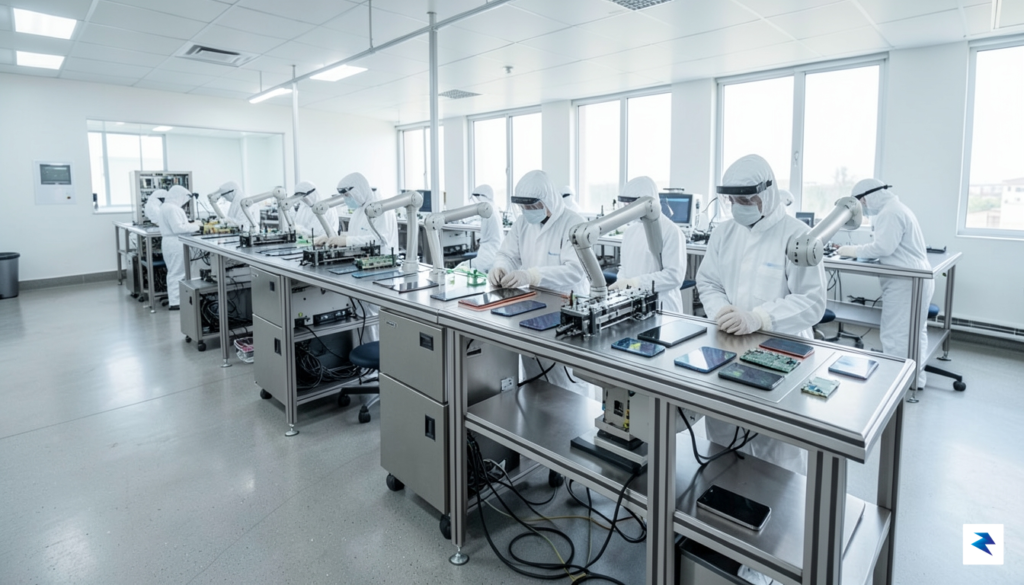
The urgency behind this transition is fueled by a convergence of economic ambition and geopolitical necessity. As global tech giants seek to de-risk their operations, they are finding that India offers a unique combination of a burgeoning domestic consumer market and a massive, relatively cost-effective labor force. Furthermore, India’s improving infrastructure and digitization efforts have created a more hospitable environment for high-precision manufacturing than has ever existed in the country’s history. The goal is clear: by transforming itself into a reliable, large-scale manufacturing hub, India intends to secure its place as the definitive counterweight to China, signaling a fundamental, permanent shift in how the world’s most critical consumer technology is conceptualized, assembled, and distributed.
The transition toward an “India-first” manufacturing approach represents one of the most significant geopolitical reallocations of industrial power in the twenty-first century, turning the country from a peripheral market into a central pillar of the global digital economy.
Ultimately, this movement is about more than just building smartphones; it is about building resilience. By betting billions of dollars on factories and supply chain logistics, India is signaling to the world that the era of monolithic manufacturing reliance is drawing to a close. As the global supply chain undergoes this tectonic shift, India’s strategic pivot is quickly becoming the defining economic story of the decade, reshaping the alliances and trade dependencies that will govern the technology sector for years to come.

At the heart of India’s ambitious industrial pivot lies a two-pronged fiscal strategy designed to dismantle the barriers that have long kept global electronics giants anchored to Chinese facilities. The government has orchestrated a staggering $19.8 billion financial commitment, split strategically between smartphone assembly and the foundational semiconductor ecosystem. By deploying these capital-intensive incentives, New Delhi is effectively lowering the cost of entry for multinational corporations, transforming India from a peripheral market into a primary manufacturing hub that can compete on both scale and technological sophistication.
The first pillar of this initiative is a $6.5 billion Production Linked Incentive (PLI) scheme specifically tailored for smartphone manufacturers. This program functions as a performance-based subsidy, offering companies like Apple and Samsung direct cash incentives ranging from 4% to 6% on incremental sales of goods manufactured within the country. By subsidizing the cost of production, the government is successfully mitigating the high logistical and infrastructure expenses that previously deterred firms from diversifying their supply chains away from existing hubs. As a result, global tech titans are finding it increasingly economically rational to shift significant portions of their assembly lines to Indian soil, knowing that the government is essentially underwriting a portion of their operational risk.
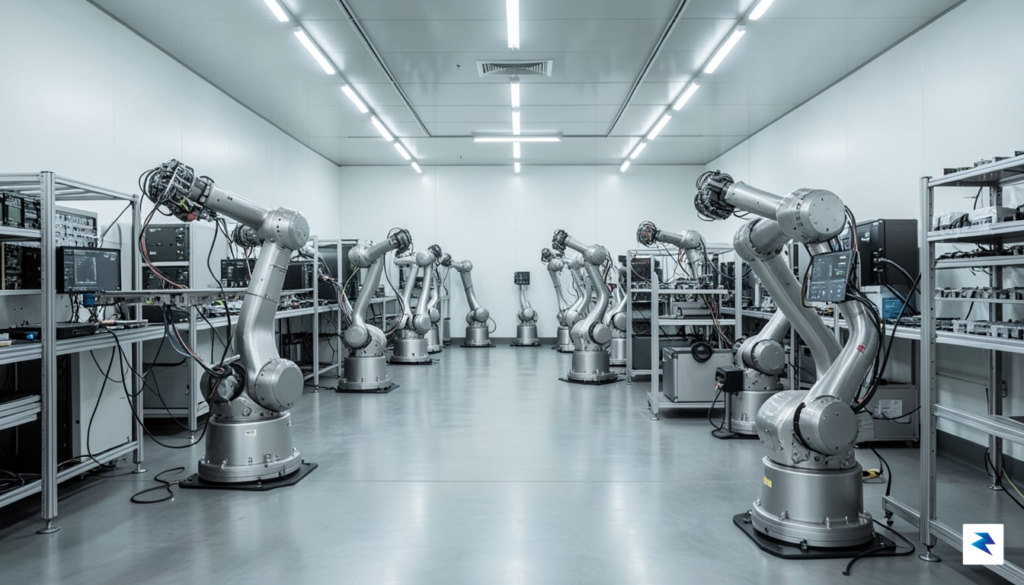
Complementing the smartphone assembly push is a massive $13.3 billion semiconductor mission, which serves as the backbone of this broader industrial vision. Recognizing that true manufacturing sovereignty requires local access to silicon, this fund provides substantial financial support—covering up to 50% of project costs—for companies establishing semiconductor fabrication plants and display units. This move is particularly critical because it creates a vertically integrated supply chain, allowing manufacturers to source high-end components domestically rather than relying on volatile international imports.
The semiconductor mission is not merely a subsidy program; it is a strategic maneuver to anchor the global electronics value chain within India, ensuring that the country moves up from simple assembly to high-value manufacturing.
This dual-layered approach creates a compelling value proposition for investors who have historically prioritized the efficiency of established Chinese networks. Furthermore, the Indian government has streamlined administrative hurdles and offered preferential land access to further sweeten the deal for major players. By aligning these capital injections with long-term policy consistency, India is signaling to the global market that it is not looking for a temporary manufacturing surge, but rather a permanent reconfiguration of how the world’s most advanced consumer electronics are built, tested, and distributed.

To truly challenge the global smartphone status quo, India recognizes that it cannot remain a mere assembly hub for imported components. The nation’s strategic pivot toward semiconductor fabrication represents an attempt to secure its place at the very core of the digital economy. Semiconductors are the “brains” of every modern device, and controlling their production is the difference between being a passive participant in the global supply chain and becoming a dominant sovereign power. By investing billions into domestic chip manufacturing, India is attempting to move up the value chain, transitioning from the labor-intensive work of snapping together pre-made parts to the high-tech, capital-intensive mastery of creating the silicon wafers that drive modern computing.

The technical hurdles involved in this endeavor are immense, as semiconductor manufacturing is widely considered one of the most complex industrial processes ever devised by humanity. Fabrication requires extreme precision, often operating at the nanometer scale where even a microscopic speck of dust can render an entire batch of chips useless. This process demands ultra-pure environments, specialized photolithography machines that cost hundreds of millions of dollars each, and a steady supply of high-grade chemicals and gases. Beyond the physical plant requirements, India faces a significant challenge in building an ecosystem of specialized talent, ranging from material scientists to software engineers capable of designing the complex architectures that smartphones demand.
Mastering the semiconductor supply chain is not merely an economic ambition; it is a fundamental pillar of national security in an era where digital sovereignty determines geopolitical influence.
Furthermore, the motivation behind this push extends well beyond commercial profit margins. Relying on external suppliers—particularly those concentrated in a single geographic region—creates a precarious vulnerability for India’s burgeoning tech sector. By localizing the production of microprocessors, memory chips, and power management integrated circuits, the government aims to insulate its domestic industries from the volatile shocks of international trade disputes and supply chain bottlenecks. This long-term vision seeks to foster an end-to-end ecosystem where the design, development, and mass production of critical electronic components happen within Indian borders.
Ultimately, the transition from assembly to silicon mastery will be a marathon rather than a sprint. While the initial infrastructure is being laid through heavy subsidies and partnerships with global tech giants, the true test will be the country’s ability to maintain a consistent output of high-yield, cutting-edge chips. If successful, India will not only reduce its dependence on existing manufacturing giants but will also position itself as a key architect of the next generation of hardware, ensuring that the devices powering the future are built on a foundation of domestic innovation.

While the influx of capital and the promise of government subsidies have certainly captured global attention, the transition from an emerging electronics hub to a dominant global player requires more than just financial incentives. India’s ambition to replicate the manufacturing scale of its northern neighbor faces a complex landscape of structural barriers. Chief among these is the logistical friction that continues to inflate costs and extend timelines; currently, the time taken for customs clearance and the transit of components from ports to inland industrial parks remains significantly higher than in mature manufacturing ecosystems. For high-precision smartphone assembly, where supply chains rely on just-in-time delivery of thousands of intricate parts, these inefficiencies can become a critical bottleneck.

Furthermore, the “ease of doing business” remains a multifaceted challenge that goes beyond digital bureaucracy. While India has made notable strides in streamlining business registrations, the practical realities of land acquisition and site development for massive electronics clusters often involve protracted legal processes and multi-layered regulatory approvals. Securing contiguous plots of land suitable for sprawling, integrated manufacturing facilities—often referred to as “plug-and-play” industrial parks—is essential to attracting the tier-one suppliers that typically cluster around smartphone assembly lines. Without these pre-prepared environments, companies are forced to navigate a fragmented landscape that complicates the rapid scaling required to meet global demand.
Success in this sector is not merely about the assembly of devices; it is about the integration of a vast, synchronized ecosystem where logistics, labor, and land policies act in concert rather than in opposition.
Labor laws represent another significant hurdle that necessitates careful, systemic reform. India’s existing regulatory framework, which historically favored rigid worker protections, is gradually evolving toward a more flexible model that accommodates the cyclical nature of high-volume electronics manufacturing. Policymakers are increasingly aware that to attract the scale of investment seen in China, they must balance worker welfare with the operational agility required for 24/7 production cycles. Achieving this balance is a delicate task, as it requires harmonizing state-level mandates with national economic goals to ensure that the workforce is both protected and highly productive.
Ultimately, the path forward involves a persistent commitment to upgrading the “soft” and “hard” infrastructure that underpins the digital economy. This includes not only building better roads and ports but also investing in technical training programs to ensure that the domestic workforce can handle the sophisticated automation involved in modern smartphone production. By addressing these systemic frictions through targeted policy implementation and long-term capital investment, India is attempting to transform itself from a consumer market into a global manufacturing powerhouse, though the journey will likely be marked by significant trial and error.

The ascendancy of India as a global manufacturing powerhouse represents far more than a mere shift in industrial logistics; it signals a tectonic realignment of geopolitical influence. For decades, the world’s technology ecosystem has been inextricably tethered to China, a dependency that grew increasingly fraught as trade tensions, pandemic-related shutdowns, and diplomatic friction exposed the fragility of a singular supply chain. By aggressively courting multinational tech giants, New Delhi is positioning itself as the primary alternative to the status quo, effectively creating a “China Plus One” strategy that Western governments have long sought to institutionalize. As production lines migrate toward the Indian subcontinent, the resulting diversification promises to insulate the global market against localized shocks, thereby fostering a more resilient and multi-polar technology landscape.

This strategic pivot is fundamentally changing the calculus for major corporations that once viewed China as the sole viable hub for high-volume hardware production. Western tech companies are now navigating a complex balancing act, striving to maintain their market access in China while simultaneously de-risking their operations by investing billions into Indian infrastructure. This dual approach is not merely a hedge against political instability; it is a pragmatic recognition that the era of hyper-globalization—defined by single-source efficiency—has been superseded by an era of strategic security. As Indian factories ramp up capacity for flagship devices, the leverage that Beijing once wielded through its manufacturing dominance is beginning to dilute, forcing a recalibration of international trade alliances.
The success of India’s manufacturing expansion acts as a geopolitical stabilizer, potentially curbing the influence of any single nation over the essential hardware that powers the modern digital economy.
Furthermore, the move toward Indian manufacturing is poised to reshape the stability of global technology trade agreements. As India integrates more deeply into the value chains of American and European firms, there is a natural incentive for these nations to deepen their economic and defense partnerships with New Delhi. This transition creates a new web of interdependence that could lead to more robust, rules-based trade frameworks designed to protect intellectual property and ensure supply chain transparency. While the tension between India and China remains a volatile factor in regional politics, the migration of the smartphone industry acts as a catalyst for a broader economic shift, one that prioritizes a diversified, secure, and more competitive global marketplace over the vulnerabilities of the past.

For the average consumer, this massive pivot toward Indian manufacturing promises a future defined by greater hardware reliability and more stable pricing. As global technology companies work to decentralize their production hubs, the inherent risks associated with a single-source supply chain—often disrupted by geopolitical tensions or regional public health crises—begin to diminish significantly. By diversifying manufacturing footprints, brands can better insulate themselves from the volatility that previously caused sudden spikes in device costs or inventory shortages. Consequently, buyers can look forward to a more consistent cadence of product launches and a mitigated risk of supply-driven inflation, ensuring that the next generation of essential hardware remains both accessible and readily available.
The influx of capital and infrastructure into India’s tech sector is also acting as a catalyst for a sophisticated labor evolution. Beyond the immediate creation of thousands of manufacturing jobs, this movement fosters an ecosystem of high-skilled engineering, precision assembly, and advanced research and development. As local facilities transition from simple assembly to complex component integration, India is rapidly positioning itself as a cornerstone of the global tech value chain. This shift not only empowers the local economy but also forces global giants to invest more heavily in regional partnerships and localized quality control, ultimately leading to products that are better calibrated for the needs of diverse, global consumer bases.
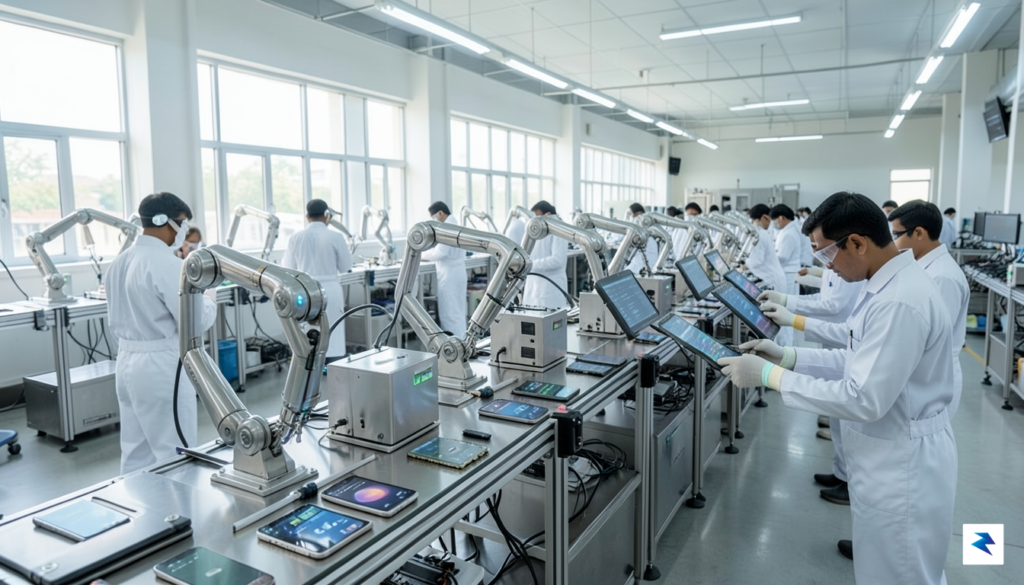
For global technology giants, the strategic move away from a China-centric model is no longer merely an option; it is an imperative for long-term survival. Companies are increasingly viewing India as a vital hedge against supply chain fragility, utilizing its vast talent pool and government-backed production incentives to build more resilient networks. This transition is not without its hurdles, as it requires massive investment in logistics, power infrastructure, and regulatory compliance. However, the potential rewards—a robust, multi-regional manufacturing base and closer proximity to one of the world’s largest emerging consumer markets—are compelling enough to justify the billions being poured into these new initiatives.
The diversification of global electronics manufacturing is a systemic shift that transforms India from a peripheral market into a primary engine of the digital age, promising a more balanced and secure future for tech consumers worldwide.
Ultimately, the success of this multibillion-dollar bet rests on the ability to scale industrial efficiency to match the high standards set by the incumbents. If India can successfully harmonize its growing manufacturing prowess with the intricate demands of global tech brands, the result will be a more competitive marketplace. This competition is likely to drive innovation, as manufacturers strive to optimize costs and improve output quality to win favor with major tech conglomerates. For the consumer, this indicates that the era of hyper-concentrated production is nearing its end, making way for a more resilient and versatile era of technological distribution.
You must be logged in to post a comment.