
8BitDo FlipPad Review: The Ultimate Game Boy-Inspired Controller for Your Phone
The Rise of Retro-Inspired Smartphone Gaming For years, the mobile gaming landscape was dominated by the limitations of glass-pane…

In the vast, interconnected expanse of the internet, most hosting providers operate under strict terms of service that prohibit illegal activity, such as phishing, malware distribution, or illicit data storage. However, nestled in the shadows of this digital landscape exists a specialized, clandestine infrastructure known as “bulletproof hosting.” These providers distinguish themselves by explicitly catering to cybercriminals, offering a sanctuary where malicious websites can operate without the constant threat of being taken offline by abuse complaints. By deliberately ignoring DMCA takedown requests, ignoring law enforcement subpoenas, and maintaining “no-log” policies that obscure the identities of their users, these hosts act as the backbone for a significant portion of global cybercrime.

For large-scale criminal operations—such as ransomware gangs, botnet operators, and sophisticated phishing rings—bulletproof hosting is not merely a convenience; it is a critical business requirement. When a criminal launches a phishing campaign aimed at stealing credentials or deploys a ransomware strain, they need a platform that will remain stable and operational for as long as possible. A standard hosting provider would detect the malicious traffic and shutter the account within hours, effectively neutralizing the attack. In contrast, a bulletproof host provides the necessary technical resilience to ensure that a malicious campaign can run its full course, maximizing the financial haul for the perpetrators before authorities can even begin the process of tracing the infrastructure.
Bulletproof hosting is the digital equivalent of a safe house; it provides the logistical cover necessary for criminal organizations to scale their operations while remaining insulated from legal repercussions.
The relationship between these providers and cybercriminals has sparked a relentless, high-stakes game of cat-and-mouse between global law enforcement agencies and the operators of these illicit networks. Authorities often spend months mapping out the infrastructure of a provider, only to find that these services frequently rotate their digital footprints, migrate between jurisdictions with weak cyber-oversight, or utilize complex proxy chains to mask their true physical locations. While international cooperation has led to significant takedowns—such as the recent dismantling of networks that facilitated $62 million in cybercrime—the decentralized nature of the internet ensures that the demand for bulletproof infrastructure remains high. As long as there is profit to be made from stolen data and digital extortion, these resilient hosting services will continue to evolve, constantly adapting their tactics to stay one step ahead of the law.

The unsealing of the 2024 indictment against three Russian nationals—Aleksandr Grichishkin, Andrei Skvortsov, and Aleksandr Skvortsov—represents a sophisticated pivot in how the Department of Justice targets the engine room of global cybercrime. Rather than chasing the ephemeral digital ghosts of individual hackers, investigators focused their efforts on the structural foundation that supports them: the “bulletproof” hosting services. These companies, operating under the guise of legitimate web service providers, intentionally ignored abuse complaints, masked the identities of their criminal clientele, and provided a secure, uninterrupted environment for malicious operations. By formalizing these charges, the DOJ is effectively declaring that the infrastructure providers are just as culpable as the keyboard operators launching the attacks.

At the core of the legal strategy is a meticulous mapping of the financial ecosystem that sustained these operations. Prosecutors successfully traced approximately $62 million in illicit gains, demonstrating that these hosting firms were not merely passive bystanders but were active participants in a profit-sharing model. Evidence collected by federal agencies showed that these providers accepted payments through anonymous cryptocurrencies and offshore bank accounts, deliberately obfuscating the origin of the funds to bypass international anti-money laundering protocols. By detailing how the hosting providers received direct payments from ransomware groups and phishing syndicates, the government has built a compelling narrative that links the availability of digital “safe havens” directly to the physical theft of victim assets.
The indictment highlights a crucial reality: modern cybercrime is an industrial enterprise. Without the technical shielding provided by these facilitators, the most prolific ransomware gangs and data thieves would be unable to sustain their operations at scale.
The legal implications of this indictment extend far beyond the immediate individuals named in the filing. By charging these foreign nationals with conspiracy to commit wire fraud and money laundering, the U.S. is establishing a clear precedent for extraterritorial accountability. This approach signals to other illicit hosting providers worldwide that the reach of American law enforcement is not constrained by geographic borders when those entities facilitate massive financial harm against U.S. citizens and institutions. Furthermore, the evidence presented—which includes internal company communications, server logs, and financial records—serves as a warning that the “anonymity” offered by bulletproof hosting is increasingly illusory in the face of modern digital forensics. The shift here is profound; the DOJ is not just removing a service, they are systematically dismantling the trust and operational security that these criminal enterprises rely upon to survive.
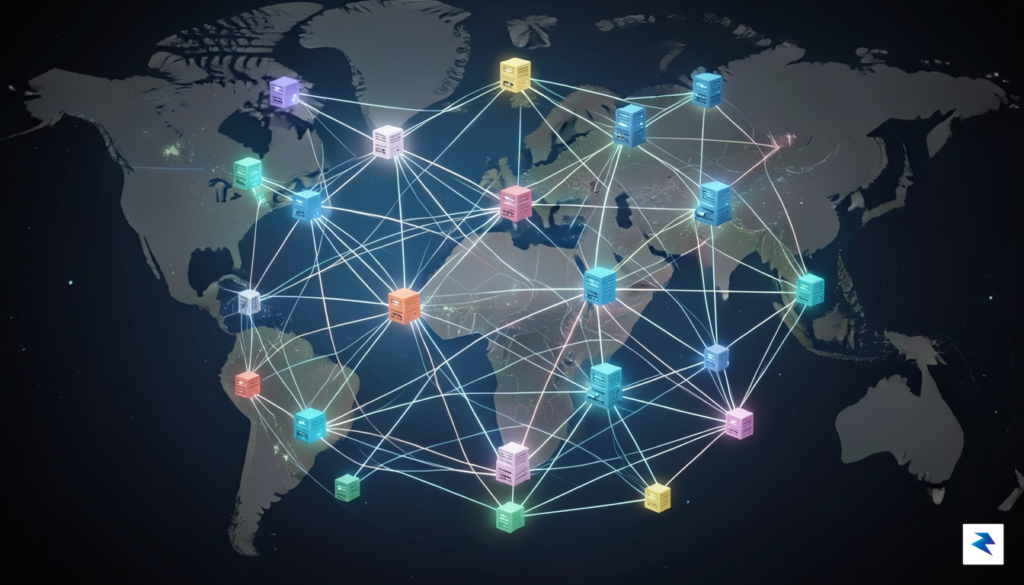
At the heart of the illicit digital economy lies a specialized breed of infrastructure known as “bulletproof” hosting. Unlike legitimate providers that enforce strict Terms of Service and proactively scan for malicious content, these rogue operators build an ecosystem specifically designed to ignore abuse complaints and legal takedown requests. By leveraging a complex technical stack that prioritizes anonymity above all else, they provide a safe harbor for malware distribution, phishing campaigns, and command-and-control servers. This architecture is not merely about renting out server space; it is a meticulously constructed fortress built on layers of obfuscation that keep the actual human operators behind a permanent veil of digital secrecy.

The primary mechanism that allows these services to function involves the strategic use of global proxy networks. When a cybercriminal launches an attack, the traffic rarely goes directly from the source to the victim. Instead, the data is routed through a series of “hop” servers distributed across multiple jurisdictions with lax data-retention laws. By bouncing traffic through these intermediaries, the hosting service ensures that the original IP address of the attacker remains obscured. Even if a cybersecurity firm or law enforcement agency attempts to trace a malicious packet, they are forced to navigate a labyrinth of international borders, where legal cooperation is often sluggish or non-existent, effectively halting the investigation in its tracks.
Bulletproof hosting services act as the backbone of the cybercrime industry, providing the essential, unmonitored infrastructure required to scale criminal operations while insulating the architects from the reach of global law enforcement.
Beyond simple traffic redirection, these operators engage in the continuous “re-hosting” of compromised sites to stay one step ahead of blacklisting efforts. When a security vendor successfully identifies a phishing site and adds it to a global blocklist, the hosting infrastructure automatically rotates the site to a new domain or IP address within minutes. This rapid migration is supported by automated scripts that mirror the content of the attack across a rotating array of servers. Furthermore, these providers often bypass standard security protocols implemented by major cloud providers by utilizing stolen or synthetic identities to procure resources. By creating a revolving door of virtual machines and leased bandwidth, they ensure that their illegal content remains online, regardless of how many times it is flagged or reported by security researchers.
The financial obfuscation layer is the final, vital component that sustains this architecture. These hosting services almost exclusively operate using decentralized cryptocurrencies, allowing them to bypass the oversight of traditional banking institutions that would otherwise flag suspicious patterns of activity. By decoupling the service from fiat currency, the operators can maintain a global client base without leaving a verifiable paper trail. This combination of technical fluidity, jurisdictional arbitrage, and anonymous financial transactions creates a resilient, self-sustaining network that has, until recently, proven remarkably resistant to conventional law enforcement intervention.

While the $62 million figure cited in the federal indictment represents a staggering financial milestone for criminal enterprises, it is fundamentally a collection of thousands of individual tragedies. Behind every digit in that total is a person whose security was violated, a small business owner whose life savings were drained, or a family left reeling from the sudden loss of essential funds. These cyberattacks—ranging from sophisticated ransomware campaigns that lock hospitals out of critical patient records to targeted phishing schemes that empty personal bank accounts—do not just steal capital; they erode the fundamental trust that modern society relies upon to function in a digital age.

The human cost of these persistent threats is often long-lasting and multifaceted, extending far beyond the initial moment of theft. For many victims, the aftermath is characterized by a grueling, years-long struggle to restore their credit, recover stolen identities, and navigate the bureaucratic nightmare of financial institution investigations. Small business owners, in particular, often find themselves unable to recover from the operational downtime caused by ransomware, leading to permanent closures that destroy livelihoods and ripple through local economies. This socioeconomic damage is profound, as it discourages entrepreneurship and forces everyday consumers to live in a state of perpetual hyper-vigilance, constantly fearing that a single misplaced click could result in financial ruin.
The true measure of a cybercrime is not the volume of currency stolen, but the restoration of the peace of mind that was shattered the moment the breach occurred.
Seeking recourse after falling victim to such crimes remains an uphill battle for most individuals. Although law enforcement agencies are making significant strides in dismantling the “bulletproof” infrastructure that facilitates these attacks, the decentralized nature of the internet often makes it difficult to track down stolen assets or hold individual bad actors accountable. Victims are encouraged to report incidents immediately to agencies like the FBI’s Internet Crime Complaint Center (IC3), but they must also prepare for the reality that financial recovery is rarely guaranteed. As we look at the broader impact of this $62 million theft, it becomes clear that technical solutions alone are insufficient. There is an urgent need for robust victim support systems and a fundamental shift in how we approach cybersecurity—not just as an IT problem, but as a critical public health and safety issue that requires a human-centric response.

Prosecuting cybercriminals who operate across international borders remains one of the most formidable challenges of the 21st century. When criminal enterprises utilize “bulletproof” hosting services—infrastructure specifically designed to ignore abuse complaints and shield illegal activity from law enforcement—they exploit the gaps in global jurisdiction to remain untouchable. Historically, the lack of standardized international treaties regarding digital sovereignty has allowed these bad actors to flourish, as they effectively play a game of geopolitical hopscotch, moving their servers to the most permissive jurisdictions available to evade capture.
The successful disruption of this $62 million network serves as a significant template for future cross-border cooperation, demonstrating that digital anonymity is not an absolute barrier to justice. By leveraging advanced intelligence gathering, global financial tracking, and meticulous forensic analysis, authorities have proven that they can bridge the divide between disparate legal systems. This case underscores a shift toward a more proactive, intelligence-led approach to policing the web, where intelligence agencies and federal prosecutors work in tandem to track not just the digital traffic, but the tangible assets and human operators behind the screens.
Moving forward, the efficacy of international cybersecurity enforcement will likely hinge on the evolution of public-private partnerships. Major internet service providers, cloud hosting firms, and financial institutions are increasingly finding themselves on the front lines of defense. Because these entities often possess the first indicators of malicious activity, their cooperation with government agencies is essential for timely intervention. Future strategies will likely involve:
The ultimate deterrent for cybercrime is the realization that the cost of maintaining a digital safe haven is becoming higher than the profits such networks can generate.
Ultimately, this operation serves as a stern warning to those who believe they are beyond the reach of the law simply because they operate from within the shadows of a foreign server room. As digital literacy and international collaboration improve, the “shield” provided by permissive hosting environments is beginning to crack. While the battle against global cybercrime is far from over, the integration of intelligence, legal agility, and private-sector vigilance is creating a far more dangerous environment for those who seek to profit from the exploitation of the internet.
You must be logged in to post a comment.